This comprehensive guide explores effective cryptocurrency mining strategies in 2024, covering everything from fundamental concepts to practical profitability analysis. The article traces mining's evolution from CPU-based hobbyist activity to industrial-scale ASIC operations, then provides detailed setup instructions for home miners using modern equipment like Bitmain Antminer S21 Pro. It compares pool mining versus solo mining approaches, with pool mining recommended for most home users seeking stable returns. Crucial profitability factors are examined including electricity costs, hardware efficiency, Bitcoin price volatility, and network difficulty adjustments. While mining profit margins remain thin with production costs ranging from $80,000-$100,000 per Bitcoin, the guide explains how joining reputable mining pools on Gate and optimizing equipment selection can enhance returns. Readers learn realistic expectations about ROI timelines and discover that success requires low-cost electricity access and long-
What is Cryptocurrency Mining?
Cryptocurrency mining represents a fundamental process where distributed miners worldwide utilize computing power and specialized hardware to solve complex cryptographic puzzles, receiving Bitcoin as compensation for their efforts. This puzzle-solving mechanism is essential for maintaining decentralization across all distributed networks employing Proof of Work (PoW) consensus.
The basic concept involves miners contributing their computational resources to validate transactions and add new blocks to the blockchain. When a miner successfully solves a cryptographic puzzle, they earn the right to add the next block and receive the associated block reward. This process not only secures the network but also controls the issuance of new bitcoins in a predictable manner.
The mining process serves multiple critical functions: it validates and confirms transactions, secures the network against attacks, and distributes new coins into circulation. Each transaction must be verified and recorded on the blockchain, and miners compete to be the first to complete this verification process for each new block.
Brief History of BTC Mining: From Individual to Industrial Scale
Mining Bitcoin at home was central to the founder's vision of a "fair network" where anyone could participate. However, as computational requirements grew, mining evolved to demand more powerful hardware and higher entry costs, transforming from a hobbyist activity into a professional industry.
CPU Era: In the early days, mining was possible using the central processing unit found in ordinary home computers. Individual miners could successfully mine blocks using standard desktop computers, making participation accessible to anyone with basic computing equipment. This period represented true decentralization, where thousands of individual miners contributed to network security.
GPU Era: As mining competition intensified, miners began utilizing graphics cards to improve efficiency and hash rates. Graphics processing units offered significantly better performance for the parallel calculations required in mining, leading to the first major shift in mining technology. This era saw the emergence of dedicated mining rigs built with multiple GPUs.
ASIC Era: With the introduction of Application-Specific Integrated Circuits, mining evolved into an industrial-scale business. ASIC miners are purpose-built devices designed exclusively for cryptocurrency mining, offering unprecedented efficiency and hash rates. This technological leap made previous mining methods obsolete and raised the barrier to entry significantly, concentrating mining power among those who could afford substantial capital investments.
Essential Hardware Required for Home Bitcoin Mining
To mine Bitcoin at home, three primary components are necessary: a Bitcoin ASIC miner, adequate power supply infrastructure, and reliable network (internet) connectivity. Each component plays a crucial role in establishing a functional mining operation.
Popular Models in Recent Years:
-
Bitmain Antminer S21 Pro: Delivers approximately 234 TH/s with 3,510W power consumption. This model represents current-generation efficiency, offering competitive performance for home miners willing to invest in quality equipment.
-
MicroBT Whatsminer M66S: Achieves approximately 298 TH/s while consuming 5,513W. This high-performance option suits miners with access to low-cost electricity and adequate cooling infrastructure.
-
Canaan Avalon A1566: Provides approximately 150 TH/s with 3,225W power consumption. This model offers a more accessible entry point for those beginning their mining journey.
Modern ASIC computational power typically exceeds 200 TH/s, with power consumption reaching several kilowatts. Mining equipment draws high current and generates substantial heat, making high-capacity power supplies (generally 1,600W to 2,000W or higher) essential for stable operation.
Beyond the miner itself, proper electrical infrastructure is crucial. Most efficient miners require 240V power input, and inadequate electrical systems can lead to equipment damage or fire hazards. Additionally, cooling solutions such as ventilation systems or dedicated cooling equipment become necessary to maintain optimal operating temperatures and prevent thermal throttling.
Step-by-Step: Setting Up a Home Bitcoin Mining Rig
Step 1 - Unboxing and Inspection: Carefully remove the ASIC miner from its packaging and thoroughly inspect for any shipping damage, missing components, or manufacturing defects. Check that all cables, documentation, and accessories are included.
Step 2 - Equipment and Power Supply Installation: Position the mining equipment on a sturdy shelf or table capable of supporting its weight. Ensure adequate space around the device for airflow. Connect the power supply unit, verifying all connections are secure and properly seated.
Step 3 - Power Connection: Plug the PSU into your household electrical outlet. Many miners recommend or require 240V input for optimal performance and efficiency. If necessary, consult an electrician to install appropriate outlets and ensure your electrical system can handle the load.
Step 4 - Network Connection: Connect the miner to your router using an Ethernet cable. While some miners support WiFi, wired connections provide more stable and reliable connectivity, reducing the risk of mining interruptions.
Step 5 - Firmware Update: Before beginning actual mining operations, update to the latest firmware version. Manufacturers regularly release updates that improve performance, fix bugs, and enhance security. Access the miner's web interface and follow the manufacturer's update procedure.
Step 6 - Miner Login: Open a web browser and navigate to the miner's IP address. Log in using the default credentials provided in the documentation. Immediately change the default password to a strong, unique password to protect your mining equipment from unauthorized access.
Step 7 - Mining Configuration: Enter your mining method details (pool or solo mining), wallet address, and other necessary parameters. For pool mining, input the pool's URL, worker name/ID, and your Bitcoin wallet address. For solo mining, configure the connection settings to your personal Bitcoin full node.
Step 8 - Start Mining: Save your configuration settings. The miner will begin hashing, and you can monitor the hash rate and other statistics through the device's status page. Verify that the reported hash rate matches the expected performance specifications.
Bitcoin Pool Mining vs. Solo Mining
Solo Mining: This approach involves using one or a small number of mining devices to independently find blocks entirely through your own efforts. If fortunate enough to discover a block, you receive the full 3.125 BTC block reward. However, the probability is extremely low—a typical home mining setup might never find a single block during its operational lifetime. Solo mining suits only those with substantial hash power or those mining for educational purposes rather than profit.
The mathematical reality of solo mining is stark. With network hash rates exceeding 500 EH/s, a single 200 TH/s miner represents only 0.00004% of total network power. This translates to potentially waiting years or decades between successful blocks, making it an impractical choice for most home miners.
Pool Mining: This represents the method chosen by the vast majority of miners. Multiple miners unite to share hash power, then distribute rewards proportionally based on each participant's contribution when blocks are discovered. While pool operation fees (typically 1-4%) reduce gross earnings, the stable and regular payout structure makes pool mining the recommended approach for most home miners.
Pool mining transforms the unpredictable lottery of solo mining into a more consistent income stream. Miners receive regular payouts based on their contributed work, even though individual rewards are smaller. This approach provides predictable returns and allows miners to accurately calculate profitability and plan their operations accordingly.
Cloud Mining: This method involves renting hash power from external data centers without purchasing or operating equipment directly. While eliminating hardware and electricity cost burdens, cloud mining presents significant risks. Many providers are unreliable or fraudulent, and even legitimate services often offer poor returns after fees are deducted. Due diligence is essential when considering cloud mining options.
Calculating Bitcoin Mining Profitability in Recent Years
Daily Revenue Calculation Formula:
Daily Revenue ≈ (Your Hash Rate / Total Network Hash Rate) × (Average Daily Block Count) × (Block Reward) × (Bitcoin Price)
Daily Electricity Cost = (Power Consumption in kW) × 24 hours × (Electricity Rate per kWh)
Key Factors Determining Bitcoin Mining Profitability:
Electricity Costs: This represents the largest operational expense for miners. Electricity rates vary dramatically by region, with some areas offering rates below $0.05 per kWh while others exceed $0.20 per kWh. This difference can determine whether mining is profitable or operates at a loss. Miners in regions with expensive electricity face significant disadvantages and may find mining economically unviable.
Equipment Efficiency: Hash rate per watt of power consumed directly impacts profitability. More efficient miners generate more hashes while consuming less electricity, improving profit margins. Newer generation ASIC miners typically offer better efficiency ratios, though they command higher purchase prices. The efficiency metric (measured in J/TH or W/TH) serves as a critical specification when evaluating mining equipment.
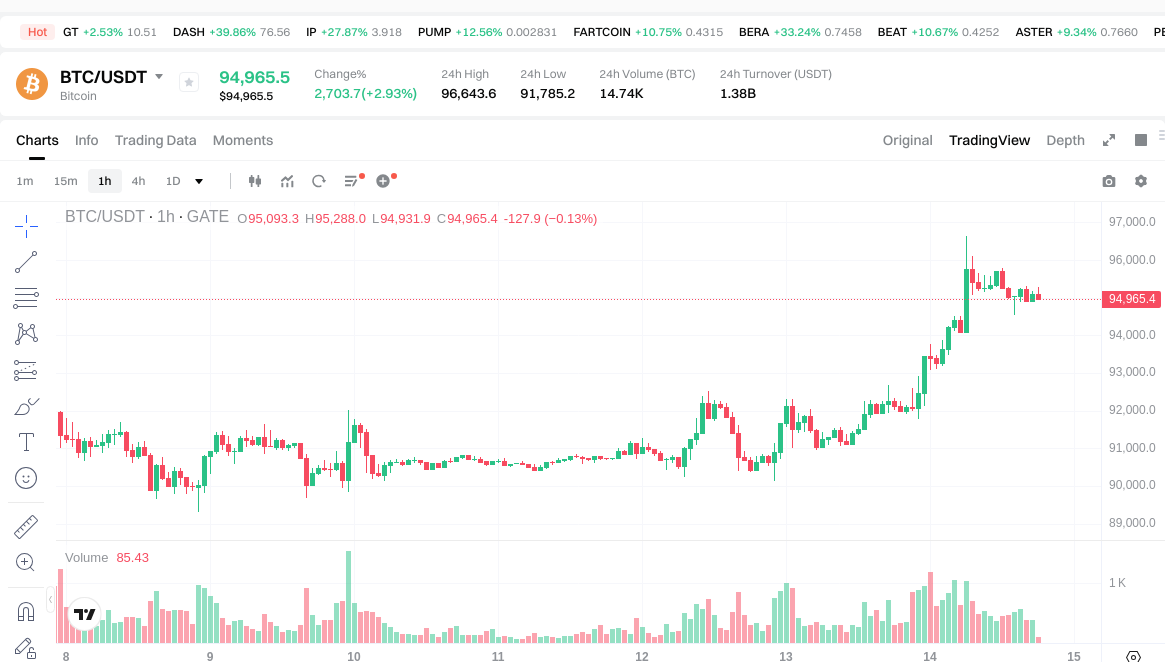
Bitcoin Price: All mining rewards are paid in BTC, making the cryptocurrency's market value a crucial profitability factor. Price volatility introduces significant uncertainty into mining economics. A sustained price increase can transform unprofitable operations into lucrative ventures, while price crashes can force miners to shut down equipment.
Network Difficulty: As more miners join the network, difficulty increases proportionally, reducing each miner's share of total rewards. Difficulty adjustments occur approximately every two weeks, responding to changes in total network hash rate. Rising difficulty without corresponding price increases compresses profit margins.
Initial Investment Costs: ASIC mining equipment ranges from several hundred to tens of thousands of dollars. This capital expenditure must be recovered through mining revenue before operations become profitable. The payback period varies based on all other profitability factors and represents a significant financial risk, especially given rapid technological advancement that can render equipment obsolete.
Additional Considerations: Cooling costs, equipment maintenance, potential downtime, and the opportunity cost of capital all impact true profitability. Many miners overlook these secondary expenses when calculating expected returns.
Overall, mining profit margins remain thin. Based on recent global averages, the production cost for one Bitcoin ranges from $80,000 to $100,000 (representing 80-90% of Bitcoin's market price), leaving limited room for profit after accounting for all expenses.
Conclusion
Mining Bitcoin at home no longer offers the profitability levels seen in earlier years. Multiple factors have contributed to this shift: dramatically increased mining difficulty and energy requirements, global energy crises that have elevated electricity costs, and the ongoing reduction in block rewards through periodic halvings.
The industrial nature of modern Bitcoin mining means that large-scale operations with access to cheap electricity, optimized cooling, and economies of scale maintain significant advantages over home miners. These professional operations can negotiate favorable electricity rates, purchase equipment in bulk at discounted prices, and optimize their operations in ways impossible for individual miners.
However, for those who believe in Bitcoin's long-term value proposition, mining can still represent an attractive option despite reduced profit margins. Mining offers a method to accumulate Bitcoin while supporting network security and decentralization. The decision to mine should consider factors beyond immediate profitability, including belief in the technology, desire to participate in the network, and long-term price expectations.
For those committed to home Bitcoin mining, success requires investing in the most efficient current-generation mining equipment and joining a reputable mining pool for stable returns. Careful calculation of all costs, realistic profitability projections, and contingency planning for price volatility and difficulty increases are essential. Only those with access to low-cost electricity and willingness to accept extended payback periods should consider home mining as a serious venture.
The evolution of Bitcoin mining from a hobbyist activity to an industrial operation reflects the cryptocurrency's maturation and growing network security. While this transformation has reduced opportunities for casual participants, it has simultaneously strengthened Bitcoin's resistance to attacks and enhanced its credibility as a robust financial network.
FAQ
Can you still make money mining Bitcoin at home in 2024?
Home Bitcoin mining in 2024 is barely profitable. Soaring electricity costs, expensive hardware, and massively increased mining difficulty make it challenging to generate returns. Most small-scale miners face significant losses.
What hardware equipment do you need for home Bitcoin mining?
Home Bitcoin mining requires ASIC chips (Antminers), a reliable power supply, adequate cooling systems, and mining software like GGMiner or BFGMiner. You'll also need sufficient space for equipment and proper ventilation to handle heat generation up to 45°C.
How much does electricity cost to mine Bitcoin at home?
Home Bitcoin mining electricity costs vary significantly by location. Global average is around 46,000 USD per Bitcoin, but cheaper regions like Lebanon may cost only 266 USD. Costs depend on local electricity rates and mining hardware efficiency.
How long does it take for an ordinary home user to mine one Bitcoin?
With a standard home computer, it typically takes approximately 556 days to mine one Bitcoin due to limited computing power and increasing mining difficulty.
What is the difference between home mining and mining farm operations?
Home mining uses personal computers with lower efficiency and profitability. Mining farms deploy large-scale professional equipment, offering higher hash rates, better energy efficiency, and greater scalability for consistent returns.
What technical foundation is needed for home Bitcoin mining?
Home Bitcoin mining requires ASIC mining hardware, mining software compatible with your equipment, stable power supply, proper cooling systems, and joining a mining pool. Basic computer knowledge and understanding of electricity costs are also essential for profitability.
What impact does Bitcoin mining have on computers and household electricity?
Bitcoin mining requires substantial electrical power and high-performance hardware, significantly increasing household electricity consumption and costs. Mining equipment operates continuously at maximum capacity, generating considerable heat that may affect computer lifespan and require enhanced cooling solutions.
What are the legal risks of home Bitcoin mining in 2024?
Home Bitcoin mining in 2024 faces legal risks including varying state regulations on energy consumption and environmental impact, potential noise restrictions, and operational limitations. Tax implications treat mined Bitcoin as income. Compliance requirements and local zoning laws also vary significantly by jurisdiction.
* The information is not intended to be and does not constitute financial advice or any other recommendation of any sort offered or endorsed by Gate.