This comprehensive analysis compares HEI and GMX as two distinct cryptocurrency assets within different blockchain niches. HEI, a Layer 1 blockchain focused on multi-chain interoperability launched in 2025, contrasts with GMX, an established decentralized perpetual exchange accruing 30% of platform fees. The article examines historical price movements, current market status on Gate, trading volumes, tokenomics, institutional adoption, technological ecosystems, and investment strategies suitable for different investor profiles. HEI exhibits higher volatility with $189,266.72 daily volume versus GMX's $20,657.88, reflecting distinct market positioning and risk profiles. The analysis provides short-term and long-term price scenarios, risk assessments covering market, technical, and regulatory factors, and tailored investment recommendations for conservative, aggressive, and institutional investors. Both assets present different opportunities aligned with varying risk tolerance and blockchain infrastructure convi
Introduction: Investment Comparison Between HEI and GMX
In the cryptocurrency market, the comparison between HEI vs GMX has consistently been a topic that investors cannot overlook. The two not only exhibit notable differences in market cap ranking, application scenarios, and price performance, but also represent distinct positioning within the crypto asset landscape.
HEI (Heima): Since its launch in 2025, it has gained market recognition by positioning itself as a cutting-edge Layer 1 blockchain focused on seamless multi-chain and cross-chain interoperability, evolved from the Litentry Network.
GMX (GMX): Launched earlier as a decentralized perpetual exchange, GMX has established itself as a utility and governance token that accrues 30% of platform-generated fees, attracting attention in the DeFi trading space.
This article will comprehensively analyze the investment value comparison of HEI vs GMX across historical price trends, supply mechanisms, institutional adoption, technological ecosystem, and future forecasts, attempting to answer the question investors care about most:
"Which is the better buy right now?"
I. Historical Price Comparison and Current Market Status
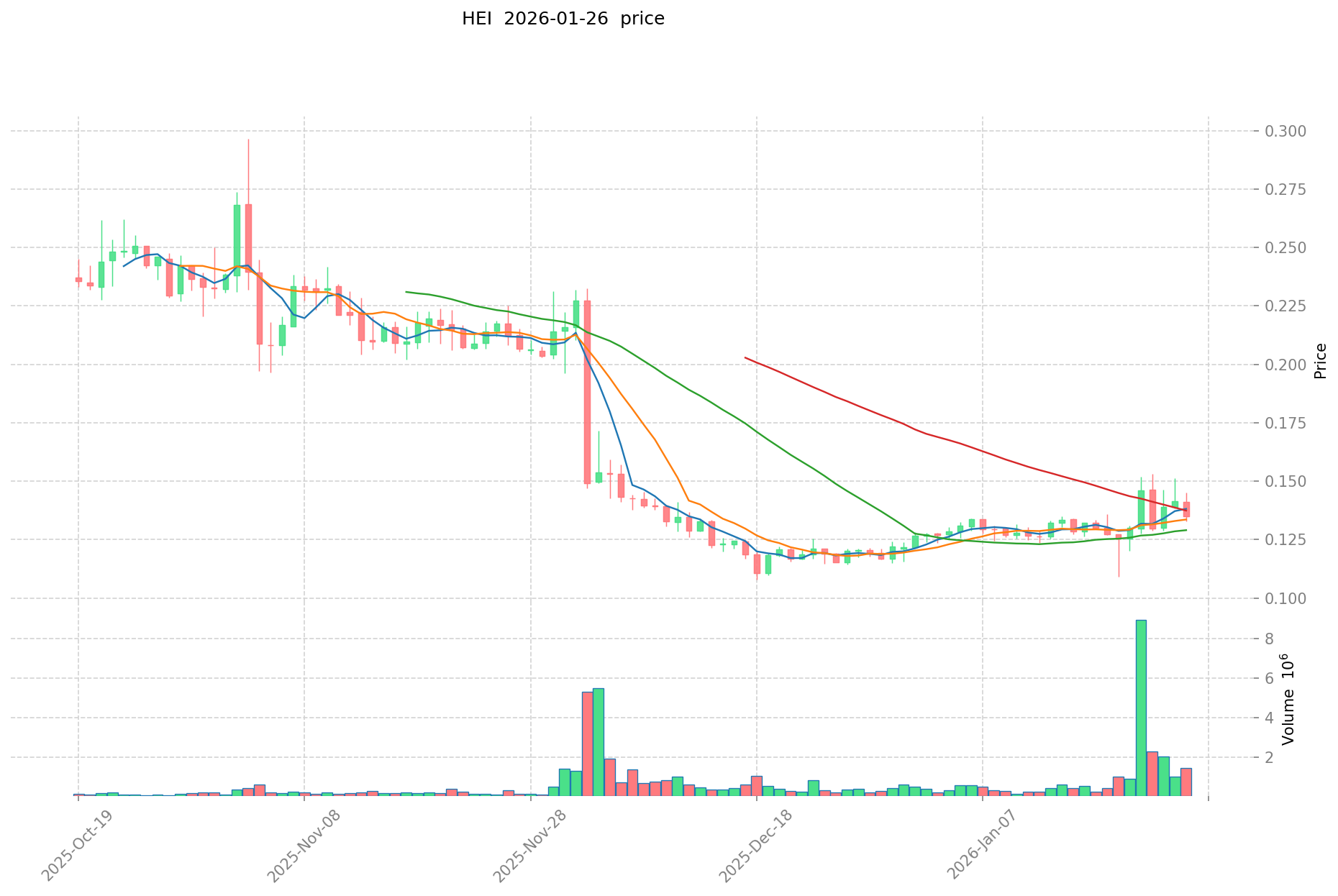
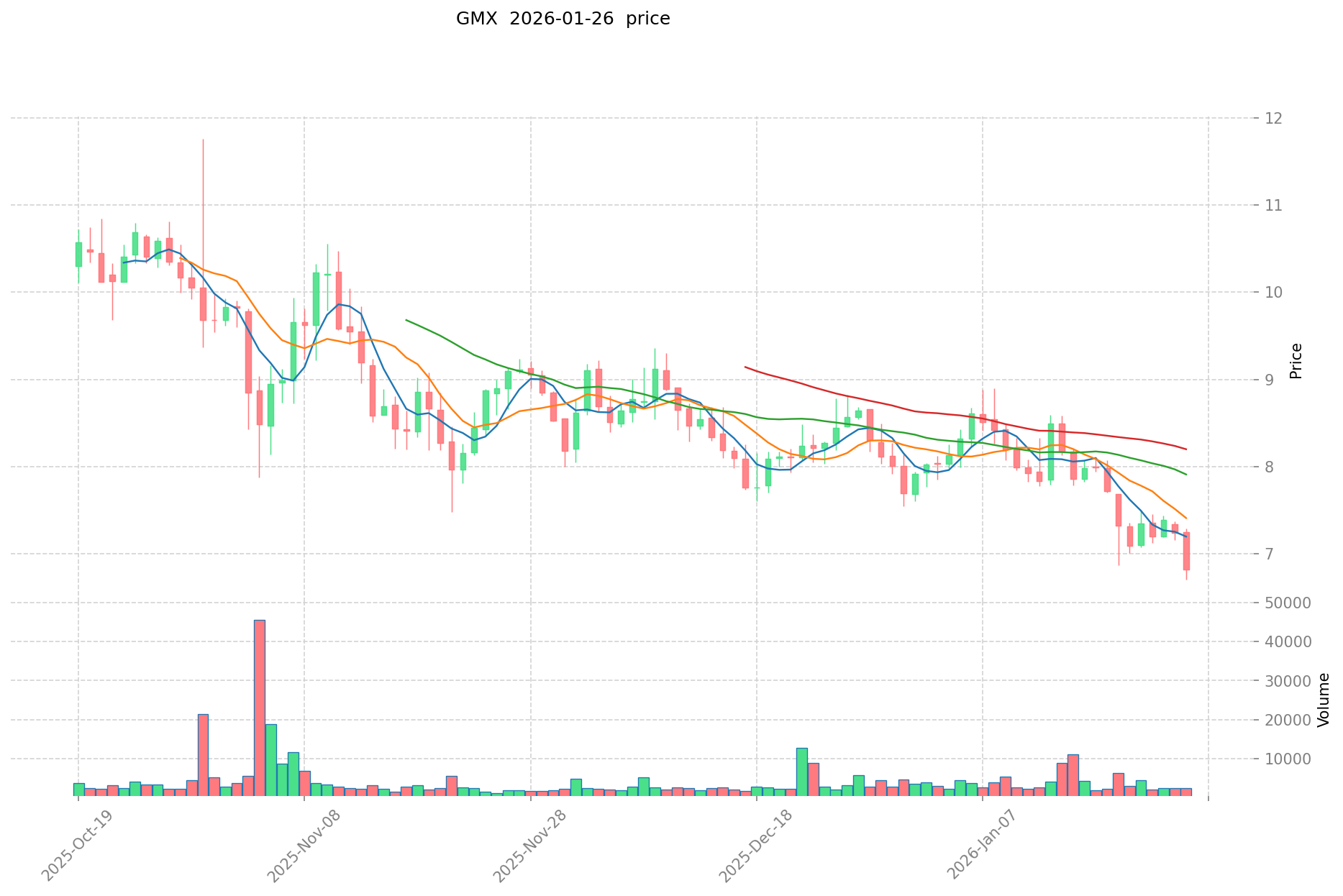
HEI (Coin A) and GMX (Coin B) Historical Price Trends
- 2023: GMX experienced significant price movements, reaching an all-time high of $91.07 on April 18, 2023, reflecting strong market interest during that period.
- 2025: HEI achieved its all-time high of $1.25 on February 13, 2025, followed by a subsequent decline to $0.04755675 on October 11, 2025.
- Comparative Analysis: During recent market cycles, HEI declined from its peak of $1.25 to a low of $0.04755675, representing substantial volatility. In contrast, GMX has experienced a decline from its historical high of $91.07 to a current low of $6.74 recorded on January 26, 2026.
Current Market Status (January 26, 2026)
- HEI current price: $0.1449
- GMX current price: $7.114
- 24-hour trading volume: HEI $189,266.72 vs GMX $20,657.88
- Market Sentiment Index (Fear & Greed Index): 20 (Extreme Fear)
View real-time prices:
- View HEI current price Market Price
- View GMX current price Market Price
II. Core Factors Affecting HEI vs GMX Investment Value
Supply Mechanism Comparison (Tokenomics)
Due to insufficient reference materials, specific supply mechanism details for HEI and GMX cannot be provided at this time.
Institutional Adoption and Market Application
Institutional Holdings: Current data does not provide comparative analysis of institutional preference between HEI and GMX.
Enterprise Adoption: Information regarding the application of HEI and GMX in cross-border payments, settlements, and investment portfolios is not available in the provided materials.
National Policies: Regulatory attitudes from different countries toward HEI and GMX are not documented in the reference materials.
Technology Development and Ecosystem Building
HEI Technology Upgrades: Specific technical upgrade information and potential impacts are not available in the provided materials.
GMX Technology Development: Details regarding technology development and potential impacts are not documented in the reference materials.
Ecosystem Comparison: Comparative data on DeFi, NFT, payment systems, and smart contract implementation for both projects is not available in the provided materials.
Macroeconomic Environment and Market Cycles
Performance in Inflationary Environment: Comparative analysis of anti-inflation properties between HEI and GMX is not available in the reference materials.
Macroeconomic Monetary Policy: Information regarding the impact of interest rates and dollar index on both assets is not documented in the provided materials.
Geopolitical Factors: Data concerning cross-border transaction demand and international situations affecting HEI and GMX is not available in the reference materials.
III. 2026-2031 Price Forecast: HEI vs GMX
Short-term Forecast (2026)
- HEI: Conservative $0.127-$0.147 | Optimistic $0.147-$0.209
- GMX: Conservative $5.71-$7.14 | Optimistic $7.14-$9.56
Mid-term Forecast (2028-2029)
- HEI may enter a phase of gradual expansion, with estimated price range of $0.167-$0.332
- GMX may enter a phase of sustained growth, with estimated price range of $7.26-$11.87
- Key drivers: institutional capital inflows, ETF developments, ecosystem advancement
Long-term Forecast (2030-2031)
- HEI: Baseline scenario $0.266-$0.281 | Optimistic scenario $0.322-$0.443
- GMX: Baseline scenario $8.45-$10.18 | Optimistic scenario $13.86-$18.10
View detailed price predictions for HEI and GMX
Disclaimer: Price predictions are based on historical data analysis and market trends. Cryptocurrency markets are highly volatile and subject to numerous unpredictable factors. These forecasts should not be considered as investment advice. Past performance does not guarantee future results. Investors should conduct thorough research and consider their risk tolerance before making any investment decisions.
HEI:
| Year |
Predicted High Price |
Predicted Average Price |
Predicted Low Price |
Price Change |
| 2026 |
0.209495 |
0.1465 |
0.127455 |
1 |
| 2027 |
0.258096375 |
0.1779975 |
0.142398 |
22 |
| 2028 |
0.23985163125 |
0.2180469375 |
0.18752036625 |
50 |
| 2029 |
0.33197646234375 |
0.228949284375 |
0.16713297759375 |
58 |
| 2030 |
0.322532304363281 |
0.280462873359375 |
0.266439729691406 |
93 |
| 2031 |
0.443201455626152 |
0.301497588861328 |
0.277377781752421 |
108 |
GMX:
| Year |
Predicted High Price |
Predicted Average Price |
Predicted Low Price |
Price Change |
| 2026 |
9.5609 |
7.135 |
5.708 |
0 |
| 2027 |
11.2697325 |
8.34795 |
8.0975115 |
17 |
| 2028 |
11.8686979125 |
9.80884125 |
7.258542525 |
37 |
| 2029 |
11.70587114775 |
10.83876958125 |
8.454240273375 |
52 |
| 2030 |
13.864954048335 |
11.2723203645 |
8.454240273375 |
58 |
| 2031 |
18.0988375772412 |
12.5686372064175 |
10.180596137198175 |
76 |
IV. Investment Strategy Comparison: HEI vs GMX
Long-term vs Short-term Investment Strategies
- HEI: May be suitable for investors interested in emerging Layer 1 blockchain technology with multi-chain interoperability features, particularly those with higher risk tolerance seeking potential growth opportunities in nascent blockchain infrastructure projects.
- GMX: May appeal to investors focused on established DeFi trading platforms with demonstrated utility, especially those seeking exposure to decentralized perpetual exchange ecosystems with revenue-sharing mechanisms.
Risk Management and Asset Allocation
- Conservative Investors: HEI 20-30% vs GMX 70-80%
- Aggressive Investors: HEI 50-60% vs GMX 40-50%
- Hedging Tools: Stablecoin allocation, options strategies, cross-asset portfolio diversification
V. Potential Risk Comparison
Market Risk
- HEI: Exhibits significant price volatility, with historical data showing a decline from $1.25 to $0.04755675 in 2025. Lower trading volume of $189,266.72 (as of January 26, 2026) may indicate reduced liquidity and potential price fluctuation risks.
- GMX: Has experienced substantial price movement from its peak of $91.07 in April 2023 to $6.74 in January 2026. Current trading volume of $20,657.88 suggests moderate market activity with associated volatility considerations.
Technical Risk
- HEI: As a relatively new Layer 1 blockchain platform launched in 2025, considerations include network maturity, scalability performance under increasing load, and potential technical challenges during early-stage development.
- GMX: Technical considerations relate to decentralized exchange infrastructure, smart contract security, platform stability, and potential vulnerabilities inherent in DeFi protocols.
Regulatory Risk
Both assets may face varying regulatory approaches across different jurisdictions. Layer 1 blockchain platforms and decentralized exchanges continue to attract regulatory attention globally, with potential impacts on operational frameworks, compliance requirements, and market accessibility.
VI. Conclusion: Which Is the Better Buy?
📌 Investment Value Summary:
- HEI Characteristics: Represents exposure to emerging Layer 1 blockchain technology with multi-chain interoperability positioning; relatively lower current price point; higher volatility profile; earlier stage in market development cycle.
- GMX Characteristics: Established presence in decentralized perpetual exchange sector; demonstrated utility with fee-accrual mechanism; longer operational history; integrated within DeFi trading ecosystem.
✅ Investment Considerations:
- New Investors: May consider starting with established projects demonstrating longer operational history and clearer utility models; emphasis on gradual position building with strict risk management protocols.
- Experienced Investors: Could evaluate portfolio diversification across both assets based on individual risk tolerance, market cycle positioning, and conviction in respective technological approaches; importance of ongoing monitoring of ecosystem development.
- Institutional Investors: Assessment may focus on liquidity profiles, regulatory clarity, technological maturity, and alignment with institutional risk parameters; consideration of position sizing relative to overall portfolio strategy.
⚠️ Risk Disclosure: The cryptocurrency market exhibits extreme volatility characteristics. This analysis does not constitute investment advice. Market participants should conduct independent research, assess personal risk tolerance, and consult qualified financial advisors before making investment decisions. Historical performance does not guarantee future results.
VII. FAQ
Q1: What are the main differences between HEI and GMX in terms of their core functionality?
HEI is a Layer 1 blockchain platform focused on multi-chain and cross-chain interoperability, while GMX is a decentralized perpetual exchange with fee-accrual mechanisms. HEI represents infrastructure-level blockchain technology aimed at facilitating seamless communication between different blockchain networks, having evolved from the Litentry Network since its 2025 launch. GMX, launched earlier, operates as a DeFi trading platform where the token accrues 30% of platform-generated fees, serving both utility and governance functions within its decentralized perpetual trading ecosystem.
Q2: Which asset shows greater price volatility based on historical performance?
HEI demonstrates significantly higher volatility, declining from $1.25 to $0.04755675 within 2025. HEI's dramatic price movement from its February 2025 all-time high to its October 2025 low represents approximately 96% decline, indicating extreme volatility characteristics typical of newly launched blockchain projects. GMX, while also experiencing substantial price movement from its April 2023 peak of $91.07 to January 2026's $6.74, exhibits this decline over a longer timeframe, suggesting relatively more gradual price adjustment patterns despite still representing significant volatility.
Q3: How do the trading volumes compare between HEI and GMX?
HEI shows substantially higher 24-hour trading volume at $189,266.72 compared to GMX's $20,657.88 as of January 26, 2026. This approximately 9x difference in trading volume suggests that HEI currently experiences greater market activity and liquidity, which may facilitate easier entry and exit positions for traders. However, trading volume alone should not be the sole determinant of investment decisions, as it represents only one aspect of overall market dynamics and should be considered alongside other factors such as market depth, price stability, and long-term ecosystem development.
Q4: What are the projected price ranges for both assets in 2026?
For 2026, HEI's conservative forecast ranges from $0.127-$0.147, with optimistic scenarios projecting $0.147-$0.209; GMX's conservative forecast ranges from $5.71-$7.14, with optimistic scenarios projecting $7.14-$9.56. These short-term forecasts suggest that HEI's potential percentage gains from current levels ($0.1449) could reach approximately 44% in optimistic scenarios, while GMX from its current price ($7.114) shows potential upside of approximately 34% in optimistic scenarios. However, these predictions are based on historical data analysis and market trends, and actual performance may vary significantly due to numerous unpredictable market factors.
Q5: Which asset is more suitable for conservative investors?
GMX may be more appropriate for conservative investors, with suggested allocation ratios of 70-80% GMX versus 20-30% HEI in conservative portfolios. This recommendation stems from GMX's longer operational history since its earlier launch, established presence within the DeFi trading ecosystem, demonstrated utility through its fee-accrual mechanism, and relatively more gradual price movement patterns. Conservative investors typically prioritize capital preservation and lower volatility over maximum growth potential, making established projects with proven track records more aligned with risk-averse investment strategies.
Q6: What are the primary technical risks associated with each asset?
HEI faces technical risks related to network maturity, scalability performance, and early-stage development challenges as a Layer 1 blockchain launched in 2025; GMX faces risks associated with decentralized exchange infrastructure, smart contract security, and DeFi protocol vulnerabilities. HEI's technical considerations center on its ability to deliver on multi-chain interoperability promises while maintaining network stability and security during rapid growth phases. GMX's technical risks involve the inherent complexities of decentralized perpetual trading platforms, including smart contract exploit possibilities, oracle manipulation risks, and platform stability under high trading volumes or extreme market conditions.
Q7: How does the current market sentiment affect investment decisions for HEI and GMX?
The current Fear & Greed Index reading of 20 (Extreme Fear) as of January 26, 2026, suggests heightened market caution that may present both opportunities and risks for both assets. Extreme fear conditions historically have preceded market bottoms, potentially offering entry opportunities for investors with longer time horizons and adequate risk tolerance. However, extreme fear also indicates elevated uncertainty and potential for continued downward price pressure in the near term. Investors should consider whether current market sentiment aligns with their investment timeframe, risk capacity, and conviction in the fundamental value propositions of HEI's Layer 1 infrastructure or GMX's DeFi trading platform.
Q8: What factors should investors prioritize when choosing between HEI and GMX?
Investors should prioritize their risk tolerance, investment timeframe, conviction in technological approaches, and portfolio diversification objectives when choosing between HEI and GMX. Key considerations include: (1) Risk appetite—HEI's higher volatility suits aggressive investors, while GMX's established presence appeals to conservative approaches; (2) Time horizon—HEI represents earlier-stage growth potential, while GMX offers more immediate utility demonstration; (3) Technological conviction—preference for Layer 1 infrastructure versus DeFi trading platforms; (4) Liquidity requirements—assessment of trading volumes and market depth; (5) Regulatory considerations—evaluation of potential regulatory impacts on blockchain infrastructure versus decentralized exchanges. No single factor should dominate the decision-making process; rather, a holistic assessment aligned with individual circumstances provides the most appropriate investment framework.
* The information is not intended to be and does not constitute financial advice or any other recommendation of any sort offered or endorsed by Gate.