# Home Bitcoin Mining Costs Around the World: A Comprehensive Overview
**Introduction:**
This comprehensive guide examines household Bitcoin mining profitability across global regions, analyzing electricity costs and economic viability for solo miners. Discover how mining expenses vary dramatically—from Asia's favorable $20,636 average to Europe's $85,768—and which countries offer genuine profit potential. The article evaluates regional differences, regulatory impacts, and mining equipment requirements, helping prospective miners on Gate assess whether household-based operations align with their local electricity rates. Through detailed cost breakdowns and profitability analysis, readers gain actionable insights for determining mining feasibility in their geographic location and making informed investment decisions.
How Much Costs to Mine 1 Bitcoin at Home, Around the World
How Much Electricity is Needed to Mine 1 Bitcoin?
As a solo miner, an average of 266,000 kilowatt-hours (kWh) of electricity is required to mine a single Bitcoin. This process would take approximately seven years to complete, demanding a monthly electricity consumption of about 143 kWh. To contextualize this requirement, the monthly electricity consumption is roughly one-sixth of what a typical household in the United States consumed in recent years, highlighting the substantial energy demands of Bitcoin mining operations.
The profitability of Bitcoin mining for solo miners depends on several critical factors. Among these, the price of electricity, the mining equipment hash rate, and the network's mining difficulty are paramount considerations. While some miners participate in mining pools to increase their chances of success, understanding household electricity costs across the globe provides valuable insights for solo miners operating within a decentralized network and helps answer the question: how much electricity is needed to mine Bitcoin?
Bitcoin Mining Evolution's Impact on Electricity Usage
In the early days of Bitcoin's inception in 2009, the mining process was relatively simple and required minimal electricity, utilizing basic desktop computers. However, as Bitcoin gained traction and global interest surged, the mining process evolved into a more intricate operation. The increasing utilization of specialized hardware, particularly application-specific integrated circuits (ASICs), became the standard for competitive mining. These specialized tools, while more efficient in certain aspects, come at the cost of significantly higher electricity usage, fundamentally transforming mining from its earlier accessible nature into a capital and energy-intensive industry.
How Much Does it Cost to Mine 1 Bitcoin? (Household Electricity Costs)
The average household electricity cost to mine 1 Bitcoin remains substantial at approximately $46,291, representing a significant financial commitment for individual miners. This cost variation reflects the ongoing challenge for solo miners attempting to achieve profitability through household electricity rates, a key consideration when calculating how much electricity is needed for Bitcoin mining operations.
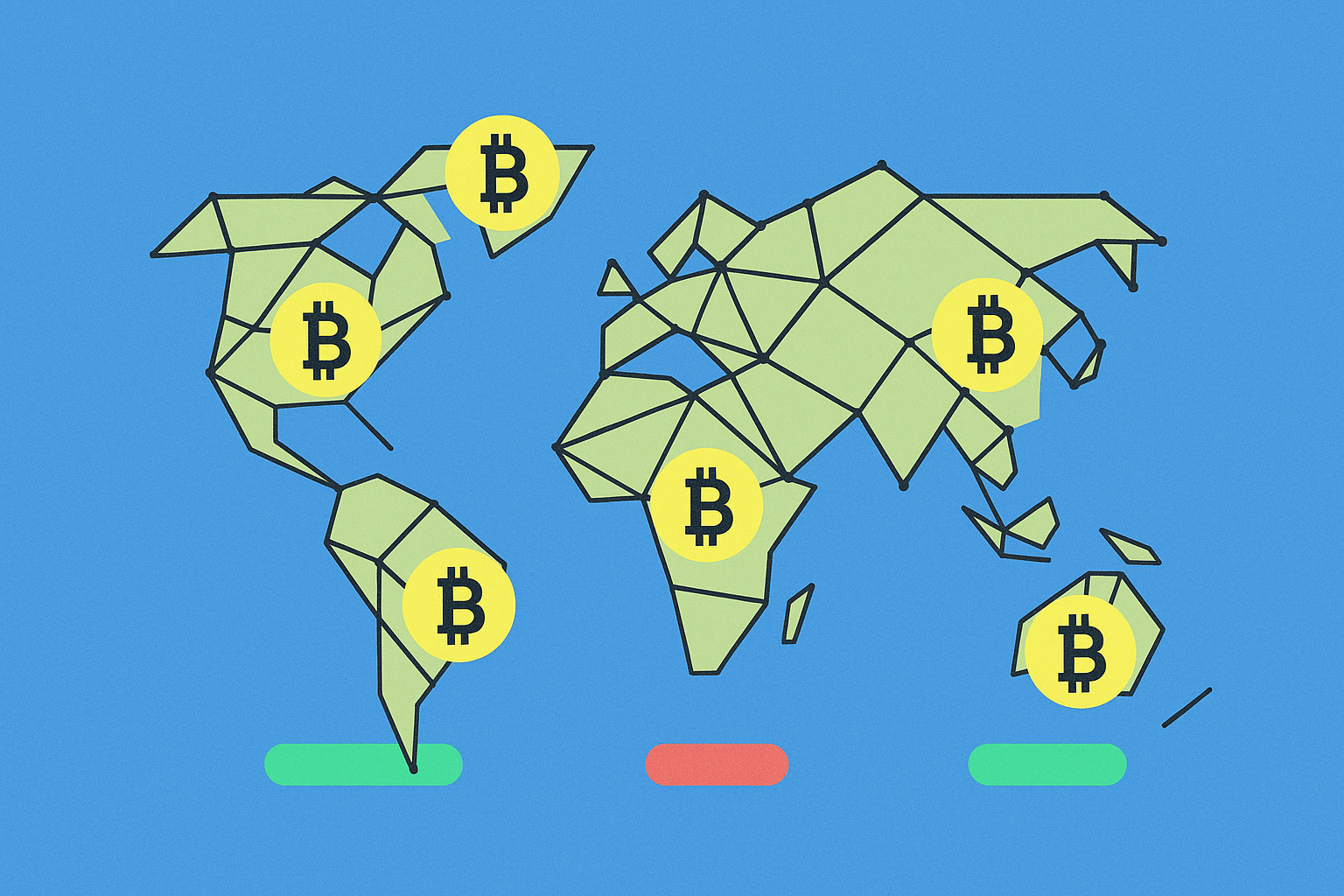
Regional differences in household electricity costs are substantial and geographically distinct. Europe stands out with notably higher average costs for household electricity at approximately $85,768 per Bitcoin mined. In sharp contrast, the Asian region boasts lower average costs for solo miners at approximately $20,636 when mining 1 Bitcoin. Asia represents the primary territory where average household electricity costs present more favorable conditions for solo miners. However, within this region, disparities are notable, with some countries offering substantially lower rates than others, accentuating the variable nature of electricity expenses within the region.
Solo Bitcoin Mining Shows Regional Profitability Variations
Globally, a limited number of countries present profitability for solo mining of a single Bitcoin based on household electricity costs. Europe accounts for a small portion of these countries, while the Americas offer opportunities primarily in South America and the Caribbean regions. Africa emerges as a noteworthy region with several countries where mining remains potentially profitable. Asia stands out as having the most significant number of countries that offer potential for profitable solo mining operations, establishing it as the most favorable region for individual miners seeking to achieve positive returns on their energy investments.
Energy Costs and Regulatory Environments Shape Mining Viability
Despite global regulatory pressures and varying policy frameworks, the relationship between electricity costs and mining profitability remains a central consideration. Several nations maintain regulatory positions toward cryptocurrency that range from restrictive to prohibitive. Notably, regions with such regulatory frameworks often possess low electricity costs that would otherwise make mining economically viable from a pure energy cost perspective.
An interesting dynamic exists where regions with cryptocurrency restrictions frequently possess the infrastructure and low electricity costs that would support profitable mining operations. This presents a complex interplay between regulatory environments and economic viability that miners must navigate when considering mining locations.
Geographic Distribution of Profitable Mining Regions
The regions where Bitcoin mining presents the most favorable conditions due to electricity cost considerations are predominantly located in Asia and Africa. These areas offer electricity rates that make solo mining more economically feasible compared to global averages, though regulatory and infrastructure considerations remain important factors.
While low electricity costs promise theoretical profitability, sustained mining operations can impact local electrical grids. Several countries have experienced challenges balancing mining activity with grid stability. Nations with initially favorable conditions have sometimes restricted or regulated mining operations due to power supply concerns during peak demand periods. This demonstrates that sustainable energy infrastructure and grid capacity are crucial considerations for supporting viable mining operations.
Regions with Higher Mining Costs
It remains uneconomical to mine Bitcoin in a substantial number of countries worldwide. These nations are characterized by significantly higher household electricity costs that render mining economically unviable for individual operators. The highest electricity costs are concentrated in specific regions, with Europe being particularly affected.
The increase in electricity prices within certain regions has been attributed to various interconnected factors including global energy market fluctuations, supply chain considerations, and geopolitical events. These circumstances have resulted in elevated electricity prices, rendering Bitcoin mining largely unprofitable within these regions for individual miners relying on household electricity rates.
How Many Units of Electricity are Consumed in an Hour of Mining Bitcoin?
The amount of electricity units consumed during an hour of Bitcoin mining is comparable to other common household appliances. Bitcoin mining, while energy-intensive on a macro scale, consumes electricity within ranges familiar from conventional household uses when examined on an hourly basis. This perspective helps contextualize the energy footprint of mining and demonstrates that individual mining operations, in terms of hourly consumption, align with standard household electrical devices such as air conditioning units, electric heaters, or industrial-grade kitchen appliances.
Conclusion
Bitcoin mining profitability at the household level varies dramatically across the globe, determined primarily by regional electricity costs and local regulatory environments. The answer to how much electricity is needed for Bitcoin mining connects directly to regional economics and infrastructure. Asia presents more favorable conditions for solo miners compared to other regions, while Europe's higher electricity costs render mining less economical for most individual operators. The analysis reveals that profitability for solo mining operations based on household electricity rates is limited to a relatively small number of countries globally. Understanding these geographic and economic disparities is essential for potential miners seeking to evaluate the viability of household-based mining operations, while policymakers must balance potential economic opportunities with considerations regarding grid stability and energy sustainability.
FAQ
How much power does it take to mine 1 Bitcoin?
Mining 1 Bitcoin requires approximately 1,449 kWh of electricity, equivalent to the monthly consumption of an average US household. The exact amount varies based on mining hardware efficiency, electricity costs, and network difficulty.
How much would it cost me to mine 1 Bitcoin?
Mining 1 Bitcoin costs approximately $5,000-$15,000 in electricity, depending on your hardware efficiency, local power rates, and network difficulty. ASIC miners are essential for profitability today.
How many days will it take to mine 1 Bitcoin?
Mining time varies greatly depending on your hardware hash rate and network difficulty. With consumer-grade equipment, it could take months to years. Professional ASIC miners may achieve it in weeks to months. Network difficulty adjusts every 2,016 blocks, affecting profitability and timeline significantly.
How difficult is it to mine 1 Bitcoin?
Mining 1 Bitcoin requires significant computational power and electricity. Current difficulty is extremely high, requiring specialized ASIC hardware and substantial operational costs. On average, it takes professional mining operations weeks to months to mine a single Bitcoin, depending on equipment efficiency and electricity costs.
What hardware do I need to mine Bitcoin profitably?
Modern Bitcoin mining requires ASIC miners like Antminer S19 Pro. GPU mining is no longer profitable. Success depends on hardware efficiency, electricity costs below $0.06/kWh, and mining pool participation to ensure consistent returns.
Is Bitcoin mining still profitable in 2024?
Yes, Bitcoin mining remains profitable in 2024 for operations with efficient hardware and low electricity costs. High Bitcoin prices and improved mining technology make it economically viable, though profitability depends on individual operational efficiency.
* The information is not intended to be and does not constitute financial advice or any other recommendation of any sort offered or endorsed by Gate.