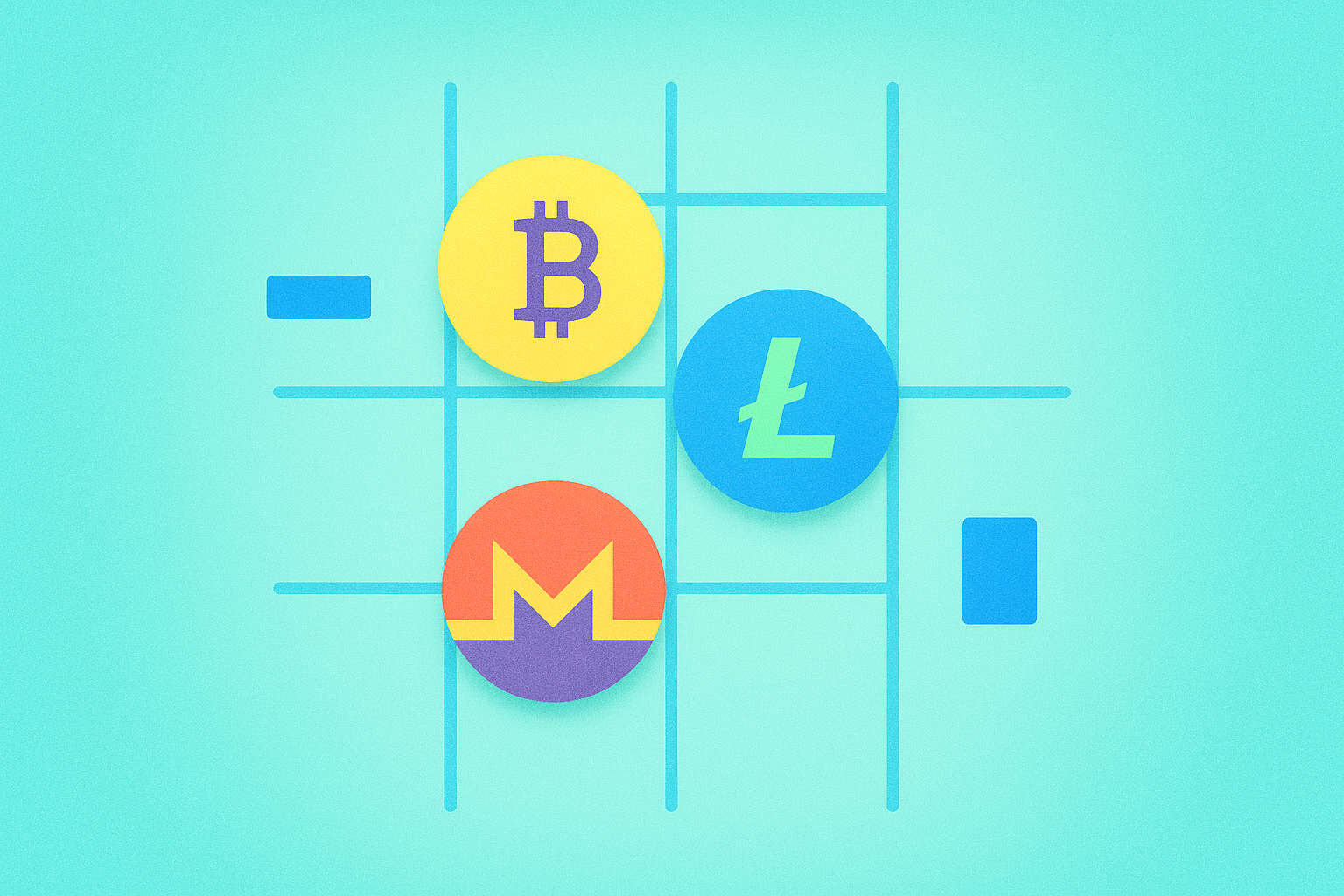
This comprehensive guide introduces cryptocurrency mining fundamentals for beginners, covering consensus mechanisms like Proof of Work and Proof of Stake. It outlines six essential steps to start mining: choosing a cryptocurrency, selecting appropriate hardware (ASIC, GPU, or CPU), installing mining software, joining pools, setting up wallets, and monitoring performance. The guide evaluates profitability across Bitcoin, Litecoin, Monero, and other cryptocurrencies while addressing rising energy costs and network difficulty challenges. It explores cloud mining alternatives and compares mining with staking and yield farming options. For miners with access to cheap renewable energy, profitability remains achievable through eco-mining approaches. The guide emphasizes that successful mining requires careful cost analysis, strategic planning, and realistic return expectations based on individual circumstances and market conditions.
What Does Cryptocurrency Mining Mean?
Mining is the process by which specialized computers use their computational power to solve complex mathematical problems. Through this process, new units of cryptocurrencies such as Bitcoin are created, and transactions on the network are verified and confirmed. Miners are rewarded with newly minted coins as well as transaction fees.
Transactions from a recent period are collected and placed in what is called a block. Miners then attempt to solve a complex cryptographic problem to validate the block and add it to the blockchain.
There are two main consensus mechanisms:
- Proof of Work – Used by Bitcoin, Litecoin, and others. It involves miners solving computationally expensive mathematical puzzles.
- Proof of Stake – Utilized by Ethereum, Cardano, and Solana. It is based on holding and "locking" a certain number of tokens as collateral.
The mining process is fundamental to maintaining the security and decentralization of blockchain networks. By requiring computational work to add new blocks, the network ensures that malicious actors cannot easily manipulate the transaction history. This creates a trustless system where participants don't need to rely on central authorities to verify transactions.
How to Mine Cryptocurrencies Step by Step
1. Choosing a Cryptocurrency to Mine
Decide which cryptocurrency you want to mine. Different currencies have different hardware requirements and algorithms. Consider factors such as the current market value, mining difficulty, and your available resources. Research the specific algorithm used by your chosen cryptocurrency, as this will determine what type of hardware will be most efficient. For beginners, it's often advisable to start with more accessible coins that don't require industrial-scale operations.
2. Choosing Hardware – CPU, GPU, ASIC
The choice of hardware depends on the cryptocurrency's algorithm. ASIC miners are highly efficient for specific algorithms (such as Bitcoin). GPUs are more versatile and popular among beginners, while CPUs are used for mining coins like Monero.
ASIC (Application-Specific Integrated Circuit) miners are purpose-built devices designed exclusively for mining specific cryptocurrencies. They offer the highest hash rates but lack flexibility. GPU (Graphics Processing Unit) mining provides a balance between performance and versatility, allowing miners to switch between different coins. CPU mining is the most accessible entry point but generally offers lower profitability except for certain privacy-focused coins.
3. Installing Mining Software
Download and install dedicated mining software compatible with your hardware and system. Examples include CGMiner, EasyMiner, or XMRig for Monero. The software serves as the interface between your hardware and the blockchain network, managing the computational tasks and communication with mining pools. Ensure you download software from official sources to avoid malware or compromised versions.
4. Joining a Mining Pool
Due to the increasing difficulty of solving blocks, many miners combine their computational power in mining pools to increase their chances of receiving rewards. Mining pools distribute rewards proportionally based on each participant's contributed hash rate. This approach provides more consistent, albeit smaller, payouts compared to solo mining. When selecting a pool, consider factors such as pool fees, payout methods, and the pool's reputation within the community.
5. Setting Up a Cryptocurrency Wallet for Withdrawals
You need a cryptocurrency wallet (such as hardware, mobile, or desktop) where your mined coins will be deposited. Hardware wallets offer the highest security for long-term storage, while software wallets provide more convenience for regular transactions. Ensure you properly backup your wallet's private keys or recovery phrases, as losing access to these means permanent loss of your funds.
Regularly check your mining efficiency and electricity consumption to assess the profitability of your entire investment. Track metrics such as hash rate, temperature, power consumption, and earnings. Use mining calculators to estimate profitability based on current network difficulty and cryptocurrency prices. Adjust your operation based on these metrics to optimize returns.
Which Cryptocurrencies Are Worth Mining in Recent Years
- Bitcoin – The largest Proof of Work cryptocurrency, requires specialized ASIC hardware
- Litecoin – A cheaper alternative to Bitcoin, based on Proof of Work
- Monero – Focuses on transaction privacy, can be mined with CPU
- Kaspa – An innovative PoW project based on the GHOSTDAG protocol
- Ravencoin – Popular among the GPU mining community
The cryptocurrency mining landscape has evolved significantly, with various coins offering different opportunities for miners. Bitcoin remains the most recognized but also the most competitive mining option. Alternative coins (altcoins) often provide better opportunities for smaller-scale miners, with lower barriers to entry and less competition. When selecting a cryptocurrency to mine, consider not only current profitability but also the project's long-term viability and development roadmap.
The Trend of Eco-Mining
Eco-mining is gaining increasing popularity – mining cryptocurrencies using renewable energy sources such as solar, wind, or hydroelectric power. This approach addresses environmental concerns associated with traditional mining operations while potentially reducing operational costs. Miners located near renewable energy sources can achieve significant cost advantages, making their operations more sustainable and profitable. Some mining facilities are even exploring waste heat recovery systems to further improve efficiency.
How to Mine Bitcoin
Mining Bitcoin requires understanding the network's operating mechanism and possessing specialized equipment. Here are the basic steps:
- Understanding the Mining Mechanism – The Bitcoin network generates a new block containing a set of transactions approximately every 10 minutes. The miner who first solves the problem adds the block to the blockchain and receives a reward
- Choosing Hardware – ASIC miners are essential – specialized devices designed exclusively for Bitcoin mining. Modern ASIC miners offer significantly higher efficiency than previous generations, measured in terahashes per second (TH/s)
- Installing Mining Software – Install software compatible with your ASIC miner. Most ASIC manufacturers provide proprietary software, though third-party alternatives exist
- Joining a Mining Pool – Due to competition and difficulty, most miners join mining pools. Solo mining Bitcoin is generally impractical for individual miners due to the immense computational requirements
- Setting Up a Bitcoin Wallet – Provide your wallet address in the mining pool configuration. Consider using a dedicated wallet for mining operations separate from your main holdings
- Monitoring Performance and Costs – Systematically control energy consumption and profitability. Bitcoin mining profitability fluctuates with network difficulty adjustments and price movements
Cloud Mining – An Alternative to Hardware
Cloud mining is a cryptocurrency mining model where users rent computational power from companies operating large data centers with specialized mining equipment.
The process typically looks like this:
- Selecting a company providing cloud mining services
- Purchasing or renting specific computational power
- Optionally choosing a mining pool
- Paying for the service
- The company activates the purchased power and begins mining
- The user receives payouts without the need to manage hardware
Cloud mining appeals to those who want to participate in cryptocurrency mining without the technical complexity and upfront capital investment of purchasing and maintaining physical mining equipment. However, users should exercise caution when selecting cloud mining providers.
Advantages and Disadvantages of Cloud Mining
Advantages:
- No need to invest in expensive hardware
- No technical or maintenance concerns
- Ability to start without high entry barriers
- Flexibility to scale operations up or down
- No noise, heat, or space requirements
Disadvantages:
- Risk of scams and fraudulent schemes
- Less control over equipment and the mining process
- Often lower profitability than owning mining equipment
- Services are subject to fees and commissions
- Contract terms may become unfavorable if cryptocurrency prices drop
Is Cryptocurrency Mining Profitable in the Current Period?
High Energy Costs and Declining Profitability
Rising electricity prices significantly impact mining profitability. Energy costs can easily exceed the value of mined coins, particularly in regions with expensive electricity. Miners must carefully calculate their break-even point, considering both capital expenditure on equipment and ongoing operational costs. Geographic location plays a crucial role, with miners in areas offering cheap electricity maintaining significant advantages.
Increasing Bitcoin Network Difficulty
The increasing difficulty of Bitcoin mining grows along with competition among miners. The Bitcoin protocol automatically adjusts mining difficulty approximately every two weeks to maintain the 10-minute block time target. As more miners join the network or existing miners upgrade to more powerful equipment, difficulty increases, requiring more computational power to earn the same rewards.
Impact of Bitcoin Halving
The halving event reduced the block reward, limiting profits for miners. Bitcoin's programmed supply schedule includes halvings approximately every four years, cutting the block reward in half. This mechanism ensures Bitcoin's scarcity but also directly impacts miner revenue. Miners must rely increasingly on transaction fees as block rewards diminish over time.
Earning Potential with Cheap Energy or Mining Alternative Coins
For those with access to cheap or renewable energy, mining can still be profitable. Industrial-scale operations in regions with subsidized electricity or abundant renewable resources maintain healthy profit margins. Additionally, mining alternative cryptocurrencies with lower difficulty levels can provide better returns for smaller operations. Strategic miners often switch between different coins based on profitability calculations.
Comparison with Alternatives: Staking, Airdrops, Yield Farming
Alternative methods of earning from cryptocurrencies, such as staking, airdrops, or yield farming, are gaining popularity and are often less costly. Staking requires holding and locking tokens to support network operations, earning rewards without energy-intensive computations. Yield farming involves providing liquidity to decentralized finance protocols in exchange for interest and token rewards. These alternatives offer lower barriers to entry and reduced operational complexity compared to traditional mining.
The Future of Cryptocurrency Mining
More and more blockchains are shifting their consensus mechanism from Proof of Work to Proof of Stake, driven by the desire to reduce electricity consumption and increase network scalability. This transition reflects growing environmental concerns and the need for more energy-efficient blockchain solutions. Major networks like Ethereum have successfully completed this transition, demonstrating the viability of alternative consensus mechanisms.
Bitcoin remains currently the symbol and last major network using the Proof of Work mechanism. It is predicted that Bitcoin will continue using PoW due to its unique positioning as digital gold. The Bitcoin community generally views PoW as essential to the network's security model and decentralization. Any change to Bitcoin's consensus mechanism would require unprecedented coordination and consensus among stakeholders.
Cryptocurrency mining operations are becoming increasingly specialized and industrial, concentrated in areas with cheap electricity. Specialization allows for increased efficiency and reduced energy costs. Modern mining facilities operate at scales that would have been unimaginable in cryptocurrency's early years, with thousands of ASIC miners housed in purpose-built warehouses. These operations employ sophisticated cooling systems, redundant power supplies, and professional management.
More and more mining facilities are investing in "green mining" – using renewable energy sources. Modern liquid cooling systems are replacing traditional fans, significantly reducing power consumption and noise. Immersion cooling, where mining equipment is submerged in non-conductive liquid, represents the cutting edge of mining technology. These innovations not only reduce environmental impact but also extend hardware lifespan and improve performance.
Summary – Is Cryptocurrency Mining Worth It?
Cryptocurrency mining in the current period can be profitable, but requires a thoughtful strategy and appropriate conditions. For large investors with access to cheap energy and modern ASIC equipment, mining Bitcoin or other Proof of Work cryptocurrencies remains an attractive form of investment. The ability to negotiate favorable electricity rates and achieve economies of scale gives institutional miners significant advantages.
For small-scale miners, energy costs and increasing mining difficulty may result in low or negative profitability. Individual miners must carefully evaluate whether their specific circumstances allow for profitable operations. Factors such as local electricity rates, climate (affecting cooling costs), and access to suitable space all influence viability.
The halving event reduced mining rewards, but may also contribute to BTC price increases in the longer term. Historical patterns suggest that halvings often precede bull markets, though past performance doesn't guarantee future results. Miners must consider both immediate profitability and potential long-term appreciation of mined assets.
Alternatives include staking, airdrops, or yield farming, which offer different risk-reward profiles and may be more suitable for those without access to cheap electricity or significant capital for mining equipment.
The decision should be based on individual analysis of costs, capabilities, and current market trends. Prospective miners should conduct thorough research, calculate expected returns using conservative estimates, and consider starting small to gain experience before committing significant resources.
FAQ
What is cryptocurrency mining? How does it work?
Cryptocurrency mining is a process where powerful computers solve complex mathematical problems to validate and record blockchain transactions. Successful miners earn newly created cryptocurrencies as rewards. This process secures the network and maintains its integrity.
What hardware equipment is needed to start mining? Is GPU or ASIC better?
ASIC miners are typically more efficient for dedicated mining, while GPUs offer greater flexibility for other computing tasks. Your choice depends on budget and mining goals. ASIC provides higher hash rates, but GPU allows alternative uses.
How much money can you make from mining? How to calculate mining revenue and costs?
Mining earnings depend on hardware efficiency and cryptocurrency prices. Calculate daily revenue by multiplying coins mined per day by current price, then subtract electricity and maintenance costs. Profitability varies based on hash rate, energy consumption, and market conditions.
What are the differences in mining methods for different cryptocurrencies such as Bitcoin and Ethereum?
Bitcoin uses Proof of Work requiring computational power, while Ethereum transitioned to Proof of Stake. Bitcoin mining focuses on hash validation, Ethereum on validator staking. Different coins employ varying consensus mechanisms, difficulty levels, and hardware requirements for mining operations.
What software do you need for mining? How to choose a mining pool?
Mining requires specialized software like CGMiner or BFGMiner. When selecting a pool, consider fee rates, payment frequency, and hash rate to maximize returns and ensure reliable payouts.
What are the risks of mining? Will electricity costs and difficulty adjustments affect profitability?
Mining risks include hardware depreciation and market volatility. Electricity costs directly impact profitability, while difficulty adjustments affect mining rewards. Higher difficulty reduces earnings unless hash power increases proportionally.
Can personal computers mine cryptocurrencies, or do professional mining machines have to be used?
Personal computers can mine cryptocurrencies, but professional mining machines are far more efficient and cost-effective. Using personal computers results in lower hash rates, higher electricity costs, and potential hardware damage, making professional miners the better choice for serious mining operations.
How to extract and trade cryptocurrencies generated from mining?
Mined cryptocurrencies are stored in your wallet. Transfer them to a trading platform, pay transaction fees, and confirm on the blockchain. Once confirmed, you can freely buy and sell on the market.
Is it still worth starting mining in 2024? What are the market prospects?
Yes, mining remains worthwhile in 2026. Bitcoin mining continues generating returns through evolving mining pools and regulatory clarity. Market adoption is strong, and block rewards sustain profitability. Individual returns depend on hardware costs and electricity efficiency. The sector shows robust long-term growth potential.
Does mining impact the environment? How much energy does it consume?
Cryptocurrency mining consumes significant energy globally, comparable to entire nations' electricity usage annually. This creates environmental concerns, though renewable energy adoption and more efficient consensus mechanisms are reducing the impact.
* The information is not intended to be and does not constitute financial advice or any other recommendation of any sort offered or endorsed by Gate.