This comprehensive guide compares ICNT and ATOM as investment opportunities within the blockchain ecosystem. ICNT, launched in 2025, focuses on decentralized enterprise-grade cloud infrastructure serving 1,000+ clients with $7 million annual recurring revenue, while ATOM, established in 2019, leads blockchain interoperability through Cosmos' IBC protocol. The article analyzes historical price trends, tokenomics mechanisms, institutional adoption, and technical ecosystems to address which token better suits different investor profiles. Current data shows ICNT trades at $0.48173 with $1.3M daily volume versus ATOM at $2.587 with $300K volume. Through 2031, ICNT targets $0.73-$0.98 and ATOM targets $4.03-$5.31 under optimistic scenarios. Conservative investors should allocate 70-80% ATOM, while aggressive investors may balance 50-60% ICNT, considering risk factors including regulatory uncertainty and market volatility.
Introduction: Investment Comparison Between ICNT and ATOM
In the cryptocurrency market, the comparison between ICNT vs ATOM remains a topic of ongoing interest among investors. These two assets differ significantly in market capitalization ranking, application scenarios, and price performance, representing distinct positions within the crypto asset landscape.
ICNT (Impossible Cloud Network Token): Since its launch in 2025, ICNT has gained market recognition through its positioning in decentralized enterprise-grade infrastructure. The network powers over 80PB of active decentralized storage across Europe and the US, serving 1,000+ enterprise clients with services generating over $7 million in annual recurring revenue.
ATOM (Cosmos): Launched in 2019, ATOM has been recognized for its role in blockchain interoperability and cross-chain communication. As a parallel network ecosystem supported by Tendermint consensus, Cosmos aims to break barriers between blockchains and create an interconnected blockchain internet.
This article will provide a comprehensive analysis of ICNT vs ATOM investment value comparison, examining historical price trends, supply mechanisms, institutional adoption, technological ecosystems, and future projections. We aim to address the question that concerns investors most:
"Which is the better buy right now?"
I. Historical Price Comparison and Current Market Status
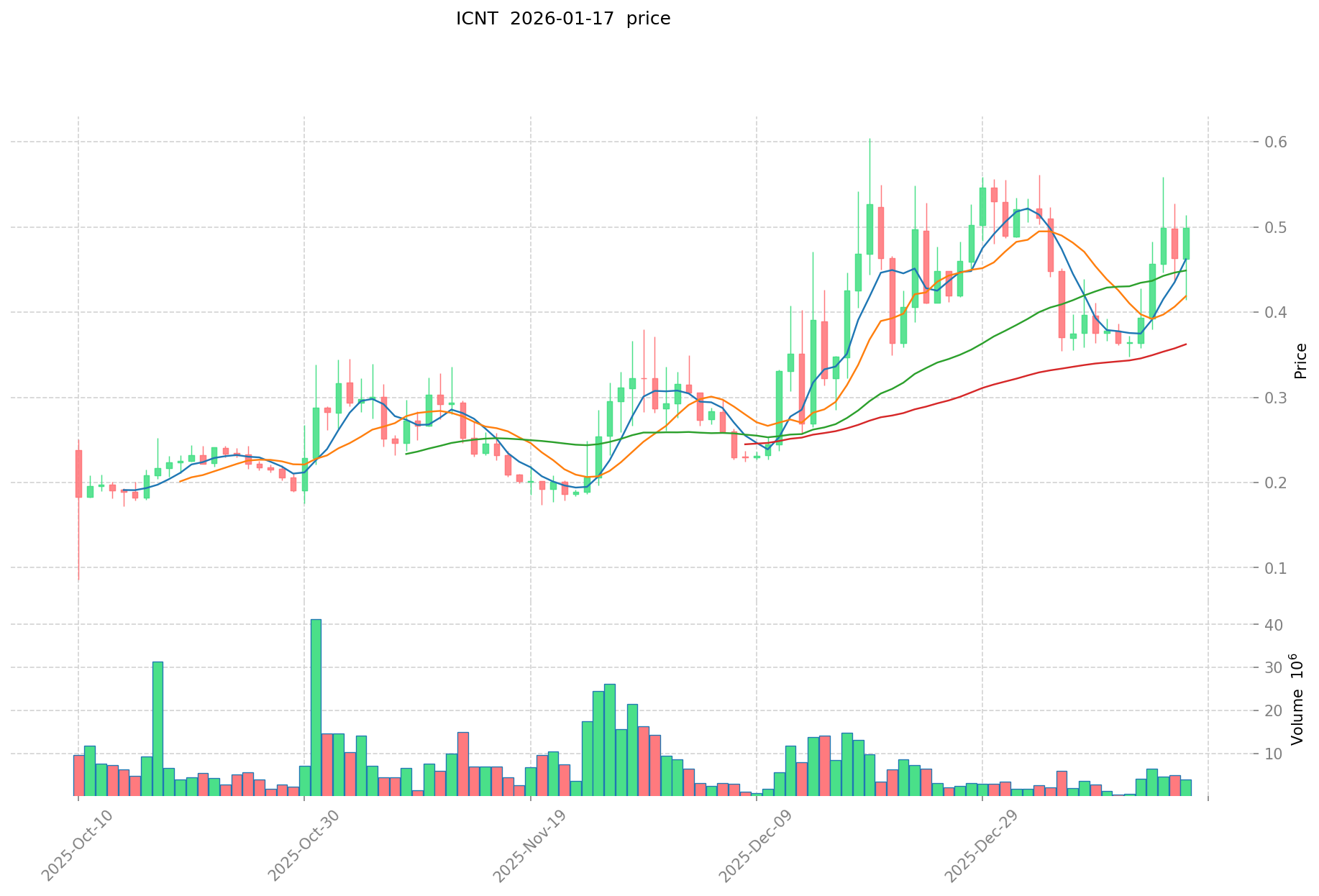
ICNT (Coin A) and ATOM (Coin B) Historical Price Trends
- 2025: ICNT reached its historical high of $0.625 in July following investment from NGP Capital, which valued the Impossible Cloud Network at a fully diluted valuation of $470 million. The token subsequently experienced price fluctuations, dropping to its historical low of $0.0859 in October.
- 2022: ATOM experienced significant volatility, with its price reaching a historical high of $44.45 in January. The token later declined substantially as broader market conditions shifted.
- 2014-2025: Throughout different market cycles, ATOM demonstrated substantial price movement, declining from its peak of $44.45 to current levels around $2.59, representing a decline of approximately 94% from its all-time high. In comparison, ICNT, as a newer token launched in 2025, has shown shorter-term volatility with a decline from $0.625 to current levels.
Current Market Status (2026-01-18)
- ICNT current price: $0.48173
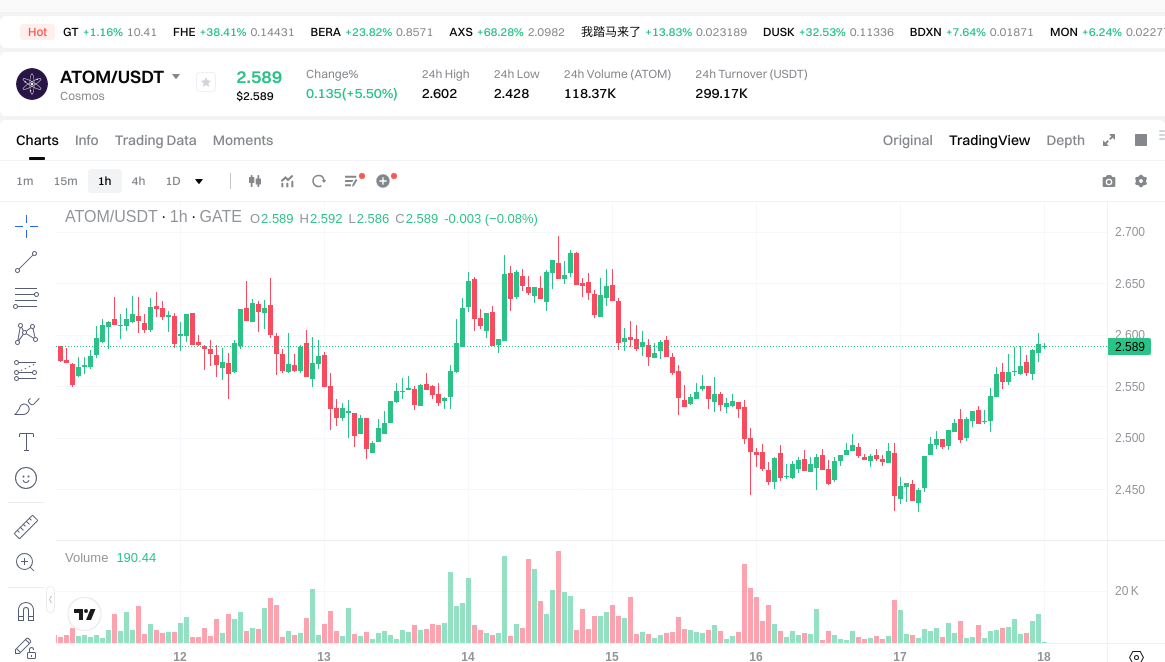
- ATOM current price: $2.587
- 24-hour trading volume: ICNT $1,316,068.61 vs ATOM $300,652.78
- Market Sentiment Index (Fear & Greed Index): 50 (Neutral)
View real-time prices:
II. Core Factors Influencing ICNT vs ATOM Investment Value
Supply Mechanism Comparison (Tokenomics)
- ICNT: The token's TGE (Token Generation Event) is expected in June/July, with each HyperNode requiring staking. The supply mechanism appears to be designed around community participation and node operation incentives.
- ATOM: Serves as the native token of the Cosmos blockchain, functioning within an inter-blockchain communication protocol with inflationary supply model to incentivize validators and stakers.
- 📌 Historical Pattern: Supply mechanisms influence price cycles through staking requirements, inflationary/deflationary pressure, and community engagement incentives.
Institutional Adoption and Market Application
- Institutional Holdings: Information regarding institutional preference between ICNT and ATOM is limited in available materials.
- Enterprise Adoption: ICNT focuses on decentralized cloud infrastructure serving AI agents, enterprise software, and digital ecosystems. ATOM enables cross-chain communication and interoperability within the Cosmos ecosystem.
- Policy Environment: Regulatory attitudes vary across jurisdictions, with both projects emphasizing decentralization and community-driven development.
Technical Development and Ecosystem Building
- ICNT Technical Development: Provides enterprise-grade decentralized cloud infrastructure covering storage, computing, and networking, emphasizing performance, security, and censorship resistance. The project demonstrates community-driven innovation through research and technological advancement.
- ATOM Technical Development: Built on Cosmos SDK with IBC (Inter-Blockchain Communication) protocol capabilities, enabling seamless cross-chain interactions. The core team includes experienced blockchain infrastructure developers with deep expertise in multi-chain interoperability.
- Ecosystem Comparison: ICNT targets decentralized cloud infrastructure applications including AI services and enterprise solutions. ATOM supports a broad ecosystem of interconnected blockchains, facilitating DeFi applications, cross-chain asset transfers, and decentralized application development.
Macroeconomic and Market Cycles
- Performance in Inflationary Environment: Both projects emphasize long-term value creation through technological innovation and community engagement rather than short-term price speculation.
- Macroeconomic Monetary Policy: Interest rates, dollar index movements, and global liquidity conditions may influence adoption rates and market sentiment for both decentralized infrastructure projects.
- Geopolitical Factors: Cross-border transaction demand, international regulatory developments, and global technological infrastructure trends may impact adoption trajectories for both ICNT and ATOM.
III. 2026-2031 Price Prediction: ICNT vs ATOM
Short-term Forecast (2026)
- ICNT: Conservative $0.40-$0.48 | Optimistic $0.58-$0.68
- ATOM: Conservative $1.55-$2.59 | Optimistic $2.79-$3.67
Mid-term Forecast (2028-2029)
- ICNT may enter a consolidation phase with predicted price range of $0.43-$0.83
- ATOM may enter an expansion phase with predicted price range of $2.52-$4.56
- Key drivers: institutional capital inflows, ETF developments, ecosystem growth
Long-term Forecast (2030-2031)
- ICNT: Baseline scenario $0.51-$0.87 | Optimistic scenario $0.73-$0.98
- ATOM: Baseline scenario $2.78-$6.81 | Optimistic scenario $4.03-$5.31
View detailed price predictions for ICNT and ATOM
Disclaimer
ICNT:
| Year |
Predicted High Price |
Predicted Average Price |
Predicted Low Price |
Price Change |
| 2026 |
0.6843837 |
0.47859 |
0.3972297 |
0 |
| 2027 |
0.7966369845 |
0.58148685 |
0.5407827705 |
20 |
| 2028 |
0.74418687063 |
0.68906191725 |
0.4341090078675 |
43 |
| 2029 |
0.8312842969704 |
0.71662439394 |
0.609130734849 |
48 |
| 2030 |
0.967442931819 |
0.7739543454552 |
0.727517084727888 |
60 |
| 2031 |
0.983889461659923 |
0.8706986386371 |
0.505005210409518 |
80 |
ATOM:
| Year |
Predicted High Price |
Predicted Average Price |
Predicted Low Price |
Price Change |
| 2026 |
3.67496 |
2.588 |
1.5528 |
0 |
| 2027 |
4.2901276 |
3.13148 |
2.7870172 |
21 |
| 2028 |
4.564288674 |
3.7108038 |
2.523346584 |
43 |
| 2029 |
4.42717447359 |
4.137546237 |
3.80654253804 |
59 |
| 2030 |
5.3101268405658 |
4.282360355295 |
4.0254187339773 |
65 |
| 2031 |
6.810665909061168 |
4.7962435979304 |
2.781821286799632 |
85 |
IV. Investment Strategy Comparison: ICNT vs ATOM
Long-term vs Short-term Investment Strategies
- ICNT: May be suitable for investors focused on emerging decentralized infrastructure applications, enterprise-grade cloud services, and early-stage technology adoption. The project's focus on AI agents and enterprise software markets presents opportunities tied to the growth of decentralized computing ecosystems.
- ATOM: May be suitable for investors interested in blockchain interoperability infrastructure, cross-chain communication protocols, and established ecosystem network effects. The project's maturity and broad ecosystem of interconnected blockchains may appeal to those seeking exposure to multi-chain architectural developments.
Risk Management and Asset Allocation
- Conservative Investors: ICNT: 20-30% vs ATOM: 70-80%
- Aggressive Investors: ICNT: 50-60% vs ATOM: 40-50%
- Hedging Tools: stablecoin allocation, options strategies, cross-asset portfolio diversification
V. Potential Risk Comparison
Market Risks
- ICNT: As a newer project launched in 2025, the token faces limited price history and potential volatility associated with early-stage market adoption. Trading volume fluctuations and liquidity considerations may impact price stability during market stress periods.
- ATOM: Historical price data shows substantial decline from previous peaks, with approximately 94% reduction from all-time highs. Market sentiment shifts and competitive pressures from alternative interoperability solutions may influence price trajectories.
Technical Risks
- ICNT: Scalability challenges associated with decentralized infrastructure deployment, network stability during enterprise adoption phases, and technology integration complexities.
- ATOM: Network coordination across multiple interconnected blockchains, validator participation dynamics, and potential security considerations within the broader Cosmos ecosystem.
Regulatory Risks
- Global regulatory developments may impact both projects differently based on their specific use cases. ICNT's focus on decentralized cloud infrastructure may face considerations related to data sovereignty and enterprise compliance requirements. ATOM's cross-chain communication capabilities may encounter regulatory attention regarding cross-border transaction frameworks and multi-jurisdictional compliance standards.
VI. Conclusion: Which Is the Better Buy?
📌 Investment Value Summary:
- ICNT Advantages: Focus on growing decentralized cloud infrastructure market, enterprise client base generating recurring revenue, positioning within AI and digital ecosystem services, community-driven innovation approach.
- ATOM Advantages: Established presence in blockchain interoperability space, mature ecosystem of interconnected applications, proven technology infrastructure with IBC protocol capabilities, broader market recognition and trading accessibility.
✅ Investment Recommendations:
- New Investors: Consider gaining foundational understanding of both decentralized infrastructure and blockchain interoperability concepts before making allocation decisions. Evaluate personal risk tolerance and investment timeline objectives.
- Experienced Investors: Assess portfolio positioning relative to exposure in infrastructure versus interoperability segments. Consider diversification strategies that balance emerging technology adoption with established ecosystem participation.
- Institutional Investors: Evaluate alignment with long-term strategic objectives regarding decentralized infrastructure adoption and cross-chain communication infrastructure. Consider due diligence processes encompassing technology assessment, market positioning analysis, and regulatory landscape evaluation.
⚠️ Risk Warning: The cryptocurrency market exhibits substantial volatility. This article does not constitute investment advice.
VII. FAQ
Q1: What is the main difference between ICNT and ATOM in terms of their core use cases?
ICNT focuses on decentralized enterprise-grade cloud infrastructure for AI agents and digital ecosystems, while ATOM enables blockchain interoperability and cross-chain communication. ICNT powers over 80PB of active decentralized storage serving 1,000+ enterprise clients with $7 million in annual recurring revenue, positioning itself in the decentralized cloud services market. In contrast, ATOM serves as the native token of the Cosmos blockchain, facilitating inter-blockchain communication through the IBC protocol and supporting a broad ecosystem of interconnected blockchains. The fundamental distinction lies in ICNT targeting enterprise infrastructure services versus ATOM enabling cross-chain connectivity and multi-blockchain interoperability.
Q2: How do the historical price performances of ICNT and ATOM compare?
ATOM has experienced a significantly larger decline from its peak, while ICNT shows shorter-term volatility as a newer asset. ATOM reached its all-time high of $44.45 in January 2022 and has since declined approximately 94% to current levels around $2.59, demonstrating substantial price correction over multiple years. ICNT, launched in 2025, reached its historical high of $0.625 in July 2025 following NGP Capital investment and subsequently dropped to a low of $0.0859 in October 2025. The key difference is that ATOM has experienced a prolonged multi-year decline from established highs, while ICNT's price history spans a shorter timeframe with rapid fluctuations characteristic of newly launched tokens.
Q3: Which token offers better liquidity based on current trading volume?
ICNT currently demonstrates higher 24-hour trading volume compared to ATOM. As of January 18, 2026, ICNT recorded a 24-hour trading volume of $1,316,068.61, while ATOM's 24-hour trading volume stood at $300,652.78. This represents approximately 4.4 times higher trading activity for ICNT. However, trading volume is a dynamic metric that fluctuates based on market conditions, news events, and investor sentiment. Higher trading volume generally indicates better liquidity and price discovery mechanisms, but investors should monitor volume trends over extended periods rather than relying on single-day snapshots when assessing liquidity characteristics.
Q4: What are the key risks specific to each token that investors should consider?
ICNT faces early-stage adoption risks and limited price history, while ATOM confronts competitive pressures and historical decline concerns. For ICNT, primary risks include limited trading history since its 2025 launch, potential volatility during enterprise adoption phases, scalability challenges in decentralized infrastructure deployment, and liquidity considerations during market stress periods. ATOM's specific risks encompass the substantial 94% decline from all-time highs, competitive pressures from alternative interoperability solutions, network coordination complexities across multiple interconnected blockchains, and validator participation dynamics. Both tokens face regulatory uncertainty, though ICNT may encounter additional considerations regarding data sovereignty and enterprise compliance requirements, while ATOM may face scrutiny related to cross-border transaction frameworks.
Q5: How do the supply mechanisms of ICNT and ATOM differ and what are the implications for investors?
ICNT utilizes a staking-based supply mechanism tied to HyperNode operations, while ATOM employs an inflationary model to incentivize validators. ICNT's Token Generation Event (TGE) occurred in June/July 2025, with each HyperNode requiring token staking, creating supply dynamics linked to network participation and node operation incentives. This mechanism potentially reduces circulating supply as adoption increases. ATOM operates with an inflationary supply model designed to reward validators and stakers who secure the network, creating ongoing token issuance that can dilute existing holders but incentivizes active network participation. The inflationary nature means ATOM holders must stake or actively participate to maintain proportional ownership, while ICNT's staking requirements may create supply scarcity as enterprise adoption drives HyperNode deployment.
Q6: What allocation strategy should investors consider when choosing between ICNT and ATOM?
Conservative investors should favor higher ATOM allocation (70-80%) with lower ICNT exposure (20-30%), while aggressive investors may balance allocations more evenly. For conservative portfolios, the higher ATOM allocation reflects its established ecosystem, proven technology infrastructure, and broader market recognition despite historical price declines. The smaller ICNT allocation provides exposure to emerging decentralized infrastructure opportunities without excessive concentration risk. Aggressive investors seeking higher growth potential may allocate 50-60% to ICNT and 40-50% to ATOM, emphasizing the earlier-stage positioning and enterprise cloud infrastructure growth prospects of ICNT while maintaining meaningful exposure to ATOM's interoperability ecosystem. All investors should incorporate hedging tools such as stablecoin allocation, options strategies, and cross-asset portfolio diversification to manage downside risks.
Q7: Which token is better positioned for the 2026-2031 period based on price predictions?
Both tokens show positive price trajectories through 2031, with ATOM demonstrating higher absolute price appreciation potential. According to baseline forecasts, ICNT is predicted to trade between $0.51-$0.87 by 2030-2031, with optimistic scenarios reaching $0.73-$0.98. ATOM's baseline scenario projects prices of $2.78-$6.81 by 2030-2031, with optimistic scenarios of $4.03-$5.31. However, percentage gains relative to current prices should be evaluated alongside absolute price movements. Key drivers for ICNT include enterprise adoption of decentralized cloud infrastructure and AI service integration, while ATOM's trajectory depends on institutional capital inflows, cross-chain ecosystem expansion, and potential ETF developments. Investors should note that these predictions carry significant uncertainty and represent potential scenarios rather than guaranteed outcomes.
Q8: How do macroeconomic factors differently impact ICNT versus ATOM?
Both tokens face macroeconomic influences, but ICNT's enterprise focus may provide different sensitivity compared to ATOM's interoperability positioning. ICNT's decentralized cloud infrastructure serves enterprise clients with recurring revenue models, potentially providing some stability during economic uncertainty as businesses continue requiring cloud services. However, enterprise technology spending may face pressure during economic downturns. ATOM's cross-chain communication infrastructure depends on broader blockchain ecosystem growth and adoption, which may correlate more directly with risk appetite and liquidity conditions in cryptocurrency markets. Interest rate changes, dollar index movements, and global liquidity conditions affect both projects, but ICNT's revenue-generating enterprise client base may offer partial insulation from pure speculative market dynamics compared to ATOM's ecosystem-dependent value proposition.
* The information is not intended to be and does not constitute financial advice or any other recommendation of any sort offered or endorsed by Gate.