Top Indicators for Crypto Trading in 2024: MA, Bollinger Bands, RSI, MACD, Stochastic. Discover how to leverage leading technical indicators for cryptocurrency analysis on Gate. This comprehensive guide serves both novice and seasoned traders.
Understanding Indicators in Trading
Indicators are specialized technical analysis tools that enable traders to assess current market conditions and forecast potential future movements. These mathematical algorithms process historical price, trading volume, and other market data, turning them into intuitive visual signals.
Charles Dow, journalist and founder of Dow Jones, is widely regarded as the father of technical analysis. In 1896, he introduced the iconic Dow Jones Index. Dow theorized that tracking the movements of leading stocks would help investors gauge the overall market’s health—a view that proved entirely accurate. His approach laid the groundwork for modern technical analysis.
Today's market indicators follow similar principles but offer far greater functionality. Traders use them to automate the collection and analysis of asset data: tracking price shifts, examining trading volumes, evaluating investor interest, and more. This streamlines the process and reduces errors associated with manual data analysis.
Each indicator uses a mathematical algorithm to process market data and visualize results. Most commonly, these results appear as lines, histograms, or other graphical forms on price charts. Investors rely on these signals to make entry decisions, adjust positions, and plan future trades.
Some market indicators feature signal repainting, meaning they can revise previously issued signals as new data becomes available. Traders should factor this in when developing strategies, as historical signals from such tools may differ from those shown in real time.
Types of Indicators
Trading indicators fall into several main categories based on their function and methodology. Understanding these differences helps traders choose the right analysis tools for each market scenario.
Trend Indicators
Trend indicators primarily show who currently controls the market: bulls (buyers) or bears (sellers). They also help gauge the strength of an active trend. For example, weakening bullish momentum may signal that sellers are about to take over, potentially driving the asset’s price downward.
Trend indicators typically rely on integral algorithms to average market data and filter out noise. This enables clear long-term trend formation and helps avoid false signals from short-term price swings. These indicators work best in markets with strong directional movement.
Popular trend indicators include:
- Moving Averages (MA) – a straightforward yet effective tool that smooths price fluctuations and displays the average price over a selected timeframe
- Bollinger Bands (BB) – a volatility indicator with three lines that expand and contract in response to market activity
- Average Directional Movement Index (ADX) – measures trend strength regardless of its direction, helping traders decide when to use trend-following strategies
Most of these indicators are available in multiple versions. For instance, different Bollinger Bands variants may factor in or disregard data from other indicators when generating signals, allowing traders to tailor tools to their specific needs.
Oscillators
Oscillators help traders spot short-term trends and potential price reversals. Unlike trend indicators—which excel during strong directional moves—oscillators are designed for range-bound markets (“flat” periods), when prices fluctuate within a set range without a defined trend.
Oscillators use differential algorithms to detect subtle shifts in market sentiment. Their main purpose is to track overbought and oversold conditions. When an oscillator reaches extreme levels, it may signal an upcoming price reversal.
Traders often call oscillators leading indicators, as they typically change direction ahead of price action. Used strategically, this feature enables traders to anticipate new market moves and enter positions before major price swings start.
Popular oscillators include:
- Moving Average Convergence Divergence (MACD) – reveals the relationship between two moving averages and identifies trend changes
- Relative Strength Index (RSI) – measures the speed and magnitude of price movements, highlighting overbought and oversold levels
- Stochastic Oscillator – compares the current closing price to the price range over a specified period
One major subgroup of oscillators is volume indicators. These show traders the level of market activity and how engaged participants are with a specific asset. This data supports better investment decisions and precise risk assessment. High trading volumes usually confirm trend strength, while low volumes may indicate weakness.
Examples of volume indicators:
- On Balance Volume (OBV) – a cumulative indicator connecting trading volume to price changes
- Money Flow Index (MFI) – a volume-weighted indicator showing buying and selling pressure
- Accumulation/Distribution – identifies whether an asset is being accumulated (bought) or distributed (sold)
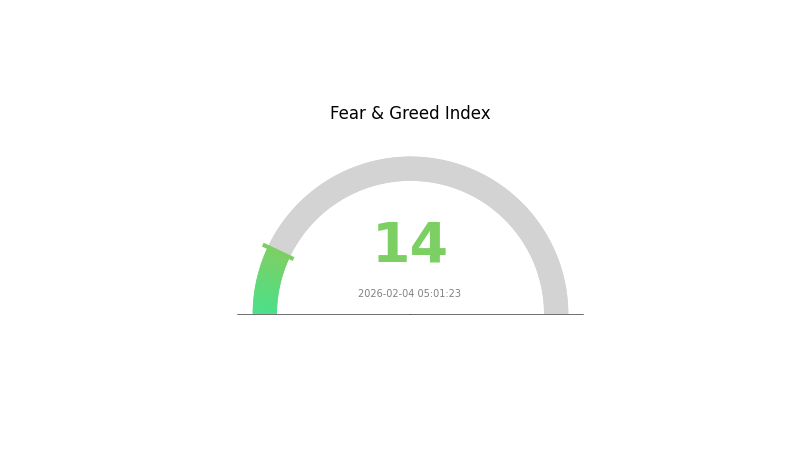
Other specialized tools exist outside the main indicator categories. For instance, many traders use the Fear and Greed Index, which analyzes market sentiment using various factors to determine whether the market is in a state of euphoria or panic.
How to Use Indicators
Experienced traders often use multiple indicators from different categories in tandem. This approach offers a more complete market view and supports better decision-making when adjusting trading operations. Relying on a single indicator can result in false signals and losses.
There is no universal formula for the ideal indicator combination. Every trader develops unique preferences and effective instrument mixes tailored to their strategy. Some pair MACD with the Stochastic Oscillator, others combine RSI with Bollinger Bands, and some add volume indicators for confirmation.
When selecting indicators, consider key principles. First, combine different types—for example, a trend indicator with an oscillator—to get confirming signals and reduce false entries. Second, avoid cluttering your chart with too many indicators, as this can lead to conflicting data and harder analysis.
Keep in mind that indicators are support tools—they do not guarantee profits. They aid in market analysis and informed decision-making. Successful trading relies on a holistic approach, including risk management, psychological discipline, and continuous strategy improvement. Always test chosen indicator combinations on historical data before using them in real trading.
FAQ
What Are Trading Indicators and How Do They Help Traders Make Decisions?
Trading indicators are mathematical tools that analyze price and volume data to identify market trends. They help traders pinpoint optimal entry and exit points, assess trend strength, and make informed, data-driven decisions.
What Are the Most Common Technical Indicators? (Such as Moving Averages, RSI, MACD, etc.)
Key technical indicators include Moving Averages (MA) for trend identification, Relative Strength Index (RSI) for momentum analysis, MACD for price dynamics, and Bollinger Bands for support and resistance levels. These tools help traders analyze charts and make sound decisions.
How Should Trading Indicators Be Used to Identify Buy and Sell Signals?
Watch for moving average crossovers to spot trends, use RSI to identify overbought and oversold levels, analyze Bollinger Bands for volatility, and monitor trading volume changes to validate signals.
What Are the Benefits of Using Multiple Indicators Together? How Should They Be Combined?
Combining indicators enables deeper market analysis, reduces false signals, and improves entry accuracy. For maximum trading efficiency, pair complementary instruments such as technical and fundamental indicators.
What Are the Limitations and Risks of Technical Indicators? How Can You Avoid Overreliance?
Indicators can lag behind the market and may produce false signals. Avoid relying on a single indicator—use a combination of signals. Incorporate volume, support levels, and market context analysis for more reliable results.
Which Basic Indicators Should Beginner Traders Learn? Where Should They Start?
Begin with the fundamentals: learn order types, read candlestick charts, and identify support and resistance. Then study simple indicators—moving averages, RSI, MACD. Always apply risk management and practice on a demo account before trading live.
* The information is not intended to be and does not constitute financial advice or any other recommendation of any sort offered or endorsed by Gate.