This comprehensive analysis evaluates Hive (HIVE) as an investment opportunity within the decentralized social blockchain ecosystem. The article examines HIVE's current market position with a $50.60 million market capitalization and $0.099 price as of January 2026, alongside its price history showing significant volatility from $3.41 (November 2021) to current levels. Key discussion areas include supply dynamics, institutional adoption through HIVE Digital Technologies, technology infrastructure, and ecosystem development. The analysis presents price forecasts across conservative, neutral, and optimistic scenarios through 2031, while addressing critical investment risks including market volatility, regulatory uncertainty, and technical challenges. Investment strategies range from long-term holding to active trading, with risk management recommendations for different investor profiles on Gate exchange and secure storage solutions.
Introduction: Hive (HIVE) Investment Position and Market Outlook
Hive (HIVE) is a notable asset in the cryptocurrency space, launched in March 2020 as a DPOS governance blockchain created through a hard fork of existing Steem code. As of January 19, 2026, HIVE holds a market capitalization of approximately $50.60 million, with a circulating supply of around 511.59 million tokens, and a current price trading near $0.099. Positioned as a decentralized social blockchain emphasizing true decentralization, speed, and scalability, HIVE has evolved into a platform for Web 3.0 applications ranging from open source development to social gaming. With its ranking at 521 in the overall cryptocurrency market and a market dominance of 0.0015%, the project has attracted attention from investors exploring "Is Hive (HIVE) a good investment?" This article provides a comprehensive analysis of HIVE's investment characteristics, historical price movements, future price projections, and associated investment risks to serve as a reference for potential investors.
I. Hive (HIVE) Price History Review and Current Investment Value Status
- March 2020: Hive blockchain launched through a hard fork from Steem, establishing itself as an independent DPOS governance blockchain focused on decentralized social media applications.
- November 2021: HIVE experienced significant price appreciation, reaching a notable price level of $3.41, driven by increased adoption of Web 3.0 social platforms and broader cryptocurrency market momentum.
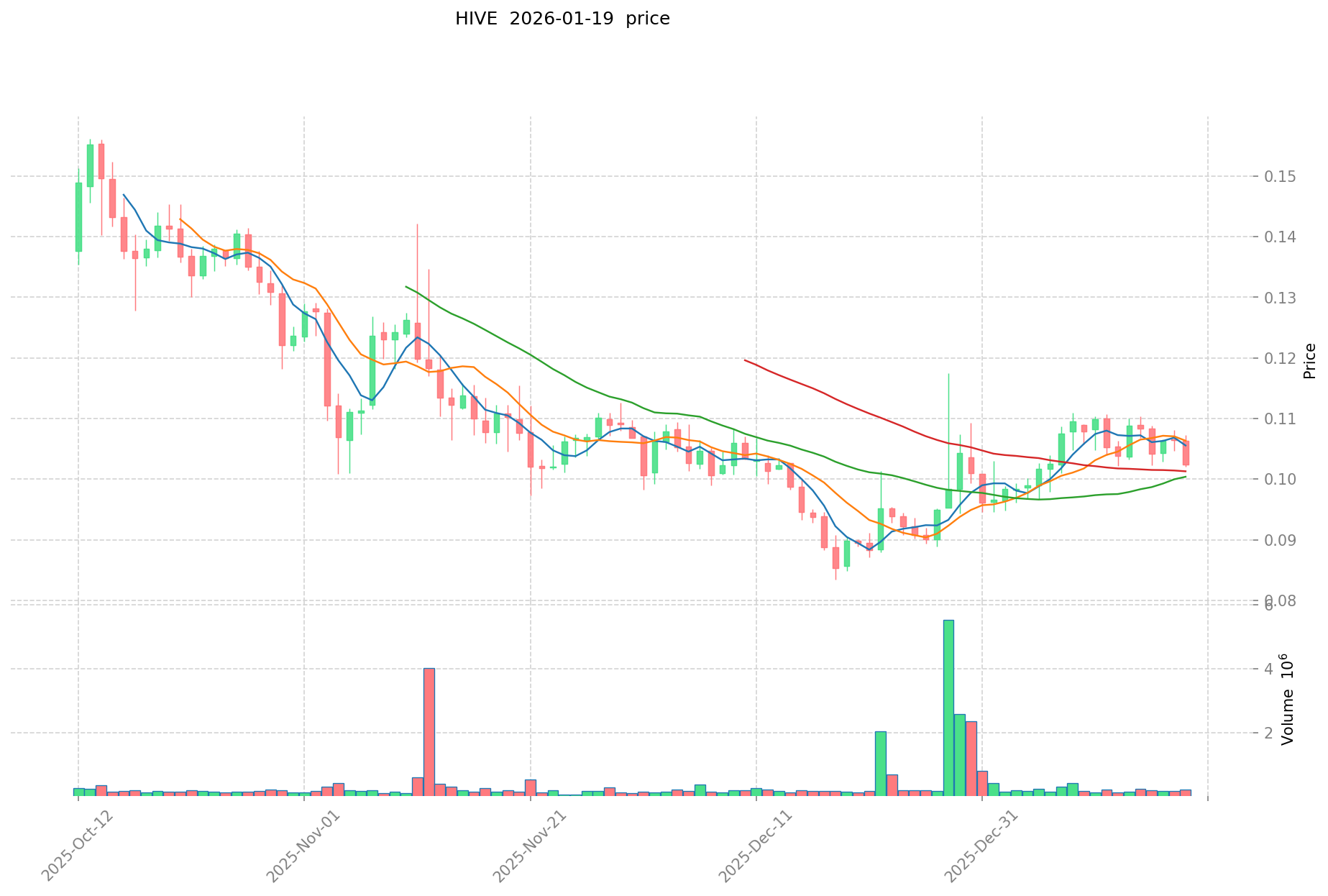
- December 2025: Market conditions led to price contraction, with HIVE trading near $0.083898, reflecting challenges in the decentralized social media sector and overall cryptocurrency market volatility.
Current HIVE Investment Market Status (January 2026)
- Current HIVE price: $0.09891
- 24-hour trading volume: $26,844.37
- Market capitalization: $50.60 million
- Circulating supply: 511.59 million HIVE tokens
- Total supply: 511.59 million HIVE tokens
- Maximum supply: 500.75 million HIVE tokens
Click to view real-time HIVE market price
Recent price trends show mixed performance across different timeframes. Over the past hour, HIVE gained 0.57%, while experiencing a decline of 6.26% over the past 24 hours. The 7-day trend shows a decrease of 5.72%, contrasted with a 30-day gain of 10.89%. The annual performance indicates a decline of 79.21%, suggesting substantial volatility throughout the year.
II. Core Factors Influencing Whether HIVE is a Good Investment
Supply Mechanism and Scarcity (HIVE Investment Scarcity)
- Supply structure: HIVE has a circulating supply of approximately 511.59 million tokens, with a total supply of 511.59 million and a max supply of 500.75 million tokens. The circulating supply represents over 102% of the max supply figure, indicating the token supply is approaching its designed limit.
- Historical context: HIVE's price reached notable levels near $3.41 in November 2021 during a period of broader market expansion, though it has since experienced substantial fluctuation. More recently, the token approached lower price levels around $0.084 in December 2025.
- Investment consideration: The token's supply dynamics, with circulation near maximum levels, may contribute to considerations around supply-side constraints as adoption and usage patterns evolve.
Institutional Investment and Mainstream Adoption (Institutional Investment in HIVE)
- Dual structure context: The HIVE ecosystem includes both HIVE Digital Technologies Ltd. (a publicly-traded company) and the HIVE blockchain token. HIVE Digital Technologies operates Bitcoin mining facilities across Canada, Sweden, Iceland, and Paraguay, reportedly holding approximately 2,201 BTC (valued around $260 million as referenced in materials) on its balance sheet while expanding into AI infrastructure through its Buzz HPC division.
- Company positioning: HIVE Digital Technologies has received analyst attention, with some research suggesting favorable ratings. Materials reference six analysts providing coverage with certain positive outlooks, though such ratings reflect third-party analysis subject to market condition changes.
- Adoption considerations: HIVE blockchain operates as a DPoS-based social content platform designed to reward content creators with tokens, positioning itself within the decentralized social media and Web3 content ecosystem.
Macroeconomic Environment Impact on HIVE Investment
- Crypto market sensitivity: HIVE's price movements have shown correlation with broader cryptocurrency market trends. The token experienced a -79.21% change over a one-year period as referenced, reflecting sensitivity to macroeconomic conditions affecting digital asset markets.
- Revenue context: HIVE Digital Technologies reported revenue of $29.2 million in its Q3 FY2025, compared to $31.3 million in the year-ago period, indicating operational performance variations that may reflect changing market conditions.
- Market position: As of the reference date, HIVE held a market capitalization of approximately $50.6 million with a market dominance of 0.0015%, positioning it within the mid-tier segment of the cryptocurrency market (ranked around 521).
Technology and Ecosystem Development (Technology & Ecosystem for HIVE Investment)
- Blockchain architecture: HIVE operates as a graphene-based social blockchain launched in March 2020, created through a hard fork of the Steem blockchain. The platform emphasizes decentralization, speed, and scalability characteristics.
- Technical features: The network incorporates DPoS governance, delay security mechanisms, integrated token allocation systems, and has indicated plans for smart media token integration. These features are designed to support dApp development and content creation use cases.
- Ecosystem focus: HIVE positions itself within the Web3 social content space, targeting applications ranging from open-source development to social gaming. The platform's focus on censorship resistance and creator rewards represents its approach to building a decentralized content ecosystem.
- AI and mining operations: HIVE Digital Technologies has expanded beyond cryptocurrency mining into AI infrastructure services, reflecting diversification efforts within the broader HIVE ecosystem that may influence long-term value considerations.
III. HIVE Future Investment Outlook and Price Forecast (Is Hive(HIVE) worth investing in 2026-2031)
Short-term Investment Outlook (2026, short-term HIVE investment outlook)
Based on available market data, short-term price projections for Hive in 2026 suggest the following scenarios:
- Conservative forecast: $0.0819 - $0.0987
- Neutral forecast: $0.0987 - $0.1064
- Optimistic forecast: $0.1064 - $0.1194
Multiple analytical sources indicate that HIVE price movements in early 2026 may range between $0.0972 and $0.1173, with technical indicators reflecting varied market signals. The token has experienced recent fluctuations, with 24-hour changes showing a decrease of approximately 6.26% and 7-day trends indicating a decline of around 5.72%.
Mid-term Investment Outlook (2027-2028, mid-term Hive(HIVE) investment forecast)
-
Market stage expectations: The mid-term period may see gradual recovery and potential growth phases, with price consolidation expected as the blockchain ecosystem continues development.
-
Investment return projections:
- 2027: $0.0817 - $0.1504
- 2028: $0.0765 - $0.1492
-
Key catalysts: Development progress within the Hive blockchain ecosystem, adoption rates of decentralized applications, overall cryptocurrency market sentiment, and competitive positioning among DPOS governance blockchains may influence price movements during this period.
Long-term Investment Outlook (Is HIVE a good long-term investment?)
- Baseline scenario: $0.1118 - $0.1687 (assuming steady ecosystem development and maintained market presence)
- Optimistic scenario: $0.1394 - $0.2549 (assuming enhanced adoption and favorable market conditions)
- Risk scenario: Below $0.0765 (under adverse market conditions or reduced platform activity)
Click to view HIVE long-term investment and price prediction: Price Prediction
2026-01-19 to 2031 Long-term Outlook
- Baseline scenario: $0.0819 - $0.1687 USD (corresponding to steady progress and gradual mainstream application growth)
- Optimistic scenario: $0.1394 - $0.2549 USD (corresponding to large-scale adoption and favorable market environment)
- Transformative scenario: Above $0.2549 USD (contingent upon breakthrough ecosystem developments and mainstream adoption)
- 2031-12-31 projected high: $0.2549 USD (based on optimistic development assumptions)
Disclaimer: Price predictions are based on historical data and analytical models. Cryptocurrency markets are highly volatile and subject to numerous unpredictable factors. These projections should not be considered as investment advice. Market participants should conduct thorough research and consider their risk tolerance before making investment decisions.
| Year |
Predicted High Price |
Predicted Average Price |
Predicted Low Price |
Price Change |
| 2026 |
0.1193544 |
0.09864 |
0.0818712 |
0 |
| 2027 |
0.150416136 |
0.1089972 |
0.0817479 |
10 |
| 2028 |
0.1491626682 |
0.129706668 |
0.07652693412 |
31 |
| 2029 |
0.197997228702 |
0.1394346681 |
0.126885547971 |
40 |
| 2030 |
0.18052606478907 |
0.168715948401 |
0.16028015098095 |
70 |
| 2031 |
0.254946669628751 |
0.174621006595035 |
0.111757444220822 |
76 |
IV. Hive Investment Strategy and Risk Management (How to invest in Hive)
Investment Methodology (Hive investment strategy)
Long-term Holding (HODL Hive)
Long-term holding may be suitable for investors seeking a steady approach to Hive. This strategy involves purchasing HIVE tokens and holding them through market fluctuations, based on confidence in the project's long-term value proposition as a decentralized social blockchain platform.
Active Trading
Active trading relies on technical analysis and swing trading techniques. Traders may monitor Hive's price movements, which have shown notable volatility with a 24-hour change of -6.26% and a 7-day change of -5.72% as of January 19, 2026. Technical indicators and chart patterns may inform entry and exit points for short-term positions.
Risk Management (Risk management for Hive investment)
Asset Allocation Ratios
- Conservative investors: May consider allocating a smaller percentage of their portfolio to Hive, given its volatility and market position
- Aggressive investors: May allocate a higher percentage while accepting increased risk exposure
- Professional investors: May employ dynamic allocation strategies based on market conditions and risk tolerance
Risk Hedging Solutions
Diversification across multiple digital assets and traditional asset classes may help mitigate concentration risk. Investors may consider combining Hive holdings with other cryptocurrencies, stablecoins, or traditional hedging instruments to balance portfolio risk.
Secure Storage
- Cold wallets: Offline storage solutions provide enhanced security for long-term holdings
- Hot wallets: Online wallets offer convenience for active trading but with increased exposure to potential security threats
- Hardware wallets: Physical devices offer a balance between security and accessibility for Hive token storage
V. Hive Investment Risks and Challenges (Risks of investing in Hive)
Market Risks
Hive exhibits high price volatility, with a 1-year decline of -79.21% as of January 19, 2026. The token's price has fluctuated significantly, with historical data showing a high of $3.41 (November 26, 2021) and a low of $0.083898 (December 19, 2025). Market capitalization stands at approximately $50.6 million, indicating a relatively small market size that may be susceptible to larger price swings.
Regulatory Risks
Cryptocurrency regulations vary significantly across jurisdictions and continue to evolve. Changes in regulatory frameworks may impact Hive's adoption, trading availability, and overall market dynamics. Investors should stay informed about regulatory developments in their respective countries.
Technical Risks
As a blockchain platform, Hive faces potential technical challenges including:
- Network security vulnerabilities that may affect platform integrity
- Potential issues during protocol upgrades or hard forks
- Dependencies on the continued development and maintenance by the open-source community
- Competition from other social blockchain platforms
VI. Conclusion: Is Hive a Good Investment?
Investment Value Summary
Hive presents itself as a decentralized social blockchain with a focus on true ownership and Web 3.0 applications. The project's features include low user adoption barriers, speed, and scalability. However, the token has experienced significant price volatility, with substantial declines over the past year and ongoing short-term fluctuations.
Investor Recommendations
✅ Beginners: Consider dollar-cost averaging combined with secure wallet storage solutions to manage entry timing and security risks
✅ Experienced Investors: May explore swing trading opportunities while maintaining diversified portfolio allocation
✅ Institutional Investors: Could evaluate Hive as part of a strategic long-term blockchain technology allocation
⚠️ Disclaimer: Cryptocurrency investments carry high risk. This content is for informational purposes only and does not constitute investment advice. Investors should conduct thorough research and consider their own financial situation and risk tolerance before making investment decisions.
VII. FAQ
Q1: What is Hive (HIVE) and how does it differ from other blockchain platforms?
Hive is a decentralized social blockchain launched in March 2020 through a hard fork of Steem, designed specifically for Web 3.0 applications and content creation. Unlike traditional blockchain platforms, Hive operates on a DPoS (Delegated Proof of Stake) governance model and focuses on rewarding content creators directly with tokens. The platform emphasizes true decentralization, censorship resistance, and low barriers to user adoption, positioning itself within the social media and content ecosystem rather than competing as a general-purpose smart contract platform.
Q2: Is HIVE a good short-term investment in 2026?
Based on current market data, HIVE shows mixed signals for short-term investment. The token has experienced significant volatility with a 24-hour decline of 6.26% and a 7-day decrease of 5.72%, though it posted a 30-day gain of 10.89%. Short-term forecasts for 2026 suggest price ranges between $0.0819 and $0.1194 depending on market conditions. Potential investors should note the high volatility, limited market capitalization of approximately $50.6 million, and market dominance of only 0.0015%, which may contribute to unpredictable price movements suitable primarily for risk-tolerant traders.
Q3: What are the main risks associated with investing in HIVE?
HIVE investment carries several significant risks: market risk demonstrated by a 79.21% annual decline and historical price volatility from a high of $3.41 (November 2021) to a low of $0.083898 (December 2025); liquidity risk due to relatively low trading volumes around $26,844 per 24 hours; regulatory uncertainty affecting cryptocurrency platforms; and technical risks inherent to blockchain development and network security. Additionally, with a market ranking around 521 and small market capitalization, HIVE faces concentration risk and susceptibility to larger price swings compared to established cryptocurrencies.
Q4: How should beginners approach investing in Hive?
Beginners should consider a cautious approach to HIVE investment through dollar-cost averaging (DCA), which involves making small, regular purchases over time rather than investing a large sum at once. This strategy helps mitigate timing risk given HIVE's volatility. Secure storage through hardware wallets or reputable cold storage solutions is essential for protecting holdings. Beginners should allocate only a small percentage of their investment portfolio to HIVE, conduct thorough research on the platform's development progress, and understand that cryptocurrency investments carry high risk with potential for significant loss.
Q5: What is the relationship between HIVE Digital Technologies and HIVE blockchain token?
HIVE Digital Technologies Ltd. and the HIVE blockchain token are separate entities with different functions. HIVE Digital Technologies is a publicly-traded company operating Bitcoin mining facilities across Canada, Sweden, Iceland, and Paraguay, holding approximately 2,201 BTC (valued around $260 million) and expanding into AI infrastructure through its Buzz HPC division. The HIVE blockchain token is the native cryptocurrency of the Hive social blockchain platform used for governance and content creator rewards. While sharing similar branding, they represent distinct investment opportunities—one being company equity in mining operations, the other being a digital asset within a decentralized social platform.
Q6: What factors could drive HIVE price appreciation in the long term?
Long-term HIVE price appreciation potential depends on several key factors: increased adoption of decentralized social media applications built on the Hive blockchain; successful implementation of planned features like smart media tokens; growth in the creator economy and Web 3.0 ecosystem; overall cryptocurrency market sentiment and mainstream digital asset adoption; and competitive advantages in speed, scalability, and user experience compared to alternative social blockchain platforms. However, these positive catalysts must overcome current challenges including limited market presence (0.0015% dominance), competition from established platforms, and the need for sustained developer and user community growth.
Q7: Should I consider HIVE as a long-term hold or focus on short-term trading?
The investment approach depends on individual risk tolerance and market outlook. Long-term holding (HODL strategy) may suit investors confident in Hive's ecosystem development and willing to withstand significant volatility, with baseline projections suggesting potential prices between $0.1118 and $0.1687 by 2031. Short-term trading may benefit from HIVE's volatility, though the limited liquidity (24-hour volume around $26,844) and small market cap present execution challenges. Historical performance shows substantial price swings, making timing crucial for traders. Conservative investors might consider avoiding or minimizing exposure, while risk-tolerant investors could explore both strategies with appropriate position sizing and risk management.
Q8: Where can I safely purchase and store HIVE tokens?
HIVE tokens can be purchased on various cryptocurrency exchanges, with Gate.com being among the platforms offering HIVE trading pairs. When selecting an exchange, verify its reputation, security measures, and regulatory compliance. For storage, hardware wallets (like Ledger or Trezor) provide the highest security for long-term holdings by keeping private keys offline. Software wallets offer convenience for active trading but carry higher security risks. Cold storage solutions are recommended for significant holdings, while hot wallets connected to the internet may suit smaller amounts needed for frequent transactions. Always enable two-factor authentication and never share private keys or recovery phrases.
* The information is not intended to be and does not constitute financial advice or any other recommendation of any sort offered or endorsed by Gate.