This comprehensive analysis evaluates whether Metis Token (METIS) represents a sound investment opportunity within the Layer 2 scaling solutions ecosystem. As of January 2026, METIS trades at $5.07 with a market capitalization of $37.02 million, featuring a dual-chain architecture (Andromeda and Hyperion) powered by MetisSDK for DeFi, gaming, DEPIN, and AI applications. The article examines METIS's historical price performance spanning from $3.45 to $323.54, current market position with 7.3 million tokens circulating, and detailed price projections through 2031 ranging from baseline scenarios of $8.30-$11.34 to optimistic projections reaching $15.40. Key sections address supply mechanisms, institutional adoption, macroeconomic impacts, and technological development. The analysis provides actionable investment strategies for conservative, aggressive, and professional investors, alongside comprehensive risk management frameworks covering market volatility, regulatory uncertainty, and technical vulnerabilities.
Introduction: Metis Token (METIS)'s Investment Position and Market Outlook
Metis Token (METIS) represents a notable asset in the cryptocurrency landscape, operating as a multi-network ecosystem powered by the MetisSDK. Since its launch in May 2021, the project has been developing decentralized infrastructure through a dual-chain architecture: Andromeda for secure, general-purpose dApps and Hyperion for high-performance, AI-optimized execution. As of January 20, 2026, METIS holds a market capitalization of approximately $37.02 million, with a circulating supply of about 7.30 million tokens out of a maximum supply of 10 million tokens. The current price stands at around $5.07, reflecting a 72.99% circulation ratio. With its positioning in the Layer 2 scaling solutions space and applications spanning DeFi, gaming, DEPIN, and AI sectors, METIS has emerged as a subject of analysis when investors consider "Is Metis Token (METIS) a good investment?" This article provides a comprehensive examination of METIS's investment characteristics, historical price performance, future price outlook considerations, and associated investment risks to serve as a reference for potential investors.
I. Token (METIS) Price History Review and Current Investment Value Status
- 2021: Token launched in May → Early investors experienced significant volatility with price starting from initial levels
- 2022: Market reached notable peak in January → METIS price climbed to $323.54 before entering correction phase
- 2022-2025: Extended market adjustment period → Price declined from January 2022 peaks to lower levels, reflecting broader crypto market conditions
- 2025: Annual performance challenges → Investment returns showed decline of approximately 86.21% over the twelve-month period
Current METIS Investment Market Status (January 2026)
- METIS current price: $5.072
- 24-hour trading volume: $201,342.94
- Market capitalization: Approximately $37.02 million
- Circulating supply: 7,299,234 METIS tokens (representing 72.99% of maximum supply)
- Recent price movements: -2.77% over 24 hours, -1.76% over 7 days, -7.64% over 30 days
Click to view real-time METIS market price
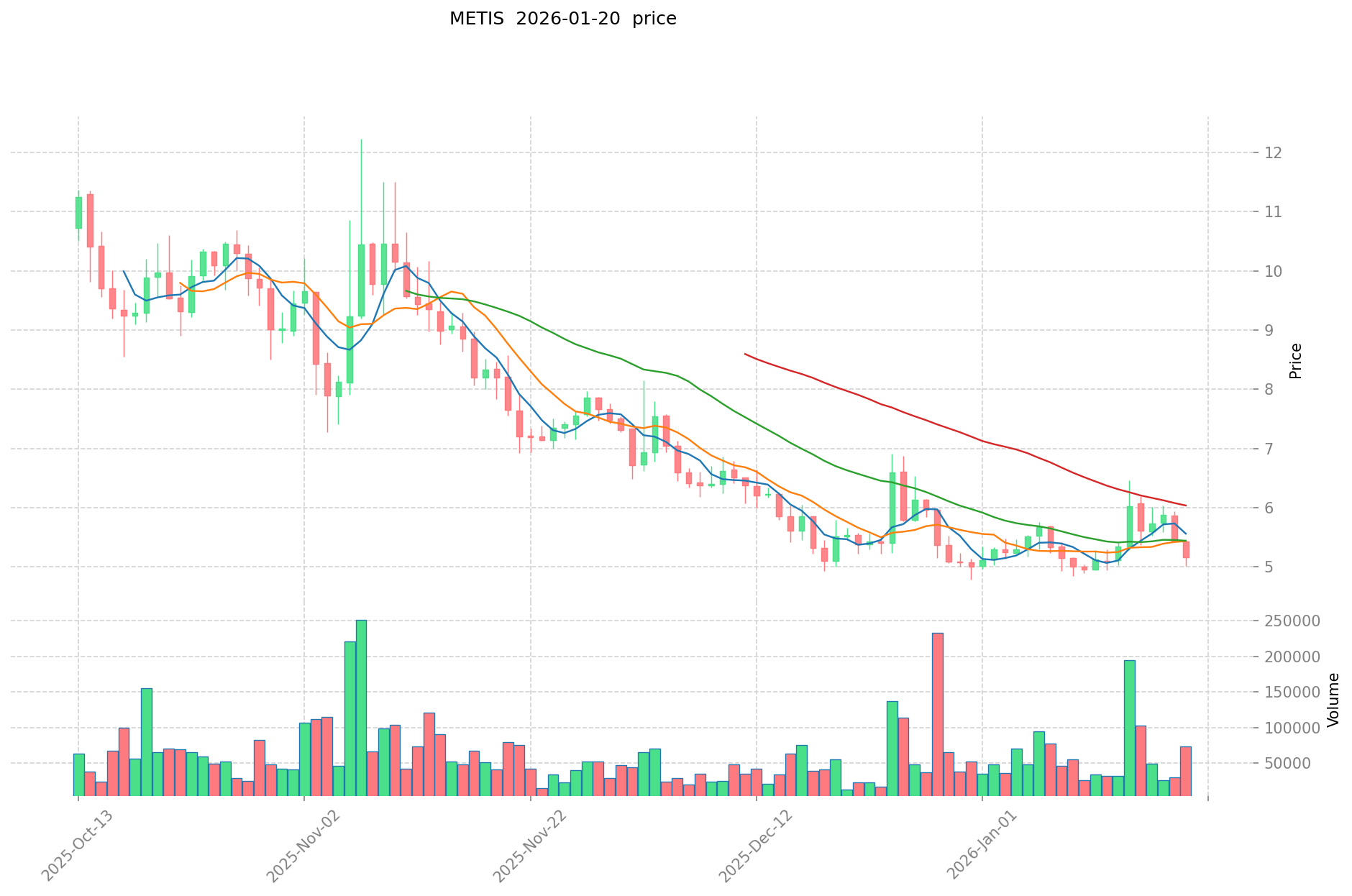
II. Core Factors Affecting Whether METIS is a Good Investment (Is Metis Token(METIS) a Good Investment)
Supply Mechanism and Scarcity (METIS investment scarcity)
- Capped Supply Model → Influences price and investment value. METIS has a maximum supply of 10,000,000 tokens, with a current circulating supply of 7,299,234.342 tokens, representing approximately 72.99% of the total supply. This limited supply structure creates a scarcity dynamic that may affect long-term value propositions.
- Historical Context: METIS has experienced price fluctuations ranging from $3.45 to $323.54 since its launch in May 2021, demonstrating how supply constraints and market dynamics interact over time.
- Investment Significance: The fixed supply cap and current circulation rate are factors investors consider when evaluating long-term holding strategies, as scarcity mechanisms can influence market positioning.
Institutional Investment and Mainstream Adoption (Institutional investment in METIS)
- Holder Base: METIS currently has 24,224 holders, indicating a distributed ownership structure across the ecosystem.
- Exchange Availability: The token is listed on 31 exchanges, providing accessibility for various investor segments and contributing to liquidity.
- Ecosystem Positioning: As part of a multi-network ecosystem with dual-chain architecture (Andromeda and Hyperion), METIS aims to serve sectors including DeFi, gaming, DEPIN, and AI, which may influence its adoption trajectory.
Macroeconomic Environment's Impact on METIS Investment
- Market Performance Context: METIS has shown price changes of +0.73% (1H), -2.77% (24H), -1.76% (7D), -7.64% (30D), and -86.21% (1Y), reflecting sensitivity to broader market conditions and investor sentiment.
- Market Capitalization: With a market cap of approximately $37.02 million and a fully diluted valuation of $50.72 million, METIS represents a market cap to FDV ratio of 72.99%, indicating the relationship between current circulation and potential future supply impact.
- Crypto Market Share: METIS holds approximately 0.0015% of the total cryptocurrency market, positioning it within the broader digital asset ecosystem dynamics.
Technology and Ecosystem Development (Technology & Ecosystem for METIS investment)
- Dual-Chain Architecture: The Metis ecosystem operates with two interoperable networks - Andromeda for secure, general-purpose dApps and Hyperion for high-performance, AI-optimized execution. This architectural approach aims to support scalability and efficiency across different use cases.
- MetisSDK Framework: The ecosystem is powered by MetisSDK, designed to enable developers to deploy Web3 applications across sectors such as DeFi, gaming, decentralized physical infrastructure networks (DEPIN), and AI.
- Layer 2 Infrastructure: As a multi-network ecosystem built in relation to Ethereum infrastructure, METIS focuses on providing solutions for decentralized infrastructure challenges, which may influence its long-term ecosystem value proposition.
III. METIS Future Investment Outlook and Price Projections (Is Metis Token (METIS) Worth Investing in 2026-2031)
Short-term Investment Outlook (2026, Short-term METIS Investment Outlook)
- Conservative Projection: 4.06 - 5.07 USD
- Neutral Projection: 5.07 - 6.26 USD
- Optimistic Projection: 6.26 - 7.46 USD
Mid-term Investment Outlook (2027-2029, Mid-term Metis Token (METIS) Investment Forecast)
-
Market Phase Expectation: During this period, METIS may experience gradual growth as the dual-network ecosystem continues development. The interoperability between Andromeda and Hyperion chains could attract developers across DeFi, gaming, and AI sectors, potentially supporting price appreciation.
-
Investment Return Projections:
- 2027: 4.38 - 7.45 USD
- 2028: 5.35 - 10.15 USD
- 2029: 6.97 - 12.50 USD
-
Key Catalysts: Expansion of MetisSDK adoption, growth in dApp deployment across both network architectures, developments in AI-optimized execution capabilities, and broader Layer 2 market trends.
Long-term Investment Outlook (Is METIS a Good Long-term Investment?)
- Baseline Scenario: 8.30 - 11.34 USD (assuming steady ecosystem development and moderate market conditions)
- Optimistic Scenario: 10.92 - 15.40 USD (assuming accelerated adoption of the multi-network infrastructure and favorable market environment)
- Risk Scenario: Below 8.30 USD (under challenging market conditions or slower-than-expected ecosystem growth)
For detailed METIS long-term investment analysis and price projections: Price Prediction
2026-2031 Long-term Outlook
- Baseline Scenario: 4.06 - 11.34 USD (reflecting steady progress and gradual mainstream application growth)
- Optimistic Scenario: 10.92 - 15.40 USD (reflecting large-scale adoption and favorable market conditions)
- Transformative Scenario: Above 15.40 USD (contingent on breakthrough ecosystem developments and mainstream adoption)
- December 31, 2031 Projected High: 15.40 USD (based on optimistic development assumptions)
Disclaimer: These projections are based on historical data and market analysis. Cryptocurrency investments carry substantial risk, and actual performance may differ significantly from forecasts. This content does not constitute investment advice.
| Year |
Predicted High Price |
Predicted Average Price |
Predicted Low Price |
Price Change |
| 2026 |
7.45584 |
5.072 |
4.0576 |
0 |
| 2027 |
7.4540648 |
6.26392 |
4.384744 |
23 |
| 2028 |
10.151308752 |
6.8589924 |
5.350014072 |
35 |
| 2029 |
12.50257134672 |
8.505150576 |
6.97422347232 |
67 |
| 2030 |
11.3441698382688 |
10.50386096136 |
9.3484362556104 |
107 |
| 2031 |
15.402861713738304 |
10.9240153998144 |
8.302251703858944 |
115 |
IV. METIS Investment Strategy and Risk Management (How to invest in Metis Token)
Investment Methodology (METIS investment strategy)
Long-term Holding (HODL METIS): Suitable for Conservative Investors
For investors seeking a buy-and-hold approach, METIS presents potential opportunities within the Layer 2 ecosystem space. Long-term holders typically focus on the fundamental development of the Metis multi-network ecosystem, including its dual-chain architecture (Andromeda and Hyperion) and the adoption of its MetisSDK framework. This strategy requires patience during market fluctuations and confidence in the project's technical roadmap across DeFi, gaming, DEPIN, and AI sectors.
Key considerations for long-term holding include monitoring network growth metrics, developer adoption rates, and ecosystem expansion. Investors should evaluate their risk tolerance and investment timeline before committing to this approach, as cryptocurrency markets can experience extended periods of volatility.
Active Trading: Relying on Technical Analysis and Swing Operations
Active traders may approach METIS through technical analysis and swing trading strategies. Current market data shows METIS trading at $5.072 with 24-hour volatility ranging between $4.972 and $5.292. The token has demonstrated price movements of 0.73% (1H), -2.77% (24H), and -1.76% (7D), providing potential opportunities for short-term trading strategies.
Traders should consider implementing stop-loss orders, position sizing rules, and profit-taking strategies. Technical indicators, chart patterns, and volume analysis can inform entry and exit points. However, this approach requires significant time commitment, market knowledge, and emotional discipline to manage the inherent risks of frequent trading.
Risk Management (Risk management for METIS investment)
Asset Allocation Ratio: Conservative / Aggressive / Professional Investors
Conservative Investors: May consider allocating 1-5% of their cryptocurrency portfolio to METIS, maintaining majority positions in more established assets. This approach limits exposure while allowing participation in potential upside.
Aggressive Investors: Could allocate 5-15% to METIS, accepting higher volatility in exchange for potentially greater returns. This strategy requires closer monitoring and willingness to accept larger drawdowns.
Professional Investors: May implement dynamic allocation strategies ranging from 10-25%, utilizing advanced risk management tools, hedging mechanisms, and portfolio rebalancing techniques based on market conditions and technical metrics.
Diversification remains a fundamental risk management principle. Investors can consider combining METIS holdings with:
- Established cryptocurrencies: To balance portfolio volatility
- Stablecoins: For liquidity and capital preservation during market downturns
- Other Layer 2 solutions: To diversify within the scaling ecosystem
- Traditional assets: For overall portfolio stability
Advanced investors may explore hedging strategies through derivatives markets where available, though such instruments carry their own complexities and risks.
Secure Storage: Hot and Cold Wallets + Hardware Wallet Recommendations
Cold Wallet Storage: For long-term holdings, hardware wallets provide enhanced security by keeping private keys offline. Popular options include devices from established manufacturers that support ERC-20 tokens (as METIS has an Ethereum contract address: 0x9e32b13ce7f2e80a01932b42553652e053d6ed8e).
Hot Wallet Storage: For active trading and frequent transactions, software wallets offer convenience but require robust security practices including:
- Two-factor authentication (2FA)
- Regular software updates
- Secure password management
- Verification of wallet addresses before transactions
Best Practices:
- Never store large amounts on exchange platforms
- Maintain backup recovery phrases in secure, offline locations
- Use multiple storage solutions based on usage frequency
- Regularly review security protocols and wallet software updates
V. METIS Investment Risks and Challenges (Risks of investing in Metis Token)
Market Risk: High Volatility and Price Manipulation Concerns
METIS exhibits characteristics common to cryptocurrency markets, including substantial price volatility. Historical data indicates the token has traded between $3.45 and $323.54, demonstrating the potential for significant price swings. Recent performance shows -7.64% over 30 days and -86.21% over one year, illustrating the magnitude of possible drawdowns.
With a 24-hour trading volume of approximately $201,342 and a market capitalization of around $37 million, METIS operates in a relatively smaller liquidity environment compared to major cryptocurrencies. This can result in:
- Higher susceptibility to large order impacts
- Wider bid-ask spreads during low-volume periods
- Potential for increased price volatility
Investors should maintain appropriate position sizing relative to their overall portfolio and risk tolerance, recognizing that past performance does not guarantee future results.
Regulatory Risk: Policy Uncertainty Across Different Jurisdictions
Cryptocurrency regulation continues to evolve globally, creating potential uncertainties for METIS holders:
Compliance Considerations:
- Different jurisdictions maintain varying approaches to cryptocurrency classification and regulation
- Changes in tax treatment, trading restrictions, or reporting requirements may impact investment strategies
- Layer 2 solutions may face specific regulatory scrutiny regarding their relationship with underlying blockchains
Operational Implications:
- Exchange listings and trading availability may vary by region
- Cross-border transactions may encounter compliance requirements
- Regulatory developments could affect ecosystem adoption and usage
Investors should stay informed about regulatory developments in their jurisdiction and consult with qualified tax and legal professionals regarding their specific situations.
Technical Risk: Network Security Vulnerabilities and Upgrade Failures
As a Layer 2 ecosystem with dual-chain architecture, METIS faces technical considerations including:
Smart Contract Risks:
- Potential vulnerabilities in protocol code
- Risks associated with protocol upgrades and migrations
- Dependencies on Ethereum mainnet security assumptions
Network Operations:
- Potential for service disruptions during maintenance or upgrades
- Interoperability challenges between Andromeda and Hyperion chains
- Consensus mechanism dependencies and validator operations
Ecosystem Dependencies:
- Integration risks with connected protocols and applications
- Third-party smart contract vulnerabilities affecting the broader ecosystem
- Technology adoption challenges in competitive Layer 2 landscape
While development teams typically implement security measures and auditing processes, no system can be considered completely risk-free. Users should practice due diligence and follow security best practices when interacting with the network.
VI. Conclusion: Is Metis Token a Good Investment?
Investment Value Summary
METIS represents participation in a Layer 2 ecosystem with dual-chain architecture designed for diverse applications including DeFi, gaming, DEPIN, and AI. The project's technical approach through its MetisSDK and interoperable network design presents a distinct positioning within the blockchain scaling landscape.
However, the cryptocurrency demonstrates substantial price volatility, as evidenced by its historical trading range and recent performance metrics. With a circulating supply of 7,299,234 tokens (approximately 73% of maximum supply) and current market capitalization around $37 million, METIS operates as a mid-to-lower capitalization asset within the broader cryptocurrency market.
Investment potential depends on multiple factors including:
- Adoption of the MetisSDK by developers
- Growth in network activity and ecosystem applications
- Competitive positioning within the Layer 2 sector
- Broader cryptocurrency market conditions
- Regulatory developments affecting blockchain technologies
Investor Recommendations
✅ Beginners:
- Consider dollar-cost averaging (DCA) to mitigate timing risk
- Store holdings in secure wallet solutions with proper backup procedures
- Allocate only capital you can afford to lose entirely
- Focus on understanding the technology and ecosystem before investing
- Start with small positions while learning market dynamics
✅ Experienced Investors:
- Implement swing trading strategies based on technical analysis and market conditions
- Maintain diversified portfolio allocation across multiple asset classes
- Utilize risk management tools including stop-losses and position sizing
- Monitor ecosystem development metrics and adoption indicators
- Consider tax implications of trading activities
✅ Institutional Investors:
- Evaluate strategic long-term positioning within Layer 2 ecosystem exposure
- Conduct thorough due diligence on technical architecture and development team
- Implement sophisticated risk management and portfolio construction methodologies
- Consider custody solutions appropriate for institutional requirements
- Assess regulatory compliance requirements across relevant jurisdictions
⚠️ Important Notice: Cryptocurrency investments carry substantial risk including potential total loss of capital. Market volatility, regulatory uncertainty, and technical risks are inherent characteristics of this asset class. This content is provided for informational purposes only and does not constitute financial advice, investment recommendation, or solicitation. Investors should conduct independent research, consider their individual circumstances, and consult with qualified financial, tax, and legal professionals before making investment decisions. Past performance does not indicate future results.
VII. FAQ
Q1: What is the current market position of Metis Token (METIS)?
As of January 20, 2026, METIS trades at approximately $5.07 with a market capitalization of around $37.02 million and holds about 0.0015% of the total cryptocurrency market share. The token operates as part of a dual-chain ecosystem (Andromeda and Hyperion) with 7.3 million tokens in circulation (72.99% of the 10 million maximum supply), listed on 31 exchanges with 24,224 holders. Recent performance shows -2.77% (24H), -7.64% (30D), and -86.21% (1Y), reflecting significant volatility within the Layer 2 scaling solutions space.
Q2: Is Metis Token suitable for long-term investment?
METIS presents opportunities for investors interested in Layer 2 infrastructure with exposure to DeFi, gaming, DEPIN, and AI sectors, though it carries substantial risk. Long-term investment suitability depends on individual risk tolerance, as the token has demonstrated extreme volatility (historical range: $3.45-$323.54). Price projections suggest baseline scenarios of $8.30-$11.34 by 2030-2031 under steady development conditions, with optimistic scenarios reaching $15.40. Conservative investors might allocate 1-5% of cryptocurrency portfolios, while accepting potential total loss and maintaining secure storage practices.
Q3: What are the primary risks of investing in METIS?
METIS investment involves three major risk categories: market risks including high volatility (24-hour volume of ~$201,342 creates liquidity constraints), price fluctuations, and relatively small market capitalization susceptibility; regulatory risks from evolving global cryptocurrency policies affecting Layer 2 solutions, exchange availability, and compliance requirements; and technical risks encompassing smart contract vulnerabilities, network upgrade challenges, dual-chain interoperability issues, and dependencies on Ethereum mainnet security. These factors can result in significant capital loss, requiring investors to implement proper risk management and position sizing strategies.
Q4: How does METIS's supply mechanism affect its investment value?
METIS employs a capped supply model with a maximum of 10 million tokens, creating scarcity dynamics that influence long-term value propositions. Currently, 7,299,234 tokens (72.99%) are in circulation, with the remaining ~2.7 million tokens representing potential future supply pressure. This fixed-cap structure differs from inflationary tokenomics and may support price appreciation under increasing demand scenarios. However, the market cap to FDV ratio of 72.99% indicates substantial circulating supply relative to maximum, reducing immediate scarcity premium compared to projects with lower circulation percentages.
Q5: What trading strategies are appropriate for METIS?
Two primary approaches suit different investor profiles: Long-term holding (HODL) for conservative investors focusing on ecosystem development, MetisSDK adoption, and fundamental growth requires patience during volatility and confidence in the dual-chain architecture roadmap. Active trading leverages technical analysis with current volatility (24H range: $4.972-$5.292) for swing operations, requiring stop-loss orders, position sizing, and disciplined execution. Investors should implement appropriate asset allocation (1-5% conservative, 5-15% aggressive, 10-25% professional), diversify across multiple assets, and utilize secure storage solutions combining cold wallets for holdings and hot wallets for active trading.
Q6: What factors drive METIS's future price potential?
METIS price projections through 2031 depend on multiple catalysts: MetisSDK adoption by developers across DeFi, gaming, and AI sectors; network activity growth on both Andromeda and Hyperion chains; competitive positioning within the expanding Layer 2 ecosystem; broader cryptocurrency market conditions and institutional adoption trends; and successful implementation of technical roadmap milestones. Short-term (2026) projections range from $4.06-$7.46, mid-term (2027-2029) from $4.38-$12.50, and long-term (2030-2031) baseline scenarios of $8.30-$11.34 with optimistic cases reaching $15.40, though actual performance may differ significantly.
Q7: How should investors approach METIS storage and security?
Proper METIS security requires multi-layered storage approaches: Cold wallet storage using hardware wallets for long-term holdings provides maximum security by keeping private keys offline (METIS supports ERC-20 standard with contract address 0x9e32b13ce7f2e80a01932b42553652e053d6ed8e). Hot wallet storage for active trading requires two-factor authentication (2FA), regular software updates, and secure password management. Best practices include avoiding large exchange platform storage, maintaining offline backup recovery phrases, implementing multiple storage solutions based on usage frequency, and regularly reviewing security protocols to protect against unauthorized access.
Q8: What distinguishes METIS's technology from other Layer 2 solutions?
METIS operates a distinctive dual-chain architecture comprising Andromeda for secure, general-purpose decentralized applications and Hyperion for high-performance, AI-optimized execution, creating an interoperable multi-network ecosystem. This design powered by MetisSDK enables developers to deploy Web3 applications across diverse sectors including DeFi, gaming, decentralized physical infrastructure networks (DEPIN), and AI use cases. The architectural approach aims to balance security, scalability, and efficiency across different application requirements, positioning METIS within the competitive Layer 2 landscape with specific focus on infrastructure supporting emerging technology sectors beyond traditional DeFi applications.
* The information is not intended to be and does not constitute financial advice or any other recommendation of any sort offered or endorsed by Gate.