This comprehensive guide compares KAITO and ETH as investment opportunities across multiple dimensions. KAITO, launched in 2025, represents an emerging AI-powered InfoFi platform focused on redistributing attention through content creator incentives, while ETH serves as established blockchain infrastructure supporting decentralized applications since 2015. The analysis evaluates historical price trends, tokenomics mechanisms, institutional adoption levels, and technical ecosystems to help investors determine appropriate allocations. KAITO experienced 84% volatility with current trading at $0.5566, whereas ETH demonstrates relative stability at $3,307.79. Through 2031 forecasts, conservative investors may allocate 10-20% to KAITO versus 80-90% ETH, while aggressive investors consider 30-40% KAITO exposure. Understanding risk profiles, regulatory considerations, and sector-specific developments proves essential for informed cryptocurrency investment decisions.
Introduction: KAITO vs ETH Investment Comparison
In the cryptocurrency market, the comparison between KAITO vs ETH remains a topic of ongoing interest among investors. These two assets differ significantly in market cap ranking, application scenarios, and price performance, representing distinct positioning within the crypto asset landscape.
KAITO: Launched in 2025, this project has gained market attention through its AI-powered InfoFi network designed to redistribute attention and capital more efficiently.
ETH: Since its launch in 2015, Ethereum has been recognized as a foundational platform for decentralized applications and smart contracts, ranking as one of the highest trading volume and market cap cryptocurrencies globally.
This article will comprehensively analyze the investment value comparison between KAITO vs ETH across historical price trends, supply mechanisms, institutional adoption, technical ecosystem, and future outlook, attempting to address investors' most pressing question:
"Which is the better buy right now?"
I. Historical Price Comparison and Current Market Status
KAITO (Coin A) and ETH (Coin B) Historical Price Trends
- 2025: KAITO experienced significant volatility following its listing on multiple exchanges in February 2025, with price reaching an all-time high of $2.92 on February 27, 2025.
- 2015-2025: ETH underwent major network transitions including the London Hard Fork in 2021 and The Merge in September 2022, shifting from Proof-of-Work to Proof-of-Stake, with price reaching $4,946.05 on August 25, 2025.
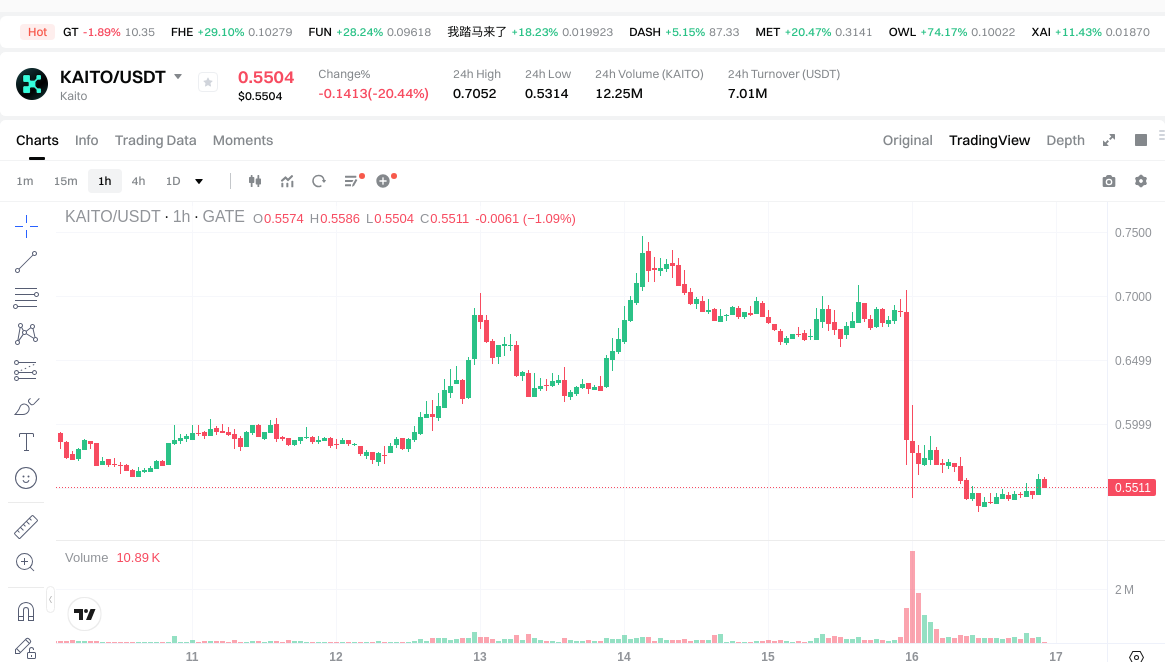
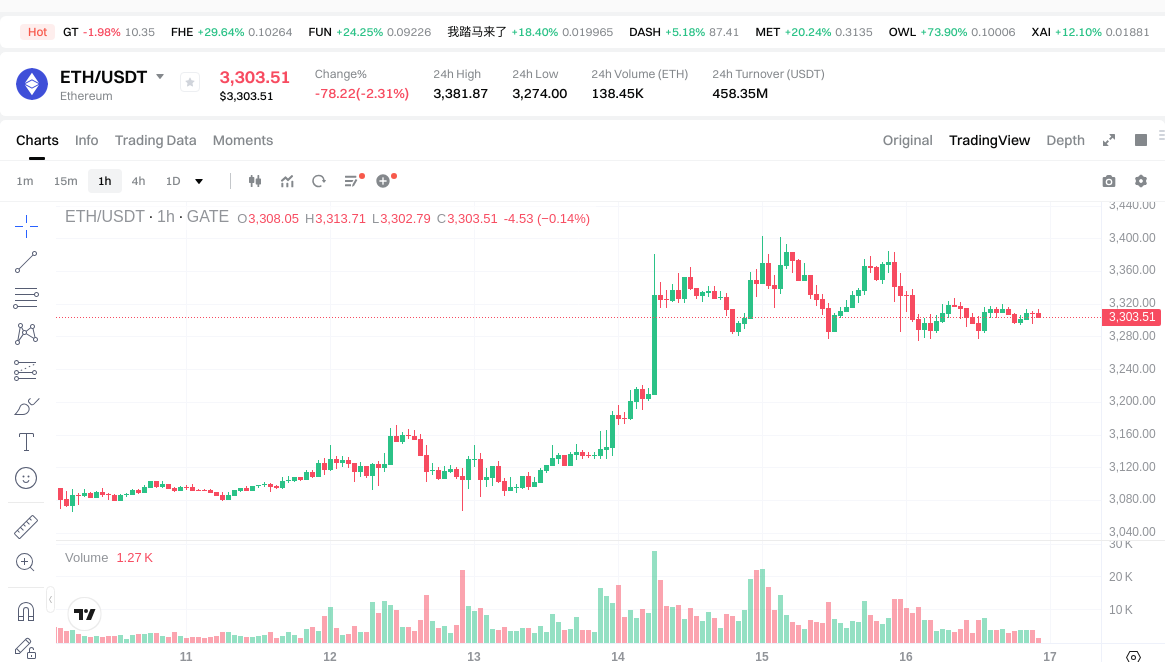
- Comparative Analysis: During the recent market cycle, KAITO declined from its peak of $2.92 to a low of $0.47 in December 2025, representing an approximate 84% correction, while ETH demonstrated relatively more stable performance with a decline from $4,946.05 to current levels.
Current Market Status (2026-01-16)
- KAITO Current Price: $0.5566
- ETH Current Price: $3,307.79
- 24-Hour Trading Volume: KAITO $7.01 million vs ETH $457.64 million
- Market Sentiment Index (Fear & Greed Index): 49 (Neutral)
View Real-Time Prices:
II. Core Factors Influencing KAITO vs ETH Investment Value
Supply Mechanism Comparison (Tokenomics)
-
KAITO: The platform implements a token distribution model that includes staking mechanisms (sKAITO) and Genesis NFT voting multipliers. According to reference materials, approximately 25.8 million tokens were in staked status during recent market fluctuations. The token economy incorporates Yap Points incentive systems and holder voting rights, with Holder votes accounting for 75% and Yapper community votes representing 25% of governance influence.
-
ETH: Ethereum operates under a proof-of-stake consensus mechanism following The Merge upgrade. The network features dynamic issuance rates that adjust based on validator participation and network activity, with periodic token burns through EIP-1559 affecting net supply dynamics.
-
📌 Historical Pattern: Supply mechanisms influence price cycles through scarcity dynamics and staking participation rates. Token locking through staking programs can reduce circulating supply, potentially affecting market liquidity and price volatility.
Institutional Adoption and Market Application
-
Institutional Holdings: KAITO secured funding totaling $10.8 million across two rounds in June and August 2023, with backing from Dragonfly, Sequoia China, and Jane Street. This demonstrates early-stage institutional interest in the InfoFi sector.
-
Enterprise Adoption: KAITO operates as an AI-driven Web3 information platform addressing information fragmentation in crypto markets. The platform serves content creators, projects, and users through its Kaito Connect network and Yaps incentive system. ETH maintains broader institutional adoption across decentralized finance, settlement systems, and enterprise blockchain solutions.
-
Regulatory Landscape: Regulatory approaches toward both assets vary across jurisdictions. The evolving framework for AI-driven platforms and information networks presents unique considerations for KAITO's market positioning.
Technical Development and Ecosystem Building
-
KAITO Technical Development: The platform leverages large language models (LLM) and semantic understanding technology to transform unstructured information into real-time insights. Core products include Kaito Pro search engine and Kaito Connect InfoFi network, which aggregate data from social media, research forums, and podcasts. The Yaps program quantifies content creator influence through AI evaluation of post quality, interaction depth, and content relevance.
-
ETH Technical Development: Ethereum continues developing layer-2 scaling solutions, consensus mechanism optimizations, and protocol upgrades aimed at improving transaction throughput and reducing costs.
-
Ecosystem Comparison: KAITO focuses on the InfoFi sector with market capitalization around $289 million, operating through an "attention proof" mechanism that rewards content creation. The platform faces challenges related to creator fatigue. ETH maintains extensive ecosystem development across DeFi protocols, NFT marketplaces, payment systems, and smart contract applications, with significantly broader adoption and established infrastructure.
Macroeconomic Environment and Market Cycles
-
Inflation Environment Performance: Digital assets demonstrate varying responses to inflationary pressures based on their utility, adoption levels, and market positioning. Established assets with broader institutional acceptance may exhibit different characteristics compared to emerging sector-specific tokens.
-
Macroeconomic Monetary Policy: Interest rate adjustments, dollar index movements, and liquidity conditions affect crypto market sentiment and capital flows. These factors influence both established networks and emerging platforms, though impact magnitude may differ based on market maturity and use case specifics.
-
Geopolitical Factors: Cross-border transaction demand and international developments continue shaping crypto adoption patterns. Information infrastructure platforms and settlement networks each serve distinct roles within the evolving digital asset landscape.
III. 2026-2031 Price Forecast: KAITO vs ETH
Short-term Forecast (2026)
- KAITO: Conservative $0.490123 - $0.5507 | Optimistic $0.5507 - $0.721417
- ETH: Conservative $2841.354 - $3303.9 | Optimistic $3303.9 - $4295.07
Medium-term Forecast (2028-2029)
- KAITO may enter a growth phase with estimated price range of $0.64820721735 - $1.075722489072
- ETH may enter a consolidation phase with estimated price range of $2670.80333680125 - $5903.8810602975
- Key drivers: institutional capital inflows, ETF developments, ecosystem expansion
Long-term Forecast (2031)
- KAITO: Baseline scenario $0.851911701955013 - $1.092194489685915 | Optimistic scenario $1.092194489685915 - $1.321555332519957
- ETH: Baseline scenario $5207.651829402249937 - $6274.27931253283125 | Optimistic scenario $6274.27931253283125 - $8282.04869254333725
View detailed price predictions for KAITO and ETH
Disclaimer
KAITO:
| Year |
Predicted High Price |
Predicted Average Price |
Predicted Low Price |
Price Change |
| 2026 |
0.721417 |
0.5507 |
0.490123 |
-1 |
| 2027 |
0.871400145 |
0.6360585 |
0.566092065 |
14 |
| 2028 |
0.927087066675 |
0.7537293225 |
0.64820721735 |
35 |
| 2029 |
1.075722489072 |
0.8404081945875 |
0.663922473724125 |
50 |
| 2030 |
1.22632363754208 |
0.95806534182975 |
0.670645739280825 |
72 |
| 2031 |
1.321555332519957 |
1.092194489685915 |
0.851911701955013 |
96 |
ETH:
| Year |
Predicted High Price |
Predicted Average Price |
Predicted Low Price |
Price Change |
| 2026 |
4295.07 |
3303.9 |
2841.354 |
0 |
| 2027 |
5433.26355 |
3799.485 |
2089.71675 |
14 |
| 2028 |
4754.86550325 |
4616.374275 |
3231.4619925 |
39 |
| 2029 |
5903.8810602975 |
4685.619889125 |
2670.80333680125 |
41 |
| 2030 |
7253.8081503544125 |
5294.75047471125 |
4818.2229319872375 |
59 |
| 2031 |
8282.04869254333725 |
6274.27931253283125 |
5207.651829402249937 |
89 |
IV. Investment Strategy Comparison: KAITO vs ETH
Long-term vs Short-term Investment Strategies
-
KAITO: Suited for investors focused on emerging AI-driven information infrastructure and InfoFi sector development, with higher risk tolerance for early-stage projects. The platform's focus on content creator incentivization and attention redistribution presents opportunities in the evolving Web3 information landscape.
-
ETH: Suited for investors seeking exposure to established blockchain infrastructure with broader ecosystem adoption across decentralized finance, smart contracts, and enterprise applications. The asset's transition to proof-of-stake and ongoing protocol development may appeal to those prioritizing network maturity and institutional recognition.
Risk Management and Asset Allocation
-
Conservative Investors: KAITO 10-20% allocation vs ETH 80-90% allocation, emphasizing established infrastructure while maintaining limited exposure to emerging sectors.
-
Aggressive Investors: KAITO 30-40% allocation vs ETH 60-70% allocation, balancing early-stage growth potential with established network positioning.
-
Hedging Tools: Stablecoin reserves for market volatility management, options strategies for downside protection, and cross-asset diversification across different blockchain use cases and market segments.
V. Potential Risk Comparison
Market Risk
-
KAITO: Exhibited significant volatility with approximately 84% decline from peak levels of $2.92 to $0.47 in December 2025. Market capitalization of approximately $289 million indicates lower liquidity compared to established assets. Trading volume of $7.01 million reflects concentrated market participation, potentially resulting in wider bid-ask spreads and increased price sensitivity to capital flows.
-
ETH: Demonstrated relative stability with broader institutional participation and higher trading volumes of $457.64 million. Market positioning as established infrastructure presents different volatility characteristics compared to emerging sector-specific tokens. Price movements correlate with broader crypto market cycles and macroeconomic conditions.
Technical Risk
-
KAITO: Platform development depends on continued advancement of AI-driven content evaluation systems and sustained creator participation. The Yaps incentive mechanism faces challenges related to creator fatigue, potentially affecting long-term engagement and platform utility. Network effects require critical mass of quality content creators and active users.
-
ETH: Network scaling solutions continue development through layer-2 implementations and protocol optimizations. Transition to proof-of-stake consensus introduces considerations around validator centralization and staking participation rates. Smart contract security remains ongoing focus area across ecosystem applications.
Regulatory Risk
Evolving regulatory frameworks affect both assets differently based on their specific use cases and market positioning. AI-driven information platforms face considerations around content moderation, data privacy, and information network governance. Established blockchain infrastructure encounters regulatory scrutiny related to securities classification, decentralized finance applications, and institutional custody requirements. Jurisdictional variations in regulatory approaches create uncertainty for cross-border operations and market access.
VI. Conclusion: Which Is the Better Buy?
📌 Investment Value Summary:
-
KAITO Advantages: Early positioning in the InfoFi sector with AI-driven information infrastructure, institutional backing from entities including Dragonfly and Sequoia China, and innovative attention redistribution mechanisms through the Yaps program. The platform addresses information fragmentation challenges in crypto markets through semantic understanding technology.
-
ETH Advantages: Established network infrastructure with extensive ecosystem development across decentralized applications, significantly higher trading volumes and market liquidity, successful transition to proof-of-stake consensus, and broader institutional adoption across financial services and enterprise blockchain implementations.
✅ Investment Recommendations:
-
Novice Investors: Consider prioritizing established infrastructure with proven track records and higher liquidity. Gradual allocation strategies with emphasis on understanding fundamental technology differences and market dynamics may support informed decision-making.
-
Experienced Investors: Portfolio diversification across different blockchain use cases and market segments may help manage sector-specific risks. Evaluation of technical development roadmaps, ecosystem growth metrics, and institutional adoption patterns can inform allocation decisions.
-
Institutional Investors: Comprehensive due diligence on regulatory compliance, custody solutions, and liquidity profiles remains essential. Consideration of both established infrastructure positions and emerging sector opportunities may support strategic portfolio construction.
⚠️ Risk Disclosure: Cryptocurrency markets exhibit extreme volatility. This analysis does not constitute investment advice. Market participants should conduct independent research and consider their risk tolerance before making investment decisions.
VII. FAQ
Q1: What are the main differences between KAITO and ETH in terms of use cases?
KAITO is an AI-driven InfoFi platform focused on redistributing attention and capital through content creator incentivization, while ETH serves as foundational infrastructure for decentralized applications and smart contracts. KAITO operates within the emerging information network sector with a market cap of approximately $289 million, leveraging large language models to transform unstructured crypto information into actionable insights through products like Kaito Pro and Kaito Connect. In contrast, ETH has established itself as the backbone for DeFi protocols, NFT marketplaces, payment systems, and enterprise blockchain solutions since 2015, with significantly broader adoption and institutional recognition across multiple sectors.
Q2: How do the supply mechanisms of KAITO and ETH affect their investment profiles?
KAITO implements a token distribution model featuring staking mechanisms (sKAITO) with approximately 25.8 million tokens staked, reducing circulating supply and potentially affecting liquidity, while ETH operates under a proof-of-stake consensus with dynamic issuance rates and EIP-1559 token burns. KAITO's supply dynamics are influenced by its governance structure where holder votes represent 75% and Yapper community votes account for 25% of decision-making power, alongside Yap Points incentive systems. ETH's supply mechanism adjusts based on validator participation and network activity, with periodic burns creating deflationary pressure. These fundamental differences in tokenomics affect scarcity dynamics, staking participation incentives, and long-term price behavior patterns.
Q3: What volatility risks should investors consider when comparing KAITO vs ETH?
KAITO experienced approximately 84% decline from its peak of $2.92 to $0.47 in December 2025, demonstrating substantially higher volatility than ETH. KAITO's 24-hour trading volume of $7.01 million compared to ETH's $457.64 million indicates lower liquidity, resulting in wider bid-ask spreads and increased price sensitivity to capital flows. ETH's established market position with broader institutional participation provides relatively more stable performance characteristics, though it remains subject to crypto market cycles and macroeconomic conditions. The concentrated market participation in KAITO creates amplified price movements during periods of buying or selling pressure, while ETH's deeper liquidity pools can absorb larger transactions with less impact.
Q4: How do institutional adoption levels differ between KAITO and ETH?
KAITO secured $10.8 million in funding across two rounds in 2023 with backing from Dragonfly, Sequoia China, and Jane Street, representing early-stage institutional interest in the InfoFi sector. ETH maintains significantly broader institutional adoption across decentralized finance, settlement systems, and enterprise blockchain solutions, with established custody infrastructure and regulatory clarity in multiple jurisdictions. While KAITO's institutional support validates its technical approach to AI-driven information networks, ETH's decade-long track record has attracted participation from major financial institutions, asset managers, and corporations. This difference in adoption maturity affects liquidity profiles, price stability, and regulatory treatment between the two assets.
Q5: What are the realistic price expectations for KAITO vs ETH through 2031?
Conservative 2026 forecasts suggest KAITO ranging between $0.490123-$0.5507 while ETH may reach $2841.354-$3303.9, with optimistic scenarios projecting KAITO at $0.5507-$0.721417 and ETH at $3303.9-$4295.07. By 2031, baseline scenarios estimate KAITO between $0.851911701955013-$1.092194489685915 and ETH between $5207.651829402249937-$6274.27931253283125. These projections reflect KAITO's potential 96% growth from current levels driven by InfoFi sector development, compared to ETH's estimated 89% increase supported by ecosystem expansion and institutional adoption. Key variables include regulatory developments, technological advancement rates, macroeconomic conditions, and sector-specific adoption patterns that may significantly alter these baseline expectations.
Q6: What portfolio allocation strategies are appropriate for KAITO vs ETH?
Conservative investors should consider 10-20% KAITO allocation versus 80-90% ETH, emphasizing established infrastructure while maintaining limited exposure to emerging sectors. Aggressive investors may structure 30-40% KAITO versus 60-70% ETH allocations, balancing early-stage growth potential with established network positioning. This allocation framework accounts for KAITO's higher volatility profile and smaller market capitalization against ETH's broader ecosystem adoption and deeper liquidity. Risk management should incorporate stablecoin reserves for volatility management, options strategies for downside protection, and diversification across different blockchain use cases. Portfolio construction must align with individual risk tolerance, investment timeframes, and conviction in specific sector developments within the crypto landscape.
Q7: What technical risks differentiate KAITO from ETH as investment options?
KAITO's platform viability depends on sustained advancement of AI-driven content evaluation systems and maintaining creator engagement through the Yaps incentive program, which faces documented challenges related to creator fatigue. The platform requires critical mass of quality content creators and active users to achieve network effects, with success tied to continued innovation in semantic understanding technology. ETH's technical considerations center on layer-2 scaling solution development, validator centralization concerns under proof-of-stake consensus, and smart contract security across its extensive ecosystem applications. While KAITO's risks concentrate in a single platform's execution and market acceptance of the InfoFi model, ETH's risks distribute across a mature but complex ecosystem requiring ongoing protocol optimization and security maintenance at scale.
* The information is not intended to be and does not constitute financial advice or any other recommendation of any sort offered or endorsed by Gate.