This comprehensive comparison analyzes KSM and LRC as investment opportunities within the cryptocurrency market. KSM, launched in 2019, functions as Polkadot's experimental network token enabling parachain testing and cross-chain functionality through NPoS consensus. LRC, introduced in 2017, powers Ethereum's Layer 2 scaling infrastructure through zkRollup technology supporting decentralized exchange protocols. The article examines historical price trajectories—KSM from peak $621.71 to current $7.393 and LRC from $3.75 to $0.05136—alongside current market metrics and trading volumes on Gate exchange. Analysis covers supply mechanisms, institutional adoption patterns, technological ecosystem development, and macroeconomic influences on both tokens. Price forecasts span 2026-2031 with KSM ranging $6.31-$20.90 and LRC between $0.034-$0.144 across scenarios. Investment strategies, risk assessments including regulatory considerations from EU's MiCA framework, and portfolio allocation approaches address diverse inv
Introduction: Investment Comparison Between KSM and LRC
In the cryptocurrency market, the comparison between KSM vs LRC has consistently been a topic that investors cannot overlook. Both tokens exhibit notable differences in market cap ranking, use cases, and price performance, representing distinct positioning within the crypto asset landscape.
Kusama (KSM): Launched in 2019, it has gained market recognition through its positioning as a testing environment for Polkadot network, featuring governance, staking, and cross-chain messaging capabilities.
Loopring (LRC): Introduced in 2017, it has been recognized for its decentralized exchange protocol based on ERC20 and smart contracts, enabling off-chain order matching with on-chain settlement.
This article will comprehensively analyze the investment value comparison between KSM vs LRC through historical price trends, supply mechanisms, institutional adoption, technological ecosystem, and future forecasts, attempting to answer the most pressing question for investors:
"Which is the better buy right now?"
I. Historical Price Comparison and Current Market Status
Historical Price Trends of KSM (Coin A) and LRC (Coin B)
- 2021: KSM experienced notable price movements, reaching its all-time high of $621.71 on May 18, 2021, during a period of heightened interest in Polkadot ecosystem projects.
- 2021: LRC saw significant price appreciation, hitting its historical peak of $3.75 on November 10, 2021, driven by growing adoption of Layer 2 scaling solutions and decentralized exchange protocols.
- Comparative Analysis: During the 2021-2022 market cycle, KSM declined from its peak of $621.71 to lower levels, while LRC similarly retreated from its high of $3.75, reflecting broader market corrections affecting both assets.
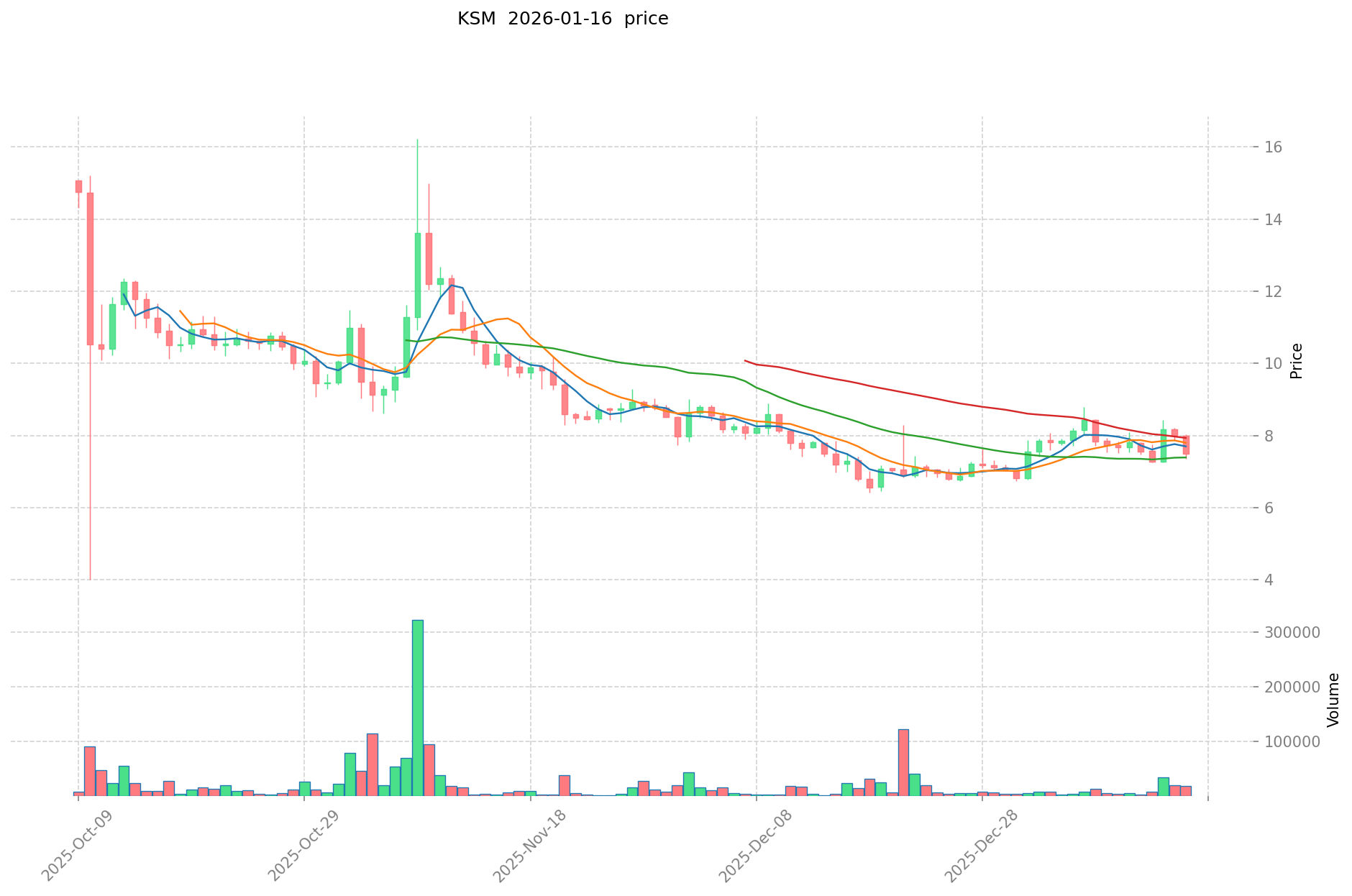
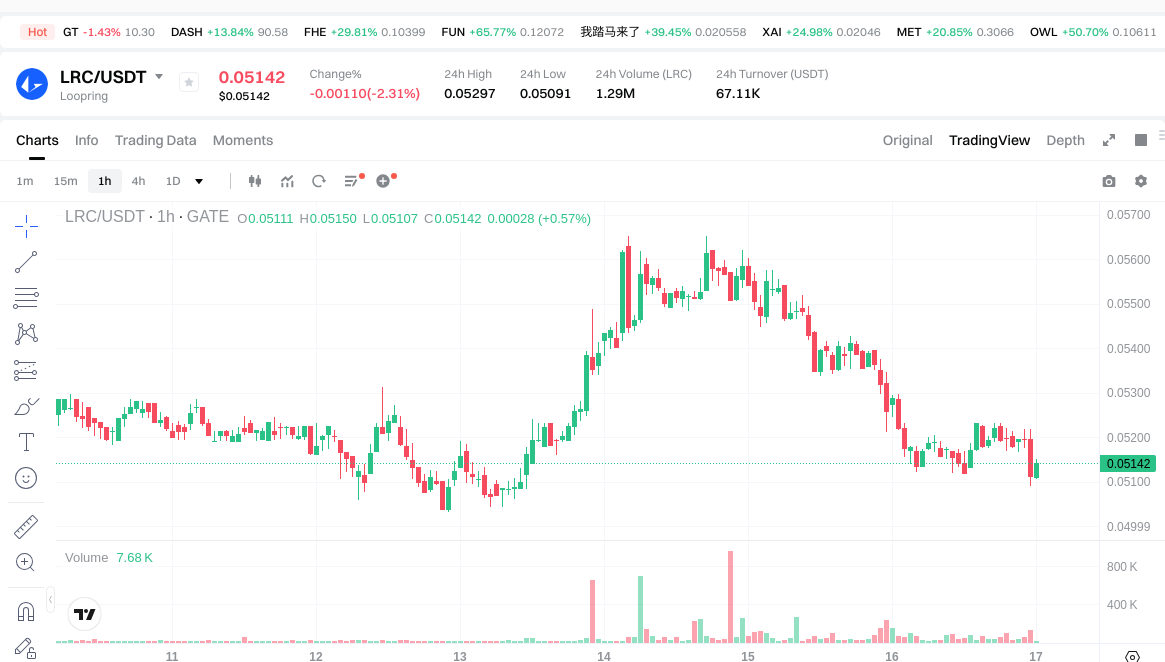
Current Market Situation (January 17, 2026)
- KSM Current Price: $7.393
- LRC Current Price: $0.05136
- 24-Hour Trading Volume: KSM recorded $150,590.51 compared to LRC's $68,803.06
- Market Sentiment Index (Fear & Greed Index): 49 (Neutral)
View real-time prices:
II. Core Factors Influencing KSM vs LRC Investment Value
Supply Mechanism Comparison (Tokenomics)
-
KSM: As Polkadot's canary network parachain token, KSM operates within Polkadot's NPoS (Nominated Proof-of-Stake) consensus mechanism. Its supply dynamics are influenced by staking behaviors and network governance decisions, with token holders participating in parachain auctions and governance processes that can affect circulating supply.
-
LRC: As an Ethereum-based Layer 2 solution token, LRC's supply structure is designed to support the Loopring protocol's zkRollup technology. The token serves utility functions within the ecosystem, including fee reduction and liquidity provision incentives.
-
📌 Historical Pattern: Supply mechanisms in blockchain networks tend to create cyclical price movements through staking lock-ups, governance participation, and ecosystem expansion phases, though specific historical data for these patterns requires continuous market observation.
Institutional Adoption and Market Application
-
Institutional Holdings: Market data suggests institutional participation in both assets remains developing, with positioning influenced by broader blockchain infrastructure adoption trends and Layer 2 scaling solution deployment.
-
Enterprise Adoption: KSM's application centers on parachain functionality and cross-chain interoperability testing within Polkadot's experimental network. LRC's utility focuses on decentralized exchange infrastructure and high-throughput trading solutions on Ethereum's Layer 2.
-
Regulatory Landscape: Regulatory approaches vary across jurisdictions. The EU's Markets in Crypto-Assets Regulation (MiCA), which became fully applicable on December 30, 2024 (with certain stablecoin-related provisions effective from June 30, 2024), establishes frameworks affecting service providers' licensing, disclosure, and governance requirements. These regulatory developments influence liquidity distribution and counterparty risk assessment for cross-border operations.
Technology Development and Ecosystem Construction
-
KSM Technical Evolution: According to industry observations, Polkadot ecosystem project selection considerations include factors such as Web3 Foundation grant history and Substrate Builders Program membership status. KSM functions as Polkadot's testing ground for parachain technology and governance mechanisms before mainnet deployment.
-
LRC Technical Development: LRC supports Ethereum's Layer 2 scaling infrastructure through zkRollup technology, aiming to address transaction throughput and cost efficiency challenges while maintaining security guarantees.
-
Ecosystem Comparison: KSM's ecosystem focuses on parachain slot auctions, cross-chain communication protocols, and experimental governance models. LRC's ecosystem centers on decentralized exchange functionality, DeFi protocol integration, and trading efficiency optimization within Ethereum's broader application landscape.
Macroeconomic Environment and Market Cycles
-
Performance in Inflationary Environments: Both assets demonstrate sensitivity to broader crypto market sentiment and macroeconomic conditions. Their responses to inflationary pressures depend on multiple factors including network adoption rates, technological progress, and overall risk appetite in digital asset markets.
-
Macroeconomic Monetary Policy: According to market analysis frameworks, crypto markets exhibit heightened sensitivity to regulatory signals, macroeconomic risk preference shifts, technical upgrades, trading platform liquidity, and security incidents. U.S. dollar liquidity conditions, interest rate environments, and risk-off sentiment can influence capital allocation to high-volatility assets.
-
Geopolitical Factors: Cross-border transaction demand and international developments can affect blockchain infrastructure adoption patterns. However, specific impacts on individual tokens require case-by-case analysis based on network utility, regulatory compliance status, and ecosystem development trajectories.
Note: The crypto asset market involves continuous trading characteristics that make prices more responsive to information flows compared to traditional securities markets. Multiple variables including regulatory expectations, macroeconomic conditions, technology upgrades, and platform liquidity collectively influence market dynamics. Investment decisions should consider comprehensive risk factors and comply with applicable jurisdictional requirements.
III. 2026-2031 Price Forecast: KSM vs LRC
Short-term Forecast (2026)
- KSM: Conservative $6.31-$7.42 | Optimistic $7.42-$8.24
- LRC: Conservative $0.034-$0.051 | Optimistic $0.051-$0.075
Mid-term Forecast (2028-2029)
- KSM may enter a growth phase with estimated price range of $6.71-$15.05
- LRC may enter an expansion phase with estimated price range of $0.066-$0.107
- Key drivers: institutional capital inflows, ETF developments, ecosystem expansion
Long-term Forecast (2030-2031)
- KSM: Baseline scenario $11.29-$15.26 | Optimistic scenario $17.90-$20.90
- LRC: Baseline scenario $0.073-$0.106 | Optimistic scenario $0.118-$0.144
View detailed price predictions for KSM and LRC
Disclaimer
KSM:
| Year |
Predicted High Price |
Predicted Average Price |
Predicted Low Price |
Price Change |
| 2026 |
8.23842 |
7.422 |
6.3087 |
0 |
| 2027 |
8.7698352 |
7.83021 |
6.5773764 |
5 |
| 2028 |
12.03503277 |
8.3000226 |
7.47002034 |
11 |
| 2029 |
15.0479409738 |
10.167527685 |
6.7105682721 |
37 |
| 2030 |
17.902982747748 |
12.6077343294 |
12.103424956224 |
70 |
| 2031 |
20.89984119784638 |
15.255358538574 |
11.28896531854476 |
105 |
LRC:
| Year |
Predicted High Price |
Predicted Average Price |
Predicted Low Price |
Price Change |
| 2026 |
0.0750732 |
0.05142 |
0.0339372 |
0 |
| 2027 |
0.074630988 |
0.0632466 |
0.046802484 |
23 |
| 2028 |
0.09237798396 |
0.068938794 |
0.06618124224 |
34 |
| 2029 |
0.1072756573434 |
0.08065838898 |
0.0750123017514 |
57 |
| 2030 |
0.118398449183742 |
0.0939670231617 |
0.073294278066126 |
82 |
| 2031 |
0.1444085211949 |
0.106182736172721 |
0.096626289917176 |
106 |
IV. Investment Strategy Comparison: KSM vs LRC
Long-term vs Short-term Investment Strategies
-
KSM: May appeal to investors focused on cross-chain infrastructure development, parachain ecosystem expansion, and experimental blockchain governance mechanisms. The token's utility within Polkadot's testing environment suggests relevance for participants interested in technological innovation cycles and network evolution phases.
-
LRC: May suit investors interested in Ethereum Layer 2 scaling solutions, decentralized exchange infrastructure, and DeFi protocol integration. The token's application in zkRollup technology and trading efficiency optimization indicates positioning within Ethereum's broader scaling narrative.
Risk Management and Asset Allocation
-
Conservative Investors: A balanced approach might consider allocation frameworks that account for correlation patterns, liquidity profiles, and risk-adjusted return characteristics. Portfolio construction should evaluate factors including historical volatility, drawdown metrics, and recovery patterns across market cycles.
-
Aggressive Investors: Higher concentration strategies involve elevated exposure to individual asset-specific risks including technological execution challenges, ecosystem adoption rates, and competitive dynamics within respective market segments.
-
Hedging Tools: Risk mitigation approaches may include stablecoin reserves for liquidity management, options contracts where available for downside protection, and cross-asset diversification strategies that consider correlation structures during stress periods.
V. Potential Risk Comparison
Market Risks
-
KSM: Price sensitivity to Polkadot mainnet development progress, parachain auction dynamics, and broader sentiment toward experimental blockchain networks. Trading volume patterns and liquidity depth may influence execution quality during volatile periods.
-
LRC: Exposure to Ethereum network adoption trends, Layer 2 competitive landscape developments, and decentralized exchange market share dynamics. Price movements may correlate with broader DeFi sector sentiment and Ethereum ecosystem developments.
Technical Risks
-
KSM: Considerations include parachain slot mechanism sustainability, cross-chain messaging protocol stability, and governance decision outcomes that may affect network parameters. As an experimental network, technical adjustments and upgrade implementations represent ongoing development factors.
-
LRC: Technical considerations involve zkRollup implementation security, smart contract audit outcomes, and protocol upgrade execution. Layer 2 scaling solutions face ongoing challenges related to transaction finality guarantees and withdrawal mechanism reliability.
Regulatory Risks
-
Regulatory frameworks continue evolving across jurisdictions, with implementations such as the EU's MiCA regulation establishing licensing requirements and operational standards for service providers. Different regulatory classifications for infrastructure tokens versus application-layer tokens may result in varying compliance obligations and market access conditions.
-
Cross-border regulatory coordination remains developing, with potential implications for liquidity fragmentation, counterparty risk assessment, and operational complexity for market participants. Regulatory clarity timelines and enforcement approaches vary significantly across major jurisdictions.
VI. Conclusion: Which Is the Better Buy?
📌 Investment Value Summary:
-
KSM Characteristics: Functions as Polkadot's experimental network token with utility in parachain testing, governance participation, and cross-chain functionality development. The asset's positioning reflects infrastructure-layer exposure within multi-chain blockchain architecture development.
-
LRC Characteristics: Serves as utility token within Ethereum Layer 2 scaling infrastructure, supporting decentralized exchange functionality and zkRollup technology implementation. The asset's application centers on transaction efficiency and DeFi protocol integration within Ethereum's ecosystem.
✅ Investment Considerations:
-
New Investors: Entry into cryptocurrency markets requires comprehensive understanding of volatility characteristics, custody solutions, and platform security considerations. Educational resources and gradual exposure approaches may support informed decision-making processes.
-
Experienced Investors: Portfolio allocation decisions should incorporate thorough analysis of technological differentiation, ecosystem development trajectories, competitive positioning, and correlation patterns with broader market indices. Risk management frameworks and position sizing methodologies remain essential considerations.
-
Institutional Investors: Asset selection involves evaluation of regulatory compliance frameworks, custody infrastructure availability, liquidity provision mechanisms, and counterparty risk assessment protocols. Due diligence processes should address operational risk factors, technological audit results, and governance structure analysis.
⚠️ Risk Disclosure: Cryptocurrency markets involve substantial volatility and principal loss risk. This analysis does not constitute investment advice, financial recommendations, or solicitation to buy or sell any assets. Market participants should conduct independent research, assess personal risk tolerance, and consult qualified professionals before making investment decisions. Regulatory status, tax treatment, and legal frameworks vary by jurisdiction and may change without notice.
VII. FAQ
Q1: What are the primary differences between KSM and LRC in terms of their core functionality?
KSM serves as Polkadot's experimental network token focused on parachain testing and cross-chain infrastructure, while LRC functions as an Ethereum Layer 2 scaling solution token centered on decentralized exchange protocols. KSM operates within Polkadot's NPoS consensus mechanism, enabling governance participation, parachain slot auctions, and cross-chain messaging functionality as a testing ground before mainnet deployment. LRC leverages zkRollup technology on Ethereum to provide high-throughput trading solutions with off-chain order matching and on-chain settlement, addressing transaction cost and scalability challenges within the DeFi ecosystem.
Q2: How do the current market positions of KSM and LRC compare as of January 2026?
KSM trades at $7.393 with 24-hour trading volume of $150,590.51, while LRC trades at $0.05136 with volume of $68,803.06. Both assets have declined significantly from their historical peaks—KSM from $621.71 (May 2021) and LRC from $3.75 (November 2021)—reflecting broader market corrections. KSM demonstrates approximately 2.2x higher trading volume, suggesting relatively greater liquidity, though both assets operate within a neutral market sentiment environment (Fear & Greed Index: 49).
Q3: What are the projected price trajectories for KSM and LRC through 2031?
KSM forecasts range from $6.31-$8.24 in 2026, expanding to $11.29-$20.90 by 2031 depending on market conditions. LRC projections span $0.034-$0.075 for 2026, potentially reaching $0.073-$0.144 by 2031. Mid-term forecasts (2028-2029) anticipate KSM in the $6.71-$15.05 range and LRC between $0.066-$0.107, with key drivers including institutional capital inflows, ETF developments, and ecosystem expansion. These projections incorporate both conservative baseline scenarios and optimistic growth assumptions based on technological adoption rates and market cycle dynamics.
Q4: What are the main risk factors investors should consider when comparing KSM and LRC?
Market risks for KSM include sensitivity to Polkadot mainnet development progress, parachain auction dynamics, and experimental network sentiment, while LRC faces exposure to Ethereum adoption trends, Layer 2 competitive pressures, and decentralized exchange market share fluctuations. Technical risks encompass parachain mechanism sustainability and governance outcomes for KSM, versus zkRollup security and withdrawal mechanism reliability for LRC. Regulatory considerations involve evolving frameworks such as the EU's MiCA regulation, with varying compliance obligations based on token classification, jurisdictional differences in enforcement approaches, and potential liquidity fragmentation across markets.
Q5: Which investment strategy better suits different investor profiles for KSM versus LRC?
Conservative investors may consider balanced allocation frameworks accounting for correlation patterns, liquidity profiles, and risk-adjusted returns, incorporating stablecoin reserves and cross-asset diversification strategies. KSM may appeal to those focused on cross-chain infrastructure and experimental governance mechanisms, while LRC suits investors interested in Ethereum Layer 2 scaling and DeFi protocol integration. Aggressive investors pursuing higher concentration strategies should evaluate asset-specific risks including technological execution challenges, ecosystem adoption rates, and competitive dynamics. Institutional investors require comprehensive due diligence addressing regulatory compliance frameworks, custody infrastructure, liquidity provision mechanisms, and governance structure analysis.
Q6: How do supply mechanisms affect the investment dynamics of KSM and LRC?
KSM operates within Polkadot's NPoS consensus with supply dynamics influenced by staking behaviors, network governance decisions, and parachain auction participation, creating token lock-ups that affect circulating supply. LRC's supply structure supports the Loopring protocol's zkRollup technology through utility functions including fee reduction incentives and liquidity provision rewards. Historical patterns suggest supply mechanisms create cyclical price movements through staking lock-ups, governance participation, and ecosystem expansion phases, though both assets require continuous market observation to assess long-term supply-demand equilibrium impacts on price formation.
Q7: What role do macroeconomic conditions play in KSM and LRC price performance?
Both assets demonstrate sensitivity to broader crypto market sentiment, macroeconomic risk appetite, and regulatory signals affecting digital asset markets. U.S. dollar liquidity conditions, interest rate environments, and risk-off sentiment influence capital allocation to high-volatility assets like KSM and LRC. Performance during inflationary environments depends on network adoption rates, technological progress, and overall market risk preferences. The crypto asset market's continuous trading characteristics create heightened responsiveness to information flows compared to traditional securities, with multiple variables including regulatory expectations, technology upgrades, platform liquidity, and security incidents collectively shaping market dynamics across different economic cycles.
* The information is not intended to be and does not constitute financial advice or any other recommendation of any sort offered or endorsed by Gate.