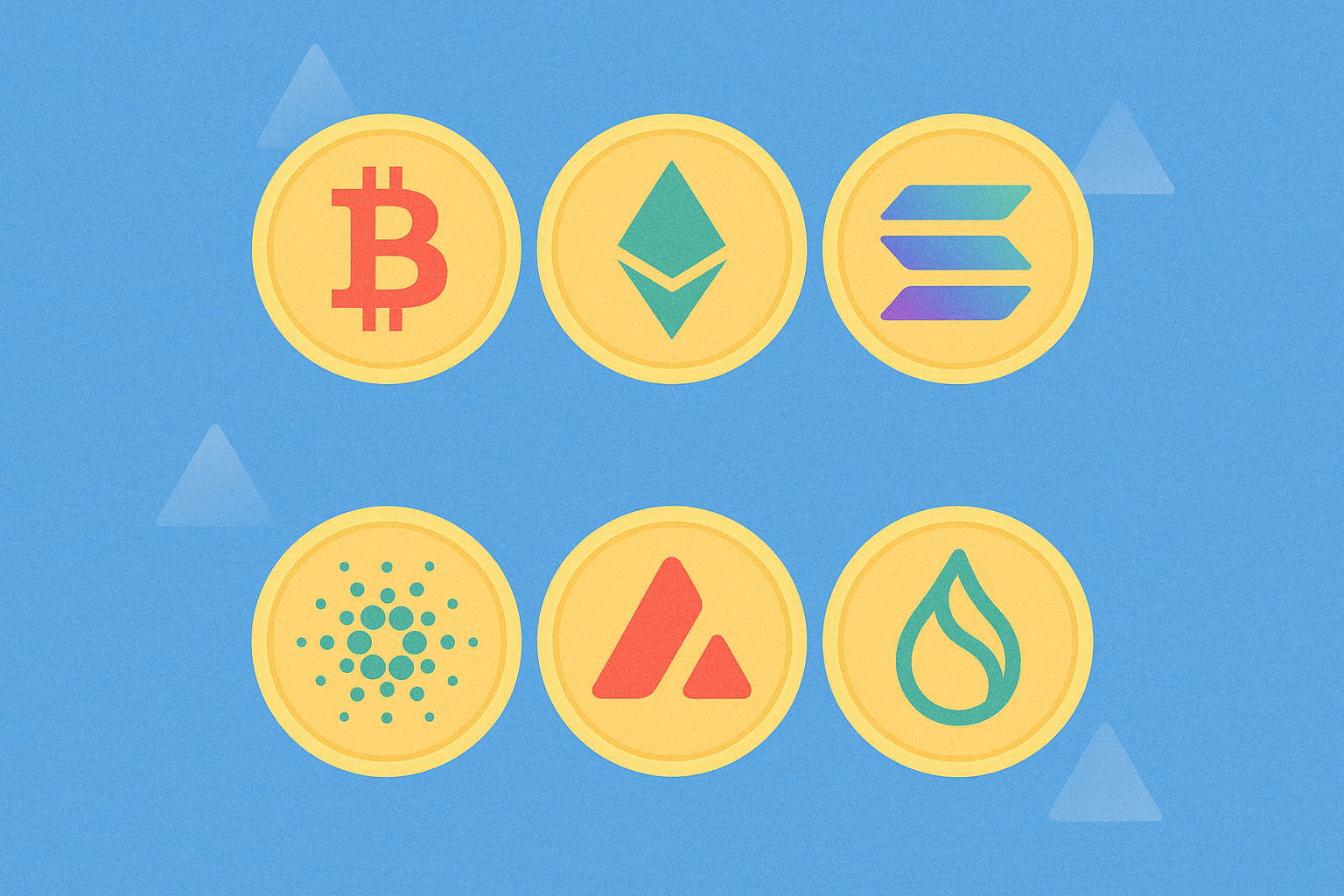
This comprehensive guide explores top Layer 1 blockchain coins for 2024, comparing major networks like Ethereum, Bitcoin, Solana, Cardano, Avalanche, and Sui. It examines how Layer 1 solutions enhance scalability through protocol-level improvements including consensus upgrades, sharding, and block parameter adjustments. The article analyzes the blockchain trilemma's trade-offs between security, decentralization, and scalability, then contrasts Layer 1 with Layer 2 and Layer 3 solutions. Readers learn key advantages of Layer 1's native protocol enhancements and unified ecosystem benefits, alongside its scalability limitations. Detailed comparisons reveal how Layer 2 solutions like rollups and sidechains complement Layer 1, while the FAQ addresses practical questions about transaction costs, security, and optimal use cases. Perfect for investors and developers seeking to understand modern blockchain architecture and scalability strategies.
Layer 1 Scaling Solutions
Layer 1 blockchain represents the fundamental protocol layer of a blockchain network. Layer 1 scaling solutions aim to enhance scalability by improving the foundational infrastructure of the blockchain itself. These solutions modify the base protocol to increase transaction throughput, reduce latency, and improve overall network performance without relying on external systems.
The primary approach of Layer 1 scaling involves making direct changes to the blockchain's core architecture. This can include adjustments to block size, modifications to consensus mechanisms, or implementation of advanced techniques like sharding. By enhancing the base layer, these solutions ensure that improvements are native to the blockchain and benefit the entire ecosystem uniformly.
Types of Layer 1 Coins
Several prominent blockchain networks exemplify different approaches to Layer 1 architecture and scaling:
Ethereum: This pioneering smart contract platform has undergone significant upgrades, transitioning from an energy-intensive Proof of Work (PoW) consensus mechanism to a more efficient Proof of Stake (PoS) system. This transition, known as "The Merge," represents one of the most significant Layer 1 upgrades in blockchain history, dramatically reducing energy consumption while maintaining security and decentralization.
Cardano, Solana, and Avalanche: These networks were designed from the ground up with scalability as a primary consideration. Each employs unique architectural decisions and consensus mechanisms optimized for high throughput. Cardano uses a research-driven approach with its Ouroboros PoS protocol, Solana implements a novel Proof of History mechanism combined with PoS, and Avalanche utilizes a subnet architecture for parallel processing.
Bitcoin: As the original blockchain network, Bitcoin prioritizes decentralization and security above all else. Its conservative approach to protocol changes ensures maximum security and network stability, though this comes at the cost of limited transaction throughput compared to newer networks.
Sui: Representing the latest generation of Layer 1 blockchains, Sui is specifically designed to address the scalability trilemma. It focuses on achieving high scalability, low transaction costs, and rapid processing speeds through innovative object-centric data models and parallel transaction execution.
Layer 1 Scaling Technologies
Layer 1 networks employ various technical approaches to enhance their scalability and performance:
Block Size and Block Time Adjustments: One of the most straightforward scaling approaches involves modifying the fundamental parameters of block production. Increasing block size allows more transactions to be included in each block, effectively raising the network's transaction capacity. Similarly, reducing block generation time means new blocks are created more frequently, allowing transactions to be confirmed faster. However, these adjustments must be carefully balanced, as larger blocks and faster block times can increase the hardware requirements for running network nodes, potentially impacting decentralization.
Consensus Mechanism Upgrades: The consensus mechanism is the heart of any blockchain network, determining how transactions are validated and blocks are added to the chain. Upgrading from PoW to PoS represents a fundamental shift in how network security is maintained. PoS systems require validators to stake cryptocurrency as collateral rather than expending computational power, resulting in dramatically reduced energy consumption and faster transaction finality. Ethereum's successful transition to PoS demonstrates the viability of this approach for major blockchain networks.
Sharding: This advanced technique involves partitioning the network's state into multiple smaller segments called shards. Each shard can process transactions independently and in parallel with other shards, effectively multiplying the network's processing capacity. Sharding represents one of the most promising approaches to achieving massive scalability while maintaining decentralization, though it introduces significant technical complexity in ensuring cross-shard communication and maintaining overall network security.
Advantages of Layer 1
Layer 1 solutions offer several compelling benefits that make them attractive for blockchain development:
The primary advantage lies in their ability to improve scalability through direct protocol modifications. By enhancing the base layer, these improvements benefit all applications and users on the network uniformly. This creates a rising tide that lifts all boats, ensuring that the entire ecosystem benefits from scalability enhancements.
Layer 1 networks can achieve high scalability and economic efficiency while maintaining strong decentralization and security guarantees. Because improvements are made at the protocol level, they don't require users or applications to adopt additional technologies or trust external systems. This native integration ensures that security and decentralization properties are preserved even as scalability increases.
Furthermore, improvements to the Layer 1 protocol enhance the entire network ecosystem. Developers building on the platform automatically benefit from these enhancements without needing to modify their applications, creating a more robust foundation for innovation and growth.
Disadvantages of Layer 1
Despite their benefits, Layer 1 solutions face significant challenges:
The fundamental issue is that Layer 1 blockchains often struggle to scale sufficiently to meet global demand. Large, established blockchains like Bitcoin face particular difficulties during periods of high network activity, leading to increased transaction fees and slower confirmation times. This scalability limitation stems from the inherent trade-offs in blockchain design, where maintaining decentralization and security often comes at the cost of throughput.
Additionally, implementing Layer 1 upgrades requires network-wide consensus and coordination. Major protocol changes can be contentious and time-consuming, sometimes taking years to implement. This slower pace of innovation can be a disadvantage compared to more flexible Layer 2 solutions.
Layer 2 Scaling Solutions
Layer 2 scaling solutions represent a different approach to addressing blockchain scalability challenges. Rather than modifying the base protocol, Layer 2 solutions build additional infrastructure on top of existing blockchains. These solutions leverage off-chain protocols and networks to enhance scalability and efficiency while maintaining security guarantees from the underlying Layer 1 blockchain.
The fundamental principle of Layer 2 solutions is to move transaction processing off the main blockchain while still anchoring security to the base layer. This approach allows for significant increases in transaction throughput and reductions in costs without requiring changes to the underlying protocol. Layer 2 solutions act as a pressure valve, handling the bulk of transaction volume while the Layer 1 blockchain focuses on security and final settlement.
Types of Layer 2 Coins
Various Layer 2 projects have emerged, each implementing different technical approaches:
zkSync and Starknet: These projects utilize zero-knowledge rollup (ZK-rollup) technology to batch process thousands of transactions off-chain. By generating cryptographic proofs that verify the correctness of these transactions, they can submit compressed data to the Layer 1 blockchain, achieving significant scalability improvements while maintaining strong security guarantees. ZK-rollups represent one of the most technically sophisticated approaches to Layer 2 scaling.
Lightning Network: Serving as Bitcoin's primary Layer 2 solution, the Lightning Network enables fast, low-cost micropayments through payment channels. By allowing users to conduct multiple transactions off-chain and only settling the final balance on the Bitcoin blockchain, it dramatically increases transaction capacity while maintaining Bitcoin's security model. This makes Bitcoin practical for everyday transactions and micropayments.
Optimism and Arbitrum: These projects implement optimistic rollup technology to scale Ethereum. Unlike ZK-rollups, optimistic rollups assume transactions are valid by default and only compute proofs if a transaction is challenged. This approach offers easier compatibility with existing Ethereum smart contracts while still providing significant scalability benefits.
Layer 2 Problem-Solving Approaches
Layer 2 solutions employ various technical mechanisms to achieve scalability:
Rollups: This technology bundles multiple transactions together into batches, processes them off-chain, and submits a single proof or summary to the Layer 1 blockchain. This approach dramatically reduces the data that needs to be stored on the main chain while maintaining security through cryptographic proofs or fraud detection mechanisms.
ZK-rollups use zero-knowledge proofs to verify transaction correctness before submission to Layer 1. This provides immediate finality and strong security guarantees, though the technology is more complex to implement. Optimistic rollups, conversely, assume all transactions are valid by default and rely on a challenge period during which anyone can submit fraud proofs if they detect invalid transactions. This approach offers easier implementation and better compatibility with existing smart contracts.
Nested Blockchains: This architecture involves creating blockchain layers within or on top of other blockchains. The main chain provides security and final settlement, while nested chains handle transaction processing. This hierarchical structure allows for multiple levels of blockchain layers to be built on top of the main chain, each optimized for different use cases or performance characteristics.
State Channels: These enable bidirectional communication between the blockchain and off-chain transaction channels, improving transaction capacity and speed. Participants can conduct numerous transactions off-chain, with only the opening and closing states recorded on the main blockchain. This approach is particularly effective for applications requiring frequent interactions between a fixed set of participants.
Sidechains: Operating as independent transaction chains adjacent to the main blockchain, sidechains use their own consensus mechanisms while maintaining a connection to the main chain. This independence allows sidechains to experiment with different features or optimizations without affecting the main chain's security or stability.
Advantages of Layer 2
Layer 2 solutions offer distinct benefits that complement Layer 1 approaches:
A key advantage is that Layer 2 solutions don't impact the performance or functionality of the underlying blockchain. They operate independently, allowing the base layer to focus on security and decentralization while Layer 2 handles scalability. This separation of concerns creates a more modular and flexible architecture.
Layer 2 solutions excel at executing numerous small transactions quickly and cost-effectively. By moving transaction processing off-chain, they can achieve throughput levels that would be impossible on Layer 1 alone. This makes them ideal for applications requiring high-frequency transactions, such as gaming, social media, or micropayments.
Disadvantages of Layer 2
Despite their advantages, Layer 2 solutions face certain limitations:
The primary challenge involves blockchain connectivity and interoperability. Layer 2 solutions can create fragmentation, with liquidity and users distributed across multiple Layer 2 networks. This can limit the seamless interaction between different parts of the ecosystem and create friction for users navigating between different Layer 2 solutions.
Additionally, privacy and security considerations arise because Layer 2 solutions may not provide the same security level as the main chain. While they anchor security to Layer 1, the off-chain processing introduces additional trust assumptions and potential attack vectors that don't exist on the base layer.
Layer 3 Solutions
Layer 3 represents an emerging concept in blockchain architecture, building another abstraction layer on top of Layer 2 solutions. This additional layer aims to address specific use cases and provide even greater flexibility in blockchain application design.
Primary Objectives of Layer 3
Layer 3 solutions focus on several key goals that extend beyond what Layer 1 and Layer 2 can achieve:
Enhanced Interoperability: Layer 3 enables seamless data exchange and interaction between different blockchain networks. By providing standardized interfaces and communication protocols, Layer 3 solutions can bridge the gaps between various Layer 1 and Layer 2 networks, creating a more interconnected blockchain ecosystem.
Application-Specific Optimization: Layer 3 allows developers to create customized environments tailored to specific application requirements. Different applications have varying needs in terms of privacy, performance, or functionality, and Layer 3 provides the flexibility to optimize for these specific use cases without compromising the underlying layers.
Higher-Level Abstraction: By adding another layer of abstraction, Layer 3 solutions can hide the technical complexities of blockchain technology from end users. This makes blockchain applications more accessible and user-friendly, potentially accelerating mainstream adoption by removing the need for users to understand underlying technical details.
The Blockchain Trilemma
The blockchain trilemma represents a fundamental challenge in blockchain design, articulating the difficulty of simultaneously achieving three critical properties: security, decentralization, and scalability. This concept, popularized by Ethereum co-founder Vitalik Buterin, suggests that blockchain networks must make trade-offs between these three attributes.
Core Principles of the Trilemma
The fundamental principle states that blockchain networks can typically optimize for only two of the three properties at any given time, making it extremely difficult to achieve all three simultaneously at a high level. This limitation stems from the inherent design constraints and trade-offs in distributed systems.
Security refers to the network's ability to resist attacks and maintain data integrity. Decentralization involves distributing control and validation across many independent participants. Scalability represents the network's capacity to process large volumes of transactions quickly and efficiently. The challenge lies in the fact that improvements in one area often necessitate compromises in another.
Examples of Trilemma Resolution Approaches
Different blockchain networks have taken varying approaches to addressing the trilemma:
Ethereum: The Ethereum network pursues a balanced approach by combining multiple technologies. Through Layer 2 rollups and the planned implementation of sharding, Ethereum aims to achieve all three properties by distributing different aspects across multiple layers. The base Layer 1 focuses on security and decentralization, while Layer 2 solutions provide scalability.
Bitcoin: Bitcoin's design philosophy prioritizes security and decentralization above all else, deliberately sacrificing scalability. This conservative approach has made Bitcoin the most secure and decentralized blockchain network, though it processes relatively few transactions per second compared to newer networks.
Solana: Solana takes a different approach by prioritizing scalability and performance. Through innovative consensus mechanisms and architectural decisions, Solana achieves high transaction throughput, though this comes with relatively lower levels of decentralization compared to Bitcoin or Ethereum, as running a Solana validator requires more substantial hardware resources.
Layer 1 vs Layer 2: Key Differences
Understanding the distinctions between Layer 1 and Layer 2 solutions is crucial for comprehending modern blockchain architecture and scalability approaches.
Definition and Fundamental Approach
Layer 1 solutions address scalability challenges by modifying the fundamental protocol layer of the blockchain itself. These changes affect the core infrastructure and require network-wide consensus to implement. Layer 1 improvements are permanent modifications to the blockchain's base architecture.
Layer 2 solutions take a different approach by building additional infrastructure on top of the existing blockchain. These off-chain solutions share the computational load with the main blockchain without requiring changes to the underlying protocol. Layer 2 operates as a separate layer that leverages the security of Layer 1 while providing additional capacity.
Operational Mechanisms
Layer 1 scaling works through direct modifications to core protocol elements. This might involve changing consensus mechanisms, implementing sharding, or adjusting block parameters. These changes are fundamental and affect how the entire network operates.
Layer 2 solutions operate independently from the base blockchain, conducting transaction processing off-chain and only reporting final results to the main chain. This independence allows Layer 2 solutions to be more flexible and experimental without risking the security or stability of the base layer.
Types of Solutions
Layer 1 solutions include various approaches such as consensus protocol enhancements (like transitioning from PoW to PoS), sharding implementations that divide the network into parallel processing segments, and block size or time adjustments that modify fundamental blockchain parameters.
Layer 2 solutions encompass technologies like rollups (both optimistic and zero-knowledge variants), nested blockchains that create hierarchical structures, state channels for off-chain interactions, and sidechains that operate alongside the main chain with their own consensus mechanisms.
Quality and Characteristics
Layer 1 serves as the ultimate settlement layer, processing final transaction data and using native tokens for network operations. The Layer 1 blockchain maintains the definitive record of all transactions and serves as the source of truth for the entire ecosystem.
Layer 2 solutions focus on reducing transaction costs, increasing throughput, and enhancing programming capabilities. They provide a more flexible environment for innovation while maintaining security guarantees through their connection to Layer 1. Layer 2 excels at handling high-frequency, low-value transactions that would be impractical on Layer 1.
The Future of Scalability
The future of blockchain scalability will likely involve sophisticated combinations of Layer 1 and Layer 2 technologies, creating evolved blockchain architectures that leverage the strengths of both approaches. This hybrid model represents the most promising path forward for achieving the scalability necessary for global adoption while maintaining security and decentralization.
Emerging trends suggest a modular blockchain architecture where different layers specialize in different functions. Layer 1 will continue to focus on providing robust security and decentralization, serving as the foundation for the entire ecosystem. Layer 2 solutions will handle the bulk of transaction processing, offering high throughput and low costs for everyday use. Layer 3 and higher-level abstractions will provide application-specific optimizations and enhanced interoperability.
This layered approach allows blockchain technology to scale to meet global demand while preserving the core properties that make blockchains valuable: security, decentralization, and censorship resistance. As these technologies mature and interoperate more seamlessly, blockchain networks will become increasingly capable of supporting mainstream applications and serving billions of users worldwide.
FAQ
What is the essential difference between Layer 1 and Layer 2?
Layer 1 is the foundational blockchain for final transaction settlement. Layer 2 is a scalability solution built on Layer 1 that increases transaction throughput and reduces congestion on the base layer.
What are the main advantages of Layer 2 compared to Layer 1?
Layer 2 offers significantly lower transaction costs, faster confirmation times, and higher transaction throughput by processing transactions off-chain. Layer 1 provides greater security and decentralization but with higher fees and slower speeds. Layer 2 solutions enhance scalability while maintaining Layer 1 security.
What are the common Layer 2 solutions (such as Rollups, Sidechains, State Channels)?
Common Layer 2 solutions include State Channels, Sidechains, Rollups (Optimistic Rollups and ZK-Rollups), and Plasma. These solutions reduce on-chain congestion and transaction costs while maintaining security.
What are the differences between Layer 1 and Layer 2 in transaction fees and speed?
Layer 1 has slower transaction speeds and higher fees due to network congestion. Layer 2 solutions process transactions off-chain, delivering faster speeds and significantly lower fees while maintaining Layer 1 security.
Is Layer 2 security lower than Layer 1? What are the risks?
Layer 2 security is generally lower than Layer 1 because it relies on Layer 1 for finality and security guarantees. Main risks include smart contract vulnerabilities, sequencer centralization, and bridge risks. However, Layer 1 still provides the ultimate security backstop.
What are the advantages and disadvantages of Ethereum Layer 2 projects (Arbitrum, Optimism, etc.) compared to mainnet?
Layer 2 solutions offer lower transaction fees and faster speeds than mainnet. However, they may reduce decentralization and security. Arbitrum eliminates asset anchoring requirements, further reducing costs compared to Optimism.
When should you use Layer 1 and when should you use Layer 2?
Use Layer 1 for maximum security and core settlement; use Layer 2 for high transaction volume, faster speeds, and lower costs. Layer 2 scales by processing transactions off-chain while maintaining Layer 1 security.
What are the risks of Layer 2 cross-chain bridges?
Layer 2 cross-chain bridges face liveness failures when bridges shut down, requiring backup pathways. Liquidity constraints limit asset flow. Smart contract vulnerabilities and validator collusion pose security risks. Bridge centralization can create single points of failure.
Which is more suitable for large transactions, Layer 1 or Layer 2?
Layer 2 is more suitable for large transactions. It offers higher throughput and significantly lower fees by processing transactions off-chain, reducing main chain congestion while maintaining security through periodic settlement.
What are the future development trends for Layer 1 and Layer 2?
Layer 1 and Layer 2 solutions will increasingly integrate for enhanced scalability. Layer 2 adoption accelerates for DeFi, while Layer 1 chains optimize throughput. Interoperability and cross-chain solutions become essential, driving ecosystem maturity and user adoption.
* The information is not intended to be and does not constitute financial advice or any other recommendation of any sort offered or endorsed by Gate.