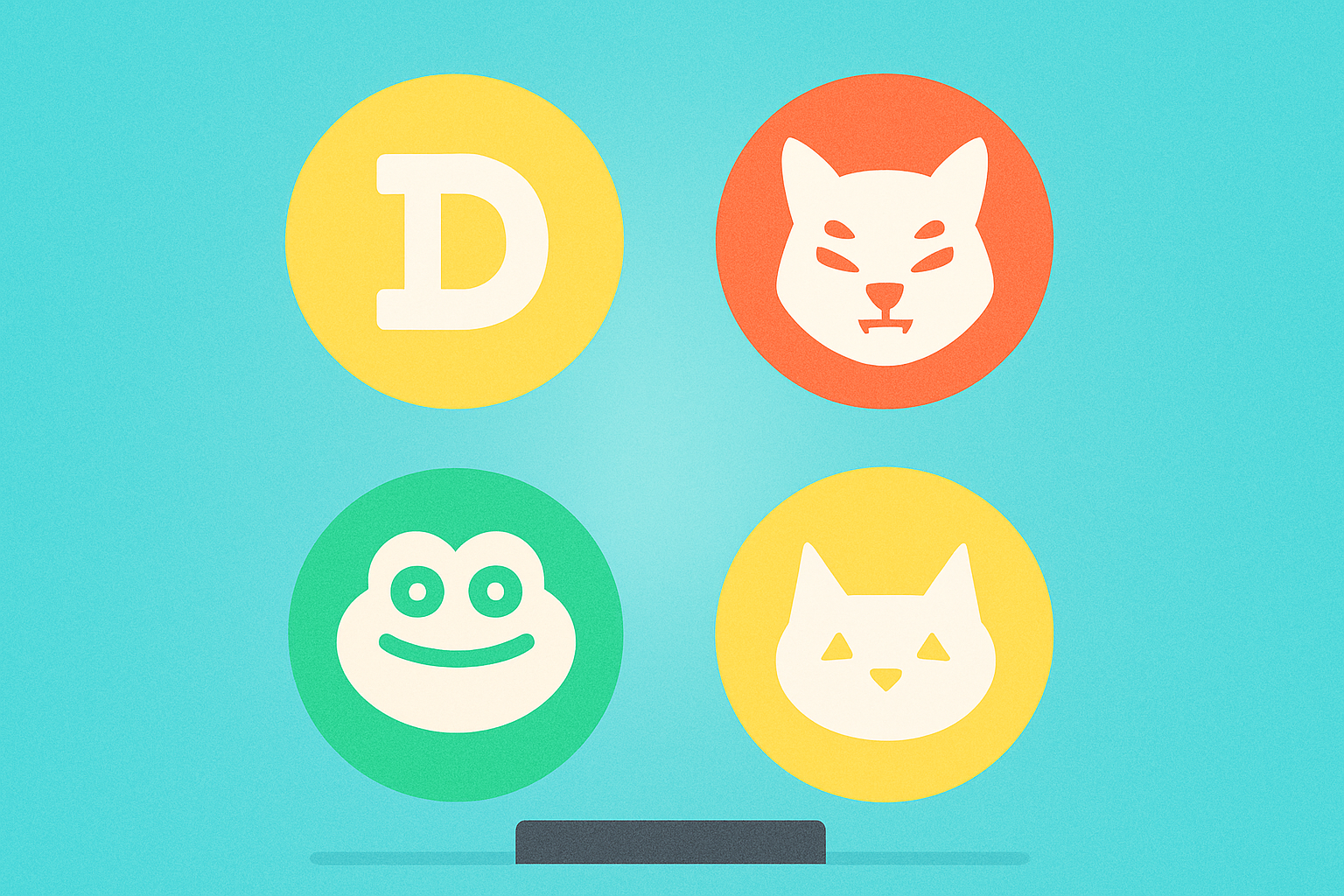
2024 Meme Coin Investment Guide: The Latest Insights. Get an in-depth comparison of leading tokens like Dogecoin, Shiba Inu, and Pepe Coin. This guide offers clear, practical explanations for Web3 beginners and intermediate users—covering how to buy with Japanese yen, essential risk management strategies for newcomers, and step-by-step instructions for purchasing safely on domestic exchanges.
How to Buy Meme Coins with Japanese Yen: Essential Methods
Meme coins, born from social media and internet memes, have established a unique presence in the cryptocurrency market. There are two primary ways to purchase meme coins with Japanese yen: buying directly on domestic exchanges or using overseas exchanges and decentralized exchanges (DEXs). It's important to understand the characteristics of each method and choose the approach that best suits your needs.
Only a limited number of meme coins can be purchased directly with yen. You can buy coins in yen only if they are listed on cryptocurrency exchanges registered with Japan’s Financial Services Agency (FSA). Notable examples include DOGE (Dogecoin), SHIB (Shiba Inu), PEPE (Pepe), and MONA (Monacoin). These coins are available on leading domestic exchanges, making it relatively easy for beginners to get started.
Most emerging meme coins are not supported by Japanese exchanges, so purchasing them typically requires using overseas exchanges or DEXs. For instance, the popular Pepe coin (PEPE) was only available on international platforms or DEXs before being listed in Japan. If you want to acquire new meme coins early, you’ll need to open an account with an overseas exchange or swap tokens on a DEX.
No matter which method you choose, be sure to fully understand the project's credibility and the risks of price volatility before buying, and always invest with surplus funds.
Major Meme Coins Available for Direct Purchase in Yen
Meme coins listed on Japanese exchanges are recognized as “crypto assets” under FSA regulations, offering strong reliability in terms of legality and security. Below are the main meme coins you can buy directly with yen, along with their features and supporting exchanges.
| Coin Name (Symbol) |
Main Domestic Exchanges |
Features & Overview |
| Dogecoin (DOGE) |
Coincheck, bitbank, GMO Coin, etc. |
The first meme coin, inspired by the Shiba Inu “Kabosu” meme. Unlimited supply, inflationary design. |
| Shiba Inu (SHIB) |
BITPOINT, SBI VC Trade, etc. |
Developed as a Dogecoin parody. ERC-20 token with over 589 trillion total supply. Community-driven, with regular token burns. |
| Pepe (PEPE) |
BITPOINT, bitFlyer, OKCoin Japan, etc. |
Based on the “Pepe the Frog” character. Employs a deflationary mechanism with token burns on every transaction. Recently listed on domestic exchanges. |
| Monacoin (MONA) |
Coincheck, bitbank, Bittrex, etc. |
Japan’s first meme coin, inspired by ASCII art “Monā.” PoW coin with its own Litecoin-derived blockchain. Strong domestic community. |
All these coins comply with Japanese regulations and provide a secure entry point for beginners.
Dogecoin (Dogecoin / DOGE)
Dogecoin is the original meme coin and holds a key role in cryptocurrency history. Developed by American engineers Jackson Palmer and Billy Markus as an internet joke, it features the Shiba Inu “Doge” meme as its logo, which quickly became a viral sensation.
Technically, Dogecoin is a PoW (Proof-of-Work) currency based on Litecoin and runs on its own blockchain, distinguishing it from tokens built on other platforms. Its fast block generation and low transaction fees have made it popular for tipping and community donations.
A defining feature of Dogecoin is its unlimited supply, making it an inflationary currency. With about 5 billion DOGE issued annually, it’s unlikely to see sustained long-term price appreciation, but this trait makes it suitable for everyday payments.
In Japan, Dogecoin has been listed on Coincheck, bitbank, GMO Coin, and other exchanges. Its widespread recognition and established trading history offer an accessible entry point for beginners.
Main Exchanges: Coincheck, bitbank, GMO Coin
Shiba Inu (Shiba Inu / SHIB)
Shiba Inu is an ERC-20 token launched by anonymous developer “Ryoshi,” who called it the “Dogecoin Killer.” It is unique among meme coins in its pursuit of a decentralized ecosystem rather than mere imitation.
Its standout characteristic is its massive supply: an initial issuance of one quadrillion (10,000 trillion) tokens, with over 589 trillion circulating long-term. As a result, the token price is extremely low, and its affordability has led to widespread popularity on social media and a global boom in recent years.
Built on Ethereum, SHIB offers broad compatibility with exchanges, wallets, DEXs, and DeFi platforms. The project continues to expand infrastructure with ShibaSwap (DEX), an NFT marketplace, and its own Layer 2 solution, Shibarium.
Token burns are ongoing to help maintain price stability and community engagement. The developer’s donation of tokens to Ethereum co-founder Vitalik Buterin also received significant attention.
Main Exchanges: BITPOINT, SBI VC Trade, OKCoin Japan, bitFlyer
Pepe (Pepe / PEPE)
PEPE is a relatively new meme token based on the internet-famous “Pepe the Frog” character. Launched by an anonymous team, its debut featured a fair launch with no presale or fees, earning high marks for transparency from the community.
PEPE's primary features include a huge supply of 420.69 trillion tokens and a deflationary mechanism that burns tokens on every transaction, gradually reducing circulation and increasing scarcity—potentially supporting long-term price appreciation.
During recent periods, PEPE became a meme coin boom icon, with its market cap reaching ¥170 billion (about $1.2 billion) at its peak. Listing on major international exchanges quickly expanded liquidity and drew many new investors.
However, there have been cases where some developers absconded with project funds, temporarily undermining credibility. Remaining team members have since addressed the issue and worked to rebuild, highlighting the risks of meme coin investments.
BITPOINT was the first Japanese exchange to list PEPE, followed by bitFlyer and OKCoin Japan.
Main Exchanges: BITPOINT, bitFlyer, OKCoin Japan
Monacoin (Monacoin / MONA)
Monacoin is Japan’s original meme coin with a long history. Developed by volunteers from the 2channel community and inspired by ASCII art “Monā,” it is the world’s first domestically-produced crypto asset and occupies a special place in Japanese crypto culture.
Technically, Monacoin runs on a Litecoin-based PoW blockchain. Blocks are generated every 1.5 minutes, with a capped supply of 105.12 million MONA and programmed halving periods, ensuring long-term scarcity.
Monacoin is more than just a joke coin; practical use has been a key focus, with early adoption for payments at Akihabara PC shops. It’s well suited for tipping culture, with Twitter tip bots and use at doujin events broadening its role.
Although new buzz has faded and market cap rankings have dropped, Monacoin’s community remains strong and development continues on GitHub. As an FSA-approved asset, it offers a stable environment for yen purchases at major exchanges.
Main Exchanges: bitFlyer, Coincheck, bitbank
Buying on Domestic Exchanges: The Easiest and Safest Approach
The easiest and safest way to buy meme coins with yen is to purchase coins listed on domestic cryptocurrency exchanges. With a Japanese exchange, you can deposit yen and buy your chosen coin directly, streamlining the process for beginners.
Basic Steps to Purchase
Open an account with a domestic exchange
Start by opening an account with a Japanese exchange that lists your desired meme coin, such as Coincheck, bitbank, or BITPOINT. Identity verification (KYC) is required, but comprehensive Japanese-language support ensures a smooth process for first-time users. Submit official ID online, and approval is typically completed within a few days.
Deposit Japanese yen
After your account is set up, deposit yen. Exchanges offer several deposit options, including bank transfer, convenience store payments, and credit card. Japanese exchanges generally support instant deposits and withdrawals, with intuitive interfaces. Deposit fees vary, so check each exchange’s policy in advance.
Buy the desired coin
Once funded, select the meme coin you want to buy and purchase with yen. Most exchanges offer two options: “dealer” (instant purchase at a set price) and “exchange” (order-based trading at your chosen price). Dealers provide convenience but higher fees; exchanges offer lower fees with more complex operations. For example, you can easily buy DOGE on Coincheck or SHIB on BITPOINT.
Advantages
- High reliability: FSA-registered domestic exchanges provide legal protection
- Japanese-language support: Prompt support in Japanese if issues arise
- Simplified tax processing: Yen-denominated trading makes tax filing and withdrawals straightforward
- Strong security: Domestic exchanges meet rigorous security standards and offer robust asset protection
Disadvantages
- Limited coin selection: Only a handful of meme coins are available in Japan
Most meme coins are new projects that require a review period before listing on domestic exchanges. As a result, only a few coins can be purchased in Japan. If you want early access to new, trending coins, you’ll need to use DEXs or overseas exchanges, which involve greater personal risk and require careful management.
Meme Coin Investment: Risks and Precautions
Meme coins offer the prospect of quick gains but are also extremely high-risk speculative assets. Before investing, it's essential to understand these key points and make careful decisions.
Extreme Price Volatility
Meme coins exhibit unusually high volatility compared to other cryptocurrencies. Prices can surge tenfold in a few days or crash just as rapidly, and many investors have suffered significant losses.
This volatility is often driven by social media, celebrity endorsements, and community sentiment—factors unrelated to underlying fundamentals. Forecasting prices is extremely difficult, and you should invest assuming the possibility of losing your entire investment.
Recommended approach: Invest only surplus funds and diversify purchases in small amounts. Never use savings needed for living expenses.
Assessing Project Credibility
Many meme coins originate as jokes, with anonymous developers and opaque management being common. This increases the risk of scams or sudden abandonment (“rug pulls”).
If you notice the following warning signs, consider avoiding investment:
- Unknown team identity or transparency: Developers are anonymous or unclear
- Concentrated token holdings: Large amounts controlled by a few addresses (insider risk)
- Excessive hype on social media: Promises of guaranteed or unrealistic returns
Recommended approach: Always review official websites, white papers, and community reputation, and gather information from trusted sources. Project transparency and development progress are key factors.
Japanese Regulations and Legal Considerations
Purchasing or holding meme coins not listed domestically is legal. However, these coins are not FSA-certified “crypto assets,” so you have no public protection in case of trouble.
Promoting or selling such coins in Japan may violate laws as unregistered business, so exercise caution. In short, overseas meme coins are entirely your responsibility and not protected by public institutions.
Profits are subject to taxation as miscellaneous income. Crypto trading profits are taxed together with other income and may result in higher tax rates. Always keep detailed transaction records for proper tax filing.
Recommended approach: When investing in meme coins not listed domestically, start with small amounts and fully understand the risks. Acquire tax knowledge and consult a professional if needed.
Summary: Practice Thorough Risk Management for Meme Coin Trading
Meme coins, with their distinctive visuals and viral appeal on social media, tend to experience sharp price swings over short periods. More coins have become available for direct yen purchase, making them accessible for beginners. However, many coins are only obtainable via overseas exchanges or DEXs, so thorough project research and risk management are essential.
For successful meme coin investing, follow these key guidelines:
- Invest only surplus funds: Never use essential personal funds; invest only what you can afford to lose
- Prioritize diversification: Spread your investment across multiple coins to reduce risk
- Verify project credibility: Rely on official sources and community reputation to avoid scams
- Understand regulations and taxes: Learn the relevant laws and tax requirements, and comply accordingly
- Avoid emotional decisions: Stay rational, regardless of sudden price surges or drops
Meme coins offer unique investment opportunities but carry significant risks. With the right knowledge and risk management, you can participate more safely in the meme coin market.
FAQ
What meme coins can be purchased with Japanese yen?
Major meme coins available for purchase in yen include Dogecoin (DOGE), Shiba Inu (SHIB), Pepe (PEPE), and Monacoin (MONA). These have strong market activity and popularity.
Which exchanges should I use to buy meme coins with Japanese yen?
To buy meme coins with yen, it’s common to use large overseas exchanges or decentralized exchanges (DEXs). Choose platforms with high trading volume and liquidity.
What are the risks and precautions of meme coin investing?
Meme coin investments are highly volatile and risky. Avoid overcommitting capital and start with small amounts. Maintain strict position management, monitor for rapid market changes, and invest within your risk tolerance.
What are the characteristics of Dogecoin, Shiba Inu, and other popular meme coins?
Dogecoin, Shiba Inu, Pepe, Floki Inu, and other popular meme coins are inspired by internet memes. They are driven by strong communities and viral attention, resulting in extreme price volatility and high speculation. Security and scam risks are elevated, so thorough due diligence is essential.
What should I do if meme coins are not available on Japanese exchanges?
You can use overseas exchanges or decentralized exchanges (DEXs). Buy BTC/ETH on domestic exchanges, transfer to an overseas exchange or wallet, then swap for meme coins on a DEX.
* The information is not intended to be and does not constitute financial advice or any other recommendation of any sort offered or endorsed by Gate.