This comprehensive analysis examines Michael Saylor's Bitcoin investment strategy and MicroStrategy's aggressive accumulation approach in the current market environment. The article explores how the company leverages its cost basis as a strategic benchmark when Bitcoin trades around $88,000, analyzing the balance between conviction in Bitcoin's long-term value and near-term financial management. It details MicroStrategy's funding mechanisms through securities issuance programs and examines key market indicators including ETF flows, stablecoin supply trends, and order book depth that influence Bitcoin price trajectories. The piece demonstrates how institutional investors like Saylor view Bitcoin dips as accumulation opportunities while navigating complex market dynamics. Ideal for investors seeking to understand institutional Bitcoin strategy, cost basis implications, and the interplay between equity markets and cryptocurrency performance on Gate and other platforms.
Bitcoin Price & MSTR Stock
Bitcoin's position around the $88,000 level has brought renewed attention to Michael Saylor and Strategy's running cost basis. This price level is particularly significant because sustained trading below the company's average purchase price tests the balance sheet flexibility that remains after an extended accumulation cycle spanning multiple years.
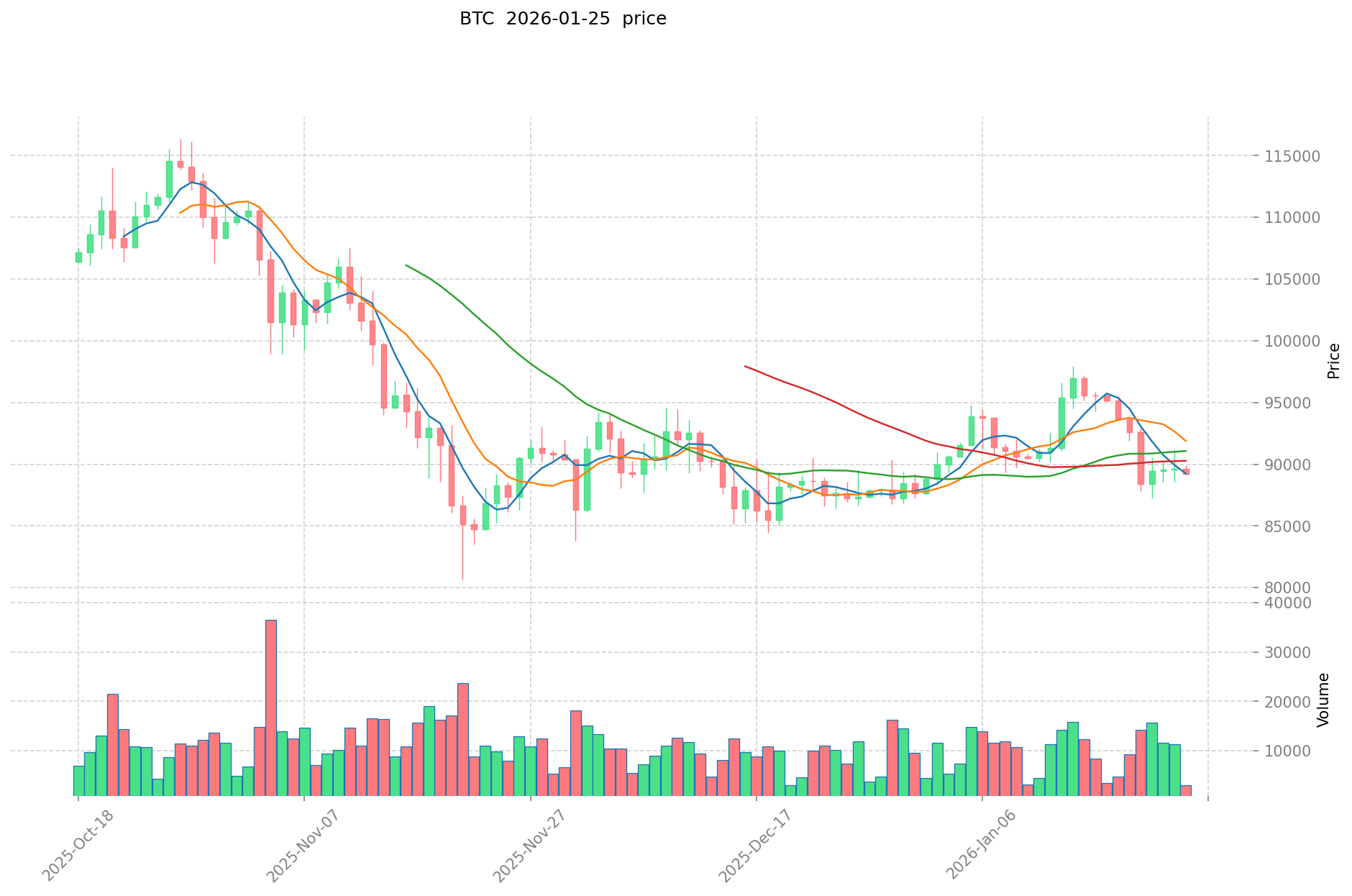
Strategy has not published recent updates on expected Bitcoin purchases, which has led market observers to speculate that the company may have paused its continuous Bitcoin investment program. The company's stock has shown resilience in recent trading sessions, maintaining levels above $177 and posting gains of approximately 4% during certain periods.
The company's acquisition strategy has been notably aggressive in recent quarters. In late 2024, Strategy added more than 8,000 Bitcoin between mid-November at a reported average cost near $102,000 for that specific tranche. This substantial purchase expanded the company's Bitcoin holdings while simultaneously pushing the blended cost basis higher than it would have been without this late-year buying activity.
The dynamics become particularly interesting when spot Bitcoin trades below the latest acquisition levels and approaches the blended cost basis. During these periods, market pressure tends to shift from celebrating headline gains to managing liquidity concerns. This shift occurs because new capital deployed at higher price points requires more time to generate unrealized profits, especially during periods of market weakness or consolidation.
Strategy's public disclosures reveal that recent Bitcoin acquisitions have relied heavily on securities issuance programs. This funding mechanism means that the equity market's risk appetite plays a crucial role in determining both the pace and scale of future Bitcoin additions. The company's ability to continue its accumulation strategy is therefore tied not only to Bitcoin's price performance but also to investor sentiment in traditional equity markets.
Michael Saylor has consistently demonstrated conviction in his Bitcoin investment thesis, even during challenging market conditions. During the depths of the 2022 cryptocurrency bear market, when Strategy's average cost basis stood at approximately $30,000 while Bitcoin traded nearly 50% below that level at around $16,000, the company's response was to acquire more Bitcoin rather than reduce exposure. This historical precedent provides insight into the company's long-term strategic approach and willingness to accumulate during periods of market distress.
Price behavior in the coming period will be critical in determining the trajectory of Strategy's Bitcoin strategy. A swift recovery above recent acquisition levels would restore financial cushions and alleviate concerns about near-term dilution from securities issuance. Such a recovery would also validate the company's aggressive accumulation strategy and potentially enable additional purchases at favorable terms.
Conversely, an extended period of trading below the blended cost basis would intensify scrutiny on treasury policy and the timing of any further securities issuance. This scenario would be particularly significant because proceeds from capital markets programs have been central to building the company's Bitcoin position throughout the past year. Market participants would closely monitor how management balances the desire to continue accumulating Bitcoin against the need to maintain shareholder value and minimize dilution.
Other Factors Besides Strategy
Strategy's financial toolkit is well-documented in regulatory filings and provides multiple pathways for continued Bitcoin accumulation. Market reports describe various instruments including common equity sales, preferred share issuance, and a stated intention to continue utilizing capital markets to acquire Bitcoin through 2027. These financial tools function most effectively when market liquidity remains stable and when equity valuations trade at a premium to the value of underlying Bitcoin holdings. This premium is crucial because it effectively lowers the cost of new Bitcoin purchases by allowing the company to issue equity at favorable terms.
However, the effectiveness of this strategy depends heavily on market conditions. If equity market risk appetite deteriorates in conjunction with cryptocurrency weakness, securities issuance remains technically possible but may become less accretive to existing shareholders. This dynamic explains why equity market performance and cryptocurrency market trends have become increasingly correlated in research analyses focusing on Strategy and similar Bitcoin-holding companies.
Several external market signals will frame Strategy's next strategic moves and the broader Bitcoin market trajectory. Exchange-traded fund flows into and out of spot Bitcoin products represent a significant factor influencing day-to-day settlement demand and price action. These flows provide insight into institutional and retail investor sentiment and can create sustained buying or selling pressure.
Stablecoin supply trends offer another critical indicator for market analysts. Changes in stablecoin supply help distinguish genuine cash-led buying activity from short covering during market rebounds. When stablecoin supply expands, it typically indicates new capital entering the cryptocurrency ecosystem, which can support sustained price appreciation. Conversely, declining stablecoin supply may signal capital outflows and reduced buying power.
Order book depth across Bitcoin and Ethereum trading pairs provides additional insight into market health and liquidity conditions. Deep order books indicate that market makers are comfortable warehousing inventory through uncertain periods or significant events, which generally supports price stability. Shallow order books, by contrast, can lead to increased volatility and make large transactions more difficult to execute without significant price impact.
The interplay between these various market indicators is crucial for understanding potential price trajectories. When exchange-traded fund flows, stablecoin supply, and order book depth all stabilize and show positive trends simultaneously, Bitcoin price recoveries typically find sustained follow-through and can establish new trading ranges. However, when these measures diverge or show conflicting signals, price bounces often prove temporary and fade into lower closing prices, creating challenging conditions for companies like Strategy that maintain substantial Bitcoin exposure on their balance sheets.
For Michael Saylor and Strategy, navigating these complex market dynamics requires balancing conviction in Bitcoin's long-term value proposition against near-term financial management considerations. The company's cost basis serves as a psychological and financial benchmark that influences both internal decision-making and external market perception of the company's Bitcoin strategy.
FAQ
Michael Saylor的成本线是什么意思?为什么投资者关注它?
Michael Saylor的成本线是指其公司MicroStrategy购入比特币的平均成本价格。投资者关注它因为它反映了机构投资者的持仓成本,可作为市场支撑位参考。当比特币价格接近或突破成本线时,往往预示着市场方向的关键转折点。
What is MicroStrategy's investment strategy when Bitcoin is below $90,000?
MicroStrategy maintains an aggressive accumulation strategy at lower Bitcoin prices, viewing dips below $90,000 as buying opportunities. The company continues dollar-cost averaging purchases to increase its Bitcoin holdings, leveraging its balance sheet strength to acquire more BTC during market corrections.
What investment value does Michael Saylor see in Bitcoin's current price position below $90,000?
Michael Saylor views Bitcoin below $90,000 as an attractive accumulation opportunity, representing strong value for long-term institutional investors seeking portfolio diversification and inflation protection in digital assets.
What is the impact of the cost line breakthrough on Bitcoin's future market?
Cost line breakthrough signals strong support. If Bitcoin sustains above this level, it could trigger institutional buying and potentially push prices toward $100,000, indicating a bullish reversal in market sentiment.
What is Michael Saylor's average cost basis for Bitcoin holdings?
Michael Saylor's Bitcoin cost basis averages approximately $26,000 per coin. MicroStrategy, under his leadership, has accumulated over 27,000 BTC through strategic purchases at varying price points since 2020.
* The information is not intended to be and does not constitute financial advice or any other recommendation of any sort offered or endorsed by Gate.