This comprehensive analysis compares NEAR and FLOW, two leading Layer-1 blockchain platforms for smart contract development and DApp deployment. The article examines historical price performance, tokenomics, institutional adoption, and technical ecosystems to help investors understand their distinct positioning. NEAR emphasizes scalable infrastructure through state sharding technology and developer tools for decentralized applications, while FLOW specializes in consumer-facing entertainment and NFT platforms with unique multi-role architecture. The guide provides 2026-2031 price forecasts, detailed investment strategies tailored to beginner, experienced, and institutional investors, and comprehensive risk analysis. Whether you're seeking infrastructure protocol exposure or entertainment sector positioning, this comparison on Gate equips investors with data-driven insights for informed decision-making in the evolving blockchain landscape.
Introduction: NEAR vs FLOW Investment Comparison
In the cryptocurrency market, the comparison between NEAR vs FLOW has been a topic of interest among investors. Both projects show notable differences in market capitalization ranking, application scenarios, and price performance, representing distinct positioning within the crypto asset landscape.
NEAR (NEAR): Launched in 2020, NEAR Protocol has gained market recognition as a highly scalable infrastructure protocol designed to support DApp operations with sufficient speed on mobile devices. Through state sharding technology, the blockchain can scale linearly with the number of network nodes.
FLOW (FLOW): Since its 2020 launch, FLOW has positioned itself as a platform for next-generation games, applications, and digital assets. Created by developers behind some popular applications on existing crypto networks, FLOW integrates usability improvements directly into the protocol layer.
This article will provide a comprehensive analysis of NEAR vs FLOW investment value comparison, focusing on historical price trends, supply mechanisms, institutional adoption, technical ecosystems, and future outlook, while attempting to address investors' most pressing question:
"Which is the better buy right now?"
I. Historical Price Comparison and Current Market Status
- 2022: NEAR experienced significant volatility, reaching a notable price level of $20.44 in January before entering a prolonged correction phase.
- 2021: FLOW reached its peak at $42.4 in April, representing a substantial valuation during the market cycle.
- Comparative analysis: During the extended market correction, NEAR declined from $20.44 to lower levels, while FLOW demonstrated a more pronounced decline from $42.4, reflecting differing market responses to broader sector conditions.
Current Market Status (2026-01-14)
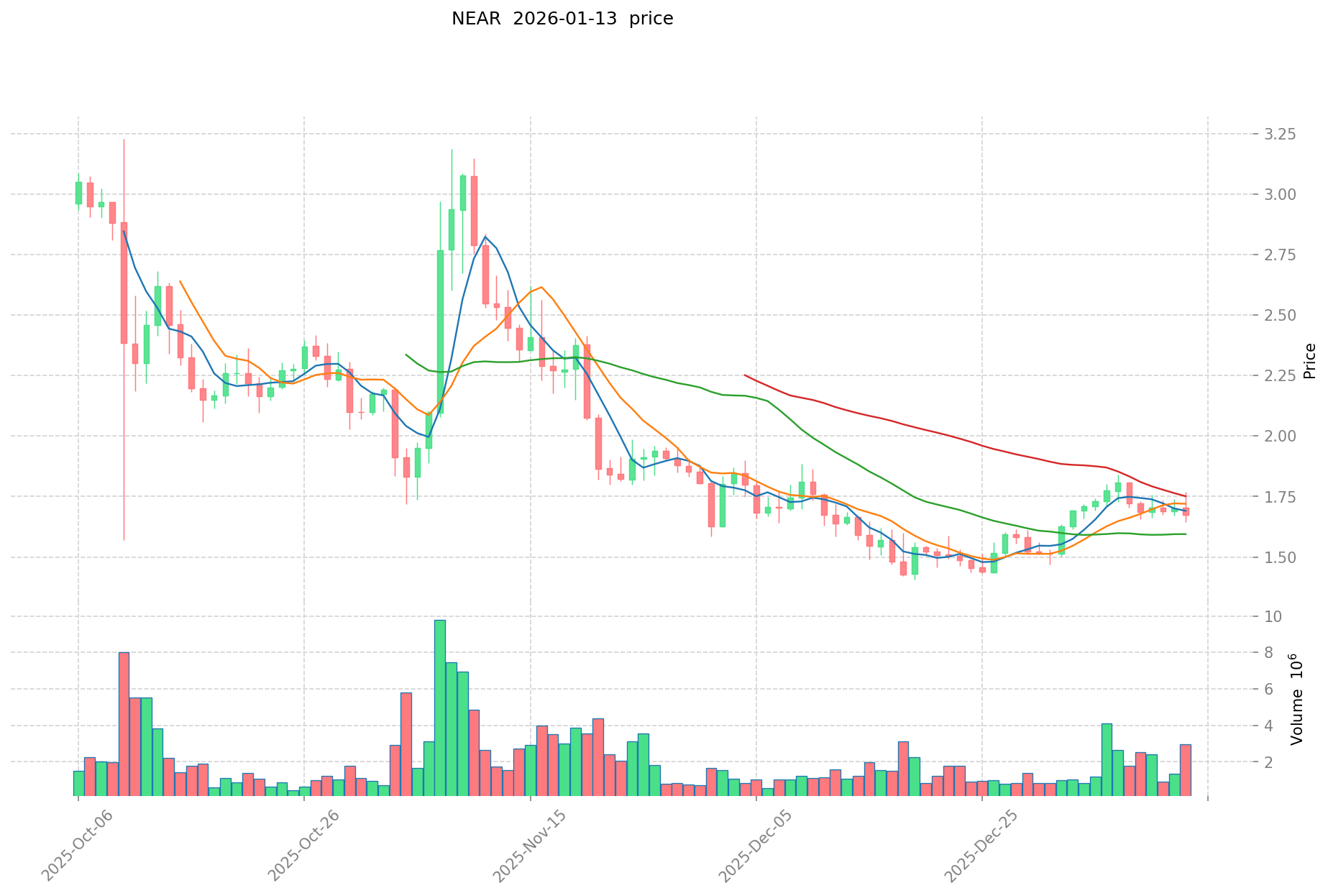
- NEAR current price: $1.8266
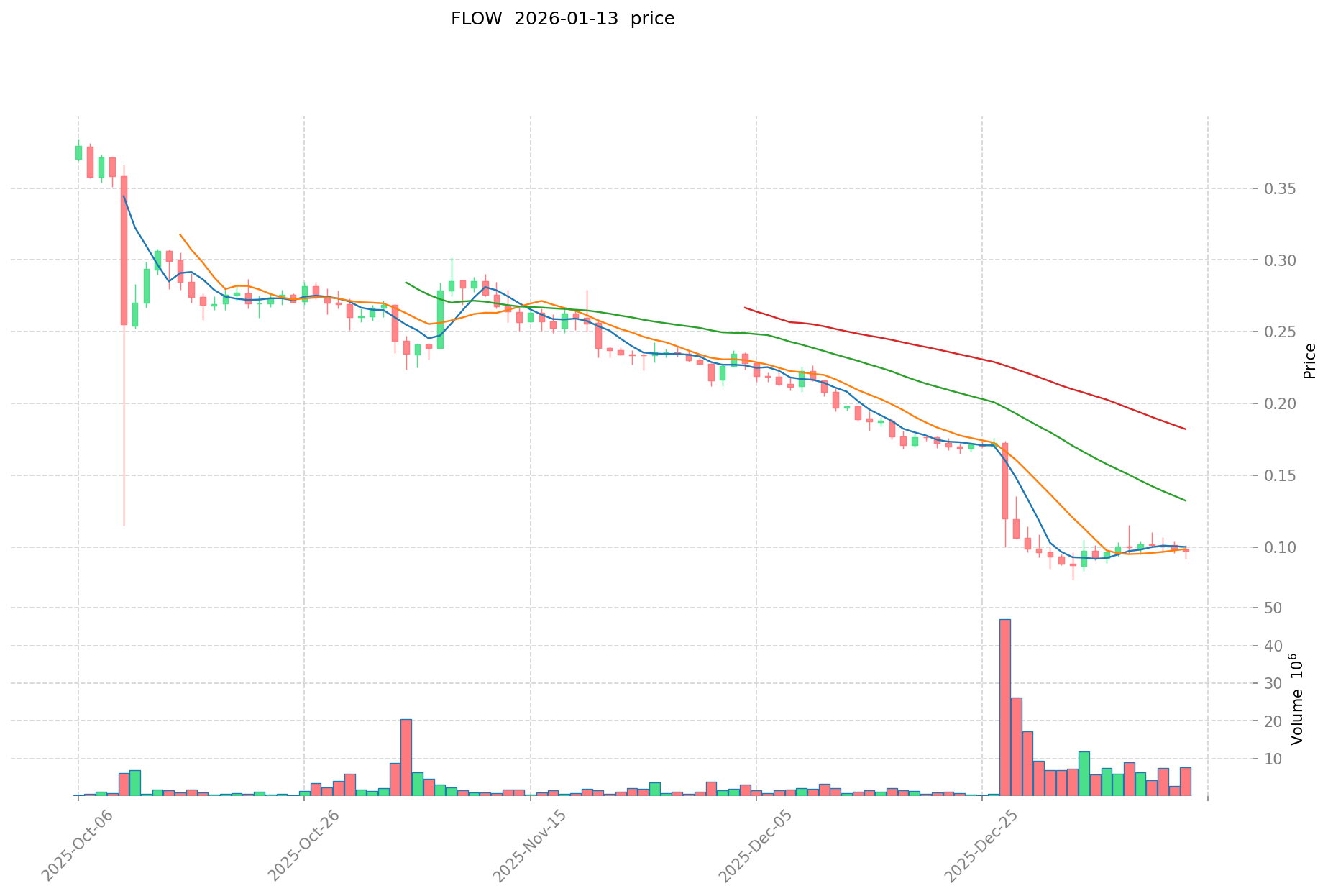
- FLOW current price: $0.09517
- 24-hour trading volume: NEAR $7.21M vs FLOW $1.60M
- Market sentiment index (Fear & Greed Index): 26 (Fear)
View real-time prices:
II. Core Factors Influencing NEAR vs FLOW Investment Value
Supply Mechanism Comparison (Tokenomics)
-
NEAR: Features a dynamic supply model with annual issuance that adjusts based on network activity and staking participation. The protocol implements an inflationary mechanism balanced by token burning from transaction fees.
-
FLOW: Operates with a planned token release schedule that gradually increases circulating supply over time through validator rewards and ecosystem incentives. The protocol incorporates periodic token unlocks from early investors and team allocations.
-
📌 Historical Pattern: Supply mechanisms influence price cycles through predictable inflation rates and unlock events, creating periodic selling pressure that markets typically anticipate and price in advance.
Institutional Adoption and Market Application
-
Institutional Holdings: Both protocols have attracted institutional attention, though detailed comparative holdings data requires ongoing market analysis.
-
Enterprise Adoption: NEAR focuses on decentralized application infrastructure and developer tooling, while FLOW emphasizes entertainment and digital collectibles sectors. Both explore use cases in payment systems and settlement solutions.
-
National Policy: Regulatory approaches vary by jurisdiction, with both protocols subject to evolving frameworks for blockchain platforms and digital assets across different countries.
Technology Development and Ecosystem Building
-
NEAR Technology Upgrades: The protocol continues developing sharding technology and cross-chain interoperability features, aiming to enhance scalability and developer experience through simplified onboarding tools.
-
FLOW Technology Development: FLOW advances its unique multi-role architecture and resource-oriented programming model, focusing on consumer-facing applications and mainstream accessibility.
-
Ecosystem Comparison: NEAR emphasizes DeFi infrastructure and developer tools, while FLOW concentrates on NFT marketplaces and digital entertainment. Both platforms support smart contract deployment with different programming paradigms and use cases.
Macroeconomic Environment and Market Cycles
-
Inflation Environment Performance: Both assets demonstrate characteristics of risk assets rather than traditional inflation hedges, with performance influenced by broader crypto market sentiment and technological adoption trends.
-
Macroeconomic Monetary Policy: Interest rate changes and dollar index movements affect both protocols similarly as part of the broader digital asset class, influencing capital flows and risk appetite.
-
Geopolitical Factors: Cross-border transaction demand and international developments create varying conditions for blockchain adoption, with both platforms positioned to benefit from increased digital infrastructure needs.
III. 2026-2031 Price Prediction: NEAR vs FLOW
Short-term Forecast (2026)
- NEAR: Conservative $1.46-$1.85 | Optimistic $1.85-$2.18
- FLOW: Conservative $0.078-$0.095 | Optimistic $0.095-$0.14
Mid-term Forecast (2028-2029)
- NEAR may enter a growth phase, with projected prices ranging from $1.28 to $2.76
- FLOW may enter a consolidation phase, with projected prices ranging from $0.078 to $0.17
- Key drivers: institutional capital inflows, ETF developments, ecosystem expansion
Long-term Forecast (2030-2031)
- NEAR: Base scenario $2.14-$2.76 | Optimistic scenario $2.64-$3.59
- FLOW: Base scenario $0.14-$0.24 | Optimistic scenario $0.20-$0.28
View detailed price predictions for NEAR and FLOW
Disclaimer
NEAR:
| Year |
Predicted High Price |
Predicted Average Price |
Predicted Low Price |
Price Change |
| 2026 |
2.181702 |
1.8489 |
1.460631 |
1 |
| 2027 |
2.31759615 |
2.015301 |
1.95484197 |
10 |
| 2028 |
2.36142894675 |
2.166448575 |
1.27820465925 |
18 |
| 2029 |
2.7620052882675 |
2.263938760875 |
2.19602059804875 |
23 |
| 2030 |
2.764269227028375 |
2.51297202457125 |
2.437582863834112 |
37 |
| 2031 |
3.588524051087745 |
2.638620625799812 |
2.137282706897848 |
44 |
FLOW:
| Year |
Predicted High Price |
Predicted Average Price |
Predicted Low Price |
Price Change |
| 2026 |
0.1399293 |
0.09519 |
0.0780558 |
0 |
| 2027 |
0.1375447905 |
0.11755965 |
0.0623066145 |
23 |
| 2028 |
0.1594402753125 |
0.12755222025 |
0.1058683428075 |
33 |
| 2029 |
0.1721954973375 |
0.14349624778125 |
0.077487973801875 |
50 |
| 2030 |
0.235190350113468 |
0.157845872559375 |
0.143639744029031 |
65 |
| 2031 |
0.277090536984354 |
0.196518111336421 |
0.14935376461568 |
106 |
IV. Investment Strategy Comparison: NEAR vs FLOW
Long-term vs Short-term Investment Strategies
-
NEAR: Suitable for investors focused on decentralized application infrastructure, developer ecosystem growth, and scalable blockchain technology. The protocol's emphasis on sharding technology and mobile accessibility positions it for long-term infrastructure value capture as decentralized applications mature.
-
FLOW: Suitable for investors interested in digital entertainment, NFT market dynamics, and consumer-facing blockchain applications. The platform's concentration on mainstream accessibility and entertainment use cases aligns with investors seeking exposure to digital collectibles and gaming sectors.
Risk Management and Asset Allocation
-
Conservative Investors: NEAR 30% vs FLOW 20%, with remainder allocated to established digital assets and stablecoins to manage volatility exposure while maintaining blockchain infrastructure positioning.
-
Aggressive Investors: NEAR 45% vs FLOW 35%, with higher allocation reflecting greater risk tolerance for infrastructure and entertainment sector growth potential, supplemented by emerging protocol exposure.
-
Hedging Tools: Stablecoin allocation for liquidity management, options strategies for downside protection, cross-asset portfolio construction combining infrastructure and application layer protocols.
V. Potential Risk Comparison
Market Risk
-
NEAR: Exposure to broader infrastructure protocol competition, with performance influenced by developer adoption rates, ecosystem funding sustainability, and market preference shifts toward alternative scaling solutions.
-
FLOW: Exposure to entertainment sector cyclicality, with performance tied to NFT market sentiment, mainstream application adoption rates, and consumer engagement with digital collectibles platforms.
Technical Risk
-
NEAR: Scalability implementation complexity, network stability during high transaction volumes, sharding coordination challenges, and cross-chain interoperability execution.
-
FLOW: Multi-role architecture adoption barriers, resource-oriented programming model learning curve, network performance optimization, and security considerations in consumer-facing applications.
Regulatory Risk
- Global regulatory frameworks affect both protocols differently based on their primary use cases. NEAR faces infrastructure protocol classification considerations across jurisdictions, while FLOW encounters evolving regulations specific to digital collectibles, entertainment applications, and consumer protection requirements. Both protocols navigate varying compliance requirements for blockchain platforms and digital asset operations internationally.
VI. Conclusion: Which Is the Better Buy?
📌 Investment Value Summary:
-
NEAR Advantages: Focuses on foundational blockchain infrastructure with sharding technology for linear scalability, supports diverse decentralized application development with developer-friendly tools, and maintains positioning in the growing DeFi and infrastructure sectors with cross-chain interoperability development.
-
FLOW Advantages: Specializes in consumer-facing applications with mainstream accessibility focus, maintains established presence in NFT and digital entertainment markets, and offers unique multi-role architecture designed for resource-efficient application deployment.
✅ Investment Recommendations:
-
Beginner Investors: Consider diversified exposure across both protocols with emphasis on understanding fundamental differences in use cases. Start with smaller position sizes to manage volatility, prioritize education on blockchain infrastructure versus application layer distinctions, and maintain stablecoin reserves for risk management.
-
Experienced Investors: Evaluate allocation based on sector preferences between infrastructure (NEAR) and entertainment (FLOW). Consider market cycle positioning, implement active monitoring of ecosystem development metrics, and utilize options strategies for portfolio hedging where available.
-
Institutional Investors: Assess strategic positioning within broader blockchain infrastructure and application portfolios. Consider correlation analysis with existing holdings, evaluate liquidity requirements for position sizing, and conduct ongoing due diligence on protocol governance and development roadmaps.
⚠️ Risk Warning: Cryptocurrency markets exhibit extreme volatility, and this content does not constitute investment advice.
VII. FAQ
Q1: What are the main differences between NEAR and FLOW protocols?
NEAR focuses on scalable infrastructure for decentralized applications using state sharding technology, while FLOW specializes in consumer-facing entertainment and NFT applications with a unique multi-role architecture. NEAR emphasizes developer tools and DeFi infrastructure with linear scalability as network nodes increase, whereas FLOW prioritizes mainstream accessibility and digital collectibles through resource-oriented programming designed for games and entertainment platforms.
Q2: Which protocol shows better historical price performance?
FLOW reached a higher peak at $42.4 in April 2021 compared to NEAR's $20.44 in January 2022, but FLOW experienced a more pronounced decline during market corrections. As of January 14, 2026, NEAR trades at $1.8266 with $7.21M in 24-hour volume, while FLOW trades at $0.09517 with $1.60M volume, indicating NEAR maintains stronger current market positioning and liquidity despite both assets experiencing significant corrections from their peaks.
Q3: How do the supply mechanisms differ between NEAR and FLOW?
NEAR operates a dynamic supply model with annual issuance that adjusts based on network activity and staking participation, balanced by token burning from transaction fees. FLOW follows a planned token release schedule with gradual circulating supply increases through validator rewards and ecosystem incentives, including periodic unlocks from early investors and team allocations. Both mechanisms create predictable inflation patterns that markets typically anticipate, though NEAR's dynamic approach responds more directly to network usage.
Q4: What are the price predictions for NEAR and FLOW through 2031?
For 2026, NEAR conservative estimates range from $1.46-$1.85 with optimistic scenarios reaching $2.18, while FLOW conservative estimates range from $0.078-$0.095 with optimistic scenarios at $0.14. By 2031, NEAR's base scenario projects $2.14-$2.76 with optimistic potential of $3.59, whereas FLOW's base scenario projects $0.14-$0.24 with optimistic potential of $0.28. These projections depend on institutional adoption, ecosystem expansion, and broader market cycles.
Q5: Which protocol is suitable for different investor types?
Conservative investors may consider 30% NEAR and 20% FLOW allocation with remainder in established assets, while aggressive investors might allocate 45% NEAR and 35% FLOW with higher risk tolerance. Beginner investors should start with smaller positions emphasizing education on infrastructure versus application layer differences, experienced investors should evaluate sector preferences between infrastructure and entertainment, and institutional investors should assess strategic positioning within broader blockchain portfolios with correlation analysis.
Q6: What are the primary risks associated with each protocol?
NEAR faces infrastructure protocol competition, developer adoption rate dependencies, and sharding coordination challenges affecting network stability during high transaction volumes. FLOW encounters entertainment sector cyclicality, NFT market sentiment exposure, and multi-role architecture adoption barriers with resource-oriented programming learning curves. Both protocols face regulatory considerations varying by jurisdiction, with NEAR subject to infrastructure classification frameworks and FLOW navigating digital collectibles and consumer protection requirements.
Q7: How does current market sentiment affect investment decisions?
The current Fear & Greed Index at 26 (Fear) indicates cautious market conditions that historically present accumulation opportunities for long-term investors but require careful risk management. Both NEAR and FLOW demonstrate risk asset characteristics influenced by broader crypto market sentiment, macroeconomic monetary policy, and interest rate environments. Investors should consider maintaining stablecoin reserves for liquidity, implementing hedging strategies through options where available, and avoiding excessive leverage during fearful market conditions while evaluating fundamental protocol development progress independent of short-term price movements.
* The information is not intended to be and does not constitute financial advice or any other recommendation of any sort offered or endorsed by Gate.