This comprehensive analysis compares NEXO and ADA as investment opportunities in 2024-2031, examining two distinct cryptocurrency segments: centralized lending services versus blockchain infrastructure. NEXO, trading at $0.96 with $1.5 billion in processed loans during 2024, offers established financial services with fixed 1 billion token supply and strategic partnerships. ADA, trading at $0.42 with superior liquidity of $5.65B daily volume, represents a blockchain platform executing a phased development roadmap addressing scalability and interoperability. The article evaluates historical price performance, tokenomics, technology evolution, market risks, and price forecasts through 2031, providing allocation strategies for conservative through institutional investors. Both assets present distinct risk-reward profiles within the crypto ecosystem on Gate exchange, requiring careful due diligence based on individual investment objectives and risk tolerance.
Introduction: NEXO Investment Value Analysis
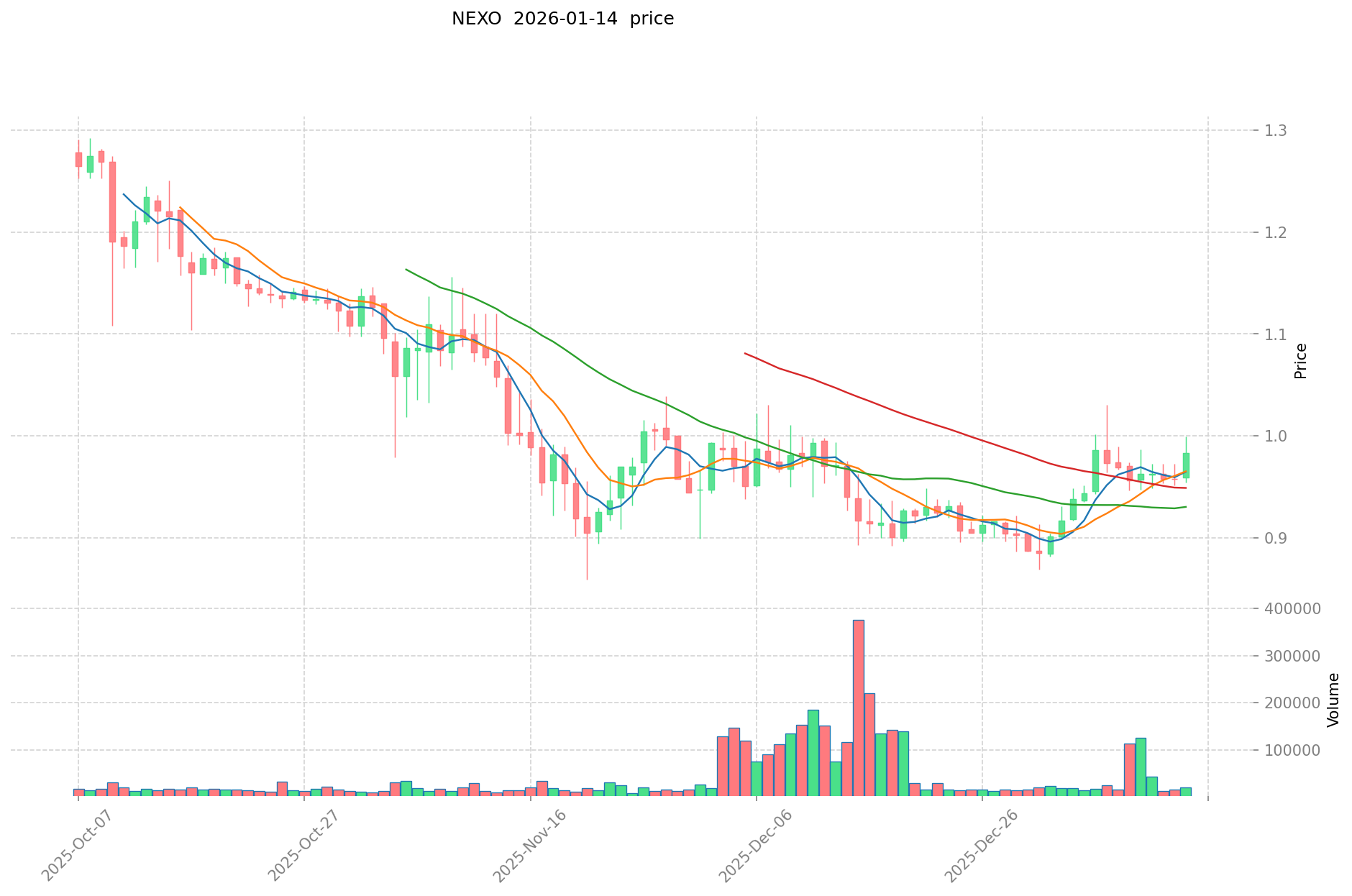
In the crypto asset market, NEXO has emerged as a distinctive player in the digital finance sector. As of January 14, 2026, NEXO ranks 91st by market capitalization with a trading price of approximately $0.96, representing a fully circulating supply of 1 billion tokens.
NEXO launched in October 2017 and has positioned itself as a platform providing instant crypto credit lines ranging from $500 to $2,000,000, operating across over 200 jurisdictions. Within its early growth phase, the platform attracted more than 170,000 users and facilitated substantial credit issuance, helping the crypto community unlock potential wealth from their assets without requiring liquidation. All crypto assets stored on the platform are protected by custodian insurance.
The platform has established partnerships with industry participants including BitGo, Coinbase, PrimeTrust, TrueUSD, Onfido, and Coinfirm, and is recognized as one of the significant entities within the Crypto Valley blockchain cluster in Switzerland and Liechtenstein.
This article will examine NEXO's investment characteristics through an analysis of its historical price performance, supply structure, market position, and associated risk factors. Key aspects to be covered include:
Price trends from its historical low of $0.045 in September 2018 to subsequent market cycles
Token supply dynamics with a fixed maximum supply of 1 billion tokens
Platform functionality and operational model
Risk considerations for potential investors
The analysis aims to provide a comprehensive overview based on available market data and project information, without constituting investment recommendations.
I. Historical Price Comparison and Current Market Status
Historical Price Trends of NEXO (Coin A) and ADA (Coin B)
- 2021: NEXO reached a price level near $4.07 in May, representing a notable peak during the broader cryptocurrency market rally.
- 2021: ADA experienced significant growth, reaching approximately $3.09 in September, driven by developments in the Cardano protocol and increased market interest.
- Comparative Analysis: During the market cycle from 2021 to 2026, NEXO declined from $4.07 to approximately $0.96, while ADA decreased from $3.09 to around $0.42, reflecting similar downward pressure across both assets during the extended market correction period.
Current Market Status (January 14, 2026)
- NEXO current price: $0.9586
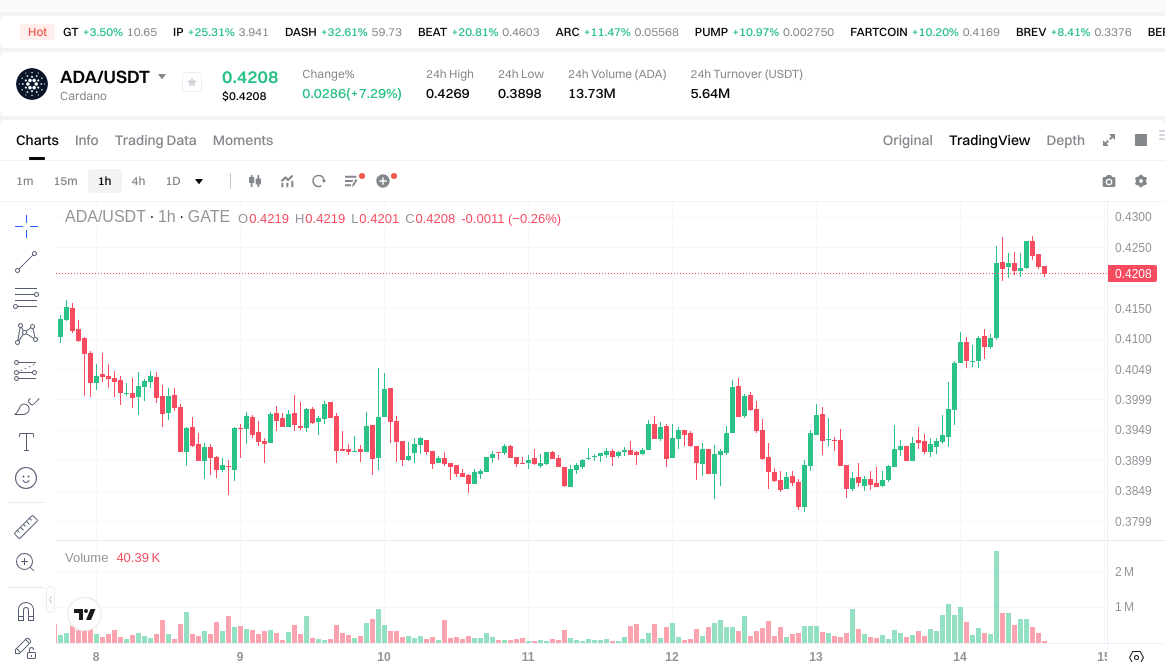
- ADA current price: $0.4214
- 24-hour trading volume: NEXO recorded $19.96M compared to ADA's $5.65B
- Market Sentiment Index (Fear & Greed Index): 48 (Neutral)
View real-time prices:
II. Core Factors Influencing NEXO vs ADA Investment Value
Supply Mechanism Comparison (Tokenomics)
- NEXO: The materials do not provide specific information regarding NEXO's supply mechanism or tokenomics structure.
- ADA: ADA operates as the native cryptocurrency of the Cardano blockchain. According to available materials, Cardano has undergone five major development phases (Byron, Shelley, Goguen, Basho, and Voltaire), each addressing different aspects of scalability, decentralization, smart contracts, scalability enhancement, and governance.
- 📌 Historical Pattern: While specific supply mechanisms are not detailed in the materials, the phased development approach of Cardano suggests a structured evolution that may influence adoption cycles and utility expansion over time.
Institutional Adoption and Market Application
- Platform Partnerships: Nexo's integration with Cardano creates additional utility for ADA holders, potentially reducing selling pressure and enhancing value proposition. This partnership enables ADA holders to access lending services through the Nexo platform.
- Enterprise Integration: The materials indicate Nexo processed over $1.5 billion in cryptocurrency loans and distributed over $250 million in interest during 2024, establishing its position as a digital asset wealth platform. However, specific comparative data on institutional holdings between NEXO and ADA is not available in the materials.
- Cross-border Applications: Both assets may serve different roles in payment and settlement systems, though the materials do not provide detailed comparative analysis of their respective adoption in cross-border transactions.
Technology Development and Ecosystem Building
- Cardano Technology Roadmap: Cardano addresses three strategic challenges faced by blockchain networks: scalability, interoperability, and sustainability. The five-phase development plan includes:
- Byron: Infrastructure and foundational blockchain language development
- Shelley: Decentralization implementation
- Goguen: Smart contract functionality
- Basho: Scalability enhancement
- Voltaire: Governance mechanisms
- Nexo Platform Evolution: Nexo's 2025 development plan includes expanded trading capabilities (futures with multi-asset collateral, 100x leverage contracts), enhanced enterprise solutions (white-label solutions, payment gateways), core product upgrades (extended fixed-term deposits), and Nexo Card global expansion.
- Ecosystem Comparison: Cardano functions as a blockchain platform supporting ecosystem applications, while Nexo operates as a centralized financial services platform. The materials indicate complementary rather than directly competitive positioning.
Macroeconomic Factors and Market Cycles
- Market Performance Considerations: The materials note that digital assets carry high risks, including market price volatility, regulatory changes, and technological evolution. Past performance does not reliably predict future results.
- Strategic Partnerships: Nexo has established partnerships with organizations including Tennis Australia (Australian Open), DP World Tour, and acquired Buenbit to strengthen regional presence. These partnerships may enhance brand recognition and user adoption.
- Market Positioning: Both assets operate within different segments of the digital asset ecosystem—Nexo as a lending and financial services platform, and ADA as a blockchain platform token. Their value drivers may respond differently to broader market conditions based on their respective use cases and adoption patterns.
III. 2026-2031 Price Forecast: NEXO vs ADA
Short-term Forecast (2026)
- NEXO: Conservative $0.67-$0.96 | Optimistic $0.96-$1.02
- ADA: Conservative $0.40-$0.42 | Optimistic $0.42-$0.50
Mid-term Forecast (2028-2029)
- NEXO may enter a gradual appreciation phase, with estimated price range of $0.84-$1.95
- ADA may enter a moderate growth phase, with estimated price range of $0.33-$0.86
- Key drivers: institutional capital inflows, ETF developments, ecosystem expansion
Long-term Forecast (2030-2031)
- NEXO: Baseline scenario $1.34-$2.05 | Optimistic scenario $2.05-$2.90
- ADA: Baseline scenario $0.61-$0.85 | Optimistic scenario $0.85-$1.15
View detailed price predictions for NEXO and ADA
Disclaimer: Price predictions are based on historical data analysis and market trends. Cryptocurrency markets are highly volatile and subject to various risks. These forecasts should not be considered as investment advice. Users should conduct their own research and consult with financial professionals before making any investment decisions.
NEXO:
| Year |
Predicted High Price |
Predicted Average Price |
Predicted Low Price |
Price Change |
| 2026 |
1.016858 |
0.9593 |
0.67151 |
0 |
| 2027 |
1.29438349 |
0.988079 |
0.62248977 |
3 |
| 2028 |
1.56348680565 |
1.141231245 |
0.8445111213 |
19 |
| 2029 |
1.947396996468 |
1.352359025325 |
1.12245799101975 |
41 |
| 2030 |
2.458318236235785 |
1.6498780108965 |
1.336401188826165 |
72 |
| 2031 |
2.89627835422826 |
2.054098123566142 |
1.602196536381591 |
114 |
ADA:
| Year |
Predicted High Price |
Predicted Average Price |
Predicted Low Price |
Price Change |
| 2026 |
0.495954 |
0.4203 |
0.403488 |
0 |
| 2027 |
0.61389018 |
0.458127 |
0.28403874 |
8 |
| 2028 |
0.7075313388 |
0.53600859 |
0.5145682464 |
27 |
| 2029 |
0.858042550872 |
0.6217699644 |
0.329538081132 |
47 |
| 2030 |
0.96927719750316 |
0.739906257636 |
0.60672313126152 |
75 |
| 2031 |
1.145152914943237 |
0.85459172756958 |
0.666581547504272 |
102 |
IV. Investment Strategy Comparison: NEXO vs ADA
Long-term vs Short-term Investment Strategies
-
NEXO: May appeal to investors focused on centralized finance (CeFi) platforms, lending service ecosystems, and digital asset wealth management. The platform's integration with traditional financial services through products like the Nexo Card and strategic partnerships with enterprises may provide utility-driven value over extended periods.
-
ADA: May attract investors interested in decentralized blockchain infrastructure, smart contract platforms, and ecosystem development. Cardano's phased development roadmap addressing scalability, interoperability, and sustainability suggests a long-term technological evolution approach that may appeal to those seeking platform-level growth potential.
Risk Management and Asset Allocation
-
Conservative Investors: A diversified approach might consider allocating 30-40% to NEXO and 60-70% to ADA, given ADA's established blockchain infrastructure and broader ecosystem presence, though individual risk tolerance and investment objectives should guide specific allocations.
-
Aggressive Investors: A more balanced allocation of 50% NEXO and 50% ADA could provide exposure to both centralized financial services growth and decentralized blockchain platform development, acknowledging the higher volatility associated with both assets.
-
Hedging Tools: Risk management strategies may include stablecoin reserves (20-30% of crypto portfolio), derivative instruments where available, and cross-asset diversification across different blockchain ecosystems to mitigate concentration risk.
V. Potential Risk Comparison
Market Risk
-
NEXO: As a centralized platform token, NEXO may face risks related to platform performance, user adoption rates, competitive pressure from other lending platforms, and shifts in demand for crypto-backed lending services. Market sentiment toward centralized finance platforms could significantly impact valuation.
-
ADA: Subject to broader blockchain platform competition, smart contract adoption rates, and ecosystem development progress. Market perception of Cardano's development pace relative to competing platforms may influence price movements. Trading volume disparities (ADA's $5.65B vs NEXO's $19.96M as of January 14, 2026) indicate different liquidity profiles.
Technology Risk
-
NEXO: Platform operational risks include cybersecurity vulnerabilities, custody arrangements for user assets, integration challenges with partner services, and technological updates to maintain competitive service offerings. As a centralized platform, single-point-of-failure risks exist despite custodian insurance coverage.
-
ADA: Technical considerations include successful implementation of remaining development phases, network scalability performance, smart contract security, and maintaining decentralization while scaling. The multi-phase development approach (Byron through Voltaire) involves execution risks at each stage.
Regulatory Risk
- Both assets face evolving regulatory landscapes that may impact operations differently. NEXO's centralized lending services may encounter securities regulations, know-your-customer (KYC) requirements, and lending practice oversight across its 200+ operational jurisdictions. ADA as a blockchain platform token may face classification questions regarding utility versus security status, though its decentralized nature may provide different regulatory considerations compared to centralized platforms. Regional regulatory approaches toward centralized versus decentralized crypto assets continue to develop and may affect both assets' accessibility and adoption.
VI. Conclusion: Which Is the Better Buy?
📌 Investment Value Summary:
-
NEXO Advantages: Established lending platform with operational track record ($1.5 billion in loans processed and $250 million in interest distributed during 2024), strategic partnerships enhancing brand recognition (Tennis Australia, DP World Tour), expanding product suite (futures trading, white-label solutions, payment gateways), and utility through financial services integration. Fixed supply of 1 billion tokens provides supply predictability.
-
ADA Advantages: Foundational blockchain platform with comprehensive development roadmap addressing scalability, interoperability, and sustainability challenges, significantly higher trading volume indicating greater liquidity ($5.65B vs $19.96M), established ecosystem with smart contract functionality, and decentralized architecture reducing platform-specific operational risks. Multi-phase development approach suggests continued technical evolution.
✅ Investment Considerations:
-
Beginning Investors: May consider starting with smaller position sizes in both assets to understand their distinct value propositions—NEXO representing centralized financial services and ADA representing blockchain platform infrastructure. Diversification across both centralized and decentralized crypto assets could provide exposure to different growth drivers while managing concentration risk.
-
Experienced Investors: Could evaluate allocations based on conviction regarding centralized finance platform growth versus blockchain infrastructure development. Technical analysis of price trends, volume patterns, and ecosystem metrics may inform position sizing. Consider rebalancing strategies as both projects execute their respective development roadmaps.
-
Institutional Investors: May assess NEXO's partnerships and enterprise solutions alongside ADA's blockchain infrastructure for different portfolio roles. Liquidity considerations favor ADA for larger position sizes, while NEXO's lending platform could provide specific exposure to crypto lending market growth. Due diligence on regulatory compliance, custody arrangements, and counterparty risks remains essential.
⚠️ Risk Disclosure: Cryptocurrency markets exhibit high volatility and substantial risk. Price forecasts based on historical data do not guarantee future performance. Both assets have experienced significant price declines from previous peaks (NEXO from $4.07 to $0.96, ADA from $3.09 to $0.42). Market conditions, technological developments, regulatory changes, and competitive dynamics may materially affect outcomes. This analysis does not constitute investment advice. Individuals should conduct independent research, assess personal risk tolerance, and consult qualified financial professionals before making investment decisions.
VII. FAQ
Q1: What is the primary difference between NEXO and ADA in terms of their core function?
NEXO operates as a centralized lending platform providing crypto-backed credit services, while ADA serves as the native token of Cardano, a decentralized blockchain infrastructure platform. NEXO functions within the centralized finance (CeFi) sector, offering instant crypto credit lines ranging from $500 to $2,000,000 across over 200 jurisdictions, with custodian insurance protecting stored assets. In contrast, ADA powers the Cardano blockchain ecosystem, which focuses on smart contract functionality, scalability, and decentralized applications through its five-phase development roadmap (Byron, Shelley, Goguen, Basho, and Voltaire).
Q2: How do the trading volumes of NEXO and ADA compare, and what does this indicate?
ADA demonstrates significantly higher trading volume at $5.65 billion compared to NEXO's $19.96 million as of January 14, 2026. This substantial difference reflects ADA's greater market liquidity and broader investor participation, which typically facilitates easier entry and exit positions with reduced price slippage. The higher liquidity of ADA may be attributed to its established position as a major blockchain platform token with wider exchange listings and larger user base, whereas NEXO's lower volume reflects its more specialized positioning as a platform-specific utility token within the lending services sector.
Q3: What were the historical peak prices for NEXO and ADA, and how do they compare to current levels?
NEXO reached its historical peak near $4.07 in May 2021, while ADA peaked at approximately $3.09 in September 2021. As of January 14, 2026, NEXO trades at $0.9586 (representing a 76.4% decline from its peak) and ADA at $0.4214 (representing an 86.4% decline from its peak). Both assets experienced significant corrections during the extended market downturn from 2021 to 2026, reflecting broader cryptocurrency market conditions. These historical comparisons demonstrate the high volatility characteristic of digital assets and underscore the importance of understanding past performance does not predict future results.
Q4: What are the key risk factors specific to each asset?
NEXO faces centralized platform risks including operational dependencies, cybersecurity vulnerabilities, competitive pressure from other lending platforms, and regulatory oversight across its 200+ jurisdictions of operation. As a centralized service, single-point-of-failure risks exist despite custodian insurance. ADA encounters blockchain platform risks including successful execution of its multi-phase development roadmap, smart contract security, network scalability performance, and competition from other blockchain platforms. Both assets face evolving regulatory landscapes, though NEXO's centralized lending services may encounter more immediate securities and lending practice regulations, while ADA's decentralized nature presents different classification and compliance considerations.
Q5: How do the long-term price forecasts (2030-2031) compare between NEXO and ADA?
According to baseline scenarios, NEXO forecasts range from $1.34 to $2.05 by 2030-2031, while ADA forecasts range from $0.61 to $0.85 during the same period. In optimistic scenarios, NEXO projects $2.05-$2.90 and ADA projects $0.85-$1.15. These forecasts suggest NEXO may experience higher absolute price appreciation (114% increase from current levels by 2031 in the forecast model), while ADA shows 102% projected increase. However, these predictions are based on historical data analysis and market trends, and cryptocurrency markets remain highly volatile and subject to various unpredictable factors including technological developments, regulatory changes, and competitive dynamics.
Q6: What partnerships and integrations enhance each asset's value proposition?
NEXO has established strategic partnerships with Tennis Australia (Australian Open), DP World Tour, and acquired Buenbit to strengthen regional presence, enhancing brand recognition and user adoption. The platform has also integrated with industry participants including BitGo, Coinbase, PrimeTrust, TrueUSD, Onfido, and Coinfirm. Notably, Nexo's integration with Cardano creates utility for ADA holders by enabling access to lending services through the Nexo platform, potentially reducing selling pressure. During 2024, Nexo processed over $1.5 billion in cryptocurrency loans and distributed over $250 million in interest, demonstrating operational scale. These partnerships position NEXO within the centralized finance ecosystem while creating complementary utility with blockchain platforms like Cardano.
Q7: What investor profile might suit each asset better?
Conservative investors may consider higher ADA allocation (60-70%) relative to NEXO (30-40%) given ADA's established blockchain infrastructure, higher liquidity, and broader ecosystem presence. Aggressive investors might adopt a more balanced 50-50 allocation to gain exposure to both centralized financial services growth (NEXO) and decentralized blockchain platform development (ADA). Beginning investors may start with smaller positions in both assets to understand their distinct value propositions—centralized lending services versus blockchain infrastructure—while managing concentration risk through diversification. Institutional investors should evaluate liquidity considerations, which favor ADA for larger position sizes, while NEXO's lending platform could provide specific exposure to crypto lending market growth, though requiring thorough due diligence on regulatory compliance and counterparty risks.
Q8: What is the supply structure of each token?
NEXO has a fixed maximum supply of 1 billion tokens, with full circulation already achieved, providing supply predictability and eliminating inflation from new token issuance. This fixed supply mechanism means price appreciation would depend primarily on demand factors rather than supply expansion. The materials do not provide specific details regarding ADA's supply mechanism or tokenomics structure, though Cardano's phased development approach (Byron through Voltaire) suggests a structured evolution that may influence adoption cycles and utility expansion over time. The absence of detailed tokenomics information for ADA in the materials limits direct supply comparison, though both assets operate within their respective ecosystems with different fundamental drivers of supply and demand dynamics.
* The information is not intended to be and does not constitute financial advice or any other recommendation of any sort offered or endorsed by Gate.