This comprehensive analysis compares NXPC and LRC—two distinct cryptocurrency projects targeting different blockchain infrastructure needs. NXPC, launched in 2025, operates as a Layer-1 gaming platform backed by Nexon, integrating the established MapleStory IP with native token economics designed for ecosystem participants. LRC functions as a decentralized Layer-2 scaling solution for Ethereum-based DeFi and NFT applications. Current market positioning shows NXPC at $0.3941 with higher trading volume, while LRC trades at $0.05469 following historical volatility. The analysis examines tokenomics, institutional adoption, technology infrastructure, macroeconomic factors, and price forecasts through 2031 to guide investment decisions. By evaluating risk profiles, regulatory considerations, and ecosystem development metrics, investors can determine positioning alignment with their investment timeframes and risk tolerance for either gaming-blockchain convergence or Layer-2 infrastructure adoption strategies.
Introduction: Investment Value, Price Prediction, and Risk Analysis of NXPC
In the evolving cryptocurrency landscape, NXPC (NEXPACE) has emerged as a distinctive project that integrates gaming intellectual property with blockchain infrastructure. Unlike many blockchain gaming initiatives that repurpose underperforming Web2 titles, MapleStory Universe has built its foundation on the Henesys L1 platform, incorporating the MapleStory IP—a franchise that has demonstrated sustained commercial success over two decades.
Launched in January 2025, NXPC represents the native token of MapleStory Universe, an ecosystem designed to capture network value through its independent Layer-1 architecture. As of January 17, 2026, NXPC holds a market ranking of 375, with a circulating supply of approximately 234.86 million tokens out of a maximum supply of 1 billion. The project's approach to token distribution eschews traditional pre-sale models, instead allocating the majority of tokens to community participants and ecosystem contributors.
This report provides a comprehensive examination of NXPC's investment characteristics, including its market performance metrics, underlying technology infrastructure, token economics, and associated risk factors. With backing from Nexon—a gaming company with an $11 billion market capitalization—and integration of an IP that has generated $550 million in annual revenue with a 24% compound annual growth rate over 21 years, NXPC presents a case study in how established gaming franchises approach blockchain adoption.
The analysis that follows will explore NXPC's price dynamics, technological framework, competitive positioning, and potential trajectories, offering investors and researchers a detailed assessment of this gaming-blockchain convergence project.
I. Historical Price Comparison and Current Market Status
NXPC and LRC Historical Price Trends
- 2021: LRC experienced notable price appreciation, influenced by its integration as GameStop's NFT marketplace Layer 2 scaling solution. The token reached an all-time high of $3.75 in November 2021.
- 2025: NXPC was launched in May 2025 with an initial listing price, subsequently reaching a high of $3.85. The token benefited from its association with MapleStory Universe and backing from Nexon.
- Comparative Analysis: During the 2021-2022 market cycle, LRC declined from its peak of $3.75 to approximately $0.02 at its lowest point in December 2019. NXPC, launched more recently, has shown price volatility between $0.20 and $3.85 since its introduction.
Current Market Status (2026-01-17)
- NXPC Current Price: $0.3941
- LRC Current Price: $0.05469
- 24-Hour Trading Volume: NXPC $109,415.16 vs LRC $69,468.09
- Market Sentiment Index (Fear & Greed Index): 50 (Neutral)
View real-time prices:
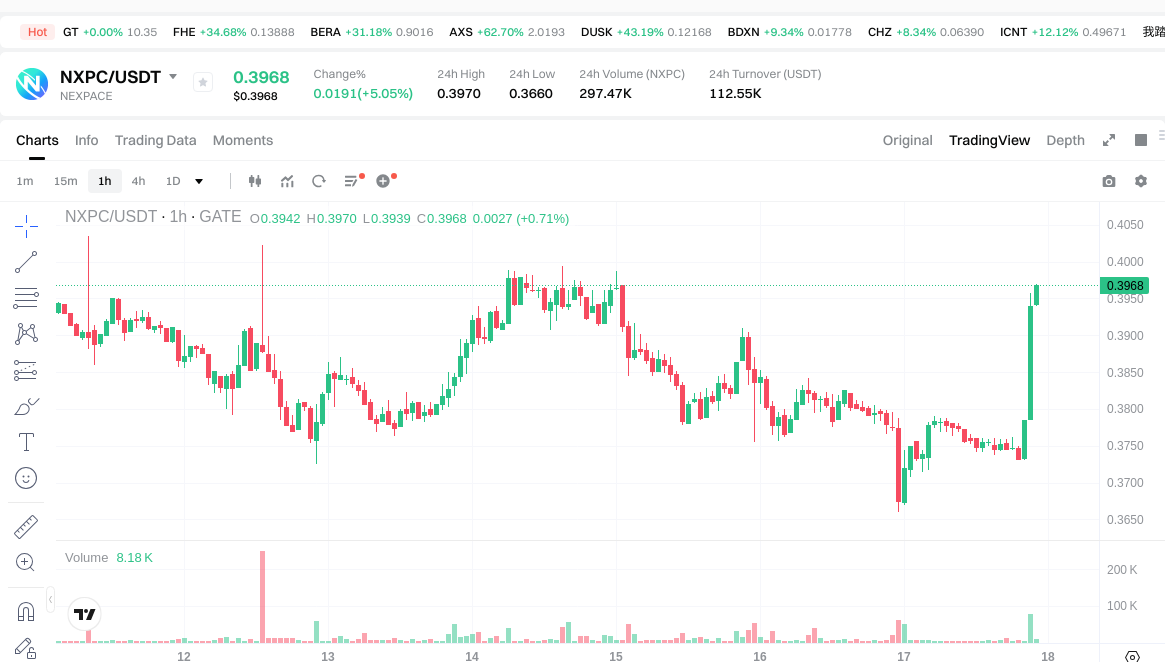
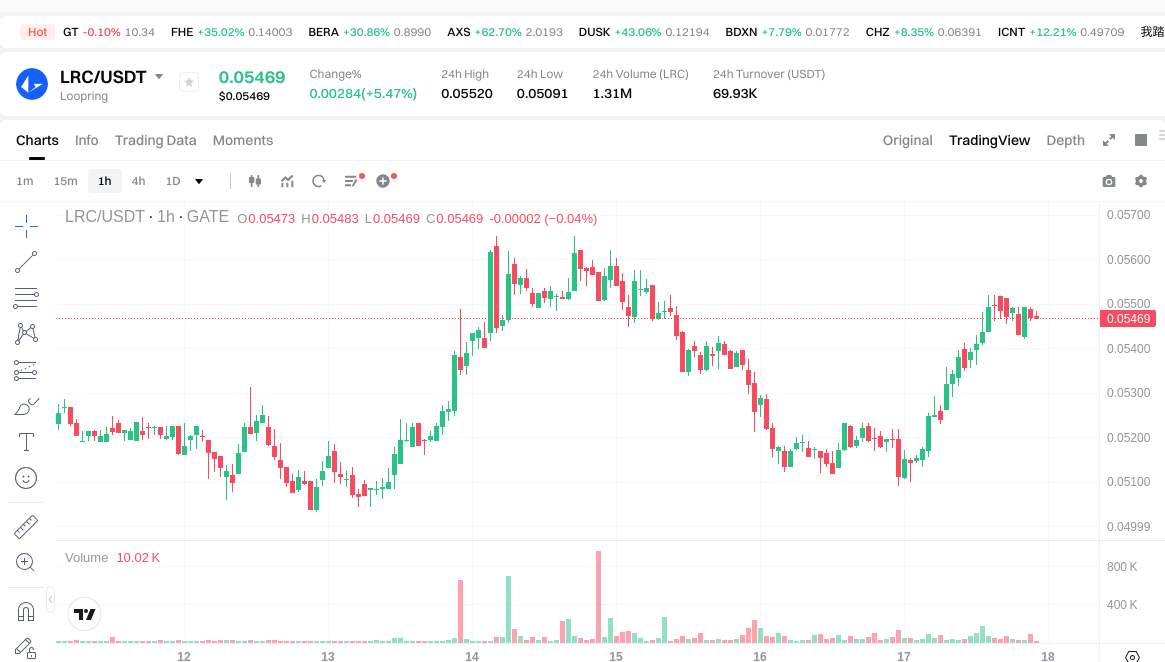
II. Core Factors Influencing NXPC vs LRC Investment Value
Supply Mechanism Comparison (Tokenomics)
The supply mechanisms of NXPC and LRC represent distinct approaches to token economics. Available materials indicate that NXPC employs a multi-currency strategy designed to reduce transaction costs and minimize address maintenance expenses. This approach allows different wallets to utilize different token types, thereby avoiding transaction history homogenization. LRC's decentralized characteristics have been noted as a factor in attracting investor attention, though specific details regarding its supply model require further investigation.
📌 Historical Pattern: Supply mechanisms play a significant role in shaping price cycle dynamics, with different tokenomic models potentially leading to varying market behaviors during bull and bear market conditions.
Institutional Adoption and Market Applications
- Institutional Holdings: Current materials do not provide sufficient data to definitively determine which asset enjoys greater institutional preference.
- Enterprise Adoption: Information regarding the specific applications of NXPC and LRC in cross-border payments, settlement systems, or investment portfolios is limited in the available materials.
- National Policies: Regulatory attitudes toward these assets vary across jurisdictions, though specific policy positions require additional research.
Technology Development and Ecosystem Building
- NXPC Technology: The platform emphasizes cost reduction through its multi-currency approach, allowing users to diversify transaction patterns across different wallet addresses and token types.
- LRC Technology: The decentralized nature of LRC has been identified as a key technical characteristic, though detailed information about recent upgrades or development roadmaps is not available in the current materials.
- Ecosystem Comparison: Comprehensive data comparing DeFi integration, NFT marketplace presence, payment infrastructure, and smart contract implementation between NXPC and LRC ecosystems is limited.
Macroeconomic Environment and Market Cycles
- Performance During Inflation: The relative performance of NXPC and LRC under inflationary conditions depends on multiple factors including their respective use cases, adoption rates, and market positioning.
- Macroeconomic Monetary Policy: Interest rate adjustments and US dollar index fluctuations can impact cryptocurrency valuations broadly, though specific correlations for NXPC and LRC require dedicated analysis.
- Geopolitical Factors: Cross-border transaction demand and international developments may influence adoption patterns, with decentralized assets potentially benefiting from increased interest in alternative financial systems during periods of geopolitical uncertainty.
III. 2026-2031 Price Forecast: NXPC vs LRC
Short-term Forecast (2026)
- NXPC: Conservative $0.301-$0.397 | Optimistic $0.397-$0.559
- LRC: Conservative $0.040-$0.055 | Optimistic $0.055-$0.077
Mid-term Forecast (2028-2029)
- NXPC may enter a consolidation phase with projected price range of $0.491-$0.781 in 2028, potentially reaching $0.544-$0.748 by 2029
- LRC may experience moderate growth trajectory with anticipated range of $0.050-$0.087 in 2028, expanding to $0.067-$0.107 by 2029
- Key drivers: institutional capital flows, ETF developments, ecosystem expansion
Long-term Forecast (2030-2031)
- NXPC: Baseline scenario $0.435-$0.714 (2030) | Optimistic scenario $0.593-$0.917 (2031)
- LRC: Baseline scenario $0.062-$0.094 (2030) | Optimistic scenario $0.063-$0.121 (2031)
View detailed price predictions for NXPC and LRC
Disclaimer: Price predictions are based on historical data analysis and market trends. Cryptocurrency markets are highly volatile and subject to various risk factors. These forecasts should not be considered as investment advice. Always conduct thorough research and consult financial professionals before making investment decisions.
NXPC:
| Year |
Predicted High Price |
Predicted Average Price |
Predicted Low Price |
Price Change |
| 2026 |
0.559347 |
0.3967 |
0.301492 |
0 |
| 2027 |
0.67879337 |
0.4780235 |
0.435001385 |
21 |
| 2028 |
0.78085138725 |
0.578408435 |
0.49164716975 |
46 |
| 2029 |
0.7475929022375 |
0.679629911125 |
0.5437039289 |
72 |
| 2030 |
0.82778923175025 |
0.71361140668125 |
0.435302958075562 |
81 |
| 2031 |
0.917133379866742 |
0.77070031921575 |
0.593439245796127 |
95 |
LRC:
| Year |
Predicted High Price |
Predicted Average Price |
Predicted Low Price |
Price Change |
| 2026 |
0.0771129 |
0.05469 |
0.0404706 |
0 |
| 2027 |
0.0850128705 |
0.06590145 |
0.048767073 |
20 |
| 2028 |
0.0867757342875 |
0.07545716025 |
0.049801725765 |
37 |
| 2029 |
0.10707371039475 |
0.08111644726875 |
0.067326651233062 |
48 |
| 2030 |
0.107268389868195 |
0.09409507883175 |
0.062102752028955 |
72 |
| 2031 |
0.120818081219967 |
0.100681734349972 |
0.063429492640482 |
84 |
IV. Investment Strategy Comparison: NXPC vs LRC
Long-term vs Short-term Investment Strategies
-
NXPC: May appeal to investors interested in gaming-blockchain convergence and ecosystem development. The project's association with established gaming IP and its Layer-1 infrastructure approach positions it for potential long-term ecosystem growth. Short-term positioning may involve monitoring ecosystem development milestones and partnership announcements.
-
LRC: May suit investors examining Layer 2 scaling solutions and decentralized exchange infrastructure. The token's historical integration with NFT marketplace solutions suggests potential alignment with investors tracking DeFi and Layer 2 adoption trends. Short-term strategies could involve monitoring broader Layer 2 sector developments.
Risk Management and Asset Allocation
-
Conservative Investors: A potential allocation framework might consider NXPC: 30-40% vs LRC: 60-70%, reflecting different risk profiles and market positioning. Conservative approaches typically emphasize established market presence and operational track records.
-
Aggressive Investors: A more assertive allocation could examine NXPC: 60-70% vs LRC: 30-40%, potentially reflecting higher risk tolerance toward emerging gaming-blockchain platforms. Aggressive strategies typically involve acceptance of higher volatility in exchange for potential growth opportunities.
-
Hedging Tools: Portfolio risk management approaches may include stablecoin allocation (20-30% of crypto portfolio), options strategies for downside protection, and cross-asset diversification across different blockchain sectors to mitigate concentration risk.
V. Potential Risk Comparison
Market Risks
-
NXPC: As a project launched in 2025, NXPC faces market establishment risks common to newer tokens. Price volatility between $0.20 and $3.85 since launch indicates substantial price fluctuation potential. Market positioning within the gaming-blockchain sector exposes the token to sentiment shifts regarding blockchain gaming adoption.
-
LRC: Historical price movement from $3.75 to previous lows around $0.02 demonstrates significant volatility exposure. As a Layer 2 solution, LRC faces market risks associated with competition among scaling solutions and shifting preferences within the DeFi ecosystem. Current trading volumes suggest liquidity considerations for position management.
Technology Risks
-
NXPC: The Layer-1 architecture approach involves scalability considerations as ecosystem adoption grows. Network stability during peak usage periods and the multi-currency transaction model's practical implementation represent technical execution risks. Integration complexity with gaming applications may present development challenges.
-
LRC: Layer 2 scaling infrastructure faces ongoing technical evolution requirements. Security considerations inherent to Layer 2 protocols require continuous monitoring. Competition from alternative Layer 2 solutions and changing technical standards within the Ethereum ecosystem present adaptation challenges.
Regulatory Risks
- Global regulatory frameworks continue evolving regarding gaming tokens, NFT platforms, and Layer 2 protocols. NXPC's gaming-focused positioning may encounter jurisdiction-specific regulations governing gaming and digital assets. LRC's DeFi infrastructure usage exposes it to regulatory developments affecting decentralized exchange protocols. Different jurisdictions maintain varying approaches toward blockchain gaming versus DeFi infrastructure, potentially creating divergent regulatory impacts on these assets.
VI. Conclusion: Which Is the Better Buy?
📌 Investment Value Summary:
-
NXPC Characteristics: Integration with established gaming IP (MapleStory) and backing from Nexon (market capitalization of $11 billion). Layer-1 architecture approach with gaming-focused ecosystem development. Token launched in 2025 with community-oriented distribution model avoiding traditional pre-sale structures.
-
LRC Characteristics: Established presence in Layer 2 scaling solutions with historical integration into NFT marketplace infrastructure. Decentralized exchange protocol positioning within the Ethereum ecosystem. Longer operational history providing more extensive price and adoption data.
✅ Investment Considerations:
-
New Investors: May benefit from thorough research into both gaming-blockchain convergence (NXPC) and Layer 2 infrastructure (LRC) sectors before allocation decisions. Understanding fundamental differences between Layer-1 gaming platforms and Layer 2 scaling solutions can inform appropriate positioning. Starting with smaller allocations while monitoring ecosystem developments may provide learning opportunities.
-
Experienced Investors: Could examine comparative analysis of gaming-blockchain adoption trends versus Layer 2 scaling solution competition. Portfolio diversification across different blockchain sectors may help manage concentration risk. Technical analysis of ecosystem development metrics, partnership announcements, and adoption indicators can inform position management.
-
Institutional Investors: May require deeper due diligence regarding regulatory positioning, liquidity profiles, and ecosystem sustainability metrics. Examining corporate backing (Nexon for NXPC) versus decentralized protocol structures (LRC) can inform risk assessment frameworks. Consideration of allocation sizing relative to portfolio mandates and risk parameters remains essential.
⚠️ Risk Notice: Cryptocurrency markets demonstrate extreme volatility. This analysis does not constitute investment advice. Market conditions, regulatory developments, and project execution can significantly impact outcomes. Investors should conduct independent research and consult qualified financial professionals before making investment decisions.
VII. FAQ
Q1: What is the fundamental difference between NXPC and LRC's technological approach?
NXPC operates as a Layer-1 blockchain specifically designed for gaming ecosystems with a multi-currency transaction model, while LRC functions as a Layer-2 scaling solution built on Ethereum for decentralized exchanges. NXPC's architecture prioritizes gaming application integration and uses multiple token types to reduce transaction costs and diversify wallet activity patterns. In contrast, LRC focuses on scaling Ethereum's transaction throughput for DeFi protocols and NFT marketplaces, achieving this through Layer-2 optimization techniques. This fundamental architectural difference means NXPC builds its own blockchain infrastructure while LRC enhances existing Ethereum functionality.
Q2: Which token demonstrates better historical price stability?
Neither token exhibits strong price stability, though their volatility patterns differ significantly. LRC experienced extreme volatility ranging from an all-time high of $3.75 in November 2021 to approximately $0.02 at its lowest point, representing over 99% decline from peak. NXPC, launched more recently in May 2025, has shown price fluctuation between $0.20 and $3.85, indicating substantial volatility within a shorter timeframe. The current price comparison ($0.3941 for NXPC versus $0.05469 for LRC as of January 17, 2026) reflects LRC's prolonged bear market impact while NXPC's relative pricing stability may partially result from its shorter market exposure period.
Q3: How do institutional backing differences affect investment risk profiles?
NXPC benefits from corporate backing by Nexon, an $11 billion market capitalization gaming company, providing tangible institutional support and financial resources. This backing offers potential advantages including capital availability, established gaming industry relationships, and access to the MapleStory IP which generates $550 million in annual revenue. LRC operates as a decentralized protocol without direct corporate backing, instead relying on community governance and protocol adoption. The trade-off involves centralization risks with NXPC versus execution uncertainty with LRC—corporate-backed projects may face business strategy changes while decentralized protocols face coordination challenges and competitive displacement risks.
Q4: What are the primary regulatory considerations for each token?
NXPC faces regulatory scrutiny related to gaming tokens and blockchain gaming platforms, which vary significantly across jurisdictions. Some regions maintain restrictive approaches toward gaming-related digital assets while others adopt more permissive frameworks. LRC encounters regulatory considerations affecting DeFi protocols and decentralized exchanges, particularly regarding securities classification, KYC/AML requirements, and financial services regulation. The divergent use cases mean NXPC may encounter gaming-specific regulations while LRC faces financial services regulatory frameworks. Investors should monitor jurisdiction-specific developments as regulatory clarity continues evolving in both sectors.
Q5: Which token presents better liquidity for position management?
Based on current 24-hour trading volumes, NXPC demonstrates higher liquidity with $109,415.16 compared to LRC's $69,468.09 (as of January 17, 2026). However, both tokens exhibit relatively modest trading volumes compared to major cryptocurrencies, indicating potential liquidity constraints for larger positions. NXPC's higher volume may result from recent launch momentum and active ecosystem development, while LRC's lower volume reflects its current market positioning after significant price decline from historical peaks. Investors managing substantial positions should consider gradual entry/exit strategies and monitor order book depth beyond daily volume figures to assess true liquidity conditions.
Q6: How do token distribution models impact long-term value potential?
NXPC eschews traditional pre-sale models, allocating the majority of its 1 billion maximum supply to community participants and ecosystem contributors, with approximately 234.86 million tokens currently circulating. This approach may reduce early investor sell pressure but creates uncertainty regarding future token release schedules. LRC's distribution information requires additional research for comprehensive comparison. Generally, community-focused distribution models like NXPC's can promote decentralization and reduce concentrated selling pressure, while pre-sale models may provide earlier price discovery but risk supply overhang. The 76.5% of NXPC tokens yet to enter circulation represents a significant consideration for long-term valuation modeling.
Q7: What ecosystem development metrics should investors monitor?
For NXPC, critical metrics include MapleStory Universe user adoption rates, gaming application launches on Henesys L1, partnership announcements with gaming developers, and transaction volume growth within the ecosystem. The connection to MapleStory's existing user base and Nexon's development roadmap provides concrete milestones for evaluation. For LRC, relevant metrics encompass total value locked in protocols using LRC technology, trading volume on integrated exchanges, adoption by new DeFi projects, and competitive positioning versus alternative Layer-2 solutions. Both tokens benefit from monitoring broader sector trends—blockchain gaming adoption for NXPC and Layer-2 scaling solution competition for LRC.
Q8: Which token aligns better with different investment timeframes?
For short-term positioning (6-12 months), NXPC may appeal to investors monitoring gaming ecosystem development announcements and partnership milestones, with price forecasts suggesting conservative range of $0.301-$0.397 and optimistic range of $0.397-$0.559 through 2026. LRC short-term positioning may involve tracking Layer-2 adoption trends with projected ranges of $0.040-$0.055 (conservative) to $0.055-$0.077 (optimistic). For long-term investment horizons (3-5 years), NXPC's corporate backing and gaming IP integration may provide clearer development trajectories, while LRC's established protocol position offers historical performance data for analysis. Investor selection should align with conviction regarding either gaming-blockchain convergence (NXPC) or Layer-2 infrastructure adoption (LRC) as dominant themes in their respective timeframes.
* The information is not intended to be and does not constitute financial advice or any other recommendation of any sort offered or endorsed by Gate.