This comprehensive guide compares OKB and THETA, two distinct blockchain utility tokens with divergent ecosystems and investment profiles. OKB, launched by OK Blockchain Foundation in 2018, functions as a centralized exchange utility token within the OKX platform, featuring deflationary tokenomics through periodic buybacks and burns. THETA, introduced in 2017, powers a decentralized video streaming network with fixed supply and staking mechanisms. The article analyzes historical price performance, current market status (OKB at $115.94 vs THETA at $0.3143 as of January 2026), tokenomics differences, institutional adoption patterns, and technical ecosystems. Price forecasts through 2031 project distinct growth trajectories, with OKB showing stronger institutional liquidity and trading volume. Whether targeting conservative or aggressive investors, this comparison addresses investment strategies, risk management approaches, and regulatory considerations essential for informed decision-making in cryptocurrency po
Introduction: Investment Comparison Between OKB and THETA
In the cryptocurrency market, the comparison between OKB vs THETA continues to be a topic of interest among investors. Both tokens demonstrate notable differences in market capitalization ranking, application scenarios, and price performance, representing distinct positioning within the crypto asset landscape.
OKB (OKB): Launched in 2018, this global utility token issued by OK Blockchain Foundation has gained market recognition through its role as a core component of the OKX ecosystem. Initially based on Ethereum ERC-20 protocol with planned migration to OKChain, OKB serves as an integral part of the OKX platform and its invested ecosystem projects.
THETA (THETA): Introduced in 2017, THETA operates as the native token of Theta Network, a next-generation decentralized video streaming platform built on blockchain technology. The project aims to revolutionize content delivery by incentivizing users to share bandwidth and computing resources.
This article will provide a comprehensive analysis of OKB vs THETA investment value comparison, examining historical price trends, supply mechanisms, institutional adoption, technical ecosystems, and future outlook. We aim to address the question that concerns investors most:
"Which is the better buy right now?"
I. Historical Price Comparison and Current Market Status
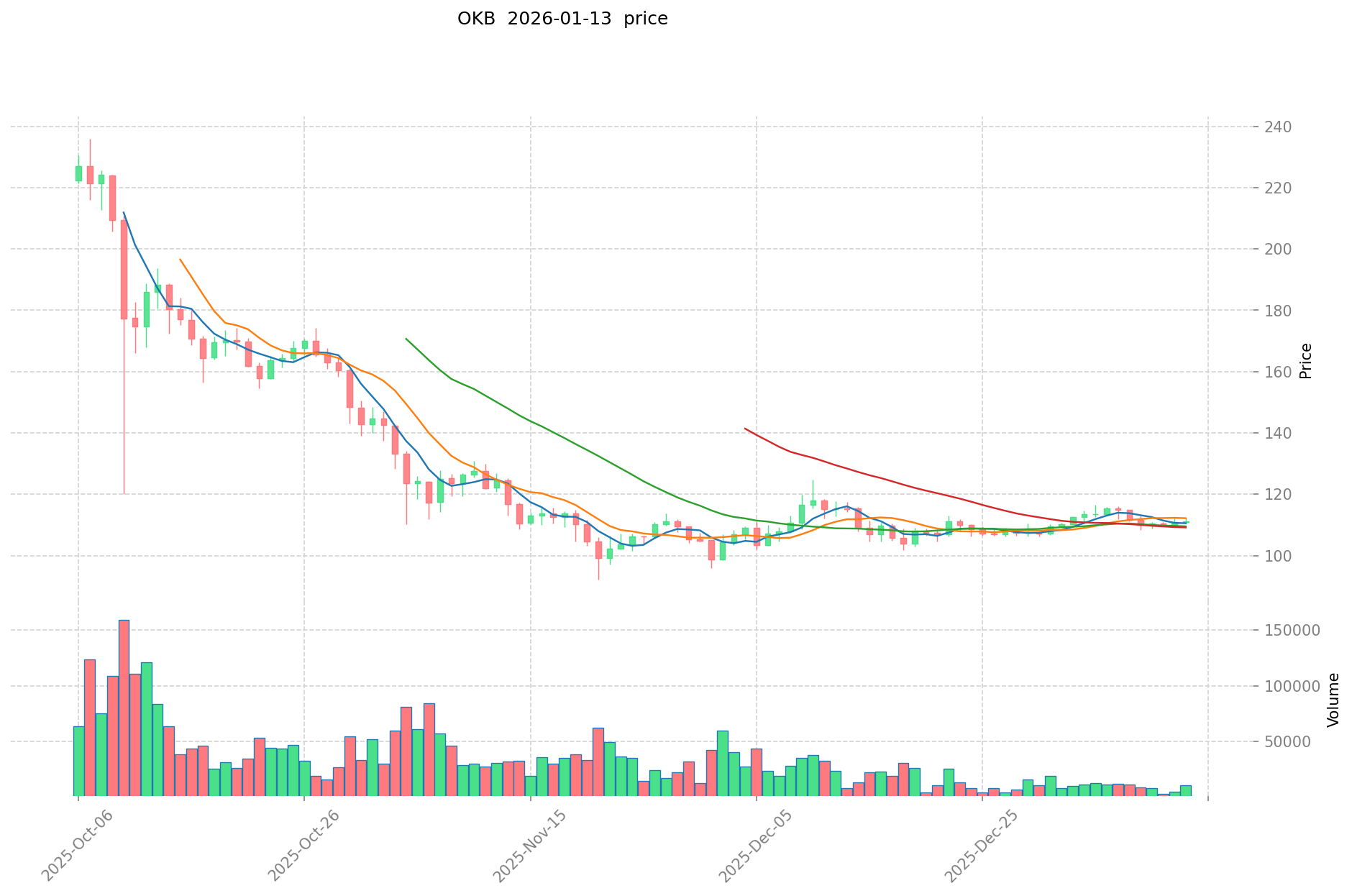
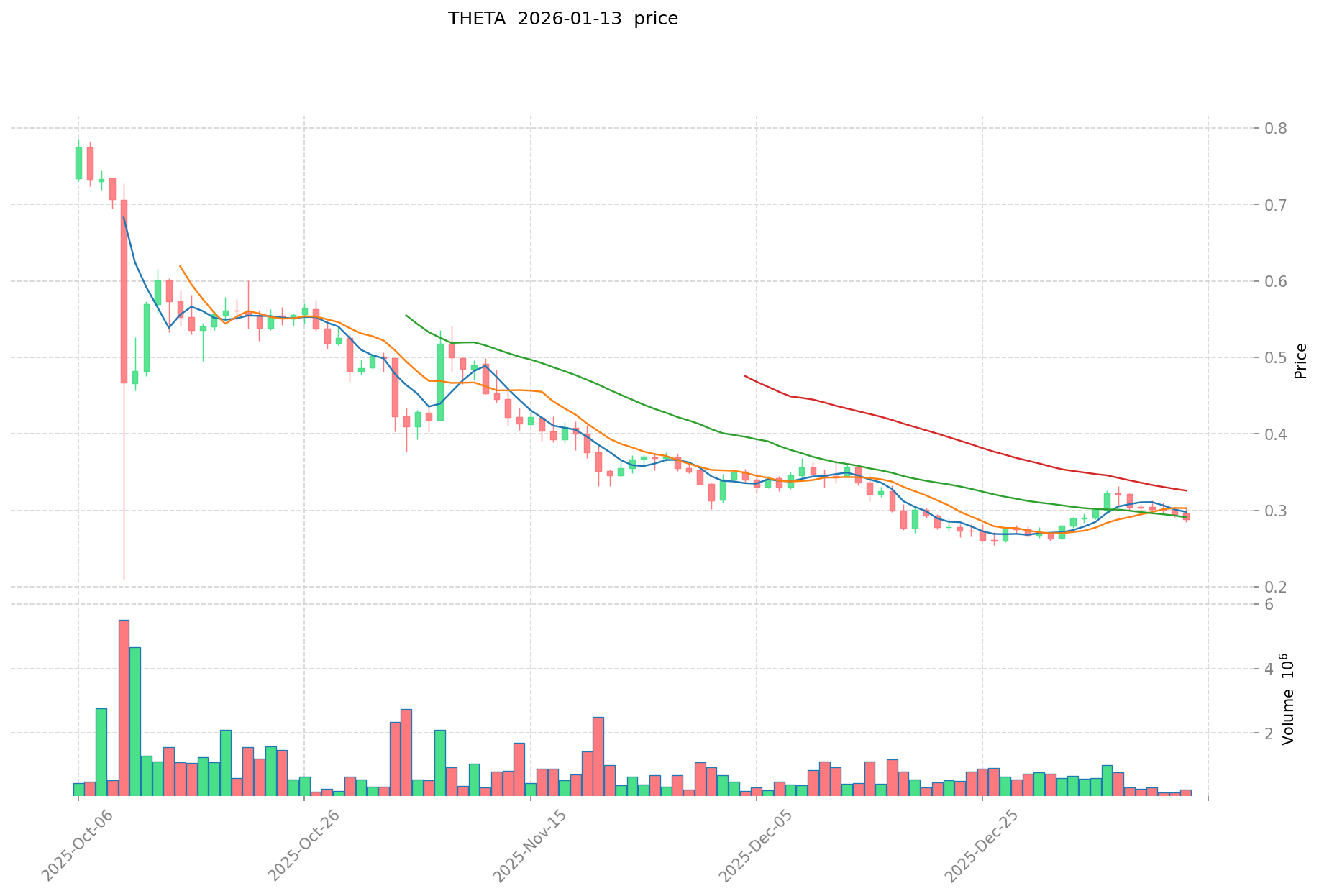
OKB and THETA Historical Price Trends
- 2019: OKB reached its historical low of $0.580608 on January 14, 2019, during a period of broader market weakness.
- 2020: THETA recorded its historical low of $0.04039979 on March 13, 2020, coinciding with global market turbulence.
- 2021: THETA experienced notable price movement, reaching $15.72 on April 16, 2021, during a period of increased interest in decentralized video streaming solutions.
- 2025: OKB achieved a notable price level of $255.5 on August 22, 2025, reflecting strong performance within the OKX ecosystem.
- Comparative Analysis: During market cycles, OKB has demonstrated significant price variation from its historical high of $255.5 to its low of $0.580608, while THETA has shown movement from $15.72 to $0.04039979, indicating different volatility patterns between the two assets.
Current Market Status (January 14, 2026)
- OKB Current Price: $115.94
- THETA Current Price: $0.3143
- 24-Hour Trading Volume: OKB recorded $3,793,042.87 compared to THETA's $109,830.29
- Market Sentiment Index (Fear & Greed Index): 26 (Fear)
View Real-Time Prices:
II. Core Factors Influencing OKB vs THETA Investment Value
Supply Mechanism Comparison (Tokenomics)
-
OKB: Features a deflationary model through periodic token buyback and burn mechanisms. As the native utility token of the OKX exchange, OKB's supply reduction strategy aims to increase scarcity over time, potentially supporting long-term price appreciation.
-
THETA: Operates with a fixed maximum supply cap, with tokens distributed across validators, enterprise nodes, and community participants. The network employs staking mechanisms where token holders can lock THETA to support network security and earn rewards.
-
📌 Historical Pattern: Deflationary mechanisms and fixed supply models have historically influenced price cycles by creating supply-demand imbalances during periods of increased adoption or trading activity.
Institutional Adoption & Market Application
-
Institutional Holdings: OKB benefits from integration within the OKX trading ecosystem, attracting traders seeking fee discounts and platform benefits. THETA's institutional interest stems from partnerships with media and content delivery companies exploring decentralized streaming infrastructure.
-
Enterprise Adoption: OKB primarily serves within the cryptocurrency exchange environment, offering utility for reduced trading fees and platform governance participation. THETA focuses on decentralized video delivery networks, positioning itself within the content distribution and streaming infrastructure sector.
-
National Policies: Regulatory approaches vary across jurisdictions. Exchange-based tokens like OKB face scrutiny related to trading platform compliance and operational licensing. THETA's technology-focused positioning may encounter different regulatory considerations related to decentralized infrastructure deployment.
Technical Development & Ecosystem Building
-
OKB Technical Progress: Development centers on enhancing exchange infrastructure, expanding DeFi integrations, and improving cross-chain compatibility within the OKX ecosystem.
-
THETA Technical Development: Focuses on improving decentralized video delivery protocols, edge computing capabilities, and network scalability to support growing content distribution demands.
-
Ecosystem Comparison: OKB's ecosystem revolves around centralized exchange services with expanding DeFi connections, while THETA builds toward decentralized content delivery networks with potential applications in streaming, gaming, and media distribution.
Macroeconomic Environment & Market Cycles
-
Performance Under Inflation: Exchange tokens like OKB may demonstrate correlation with overall cryptocurrency trading volumes, which can increase during periods of monetary uncertainty. THETA's infrastructure focus provides exposure to long-term technology adoption trends rather than immediate inflation hedging.
-
Monetary Policy Impact: Interest rate changes and dollar strength influence risk appetite in cryptocurrency markets, affecting both tokens through altered trading activity and investment flows into digital assets.
-
Geopolitical Factors: International tensions and cross-border transaction demands may drive increased cryptocurrency exchange usage, potentially benefiting OKB. THETA's decentralized infrastructure proposition may gain relevance in scenarios where content delivery censorship concerns arise.
III. 2026-2031 Price Forecast: OKB vs THETA
Short-term Forecast (2026)
- OKB: Conservative $80.21-$116.25 | Optimistic $116.25-$132.53
- THETA: Conservative $0.22-$0.31 | Optimistic $0.31-$0.41
Medium-term Forecast (2028-2029)
- OKB may enter a growth phase, with estimated price range of $104.69-$236.46
- THETA may enter a consolidation phase, with estimated price range of $0.23-$0.54
- Key drivers: institutional capital inflows, ETF developments, ecosystem expansion
Long-term Forecast (2030-2031)
- OKB: Baseline scenario $125.09-$275.19 | Optimistic scenario $203.14-$311.97
- THETA: Baseline scenario $0.41-$0.71 | Optimistic scenario $0.45-$0.73
View detailed price predictions for OKB and THETA
Disclaimer
OKB:
| Year |
Predicted High Price |
Predicted Average Price |
Predicted Low Price |
Price Change |
| 2026 |
132.525 |
116.25 |
80.2125 |
0 |
| 2027 |
182.849625 |
124.3875 |
106.97325 |
7 |
| 2028 |
207.385059375 |
153.6185625 |
118.286293125 |
32 |
| 2029 |
236.457372328125 |
180.5018109375 |
104.69105034375 |
55 |
| 2030 |
275.1930609553125 |
208.4795916328125 |
125.0877549796875 |
79 |
| 2031 |
311.968860919340625 |
241.8363262940625 |
203.1425140870125 |
108 |
THETA:
| Year |
Predicted High Price |
Predicted Average Price |
Predicted Low Price |
Price Change |
| 2026 |
0.40924 |
0.3148 |
0.22036 |
0 |
| 2027 |
0.5032078 |
0.36202 |
0.2932362 |
15 |
| 2028 |
0.540767375 |
0.4326139 |
0.233611506 |
37 |
| 2029 |
0.53535970125 |
0.4866906375 |
0.394219416375 |
54 |
| 2030 |
0.7052147337375 |
0.511025169375 |
0.4088201355 |
62 |
| 2031 |
0.7297439418675 |
0.60811995155625 |
0.450008764151625 |
93 |
IV. Investment Strategy Comparison: OKB vs THETA
Long-term vs Short-term Investment Strategies
-
OKB: May appeal to investors focused on exchange ecosystem participation and trading fee optimization. The token's integration within the OKX platform provides utility for active traders seeking cost reduction and platform governance involvement. Long-term holders may consider the deflationary supply mechanism and ecosystem expansion potential.
-
THETA: May suit investors interested in decentralized infrastructure development and content delivery network evolution. The project's focus on video streaming technology positions it within the broader infrastructure sector, potentially appealing to those seeking exposure to decentralized media solutions over extended time horizons.
Risk Management and Asset Allocation
-
Conservative Investors: May consider balanced exposure with careful position sizing, such as OKB: 40% vs THETA: 60%, prioritizing established exchange utility over emerging infrastructure deployment.
-
Aggressive Investors: Could explore higher-risk allocations like OKB: 60% vs THETA: 40%, seeking greater exposure to exchange ecosystem growth while maintaining diversification.
-
Hedging Tools: Stablecoin reserves for rebalancing opportunities, options strategies for downside protection, and cross-asset combinations to manage portfolio volatility across different market conditions.
V. Potential Risk Comparison
Market Risks
-
OKB: Price movements may correlate with overall cryptocurrency exchange trading volumes and platform adoption rates. Market sentiment shifts affecting centralized exchange usage could influence token demand and liquidity patterns.
-
THETA: Valuation may be influenced by progress in decentralized streaming adoption and competition from alternative content delivery solutions. Market interest in infrastructure projects can experience cyclical variations affecting price stability.
Technical Risks
-
OKB: Technical considerations include platform infrastructure reliability, cross-chain integration challenges, and dependency on exchange operational continuity for utility value maintenance.
-
THETA: Network scalability requirements, validator participation levels, and edge computing deployment progress represent key technical factors. Infrastructure expansion timing and adoption rates may affect long-term network viability.
Regulatory Risks
-
Regulatory approaches toward centralized exchanges may impact OKB's operational environment, particularly regarding trading platform licensing requirements and compliance obligations across different jurisdictions.
-
THETA's decentralized infrastructure model may encounter different regulatory considerations related to content delivery networks, data transmission frameworks, and cross-border streaming protocols.
-
Evolving cryptocurrency regulations in major markets could affect both tokens through changes in trading accessibility, institutional participation requirements, and operational compliance standards.
VI. Conclusion: Which Is the Better Buy?
📌 Investment Value Summary:
-
OKB Characteristics: Integration within established exchange ecosystem, deflationary supply mechanism, utility for trading fee reduction, exposure to centralized exchange growth trends, and ongoing platform development initiatives.
-
THETA Characteristics: Focus on decentralized video streaming infrastructure, fixed supply model with staking mechanisms, positioning within content delivery network sector, and technology development toward edge computing applications.
✅ Investment Considerations:
-
Beginner Investors: May prioritize understanding fundamental differences between exchange utility tokens and infrastructure projects before allocation. Starting with smaller positions while learning about ecosystem developments and use cases could support informed decision-making.
-
Experienced Investors: Could evaluate portfolio diversification benefits by comparing exchange ecosystem exposure versus decentralized infrastructure positioning. Assessment of technical roadmaps, adoption metrics, and market cycle positioning may inform allocation strategies.
-
Institutional Investors: May conduct comprehensive due diligence on regulatory compliance frameworks, liquidity profiles, and ecosystem development sustainability. Evaluation of long-term infrastructure trends and exchange market dynamics could inform strategic positioning.
⚠️ Risk Disclosure: Cryptocurrency markets demonstrate notable volatility. This content provides informational analysis and does not constitute investment advice. Market conditions, regulatory developments, and project execution may significantly impact outcomes.
VII. FAQ
Q1: What are the fundamental differences between OKB and THETA in terms of their use cases?
OKB serves primarily as an exchange utility token within the OKX ecosystem for trading fee discounts and platform governance, while THETA functions as the native token of a decentralized video streaming infrastructure network. OKB's value proposition centers on exchange platform benefits and deflationary tokenomics through buyback mechanisms, whereas THETA focuses on incentivizing bandwidth sharing and supporting decentralized content delivery networks. The key distinction lies in OKB's centralized exchange integration versus THETA's decentralized infrastructure positioning within the content distribution sector.
Q2: How do the historical price performances of OKB and THETA compare during market cycles?
OKB demonstrated a significantly wider price range, moving from a historical low of $0.580608 (January 2019) to a peak of $255.5 (August 2025), while THETA ranged from $0.04039979 (March 2020) to $15.72 (April 2021). As of January 14, 2026, OKB trades at $115.94 with 24-hour volume of $3,793,042.87, compared to THETA's $0.3143 with volume of $109,830.29. This indicates OKB has maintained higher absolute price levels and trading activity, though both assets have experienced substantial volatility across different market conditions.
Q3: What are the key risk factors that differentiate OKB from THETA investments?
OKB's primary risks relate to centralized exchange operations, including platform infrastructure reliability, trading volume fluctuations, and regulatory scrutiny of exchange licensing requirements across jurisdictions. THETA faces different risk profiles centered on decentralized infrastructure adoption rates, network scalability challenges, validator participation levels, and competition from alternative content delivery solutions. Exchange-based tokens like OKB demonstrate correlation with overall trading activity, while infrastructure tokens like THETA depend more heavily on long-term technology deployment success and ecosystem adoption timelines.
Q4: How do the tokenomics models of OKB and THETA affect their long-term value propositions?
OKB implements a deflationary supply mechanism through periodic token buyback and burn programs, designed to increase scarcity over time and potentially support price appreciation as exchange ecosystem usage grows. THETA operates with a fixed maximum supply cap distributed across validators and network participants, utilizing staking mechanisms where holders lock tokens to support network security and earn rewards. The deflationary model may respond more directly to trading volume increases, while the fixed supply model creates value through network utility expansion and staking participation incentives.
Q5: What price forecasts suggest for OKB and THETA through 2031?
For 2026, OKB projections range from conservative estimates of $80.21-$116.25 to optimistic scenarios of $116.25-$132.53, while THETA shows conservative ranges of $0.22-$0.31 and optimistic projections of $0.31-$0.41. Long-term forecasts for 2030-2031 indicate OKB baseline scenarios of $125.09-$275.19 (optimistic $203.14-$311.97) and THETA baseline scenarios of $0.41-$0.71 (optimistic $0.45-$0.73). These projections assume continued ecosystem development, with OKB potentially benefiting from exchange market expansion and THETA from decentralized infrastructure adoption, though actual outcomes depend heavily on market conditions and project execution.
Q6: Which token might be more suitable for different investor profiles?
Conservative investors seeking established utility and exchange ecosystem exposure might allocate higher percentages to OKB (suggested 40% OKB vs 60% THETA) due to its integration within operational trading infrastructure and deflationary mechanisms. Aggressive investors could consider higher OKB allocations (60% OKB vs 40% THETA) to capture potential exchange growth while maintaining diversification. Investors interested in emerging decentralized technologies and long-term infrastructure development may prefer higher THETA weightings, accepting higher execution risk in exchange for exposure to content delivery network evolution. Portfolio construction should account for individual risk tolerance, investment timeframes, and correlation with existing holdings.
Q7: How do macroeconomic conditions differently impact OKB versus THETA?
OKB's performance typically correlates with overall cryptocurrency trading volumes, which may increase during monetary uncertainty periods as traders seek alternative assets and exchange activity rises. Interest rate changes and dollar strength influence risk appetite across markets, affecting exchange token demand through altered trading patterns. THETA's infrastructure focus provides exposure to long-term technology adoption trends rather than immediate macroeconomic hedging, potentially benefiting from content delivery decentralization demands during periods of censorship concerns or regulatory shifts affecting centralized streaming platforms. Both tokens remain subject to broader cryptocurrency market cycles and investor risk sentiment.
Q8: What are the current market conditions and sentiment indicators for these assets?
As of January 14, 2026, the cryptocurrency market exhibits a Fear & Greed Index reading of 26 (Fear), indicating cautious investor sentiment. OKB maintains a current price of $115.94 with substantially higher trading volume ($3,793,042.87) compared to THETA's $0.3143 and $109,830.29 volume, suggesting greater liquidity and market participation for the exchange token. This fear-dominated environment typically creates both risks of further downside and potential opportunities for strategic accumulation, though investors should consider that market sentiment can shift rapidly based on regulatory developments, macroeconomic data, and ecosystem-specific catalysts affecting either project's adoption trajectory.
* The information is not intended to be and does not constitute financial advice or any other recommendation of any sort offered or endorsed by Gate.