This comprehensive analysis compares ORBS and ETH across multiple investment dimensions including historical price performance, tokenomics, institutional adoption, and technical ecosystems. ETH, launched in 2015, serves as the second-largest cryptocurrency with established DeFi infrastructure, substantial institutional holdings including BitMine's 4.168 million ETH tokens, and high daily trading volume ($456.2 million). ORBS, an emerging 2019 blockchain infrastructure project, demonstrates higher volatility with limited liquidity ($21,743.79 daily volume) and adoption uncertainty. The article addresses investor concerns through detailed price forecasts through 2031, risk analysis, and portfolio allocation strategies suitable for conservative, aggressive, and institutional investors. Long-term forecasts project ETH reaching $3,774-$7,166 by 2031 versus ORBS $0.0159-$0.0273. Essential reading for cryptocurrency investors seeking informed decision-making guidance on established versus emerging blockchain assets.
Introduction: ORBS vs ETH Investment Comparison
In the cryptocurrency market, the comparison between ORBS and ETH has been a topic of interest among investors. These two assets differ significantly in market cap ranking, application scenarios, and price performance, representing distinct positioning within the crypto asset landscape.
ORBS: Launched in 2019, this decentralized blockchain architecture aims to provide blockchain support for mainstream applications with features including scalability and security compliance. The project positions itself as blockchain infrastructure designed for established consumer brands and their business requirements.
ETH (Ethereum): Since its launch in 2015, Ethereum has established itself as a decentralized open-source blockchain platform supporting smart contracts and decentralized applications (DApps). It operates using Ether and ranks as the second-largest cryptocurrency by market capitalization.
This article will analyze the investment value comparison between ORBS and ETH across multiple dimensions including historical price trends, supply mechanisms, institutional adoption, technical ecosystems, and future outlook, aiming to address the question investors care about most:
"Which is the better buy right now?"
I. Historical Price Comparison and Current Market Status
Price Trends of ORBS (Coin A) and ETH (Coin B)
-
2021: ORBS reached a historical high of $0.360443 on March 16, 2021, reflecting strong market interest during the broader cryptocurrency bull market. ETH reached a historical high of $4,946.05 on August 25, 2025, driven by its dominant position in decentralized finance (DeFi) and non-fungible token (NFT) ecosystems.
-
2019-2020: ORBS recorded its historical low of $0.00469039 on December 20, 2019, during a period of reduced market activity. ETH's historical low of $0.432979 occurred on October 20, 2015, shortly after its initial launch.
-
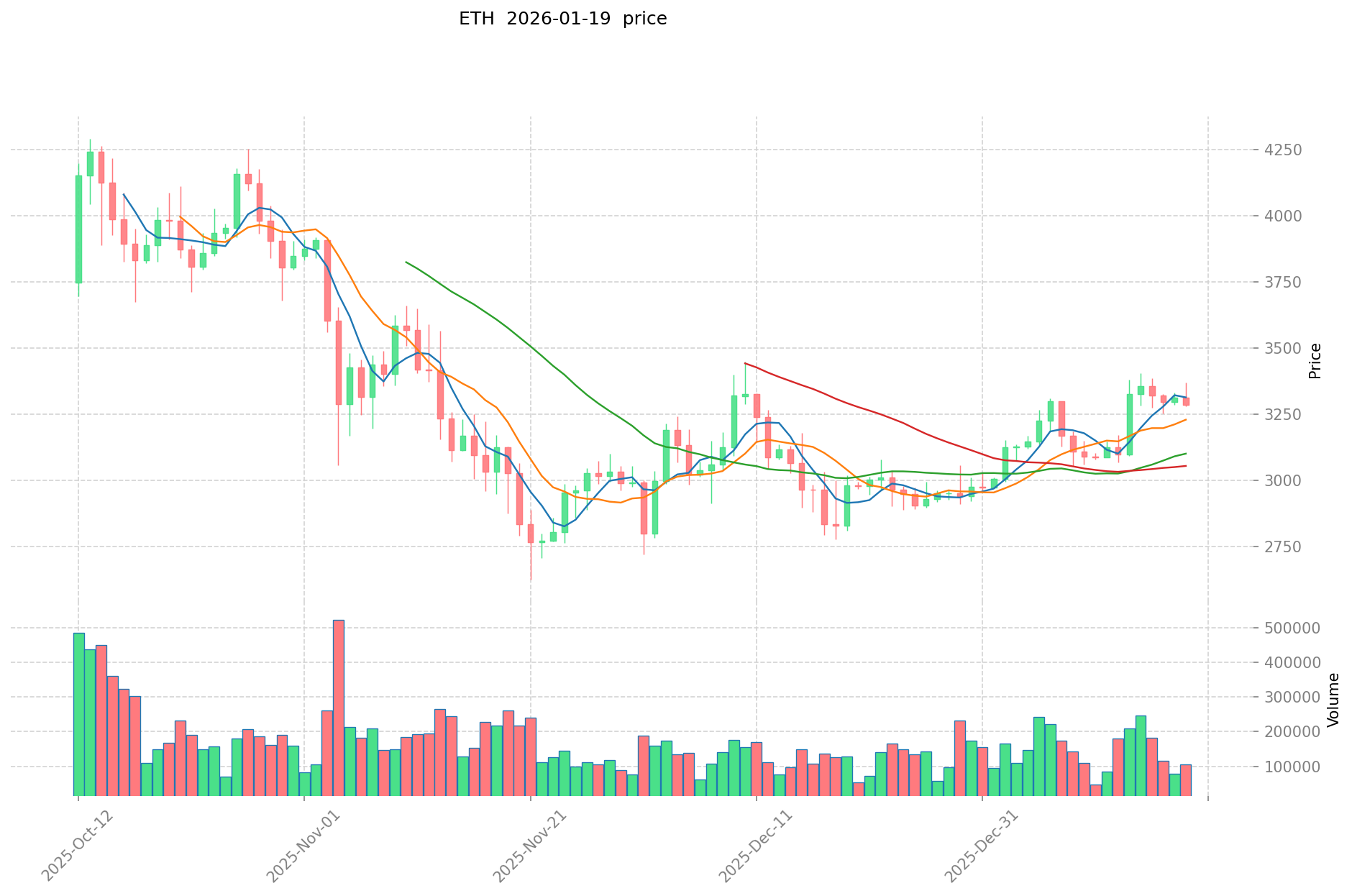
Comparative Analysis: During the 2021-2026 market cycle, ORBS declined from its high of $0.360443 to its current level of $0.010537, representing a substantial decrease. In contrast, ETH declined from its high of $4,946.05 to $3,204.97, showing relatively stronger price resilience during market fluctuations.
Current Market Status (January 19, 2026)
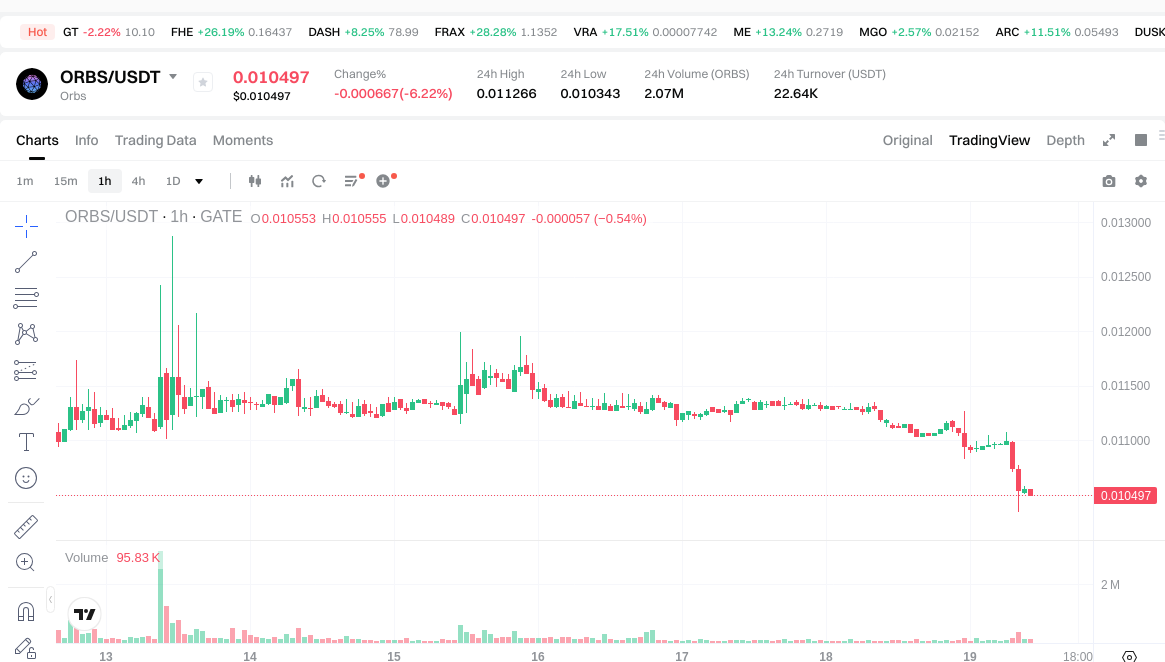
- ORBS Current Price: $0.010537
- ETH Current Price: $3,204.97
- 24-Hour Trading Volume: ORBS recorded $21,743.79 compared to ETH's $456,227,055.16
- Market Sentiment Index (Fear & Greed Index): 44 (Fear)
View Real-Time Prices:
II. Core Factors Influencing ORBS vs ETH Investment Value
Supply Mechanism Comparison (Tokenomics)
-
ETH: Ethereum transitioned to a Proof-of-Stake consensus mechanism, implementing a dynamic supply model where ETH issuance is balanced by burning mechanisms through EIP-1559. The supply can be inflationary or deflationary depending on network activity and transaction fees.
-
ORBS: ORBS operates with a fixed maximum supply model. The token distribution is designed to support long-term ecosystem development, with allocations for validators, community incentives, and development funds.
-
📌 Historical Pattern: Supply mechanisms play a role in price cycles. Ethereum's transition to PoS and the introduction of burning mechanisms have created periods of deflationary pressure during high network usage, potentially supporting price appreciation. Fixed supply models like ORBS may experience different dynamics based on adoption rates and token velocity.
Institutional Adoption and Market Application
-
Institutional Holdings: ETH has attracted significant institutional interest. According to reference materials, BitMine Immersion Technologies holds over 4.168 million ETH tokens as of January 2026, representing approximately 3.45% of total ETH supply. The company is backed by prominent institutional investors including ARK's Cathie Wood, MOZAYYX, Founders Fund, Bill Miller III, Pantera, Kraken, DCG, and Galaxy Digital. BitMine also holds a position in Eightco Holdings (NASDAQ: ORBS), valued at approximately USD 113 million, indicating some institutional crossover interest.
-
Enterprise Adoption: ETH serves as the foundation for numerous blockchain services, including DeFi protocols, NFT platforms, and smart contract applications. Its value proposition is tied to sustained demand for Ethereum network services. ORBS adoption focuses on advanced blockchain technology applications, though specific enterprise use cases are less documented in available materials.
-
Regulatory Environment: Different jurisdictions maintain varying regulatory approaches toward cryptocurrencies. The regulatory landscape continues to evolve, affecting both assets differently based on their classification and use cases.
Technology Development and Ecosystem Building
-
ETH Technology Upgrades: Ethereum has undergone network upgrades aimed at improving scalability, security, and efficiency. The transition to Proof-of-Stake represents a fundamental shift in the network's consensus mechanism. BitMine has initiated staking operations, with 1,256,083 ETH staked as of January 11, 2026, and plans to launch its MAVAN (Made in America Validator Network) in Q1 2026.
-
ORBS Technology Development: ORBS employs advanced blockchain technology designed to enhance security and efficiency. The technical architecture aims to provide competitive advantages in these areas.
-
Ecosystem Comparison: ETH maintains a robust ecosystem encompassing DeFi applications, NFT marketplaces, payment solutions, and smart contract platforms. The network benefits from extensive developer activity and established infrastructure. ORBS ecosystem development focuses on specialized blockchain applications, though the scale and breadth of deployment differ from Ethereum's established presence.
Macroeconomic Factors and Market Cycles
-
Performance in Inflationary Environments: Cryptocurrency markets respond to broader macroeconomic conditions. Both assets experience price fluctuations influenced by investor sentiment regarding inflation, though neither has established consistent correlation patterns.
-
Monetary Policy Impact: Interest rate adjustments, US dollar strength, and central bank policies affect cryptocurrency valuations. BitMine's chairman Tom Lee cited market environment and upcoming network upgrades as factors influencing acquisition decisions, suggesting that macroeconomic conditions play a role in institutional positioning.
-
Geopolitical Considerations: Cross-border transaction demand and international developments can influence cryptocurrency adoption patterns. Ethereum's established infrastructure positions it for international settlement applications, while ORBS potential depends on continued technology adoption and network expansion.
III. 2026-2031 Price Forecast: ORBS vs ETH
Short-term Forecast (2026)
- ORBS: Conservative $0.0063-$0.0105 | Optimistic $0.0105-$0.0132
- ETH: Conservative $2,813-$3,197 | Optimistic $3,197-$3,549
Mid-term Forecast (2028-2029)
- ORBS may enter a consolidation phase, with estimated price range of $0.0092-$0.0199
- ETH may enter a growth phase, with estimated price range of $3,069-$6,048
- Key drivers: institutional capital inflows, ETF developments, ecosystem expansion
Long-term Forecast (2030-2031)
- ORBS: Base scenario $0.0159-$0.0211 | Optimistic scenario $0.0211-$0.0273
- ETH: Base scenario $3,774-$5,687 | Optimistic scenario $5,687-$7,166
View detailed price predictions for ORBS and ETH
Disclaimer
ORBS:
| Year |
Predicted High Price |
Predicted Average Price |
Predicted Low Price |
Price Change |
| 2026 |
0.0131575 |
0.010526 |
0.0063156 |
0 |
| 2027 |
0.0174073725 |
0.01184175 |
0.0079339725 |
12 |
| 2028 |
0.0198894033 |
0.01462456125 |
0.0092134735875 |
38 |
| 2029 |
0.01984552961625 |
0.017256982275 |
0.015876423693 |
63 |
| 2030 |
0.0237456076104 |
0.018551255945625 |
0.015954080113237 |
76 |
| 2031 |
0.027281476993636 |
0.021148431778012 |
0.019456557235771 |
100 |
ETH:
| Year |
Predicted High Price |
Predicted Average Price |
Predicted Low Price |
Price Change |
| 2026 |
3548.6811 |
3197.01 |
2813.3688 |
0 |
| 2027 |
4958.0829585 |
3372.84555 |
2866.9187175 |
5 |
| 2028 |
4998.5571051 |
4165.46425425 |
3457.3353310275 |
29 |
| 2029 |
6048.254097171 |
4582.010679675 |
3069.94715538225 |
42 |
| 2030 |
6059.25092280222 |
5315.132388423 |
3773.74399578033 |
65 |
| 2031 |
7165.8614860718886 |
5687.19165561261 |
4549.753324490088 |
77 |
IV. Investment Strategy Comparison: ORBS vs ETH
Long-term vs Short-term Investment Strategies
-
ORBS: May appeal to investors with higher risk tolerance seeking exposure to emerging blockchain infrastructure projects with potential for ecosystem expansion. The asset exhibits characteristics of early-stage blockchain infrastructure investments with substantial price volatility.
-
ETH: May suit investors seeking exposure to established blockchain platforms with extensive ecosystem development, institutional participation, and demonstrated utility across DeFi, NFT, and smart contract applications. The asset represents exposure to foundational blockchain infrastructure with broader market recognition.
Risk Management and Asset Allocation
-
Conservative Investors: A potential allocation framework might consider ETH (70-80%) for core blockchain exposure with limited or no ORBS allocation (0-5%), prioritizing established assets with institutional backing and demonstrated utility.
-
Aggressive Investors: Risk-tolerant portfolios might consider ETH (40-60%) as a foundation with ORBS (10-20%) representing higher-risk, higher-potential-volatility exposure, balanced with stablecoin reserves (20-30%) for liquidity management.
-
Hedging Tools: Portfolio risk management may incorporate stablecoin allocations for capital preservation, options strategies for downside protection, and diversification across multiple blockchain assets to reduce concentration risk.
V. Comparative Risk Analysis
Market Risk
-
ORBS: The asset demonstrates elevated price volatility with substantial historical drawdowns from peak levels. Limited trading volume ($21,743.79 daily) may contribute to increased liquidity risk and price slippage during market stress periods. Market positioning as emerging blockchain infrastructure creates adoption uncertainty.
-
ETH: While exhibiting lower relative volatility compared to smaller-cap assets, ETH remains subject to broader cryptocurrency market cycles and sentiment shifts. The asset maintains higher liquidity ($456,227,055.16 daily trading volume), though significant drawdowns remain possible during market corrections. Current market sentiment indicates a fear environment (Fear & Greed Index: 44).
Technical Risk
-
ORBS: Technical development and network stability depend on continued innovation and adoption. The scalability of the platform and ability to compete with established blockchain infrastructure represents ongoing technical challenges. Network effect dynamics favor larger ecosystems with established developer communities.
-
ETH: The network has undergone transitions including the shift to Proof-of-Stake consensus. While this addresses certain scalability concerns, network congestion during high-activity periods and gas fee volatility remain considerations. Security considerations exist across all blockchain platforms, requiring ongoing development and monitoring.
Regulatory Risk
- Global regulatory frameworks continue to evolve, with different jurisdictions implementing varied approaches to cryptocurrency classification and oversight. ETH's established position and classification considerations differ from smaller blockchain infrastructure projects. Regulatory developments regarding staking, DeFi applications, and cryptocurrency taxation affect both assets, though potential impacts vary based on network use cases and jurisdictional interpretations.
VI. Conclusion: Which Is the Better Buy?
📌 Investment Value Summary:
-
ORBS Considerations: Represents exposure to emerging blockchain infrastructure technology with advanced security and efficiency features. The asset carries higher volatility and adoption uncertainty, requiring substantial risk tolerance. Limited institutional adoption and trading volume present liquidity considerations.
-
ETH Considerations: Provides access to established blockchain infrastructure with extensive ecosystem development across DeFi, NFT, and smart contract applications. Notable institutional participation including BitMine's holdings (over 4.168 million ETH) and staking operations. Broader market recognition and higher liquidity support portfolio positioning flexibility.
✅ Investment Considerations:
-
Beginning Investors: May prioritize established assets with demonstrated utility, broader market recognition, and higher liquidity. ETH represents more established blockchain infrastructure exposure, though all cryptocurrency investments carry substantial risk requiring careful position sizing and risk assessment.
-
Experienced Investors: Portfolio construction might incorporate both established blockchain platforms and selective exposure to emerging infrastructure projects, balanced according to individual risk tolerance and investment objectives. Diversification across multiple assets and maintenance of liquidity reserves support risk management.
-
Institutional Investors: Due diligence frameworks typically emphasize regulatory clarity, custody solutions, liquidity depth, and established use cases. ETH maintains advantages in these areas with institutional holding examples and staking infrastructure development. Smaller infrastructure projects require enhanced risk assessment regarding adoption trajectories and market positioning.
⚠️ Risk Disclosure: Cryptocurrency markets exhibit extreme volatility with potential for substantial capital loss. This analysis does not constitute investment advice. Market conditions, regulatory developments, and technology evolution create uncertainty affecting all digital assets. Investors should conduct independent research, assess personal risk tolerance, and consider professional financial guidance before making investment decisions.
VII. FAQ
Q1: What is the main difference between ORBS and ETH in terms of market positioning?
ETH is an established blockchain platform with extensive institutional adoption and ecosystem development, while ORBS is an emerging blockchain infrastructure project with higher volatility and adoption uncertainty.
ETH, launched in 2015, has become the second-largest cryptocurrency by market capitalization, serving as the foundation for DeFi protocols, NFT platforms, and smart contract applications. As of January 2026, ETH maintains substantial daily trading volume ($456,227,055.16) and notable institutional holdings, with BitMine Immersion Technologies holding over 4.168 million ETH tokens. In contrast, ORBS, launched in 2019, positions itself as blockchain infrastructure for mainstream applications but demonstrates significantly lower trading volume ($21,743.79 daily) and limited institutional adoption documentation. The price performance reflects this positioning difference: ETH declined from $4,946.05 to $3,204.97, while ORBS decreased from $0.360443 to $0.010537, showing substantially greater volatility.
Q2: How do the supply mechanisms of ORBS and ETH differ?
ETH operates with a dynamic supply model that can be inflationary or deflationary, while ORBS utilizes a fixed maximum supply model.
Ethereum transitioned to a Proof-of-Stake consensus mechanism and implemented EIP-1559, which introduces a burning mechanism that balances new ETH issuance with transaction fee burns. This creates deflationary pressure during periods of high network usage, potentially supporting price appreciation. The supply dynamics respond to network activity levels and transaction volumes. ORBS, conversely, employs a fixed maximum supply model with token distribution designed for long-term ecosystem development, including allocations for validators, community incentives, and development funds. These different approaches create distinct supply-side dynamics that may influence price behavior based on adoption rates, network usage, and token velocity patterns.
Q3: Which asset demonstrates stronger institutional interest?
ETH shows substantially stronger institutional interest with documented holdings and staking operations from major institutions.
BitMine Immersion Technologies holds over 4.168 million ETH tokens as of January 2026, representing approximately 3.45% of total ETH supply, backed by prominent investors including ARK's Cathie Wood, Founders Fund, Pantera, and Galaxy Digital. Additionally, BitMine has initiated staking operations with 1,256,083 ETH staked as of January 11, 2026, and plans to launch its MAVAN (Made in America Validator Network) in Q1 2026. While BitMine also holds a position in Eightco Holdings (NASDAQ: ORBS) valued at approximately $113 million, indicating some institutional crossover interest, the scale and breadth of institutional participation favors ETH significantly. The substantial difference in daily trading volumes ($456,227,055.16 for ETH versus $21,743.79 for ORBS) further reflects this institutional adoption disparity.
Q4: What are the price forecasts for ORBS and ETH through 2031?
ETH forecasts show substantially higher absolute price targets with more moderate percentage growth, while ORBS forecasts indicate lower absolute prices with higher percentage volatility.
For 2026, ETH's conservative forecast ranges from $2,813-$3,197 with an optimistic range of $3,197-$3,549, while ORBS conservative forecast is $0.0063-$0.0105 with optimistic $0.0105-$0.0132. By 2031, ETH's base scenario projects $3,774-$5,687 with an optimistic scenario of $5,687-$7,166, representing a 77% change from current levels. ORBS 2031 forecasts show a base scenario of $0.0159-$0.0211 with optimistic $0.0211-$0.0273, representing a 100% change. These forecasts depend on institutional capital inflows, ETF developments, ecosystem expansion, and broader market conditions. However, cryptocurrency markets exhibit extreme volatility with potential for substantial deviations from projections.
Q5: What portfolio allocation strategies are suggested for different investor types?
Conservative investors may prioritize higher ETH allocation (70-80%) with minimal or no ORBS exposure (0-5%), while aggressive investors might balance ETH (40-60%) with higher-risk ORBS allocation (10-20%).
Conservative portfolios emphasize established assets with institutional backing, demonstrated utility, and higher liquidity. ETH's extensive ecosystem development across DeFi, NFT, and smart contract applications provides foundational blockchain infrastructure exposure. More aggressive portfolios might incorporate selective exposure to emerging infrastructure projects like ORBS for higher-potential-volatility positioning, balanced with stablecoin reserves (20-30%) for liquidity management and capital preservation. Portfolio risk management should incorporate diversification across multiple blockchain assets to reduce concentration risk, options strategies for downside protection, and appropriate position sizing based on individual risk tolerance. All cryptocurrency investments require careful risk assessment and should align with personal investment objectives.
Q6: What are the primary risks associated with investing in ORBS versus ETH?
ORBS carries higher market risk with elevated volatility and liquidity constraints, while ETH faces lower relative volatility but remains subject to broader market cycles and regulatory developments.
ORBS demonstrates substantial historical drawdowns from peak levels with limited daily trading volume ($21,743.79), contributing to increased liquidity risk and potential price slippage during market stress periods. Market positioning as emerging blockchain infrastructure creates adoption uncertainty and network effect challenges compared to established platforms. ETH maintains significantly higher liquidity ($456,227,055.16 daily volume) with broader institutional participation, though it remains subject to cryptocurrency market volatility and sentiment shifts indicated by the current Fear & Greed Index of 44 (Fear). Both assets face regulatory risk as global frameworks continue evolving, with different jurisdictions implementing varied cryptocurrency oversight approaches. Technical risks include network stability, scalability challenges, and security considerations requiring ongoing development and monitoring.
Q7: How does institutional staking activity affect ETH's investment value?
Institutional staking operations potentially support ETH's value proposition through network security participation, yield generation, and demonstrated long-term commitment.
BitMine Immersion Technologies has staked 1,256,083 ETH as of January 11, 2026, with plans to launch its MAVAN (Made in America Validator Network) in Q1 2026. This institutional staking activity contributes to Ethereum network security through the Proof-of-Stake consensus mechanism while generating staking yields for participants. The commitment of substantial ETH holdings to staking indicates institutional confidence in long-term network viability and creates supply dynamics that may influence price behavior. Staked ETH becomes locked in the protocol, potentially reducing circulating supply and creating different market dynamics compared to unstaked assets. However, staking also introduces technical and protocol risks, including potential slashing penalties and smart contract vulnerabilities that require ongoing risk management.
Q8: What factors should beginners prioritize when choosing between ORBS and ETH?
Beginning investors should prioritize established assets with demonstrated utility, broader market recognition, higher liquidity, and clearer regulatory positioning over higher-risk emerging projects.
ETH represents more established blockchain infrastructure with extensive ecosystem development, institutional participation, and demonstrated use cases across multiple applications. The significantly higher trading volume ($456,227,055.16 versus $21,743.79) provides better liquidity for position entry and exit, reducing execution risk. Broader market recognition and regulatory clarity considerations favor established platforms over emerging infrastructure projects. However, all cryptocurrency investments carry substantial risk requiring careful position sizing relative to overall portfolio, understanding of extreme volatility potential, and assessment of personal risk tolerance. Beginning investors should conduct independent research, consider starting with smaller position sizes, maintain appropriate diversification, and potentially seek professional financial guidance before making investment decisions. Building foundational knowledge about blockchain technology, market dynamics, and risk management principles supports more informed decision-making.
* The information is not intended to be and does not constitute financial advice or any other recommendation of any sort offered or endorsed by Gate.