This comprehensive analysis compares QTUM and LINK, two distinct blockchain platforms with different value propositions and investment profiles. QTUM operates as a hybrid blockchain infrastructure platform supporting multiple industries through its unique UTXO-smart contract architecture, while LINK functions as a decentralized oracle network providing cross-chain data integration services. The article examines historical price trends, tokenomics, institutional adoption, technical ecosystems, and risk factors to address investor concerns. Price forecasts suggest LINK maintains stronger market liquidity and price retention compared to QTUM, with divergent growth trajectories through 2031. Investment recommendations vary by risk tolerance, positioning QTUM for infrastructure-focused investors and LINK for those seeking middleware layer exposure. Both tokens present distinct opportunities and risks requiring careful portfolio allocation and macroeconomic considerations.
Introduction: QTUM vs LINK Investment Comparison
In the cryptocurrency market, the comparison between QTUM and LINK has consistently been a topic of interest for investors. Both exhibit notable differences in market capitalization ranking, application scenarios, and price performance, while representing distinct positions within the crypto asset landscape.
Qtum (QTUM): Launched in 2017, it has gained market recognition through its positioning as a decentralized application development platform supporting multiple industries including finance, IoT, supply chain, social networking, and gaming.
ChainLink (LINK): Since its launch in 2017, it has been recognized for its role in providing oracle services, becoming one of the widely-traded cryptocurrencies with significant market presence.
This article provides a comprehensive analysis of QTUM vs LINK investment value comparison, focusing on historical price trends, supply mechanisms, institutional adoption, technical ecosystems, and future projections, attempting to address the question most concerning to investors:
"Which is the better buy right now?"
I. Historical Price Comparison and Current Market Status
Historical Price Trends of QTUM (Coin A) and LINK (Coin B)
-
2018: QTUM experienced significant volatility following its peak in January 2018, when it reached an all-time high of $100.22. Subsequently, the price declined substantially as the broader cryptocurrency market entered a bearish phase.
-
2021: LINK demonstrated notable growth during the DeFi boom, reaching its all-time high of $52.7 in May 2021. This surge was driven by increased adoption of Chainlink's oracle services across various blockchain platforms.
-
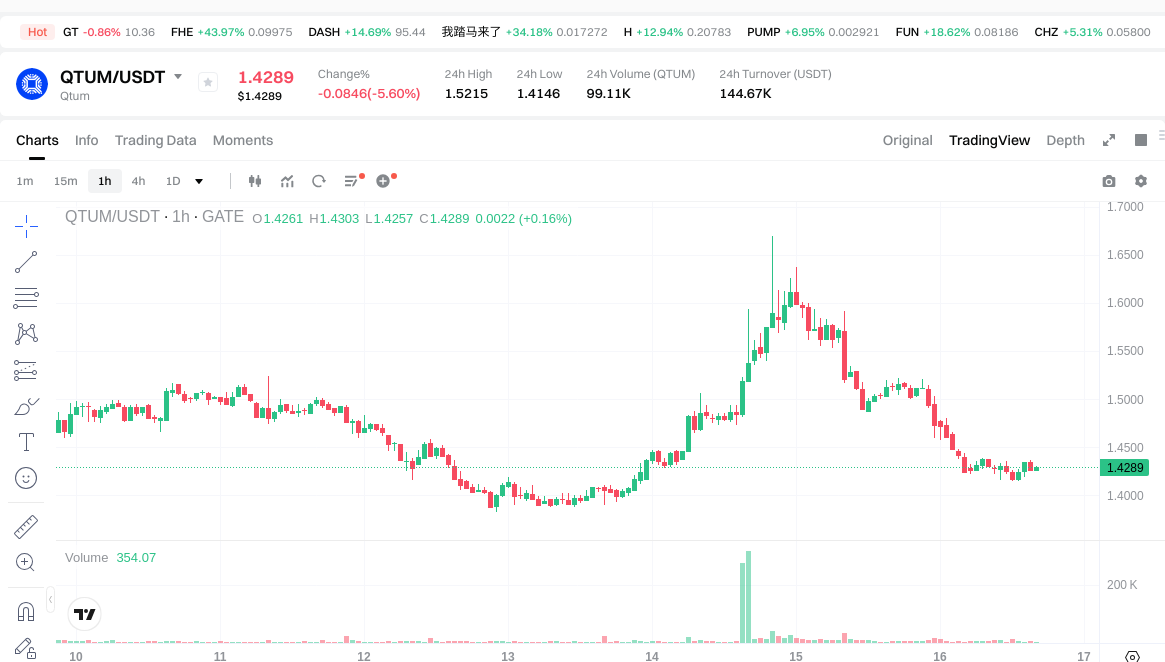
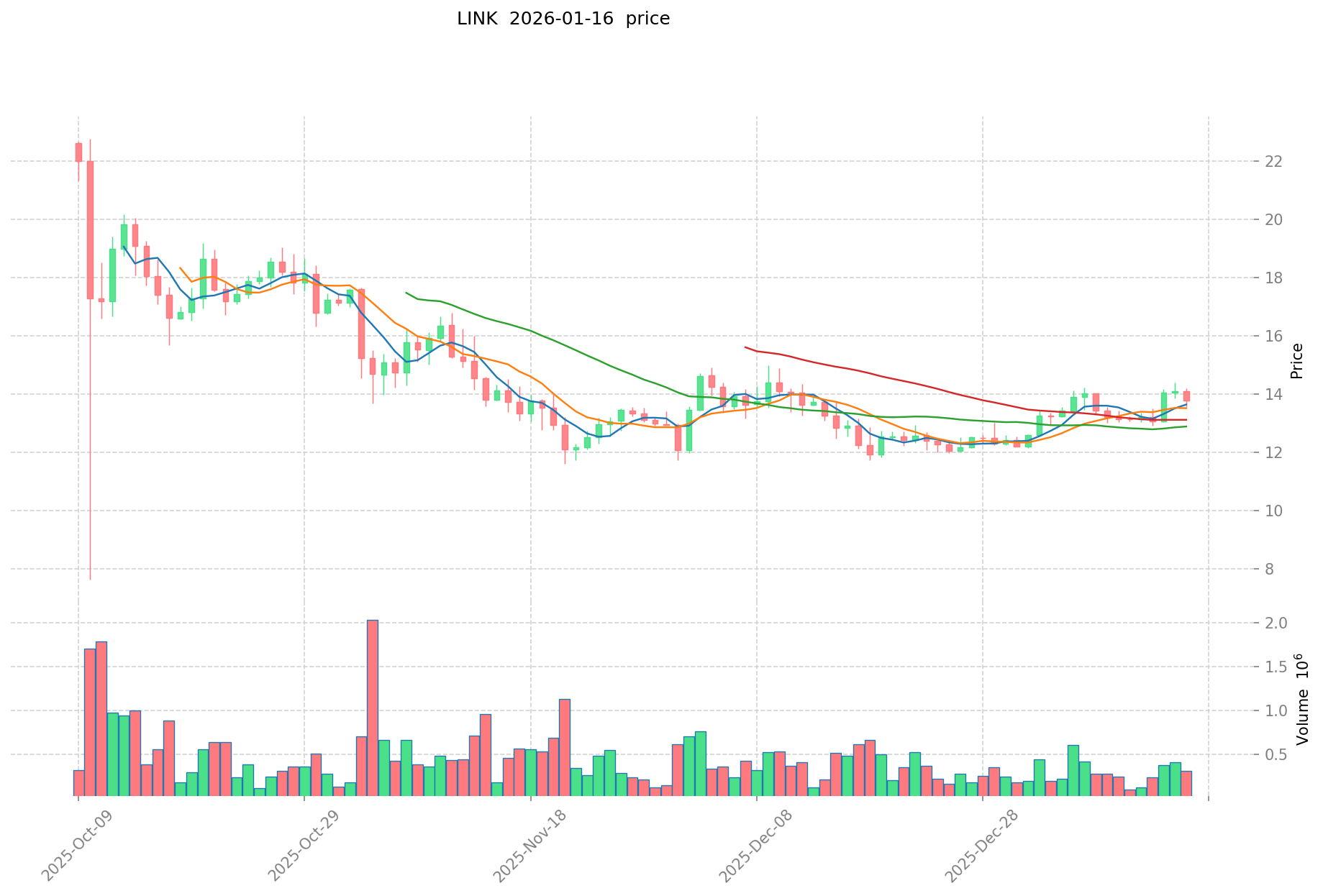
Comparative Analysis: During the 2021-2022 market cycle, QTUM declined from its historical high of $100.22 to levels around $1.43-$1.52, representing a substantial correction. In contrast, LINK declined from $52.7 to approximately $13.83, showing a similar pattern of significant retracement but maintaining relatively higher value retention.
Current Market Status (2026-01-16)
- QTUM Current Price: $1.4278
- LINK Current Price: $13.833
- 24-Hour Trading Volume: QTUM recorded $145,240.42 compared to LINK's $3,621,059.15
- Market Sentiment Index (Fear & Greed Index): 49 (Neutral)
View real-time prices:
II. Core Factors Influencing QTUM vs LINK Investment Value
Tokenomics Comparison
- QTUM: QTUM operates with its own blockchain infrastructure, combining Bitcoin's UTXO model with Ethereum's smart contract capabilities. The token's value depends on the underlying infrastructure's success or failure.
- LINK: LINK functions as a decentralized oracle network token, providing external data feeds to smart contracts across multiple blockchain platforms. Its utility derives from data connectivity services rather than independent blockchain operation.
- 📌 Historical Pattern: Supply mechanisms directly influence price cycles through adoption rates and network utility expansion.
Institutional Adoption and Market Applications
- Institutional Holdings: Both tokens face distinct institutional positioning based on their technical architecture and use case differentiation.
- Enterprise Adoption: QTUM serves blockchain infrastructure needs while LINK addresses data integration requirements for decentralized applications. Their enterprise applications differ fundamentally in scope and implementation.
- Regulatory Landscape: Both tokens navigate varying regulatory frameworks across jurisdictions, though specific policy stances require case-by-case examination.
Technical Development and Ecosystem Building
- QTUM Technical Architecture: QTUM maintains its own mainchain with proprietary consensus mechanisms. Technical advantages and concentrated resources provide development foundations, though infrastructure-dependent value creates inherent risk exposure.
- LINK Technical Framework: LINK operates through decentralized oracle networks enabling cross-chain data connectivity. The protocol's utility extends across multiple blockchain ecosystems rather than single-chain dependency.
- Ecosystem Comparison: Both projects demonstrate distinct positioning in DeFi integration, smart contract implementation, and payment applications based on their fundamental technical architectures.
Macroeconomic Environment and Market Cycles
- Inflation Environment Performance: Investment value assessment requires consideration of technology adoption trajectories, market demand patterns, and network utility expansion rather than absolute inflation-hedge characteristics.
- Macroeconomic Monetary Policy: Interest rate movements, dollar index fluctuations, and broader monetary conditions influence cryptocurrency valuations through risk appetite and capital flow dynamics.
- Geopolitical Factors: Cross-border transaction requirements and international developments affect blockchain adoption patterns, though specific impact varies by technical architecture and use case application.
III. 2026-2031 Price Forecast: QTUM vs LINK
Short-term Forecast (2026)
- QTUM: Conservative $1.27-$1.43 | Optimistic $1.43-$2.03
- LINK: Conservative $9.54-$13.83 | Optimistic $13.83-$18.12
Medium-term Forecast (2028-2029)
- QTUM may enter a consolidation phase with estimated prices ranging from $1.87 to $2.38 in 2028, potentially reaching $1.91 to $2.35 by 2029
- LINK may enter a growth phase with estimated prices ranging from $9.27 to $21.47 in 2028, potentially advancing to $18.36 to $23.19 by 2029
- Key drivers: institutional capital inflows, ETF developments, ecosystem expansion
Long-term Forecast (2030-2031)
- QTUM: Baseline scenario $1.57-$2.27 (2030) | Optimistic scenario $1.39-$2.43 (2031)
- LINK: Baseline scenario $11.05-$21.25 (2030) | Optimistic scenario $21.73-$28.97 (2031)
View detailed price predictions for QTUM and LINK
Disclaimer
QTUM:
| Year |
Predicted High Price |
Predicted Average Price |
Predicted Low Price |
Price Change |
| 2026 |
2.029038 |
1.4289 |
1.271721 |
0 |
| 2027 |
2.29952877 |
1.728969 |
0.96822264 |
21 |
| 2028 |
2.3768136843 |
2.014248885 |
1.87325146305 |
41 |
| 2029 |
2.3492184745755 |
2.19553128465 |
1.9101122176455 |
53 |
| 2030 |
2.45416486998177 |
2.27237487961275 |
1.567938666932797 |
59 |
| 2031 |
2.434167971041177 |
2.36326987479726 |
1.394329226130383 |
65 |
LINK:
| Year |
Predicted High Price |
Predicted Average Price |
Predicted Low Price |
Price Change |
| 2026 |
18.12123 |
13.833 |
9.54477 |
0 |
| 2027 |
18.37368225 |
15.977115 |
11.34375165 |
15 |
| 2028 |
21.46924828125 |
17.175398625 |
9.2747152575 |
24 |
| 2029 |
23.18678814375 |
19.322323453125 |
18.35620728046875 |
39 |
| 2030 |
24.017648052234375 |
21.2545557984375 |
11.0523690151875 |
53 |
| 2031 |
28.97421046443 |
22.636101925335937 |
21.7306578483225 |
63 |
IV. Investment Strategy Comparison: QTUM vs LINK
Long-term vs Short-term Investment Strategies
-
QTUM: Suitable for investors focusing on blockchain infrastructure development and platform-based ecosystem expansion. The token's value proposition centers on adoption of its hybrid blockchain architecture across multiple application verticals.
-
LINK: Suitable for investors seeking exposure to oracle services and cross-chain data integration infrastructure. The token's utility derives from decentralized data connectivity demand across multiple blockchain platforms.
Risk Management and Asset Allocation
-
Conservative Investors: QTUM 30-40% vs LINK 60-70% allocation may reflect lower volatility exposure through established oracle network positioning
-
Aggressive Investors: QTUM 50-60% vs LINK 40-50% allocation may capture potential infrastructure growth while maintaining diversified blockchain exposure
-
Hedging Tools: Stablecoin allocations for liquidity management, options strategies for downside protection, cross-asset portfolio construction for correlation diversification
V. Potential Risk Comparison
Market Risks
-
QTUM: Price volatility tied to blockchain infrastructure adoption rates, competition from established smart contract platforms, market sentiment shifts affecting platform tokens
-
LINK: Price fluctuations correlated with DeFi activity levels, oracle service demand cycles, competitive pressure from alternative data provider networks
Technical Risks
-
QTUM: Scalability limitations inherent in hybrid architecture design, network stability dependencies on validator participation, smart contract implementation challenges
-
LINK: Node operator decentralization requirements, data feed accuracy dependencies, cross-chain integration complexity
Regulatory Risks
- Global regulatory frameworks may affect both tokens differently based on their functional classifications—QTUM as platform infrastructure versus LINK as data service utility. Jurisdictional variations in blockchain regulation, securities classification debates, and cross-border transaction policies create distinct compliance landscapes for each token's operational model.
VI. Conclusion: Which Is the Better Buy?
📌 Investment Value Summary:
-
QTUM Advantages: Hybrid blockchain architecture combining UTXO and smart contract capabilities, established platform positioning since 2017, multi-industry application potential across finance, IoT, and supply chain sectors
-
LINK Advantages: Dominant oracle network positioning, cross-chain data integration utility, demonstrated adoption across multiple blockchain ecosystems, established institutional recognition in DeFi infrastructure
✅ Investment Recommendations:
-
Novice Investors: Consider starting with smaller allocations to understand volatility patterns and technical fundamentals. Focus on educational resources regarding blockchain infrastructure (QTUM) versus oracle services (LINK) before capital commitment.
-
Experienced Investors: Evaluate portfolio positioning based on existing blockchain exposure. QTUM may complement smart contract platform holdings, while LINK provides oracle service layer diversification. Monitor adoption metrics and ecosystem developments for tactical rebalancing.
-
Institutional Investors: Assess both tokens within broader blockchain infrastructure allocation frameworks. QTUM represents platform-layer exposure while LINK captures middleware service demand. Consider correlation analysis with existing digital asset portfolios and regulatory compliance requirements across operating jurisdictions.
⚠️ Risk Warning: Cryptocurrency markets exhibit extreme volatility. This content does not constitute investment advice.
VII. FAQ
Q1: What is the main difference between QTUM and LINK's core technology?
QTUM is a hybrid blockchain infrastructure platform combining Bitcoin's UTXO model with Ethereum's smart contract capabilities, while LINK is a decentralized oracle network providing external data feeds to smart contracts across multiple blockchains. QTUM operates as an independent blockchain serving as a foundation for decentralized application development across industries like finance, IoT, and supply chain. In contrast, LINK functions as a middleware layer connecting blockchain smart contracts with real-world data sources, enabling cross-chain data integration without maintaining its own independent blockchain infrastructure.
Q2: Which token has shown better price stability historically?
LINK has demonstrated relatively better price retention compared to QTUM based on historical performance. From their respective all-time highs, QTUM declined from $100.22 to current levels around $1.43 (approximately 98.6% decline), while LINK decreased from $52.7 to approximately $13.83 (approximately 73.8% decline). LINK's 24-hour trading volume of $3,621,059.15 also significantly exceeds QTUM's $145,240.42, indicating higher market liquidity and potentially reduced volatility risk.
Q3: What are the projected price ranges for QTUM and LINK by 2030?
According to baseline forecasts, QTUM is projected to reach $1.57-$2.27 by 2030, while LINK may achieve $11.05-$21.25 during the same period. The optimistic scenario for 2031 suggests QTUM could range between $1.39-$2.43, whereas LINK might reach $21.73-$28.97. These projections are influenced by factors including institutional capital inflows, ecosystem expansion, ETF developments, and broader cryptocurrency market cycles. However, these estimates carry significant uncertainty and should not be considered guaranteed outcomes.
Q4: How should investors allocate between QTUM and LINK based on risk tolerance?
Conservative investors may consider a 30-40% QTUM allocation versus 60-70% LINK allocation, reflecting lower volatility exposure through LINK's established oracle network positioning and higher market liquidity. Aggressive investors seeking infrastructure growth potential might adopt a 50-60% QTUM versus 40-50% LINK allocation to capture potential upside from blockchain platform adoption while maintaining diversified exposure. Both strategies should incorporate hedging tools such as stablecoin allocations for liquidity management and options strategies for downside protection.
Q5: What are the primary risks facing each token?
QTUM faces market risks tied to blockchain infrastructure adoption rates, competition from established smart contract platforms like Ethereum, and technical challenges including scalability limitations in its hybrid architecture and network stability dependencies. LINK confronts price fluctuations correlated with DeFi activity levels, node operator decentralization requirements, data feed accuracy dependencies, and competitive pressure from alternative oracle networks. Both tokens face regulatory uncertainties, though their risk profiles differ based on functional classifications—QTUM as platform infrastructure versus LINK as data service utility.
Q6: Which token is more suitable for institutional investors?
LINK may be more suitable for institutional investors seeking exposure to blockchain middleware infrastructure due to its established adoption across multiple blockchain ecosystems, dominant oracle network positioning, and demonstrated utility in DeFi applications. QTUM offers institutional exposure to platform-layer blockchain infrastructure with multi-industry application potential. Institutional allocation decisions should consider existing digital asset portfolio composition, with QTUM providing smart contract platform diversification and LINK offering oracle service layer exposure. Both require thorough correlation analysis and regulatory compliance assessment across operating jurisdictions.
Q7: How do macroeconomic conditions affect QTUM and LINK differently?
Both tokens are influenced by macroeconomic factors including interest rate movements, dollar index fluctuations, and broader monetary policy conditions that affect cryptocurrency valuations through risk appetite and capital flow dynamics. However, their sensitivity patterns differ based on use case positioning. LINK's value proposition as data connectivity infrastructure may show resilience during periods of increased blockchain adoption regardless of economic cycles, while QTUM's platform-based model faces competition intensity that may vary with funding availability and developer ecosystem growth during different macroeconomic environments.
Q8: What timeframe is recommended for evaluating investment performance in these tokens?
Medium to long-term evaluation timeframes (3-5 years) are recommended for both tokens due to cryptocurrency market volatility and the time required for technology adoption cycles to materialize. Short-term price movements often reflect market sentiment and speculation rather than fundamental value drivers. For QTUM, monitoring blockchain infrastructure adoption metrics and ecosystem development progress provides meaningful performance indicators. For LINK, tracking oracle service integration across blockchain platforms and data feed utilization rates offers insights into fundamental value creation beyond price fluctuations.
* The information is not intended to be and does not constitute financial advice or any other recommendation of any sort offered or endorsed by Gate.