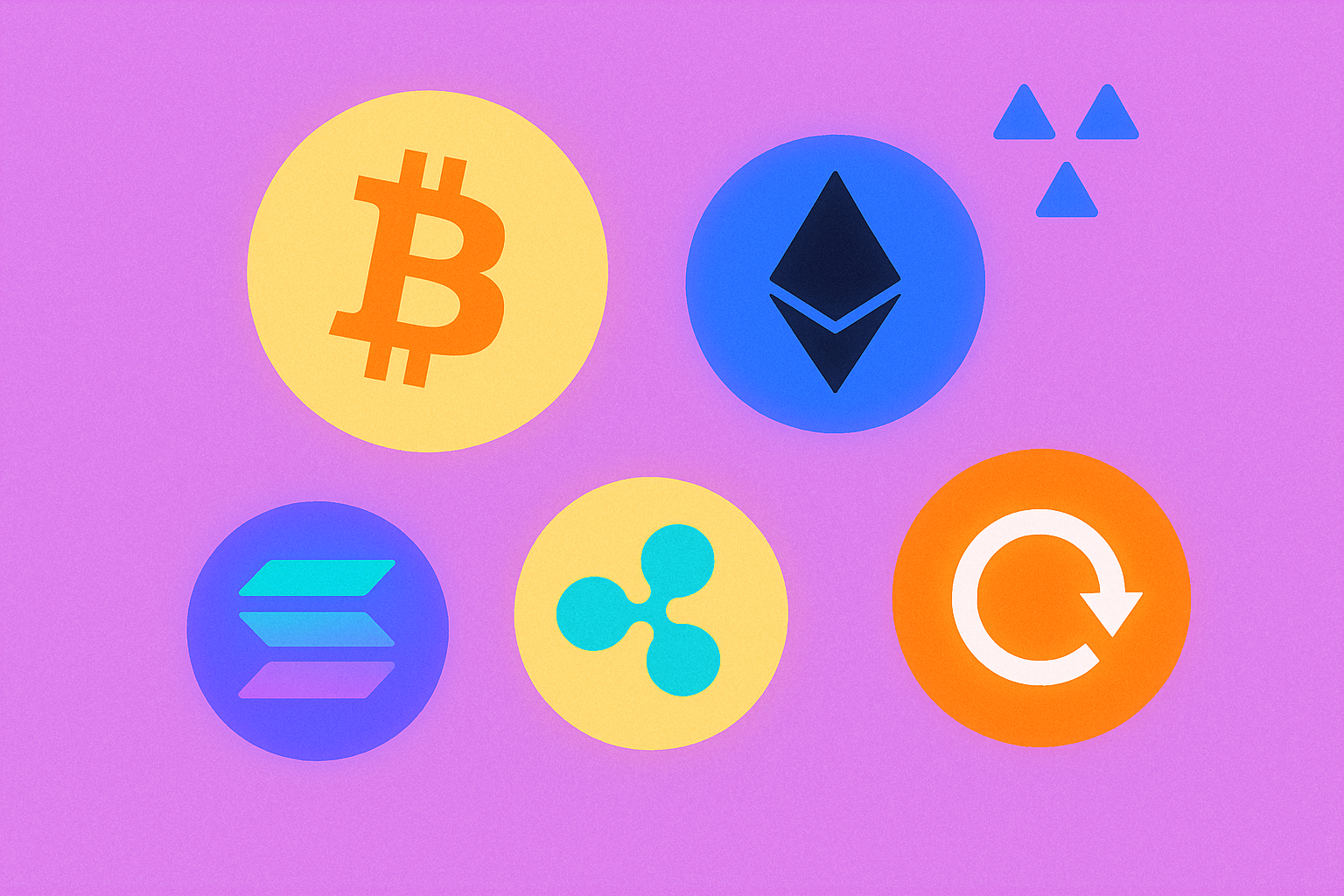
[2024 Edition] Top 5 Most Promising Cryptocurrencies Ranked. Comprehensive analysis of investment-worthy digital assets such as Bitcoin, Ethereum, and Solana, detailing how to identify value, as well as their respective advantages and disadvantages. This guide also covers portfolio construction methods using exchanges like Gate.
The Current State and Future Outlook of the Cryptocurrency Market
Cryptocurrencies (crypto assets) have rapidly become one of the most prominent asset classes among global investors in recent years. This surge in interest stems from growing skepticism toward centralized financial systems and breakthrough developments in blockchain technology.
Blockchain, as a decentralized ledger, has the potential to dramatically improve transparency and security in financial transactions. Cryptocurrencies built on this technology are increasingly viewed as solutions for long-standing issues in traditional finance—such as high remittance fees, transaction delays, and the complexity of cross-border transfers.
With regulatory frameworks advancing worldwide and institutional investment on the rise, the cryptocurrency market continues to mature steadily. As the digital economy expands, demand for cryptocurrencies is expected to accelerate.
This article explores the top-ranked cryptocurrencies with high future potential and provides a detailed guide to the key factors for evaluating investment-worthy crypto assets. If you’re interested in cryptocurrency investing or want to discover promising projects, read through to the end.
Top 5 Cryptocurrencies with Strong Growth Potential
Below, we examine the key features and future prospects of the five leading cryptocurrencies regarded as most promising for the years ahead.
- Bitcoin (BTC)
- Ethereum (ETH)
- Solana (SOL)
- Ripple (XRP)
- Major Exchange Tokens
Future Potential #1: Bitcoin (BTC)
Bitcoin, introduced in 2009 by the anonymous developer Satoshi Nakamoto, is the world’s first cryptocurrency. Designed as a decentralized digital currency leveraging blockchain technology, Bitcoin enables direct peer-to-peer transactions without intermediaries such as central banks or governments—ushering in a revolutionary financial paradigm.
One of Bitcoin’s defining characteristics is its scarcity. The supply is strictly capped at 21 million coins, a limitation that restrains inflation and positions Bitcoin as a reliable store of long-term value. For this reason, Bitcoin is often described as “digital gold,” recognized for its value-preserving function similar to physical gold.
Bitcoin’s global recognition has grown rapidly, with countries and corporations beginning to trade and hold it. Notably, the launch of Bitcoin ETFs by major asset managers has paved the way for significant institutional investment, further elevating Bitcoin’s status as an investable asset.
On a national scale, examples such as El Salvador’s adoption of Bitcoin as legal tender highlight its growing potential. Its use as a payment method is expanding, with some major enterprises now accepting Bitcoin for transactions.
Future Potential #2: Ethereum (ETH)
Ethereum is a blockchain project developed to serve as a platform for building decentralized applications (DApps). Its native token, ETH, facilitates transactions and operations within the ecosystem.
Ethereum’s most distinctive feature is its smart contract capability. Smart contracts are self-executing agreements triggered automatically when certain conditions are met, enabling secure and reliable transactions without middlemen.
For example, DeFi platforms built on Ethereum automate settlements, lending, and interest payments through smart contracts—delivering financial services more efficiently and at lower cost than traditional institutions.
All transactions and smart contract executions on Ethereum require a “gas” fee, paid in ETH. ETH is currently the second-largest cryptocurrency by market capitalization, widely used in DeFi, NFTs, DAOs, and beyond.
Ethereum is continually upgraded to improve energy efficiency and scalability. These ongoing technical enhancements ensure Ethereum will remain a cornerstone of the cryptocurrency industry for years to come.
Future Potential #3: Solana (SOL)
Solana is a blockchain platform designed to enable rapid and low-cost development of decentralized applications (DApps). Its impressive performance has already attracted widespread attention from businesses and engineers, with swift adoption in areas like NFTs and DeFi.
Solana’s primary advantage is its outstanding speed and cost efficiency. It can process roughly 3,000–5,000 transactions per second—far exceeding Ethereum’s throughput. Transaction fees are exceptionally low, averaging about $0.00025, making Solana highly economical for users.
Solana’s unique “Proof of History (PoH)” consensus algorithm underpins its high scalability by efficiently recording transaction chronology, setting it apart from conventional blockchains.
Solana’s ecosystem is expanding rapidly, with adoption across DeFi protocols, NFT marketplaces, and game development. Many NFT projects have chosen Solana for its speed and affordability.
Thanks to its technical strengths and practical utility, Solana is widely regarded as a cryptocurrency with significant future growth prospects.
Future Potential #4: Ripple (XRP)
Ripple (XRP) operates on the XRP Ledger, a distributed ledger technology developed by the US-based Ripple company. Ripple’s core aim is to facilitate faster and more affordable international money transfers, making it a focal point in the financial sector.
The legacy SWIFT system for international payments involves numerous banks and days of processing, resulting in high costs and slow transfers. Ripple, by contrast, enables transactions to settle in seconds with dramatically reduced fees.
Ripple’s “ODL (On-Demand Liquidity)” service leverages XRP as an intermediary currency, streamlining cross-border payments and reducing the need for advance local currency preparation—cutting liquidity management costs for financial institutions globally.
Increasing adoption of ODL is expected to drive up demand and value for XRP. Financial institutions in Asia, the Middle East, and South America have begun integrating ODL, steadily expanding Ripple’s global payment network.
Ripple’s proactive collaboration with regulators and commitment to compliance further establishes trust and strengthens its long-term outlook.
Future Potential #5: Major Exchange Tokens
Native tokens issued by leading cryptocurrency exchanges are gaining traction as high-potential investment assets. These tokens serve as platform base currencies, used for trading fees and special rewards.
Major exchange tokens stand out for their versatile utility. Benefits for holders include discounted trading fees, staking rewards, priority access to new token sales, and participation in platform governance.
Many top exchanges have launched proprietary smart contract platforms where their native tokens are used for transactions—delivering high-speed, low-cost functionality similar to Ethereum’s smart contracts.
Exchange ecosystems now span far more than trading, encompassing wallet services, lending, DeFi protocols, NFT marketplaces, and payment services.
As these ecosystems continue to grow, the utility and demand for exchange tokens will rise accordingly. In particular, tokens from globally operating exchanges offer both stability and growth potential for investors.
Three Key Benefits of Cryptocurrency Investing
Cryptocurrency investments offer unique advantages not found in traditional asset classes. Here are three major benefits explained in detail.
- Potential for Price Appreciation
- Access to Next-Generation Financial Systems
- Enhanced Information Awareness
Benefit #1: Potential for Price Appreciation
Since Bitcoin’s inception in 2009, cryptocurrencies have rapidly gained traction through integration with the broader financial system. Several factors have contributed to their growth:
Rising Distrust in Centralized Financial Systems
The 2008 financial crisis undermined trust in central banks and major financial institutions, prompting interest in decentralized alternatives. Cryptocurrencies emerged to fulfill this demand by providing decentralized value storage and exchange.
Blockchain Technology Advancements
Blockchain’s transparency, security, and efficiency surpass legacy systems, driving adoption by enterprises and governments and enhancing cryptocurrency utility.
Progress in Legal Frameworks
Global regulatory improvements have increased market transparency and reliability, lowering entry barriers for institutional investors and accelerating capital inflows.
Institutional Investment
Major financial institutions, hedge funds, and pension funds are entering the market, advancing maturity and stability.
These trends are expected to further boost cryptocurrency demand. Leading assets such as Bitcoin and Ethereum have established themselves as digital investments with strong long-term growth potential.
However, the market’s volatility means sharp short-term downturns are possible. Sound risk management and a long-term approach are essential.
Benefit #2: Access to Next-Generation Financial Systems
Cryptocurrencies provide entry into next-generation financial systems powered by blockchain. This technology promises to address persistent issues in traditional finance, delivering the following advantages:
Streamlined Payments and Transfers
Blockchain enables direct value transfers, bypassing intermediaries. International remittances settle within minutes—a vast improvement over conventional systems.
Superior Security
Decentralized ledgers eliminate single points of failure, making hacking and tampering exceedingly difficult. All transactions are encrypted and virtually immutable.
Greater Transparency
Blockchain records are public and auditable, combating fraud and corruption while fostering trust in financial systems.
Promoting Financial Inclusion
Anyone with a smartphone can use cryptocurrencies, granting billions access to financial services.
24/7 Trading
The crypto market operates non-stop, enabling transactions on weekends and overnight—an advantage for global commerce.
Low-Cost Cross-Border Transfers
Cryptocurrencies facilitate global remittances at minimal cost, eliminating the hefty fees associated with legacy transfers.
These benefits extend beyond finance to areas like supply chain management, real estate, healthcare records, and voting systems. Investing in cryptocurrencies offers indirect access to these innovations and participation in the evolution of the next-generation economy.
Benefit #3: Enhanced Information Awareness
Cryptocurrency is a dynamic field at the intersection of technology, finance, economics, and law. Constant innovation and rapid information flow mean investors naturally develop broad knowledge and heightened market awareness.
Deeper Understanding of Economic and Financial Trends
Crypto prices are affected by global economic developments, policy decisions, and geopolitical risks. Investing encourages greater understanding of macroeconomic factors and global market dynamics.
Exposure to Emerging Technologies
Investors learn about blockchain, smart contracts, DeFi, NFTs, and the metaverse—technologies that will reshape business and society. Early knowledge is a significant advantage.
Improved Investment Skills
Cryptocurrency investing strengthens risk management, portfolio building, and market analysis—skills applicable to other asset classes.
Global Perspective Development
The crypto market is global, with participants around the world. This broadens investors’ understanding of cross-border economics and regulatory trends.
Ability to Forecast Future Trends
Learning about technology and market trends helps anticipate changes in society, work, and lifestyle—crucial for career and business strategy.
Over the long term, enhanced information awareness has value beyond financial returns. In today’s fast-changing world, staying informed and adaptable is a vital competitive edge.
Risks and Drawbacks of Cryptocurrency Investing
While cryptocurrency investing offers compelling benefits, it comes with risks and challenges that must be addressed. Careful risk management is essential for investors.
- Extreme Price Volatility
- Cybersecurity and Hacking Risks
Drawback #1: Extreme Price Volatility
Cryptocurrency’s high volatility is one of its defining features. Compared to stocks, crypto prices can fluctuate much more dramatically, and asset values may swing sharply in short periods.
Drivers of Volatility
The market is relatively new and smaller than traditional equities, making it sensitive to large trades and investor sentiment. Constant 24/7 trading means volatility can occur at any time.
Impact of Regulatory Announcements
Government regulation and legal decisions can trigger major price moves. News of stricter regulation often leads to steep declines, while regulatory easing sparks rallies.
Market Immaturity
Crypto is still developing, and liquidity varies—especially with small-cap coins, where large trades can move prices significantly.
Speculative Trading
Speculators seeking short-term profits amplify volatility. Social media can also drive herd behavior and sudden price swings.
Essential Risk Management Practices
To manage volatility, investors should:
- Limit investments to surplus funds
- Diversify holdings; avoid concentrating in one asset
- Maintain a long-term outlook and avoid emotional reactions to short-term moves
- Set loss limits and stick to them
- Regularly review and rebalance their portfolio
Volatility offers opportunities for gains but also the risk of significant losses. Know your risk tolerance and invest responsibly.
Drawback #2: Cybersecurity and Hacking Risks
Because cryptocurrencies are digital assets traded and stored online, they are vulnerable to cyberattacks and hacking. Multiple major hacks have resulted in substantial losses over the years.
Exchange Attacks
Leading exchanges have been targeted by hackers, resulting in losses of hundreds of millions of dollars. For example, in 2017, a Japanese exchange suffered a $580 million theft. Such incidents harm both investors and overall market trust.
Individual Wallet Vulnerabilities
Personal wallets are susceptible to phishing, malware, and private key theft, putting individual funds at risk.
DeFi Protocol Risks
DeFi platforms may contain smart contract vulnerabilities that hackers exploit. Several attacks have led to large-scale losses from these protocols.
NFT-Related Fraud
The rapid growth of NFTs has spawned fake projects and scam sites, resulting in theft of digital assets and funds.
Best Security Practices
To mitigate risks, implement the following safeguards:
Enable Two-Factor Authentication
Activate two-factor authentication for all exchange and wallet accounts.
Use Hardware Wallets
For significant holdings, consider hardware wallets that remain offline.
Safeguard Private Keys
Do not share private keys or recovery phrases; store securely and encrypt digital copies.
Choose Reputable Exchanges
Opt for established exchanges with proven security measures and review their track records.
Be Wary of Phishing
Avoid suspicious links; always verify official URLs and maintain high security awareness.
Regular Security Checks
Change passwords periodically, delete unused accounts, and update software regularly.
While hacking risks cannot be eliminated entirely, robust security measures can significantly reduce exposure. Investors must understand their responsibilities and maintain high security awareness.
How to Identify Cryptocurrencies with Strong Growth Potential
With thousands of cryptocurrencies in circulation, picking projects with real future potential is critical for successful investing. Here are three key criteria to consider:
- Clear Project Purpose and Vision
- Active Community and Ecosystem
- Market Demand, Liquidity, and Market Capitalization
Criterion #1: Clear Project Purpose and Vision
Leading cryptocurrency projects are driven by clear objectives and visions. Projects focused on solving real-world problems and adding social value—rather than mere speculation—have stronger long-term prospects.
Defined Problem and Solution
Bitcoin was born from dissatisfaction with centralized finance, offering a decentralized store of value outside government or central bank control. Ethereum’s purpose is to provide a platform for automated smart contracts, transforming finance and commerce.
Whitepaper Review
Always read the project’s whitepaper to confirm:
- The problem being addressed
- Technical feasibility of the solution
- Competitive advantages over existing solutions
- Credibility and experience of the development team
- Sustainability of the tokenomics model
Philosophical Alignment
Invest in projects whose vision and values resonate with you. Long-term investing requires conviction and alignment with the project’s mission.
If you cannot fully understand or support a project’s goals, it is wiser to pass. Invest only in what you truly believe in.
Criterion #2: Active Community and Ecosystem
Technical innovation alone is not enough; vibrant communities and ecosystems are essential for success. Strong communities drive adoption, development, and problem-solving.
Community Impact
Bitcoin is supported by global advocates who promote its philosophy, educate users, and secure the network—functioning as the largest DAO in practice. Ethereum’s active community of developers, businesses, and investors fuels the creation of thousands of DApps and ecosystem expansion.
Ecosystem Evaluation
Key metrics for assessing ecosystems include:
Developer Activity
Check GitHub commits and project updates to gauge ongoing development.
DApp Quantity and Quality
Diverse, practical DApps signal a healthy and useful platform.
Partnerships
Partnerships with major corporations and financial institutions add credibility and signal future growth.
Social Media Engagement
Evaluate not just follower counts but actual engagement across platforms like Twitter, Discord, and Telegram.
Events and Conferences
Frequent events strengthen community ties and support long-term development.
Network Effects
A growing ecosystem creates a feedback loop—more users increase value, attracting further adoption and development. Projects benefiting from these effects are positioned for lasting growth.
Criterion #3: Market Demand, Liquidity, and Market Capitalization
Analysis of market data—demand, liquidity, and capitalization—is vital for objective evaluation of future potential.
Market Capitalization
Market cap reflects a cryptocurrency’s overall value and stability. Higher-cap assets are generally more recognized and stable.
Crypto assets are commonly classified as:
- Large Cap: Trillions of yen/Billions of dollars. Includes Bitcoin, Ethereum. Stable, but less explosive growth.
- Mid Cap: Tens to hundreds of billions. Balanced risk and growth potential.
- Small Cap: Below billions. High risk, high return possibility.
New or cautious investors should start with large-cap cryptocurrencies.
Liquidity Assessment
High liquidity means assets can be easily bought and sold, with less risk of sharp price swings.
Assess liquidity by:
- Trading Volume: Higher 24-hour volume indicates better liquidity.
- Exchange Listings: More listings mean greater liquidity.
- Spread: Narrow bid-ask spreads show healthy liquidity.
Low-liquidity coins may be difficult to sell or could trigger sudden price drops.
Market Demand Indicators
Other demand signals include:
- Number of Exchange Listings
- Search Trends on Google or similar tools
- On-Chain Metrics: Active addresses, transaction count, network fees
- Institutional Investment Activity
Balanced Assessment
Very small-cap projects may carry fraud or abandonment risk, while extremely large-cap assets may have limited upside.
The ideal approach is to invest in projects with established track records and sufficient market cap, but which still offer room for growth—balancing risk and potential reward.
Conclusion: Investing in Cryptocurrencies with Future Potential
This guide has detailed the top cryptocurrencies with growth potential, as well as key criteria for identifying high-value projects.
The five highlighted assets—Bitcoin, Ethereum, Solana, Ripple, and major exchange tokens—stand out for their technical strengths, clear missions, and active communities, supporting future expansion.
Cryptocurrency investing offers the potential for price appreciation, access to transformative financial systems, and heightened information awareness. However, risks like volatility and hacking must be fully understood and managed for success.
When selecting cryptocurrencies, consider project mission and vision, community and ecosystem activity, and market demand and liquidity.
With blockchain technology, regulatory clarity, and institutional investment driving growth, the cryptocurrency market is poised for continued expansion. However, given its volatility and evolving nature, investors should:
- Invest only surplus funds
- Diversify investments
- Adopt a long-term perspective
- Continually learn and update their knowledge
- Implement robust security measures
- Support projects they understand and believe in
Crypto investing offers not just financial opportunity, but a chance to participate in technological and societal change. Use the insights from this guide to identify promising assets and make wise investment decisions.
Ultimately, make investment choices responsibly, fully aware of the risks, and within your financial means. Refer to this article as you consider investing in cryptocurrencies with strong future potential.
FAQ
Which cryptocurrencies have the strongest prospects for 2024?
Bitcoin, Ethereum, and Solana are the most promising cryptocurrencies in 2024. Their market size, innovation, and trading volume position them as industry leaders.
How do you evaluate the growth potential of a cryptocurrency project?
Assess the project’s ability to solve unique problems, market demand, and competitive landscape. Key indicators include a strong team, well-defined use cases, rising trading volume, and ongoing innovation.
What are the most important metrics when assessing cryptocurrency future potential?
Active address count, trading volume, and hash rate are vital—they reflect network activity and security. Also consider developer activity, community size, and technological innovation.
Which aspects of a cryptocurrency whitepaper demonstrate project feasibility?
Project objectives, tokenomics, functionality, and team credentials all signal feasibility, showing the project’s planning and execution strengths.
How do team background and developer expertise impact a cryptocurrency’s future?
Team background and developer expertise are crucial to project success. Well-known founders and strong teams attract investor trust and improve product quality and market performance. They are essential for long-term value creation.
How can you identify crypto scams and “air coins”?
Verify team identities, examine the whitepaper’s detail and technical rigor, check for active communities, be cautious of unrealistic profit promises, and monitor abnormal trading patterns. Trustworthy projects have transparent teams and concrete implementation plans.
How do application scenarios and ecosystem development affect a cryptocurrency’s long-term value?
Widespread adoption in areas like DeFi, smart contracts, and international payments strengthens long-term value. As ecosystems grow and technology advances, adoption rates and market size increase, enhancing stability and utility.
* The information is not intended to be and does not constitute financial advice or any other recommendation of any sort offered or endorsed by Gate.