This comprehensive analysis compares RITE and SNX, two distinct DeFi protocols serving different blockchain verticals. RITE operates as a Web3 entertainment platform for NFT-based film and television content, ranked #3250 with $378,478 market cap, while SNX functions as a decentralized synthetic asset protocol ranked #295 with $96.58 million market cap. The article examines historical price trends showing both tokens declined ~99% from peaks, compares tokenomics and institutional adoption, and provides 2026-2031 price forecasts. Key differentiators include liquidity profiles (SNX: $3.4M vs RITE: $13.7K daily volume), risk factors, and investment strategies suited for different investor types. SNX appeals to conservative investors seeking established DeFi infrastructure, while RITE targets risk-tolerant participants exploring emerging Web3 content ecosystems. Current extreme fear market sentiment (index: 9) favors cautious positioning with comprehensive due diligence recommended before investment decisions.
Introduction: Investment Comparison Between RITE and SNX
In the cryptocurrency market, the comparison between RITE vs SNX has become a topic of interest for investors. The two tokens differ significantly in market capitalization ranking, application scenarios, and price performance, representing distinct positioning within the crypto asset landscape.
RITE (RITE): Launched in 2022, RITE has positioned itself as a Web3 ecosystem platform for creating, monetizing, and consuming film and television content through NFTs. Currently ranked #3250 with a market cap of approximately $378,478, RITE operates within the entertainment and creator economy vertical.
SNX (SNX): Since its launch in 2018 (formerly known as Havven), SNX has established itself as a decentralized synthetic asset protocol. Ranked #295 with a market cap of approximately $96.58 million, SNX enables users to create and trade synthetic assets including fiat currencies, precious metals, indices, and other cryptocurrencies.
This article will provide a comprehensive analysis of RITE vs SNX investment value comparison, examining historical price trends, supply mechanisms, institutional adoption, technical ecosystems, and future outlook. We aim to address the question that investors care about most:
"Which is the better buy right now?"
I. Historical Price Comparison and Market Overview
RITE and SNX Historical Price Trends
-
2024: RITE reached a peak of $0.081853 in January 2024, reflecting initial market interest in its Web3 content creation ecosystem. However, the token experienced significant volatility, dropping to a low of $0.00016697 within the same period.
-
2021: SNX achieved an all-time high of $28.53 in February 2021, driven by strong momentum in the DeFi sector and growing adoption of synthetic asset protocols. The token demonstrated considerable influence during the DeFi boom period.
-
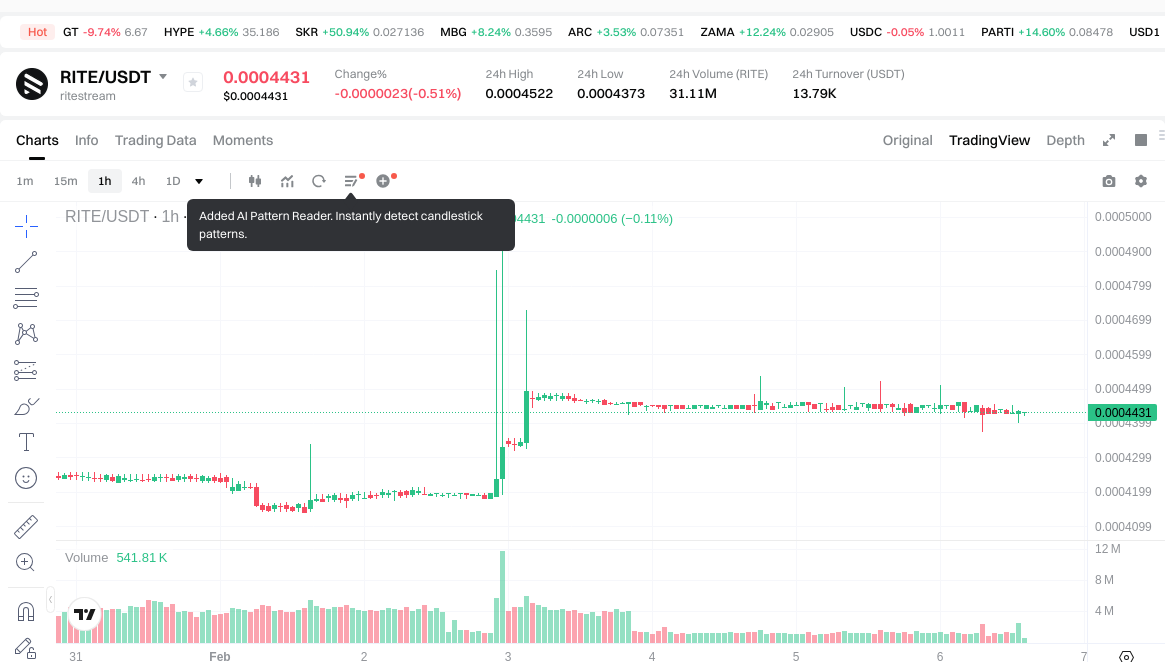
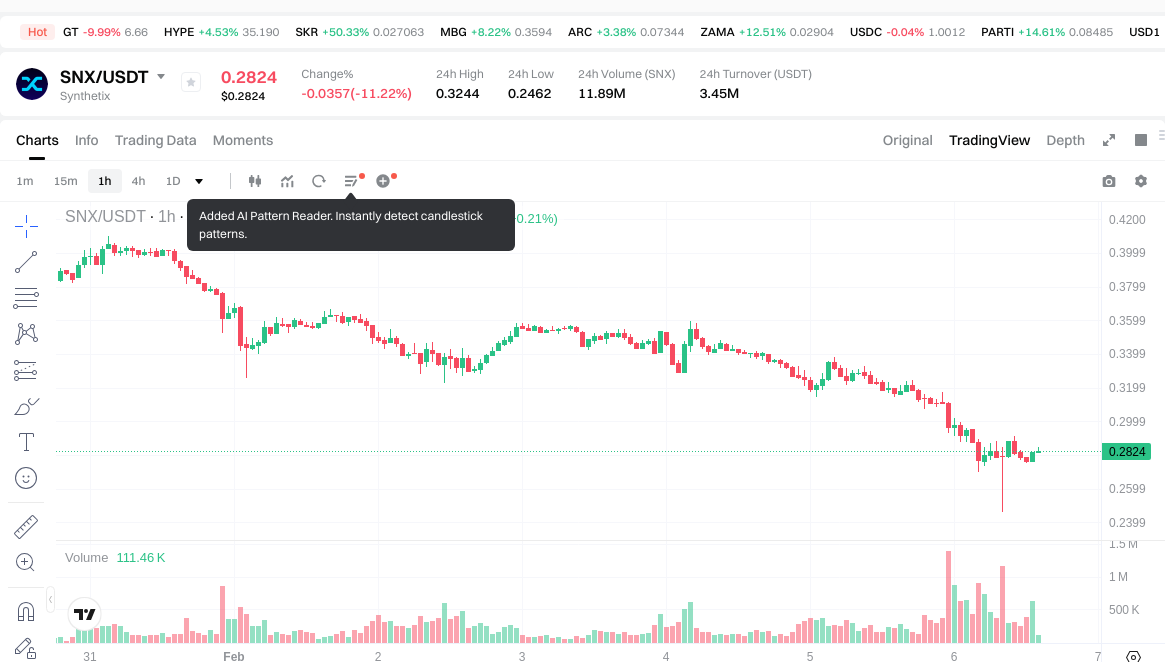
Comparative Analysis: During the 2024-2025 market cycle, RITE declined from its peak of $0.081853 to current levels around $0.0004401, representing a decline of approximately 99.46%. In contrast, SNX fell from its 2021 high of $28.53 to the current price of $0.2812, reflecting a decrease of approximately 99.01% from its peak.
Current Market Status (February 6, 2026)
- RITE Current Price: $0.0004401
- SNX Current Price: $0.2812
- 24-Hour Trading Volume: RITE recorded $13,700.19 compared to SNX's $3,445,070.64
- Market Sentiment Index (Fear & Greed Index): 9 (Extreme Fear)
View real-time prices:
II. Core Factors Influencing RITE vs SNX Investment Value
Supply Mechanism Comparison (Tokenomics)
- RITE: Information regarding RITE's supply mechanism, token distribution model, or emission schedule is not available in the reference materials.
- SNX: Details about SNX's tokenomics, including supply cap, inflation rate, or deflationary mechanisms, are not provided in the available data.
- 📌 Historical Pattern: Supply mechanisms have historically influenced price cycles through scarcity dynamics and emission rates, though specific applications to RITE and SNX cannot be determined from current materials.
Institutional Adoption and Market Application
- Institutional Holdings: Reference materials do not contain comparative data on institutional preference between RITE and SNX.
- Enterprise Adoption: Specific use cases for RITE or SNX in cross-border payments, settlement systems, or investment portfolios are not documented in the provided sources.
- National Policies: Regulatory attitudes toward RITE and SNX across different jurisdictions are not covered in available materials.
Technological Development and Ecosystem Building
- RITE Technical Upgrades: Information about RITE's technological roadmap, protocol improvements, or network enhancements is not included in reference materials.
- SNX Technical Development: Details regarding SNX's technical evolution, platform upgrades, or protocol modifications are not available in provided sources.
- Ecosystem Comparison: Comparative analysis of DeFi integration, NFT adoption, payment applications, or smart contract implementation for RITE versus SNX is not documented in available materials.
Macroeconomic Environment and Market Cycles
- Performance Under Inflation: Comparative analysis of RITE and SNX as inflation hedges is not available in reference materials.
- Macroeconomic Monetary Policy: Specific impacts of interest rates, US Dollar Index movements, or central bank policies on RITE and SNX are not covered in provided sources.
- Geopolitical Factors: Effects of cross-border transaction demand, international tensions, or regional economic policies on RITE and SNX investment value are not documented in available materials.
III. 2026-2031 Price Forecast: RITE vs SNX
Short-term Forecast (2026)
- RITE: Conservative $0.000248 - $0.000443 | Optimistic $0.000443 - $0.000492
- SNX: Conservative $0.268 - $0.282 | Optimistic $0.282 - $0.384
Mid-term Forecast (2028-2029)
- RITE may enter a consolidation phase, with projected prices ranging from $0.000376 to $0.000823
- SNX may enter an expansion phase, with projected prices ranging from $0.197 to $0.557
- Key drivers: institutional capital inflows, ETF developments, ecosystem growth
Long-term Forecast (2030-2031)
- RITE: Baseline scenario $0.000582 - $0.000728 | Optimistic scenario $0.000622 - $0.000913
- SNX: Baseline scenario $0.286 - $0.489 | Optimistic scenario $0.304 - $0.652
View detailed price predictions for RITE and SNX
Disclaimer
RITE:
| Year |
Predicted High Price |
Predicted Average Price |
Predicted Low Price |
Price Change |
| 2026 |
0.000491841 |
0.0004431 |
0.000248136 |
0 |
| 2027 |
0.00067315752 |
0.0004674705 |
0.000331904055 |
6 |
| 2028 |
0.0006957830922 |
0.00057031401 |
0.0003764072466 |
29 |
| 2029 |
0.00082296311643 |
0.0006330485511 |
0.00037982913066 |
43 |
| 2030 |
0.000888167117193 |
0.000728005833765 |
0.000582404667012 |
65 |
| 2031 |
0.000913137717291 |
0.000808086475479 |
0.000622226586118 |
83 |
SNX:
| Year |
Predicted High Price |
Predicted Average Price |
Predicted Low Price |
Price Change |
| 2026 |
0.384064 |
0.2824 |
0.26828 |
0 |
| 2027 |
0.46319248 |
0.333232 |
0.19660688 |
18 |
| 2028 |
0.4459977088 |
0.39821224 |
0.3663552608 |
41 |
| 2029 |
0.557178566208 |
0.4221049744 |
0.278589283104 |
50 |
| 2030 |
0.5875701243648 |
0.489641770304 |
0.30357789758848 |
74 |
| 2031 |
0.651713196274624 |
0.5386059473344 |
0.285461152087232 |
91 |
IV. Investment Strategy Comparison: RITE vs SNX
Long-term vs Short-term Investment Strategies
-
RITE: May suit investors focused on Web3 content creation ecosystems and entertainment-focused blockchain applications. The token's position in the NFT and creator economy vertical suggests potential alignment with long-term Web3 adoption trends, though current market cap of $378,478 indicates limited liquidity.
-
SNX: May suit investors seeking exposure to decentralized synthetic asset protocols and DeFi infrastructure. With a market cap of approximately $96.58 million and established presence since 2018, SNX represents a more mature protocol with demonstrated resilience through multiple market cycles.
Risk Management and Asset Allocation
-
Conservative Investors: Consider allocation strategies emphasizing established protocols with demonstrated market presence. SNX's larger market cap and trading volume ($3,445,070.64 vs RITE's $13,700.19) may provide greater liquidity for risk-averse approaches.
-
Aggressive Investors: May explore higher-risk allocations in emerging ecosystems, though liquidity constraints and volatility patterns should inform position sizing decisions.
-
Hedging Tools: Consider stablecoin reserves, options strategies where available, and cross-asset diversification to manage portfolio volatility exposure.
V. Potential Risk Comparison
Market Risk
-
RITE: Exhibits substantial price volatility, with historical decline of approximately 99.46% from peak levels. Limited trading volume of $13,700.19 may amplify liquidity risk during market stress. Current ranking of #3250 suggests limited market recognition and potential for sustained low liquidity conditions.
-
SNX: Despite higher market cap ranking (#295), the token has experienced significant drawdown of approximately 99.01% from February 2021 peak. Current price of $0.2812 reflects sustained market correction. Trading volume of $3,445,070.64 provides relative liquidity advantage compared to RITE.
Technical Risk
-
RITE: Information regarding network architecture, protocol vulnerabilities, or scalability limitations is not available in reference materials. The Web3 content platform model faces execution risks related to user adoption and content creator onboarding.
-
SNX: As a synthetic asset protocol, faces technical considerations related to oracle reliability, collateralization mechanisms, and smart contract security. Specific technical risk factors are not documented in provided materials.
Regulatory Risk
- Global regulatory frameworks continue to evolve regarding synthetic assets, NFT platforms, and DeFi protocols. Both RITE and SNX operate in categories subject to ongoing regulatory scrutiny across multiple jurisdictions. Specific regulatory impacts on either protocol are not detailed in available sources.
VI. Conclusion: Which Is the Better Buy?
📌 Investment Value Summary:
-
RITE Considerations: Represents exposure to Web3 content creation and NFT monetization vertical. Current market cap of $378,478 and ranking of #3250 indicate early-stage positioning with associated liquidity constraints. Historical volatility patterns suggest elevated risk profile.
-
SNX Considerations: Offers exposure to established DeFi infrastructure and synthetic asset protocols. Market cap of approximately $96.58 million and ranking of #295 provide relative liquidity advantage. Operational history since 2018 demonstrates protocol longevity through multiple market cycles.
✅ Investment Considerations:
-
Beginning Investors: May prioritize protocols with demonstrated market presence, adequate liquidity, and established trading infrastructure. Consider focusing on risk management fundamentals and portfolio diversification principles.
-
Experienced Investors: May evaluate both tokens within broader portfolio context, considering liquidity profiles, historical volatility patterns, and correlation with macro crypto market trends. Current market sentiment index of 9 (Extreme Fear) suggests cautious positioning.
-
Institutional Participants: Should conduct comprehensive due diligence regarding liquidity depth, regulatory compliance frameworks, and operational risk factors. Consider custody solutions, execution strategies, and position sizing relative to available market liquidity.
⚠️ Risk Disclosure: Cryptocurrency markets exhibit high volatility. This analysis does not constitute investment advice. Conduct independent research and consult qualified financial advisors before making investment decisions.
VII. FAQ
Q1: What is the current market capitalization difference between RITE and SNX?
SNX significantly outranks RITE with a market cap of approximately $96.58 million (#295) compared to RITE's $378,478 (#3250). This represents a market capitalization difference of over 250x, with SNX commanding substantially greater market recognition and liquidity. The trading volume disparity further illustrates this gap, with SNX recording $3,445,070.64 in 24-hour volume versus RITE's $13,700.19, indicating that SNX offers meaningfully better liquidity conditions for investors seeking entry and exit flexibility.
Q2: How have RITE and SNX performed since their respective peak prices?
Both tokens have experienced severe drawdowns from historical peaks, though timing differs significantly. RITE declined approximately 99.46% from its January 2024 peak of $0.081853 to current levels around $0.0004401. SNX fell approximately 99.01% from its February 2021 all-time high of $28.53 to the current price of $0.2812. While the percentage declines are comparable, SNX's peak occurred during the 2021 DeFi boom, demonstrating multi-year market presence, whereas RITE's peak was more recent in 2024.
Q3: What are the primary use cases that differentiate RITE from SNX?
The tokens serve fundamentally different purposes within the blockchain ecosystem. RITE operates as a Web3 platform focused on creating, monetizing, and consuming film and television content through NFTs, positioning itself within the entertainment and creator economy vertical. In contrast, SNX functions as a decentralized synthetic asset protocol enabling users to create and trade synthetic representations of fiat currencies, precious metals, indices, and other cryptocurrencies. This positions SNX within the DeFi infrastructure layer rather than content creation applications.
Q4: Which token shows better price projections for 2026-2031?
Price forecasts suggest different trajectories for each token through 2031. RITE's conservative 2026 projection ranges from $0.000248 to $0.000443, potentially reaching $0.000622 to $0.000913 by 2031 under optimistic scenarios. SNX's conservative 2026 forecast spans $0.268 to $0.282, with long-term projections reaching $0.304 to $0.652 by 2031. In absolute terms, SNX maintains higher price levels throughout the forecast period, though percentage growth rates vary based on market conditions and ecosystem development trajectories.
Q5: What liquidity considerations should investors evaluate when choosing between RITE and SNX?
Liquidity represents a critical differentiating factor between these tokens. SNX's 24-hour trading volume of $3,445,070.64 provides substantially greater market depth compared to RITE's $13,700.19, translating to improved execution quality and reduced slippage risk for SNX transactions. RITE's limited trading volume may create challenges for investors seeking to establish or exit positions, particularly during volatile market conditions. This liquidity differential becomes especially relevant for larger position sizes or time-sensitive trading strategies.
Q6: How does the current market sentiment affect investment decisions for RITE versus SNX?
The current market sentiment index of 9 (Extreme Fear) suggests heightened risk aversion across cryptocurrency markets, which disproportionately impacts lower-liquidity assets like RITE. During extreme fear periods, investors typically seek relative safety in more established protocols with demonstrated resilience, potentially favoring SNX's longer operational history since 2018 over RITE's more recent 2022 launch. However, risk-seeking investors may view extreme fear conditions as potential accumulation opportunities, though liquidity constraints remain a practical consideration for RITE positions.
Q7: What risk factors are most relevant when comparing RITE and SNX investments?
Both tokens carry distinct risk profiles requiring careful evaluation. RITE faces execution risks related to user adoption in Web3 content creation, combined with liquidity constraints from its #3250 ranking and minimal trading volume. SNX encounters technical considerations inherent to synthetic asset protocols, including oracle reliability, collateralization mechanisms, and smart contract security, though its larger market presence provides some risk mitigation through greater market scrutiny. Regulatory uncertainty affects both tokens, with SNX facing DeFi protocol oversight and RITE subject to evolving NFT and content platform regulations. Investors should assess their risk tolerance relative to these differentiated risk factors.
Q8: Which investor profile is better suited for RITE versus SNX?
SNX may align better with investors seeking exposure to established DeFi infrastructure with adequate liquidity for portfolio management. Its operational longevity since 2018 and higher market cap provide characteristics that conservative to moderate risk profiles typically prefer. RITE may attract investors specifically interested in Web3 content creation ecosystems and willing to accept elevated liquidity risk and volatility in exchange for exposure to an early-stage entertainment-focused blockchain application. Institutional participants would likely find SNX's liquidity profile more compatible with portfolio management requirements, while RITE's limited depth constrains institutional allocation capacity.
<>
* The information is not intended to be and does not constitute financial advice or any other recommendation of any sort offered or endorsed by Gate.