This article explores Robert Kiyosaki's strategic Bitcoin exit strategy and its implications for cryptocurrency and real estate investing. Kiyosaki sold $2.25 million in Bitcoin at $90,000 per coin, reinvesting profits into surgical centers and billboard businesses to generate $27,500 in monthly tax-free cash flow by February 2026. Despite liquidating crypto holdings, he maintains bullish conviction on Bitcoin reaching $250,000 by 2026. The piece examines current market dynamics as Bitcoin faces 33% pullback from October peaks, analyzes potential support levels between $73,000-$84,000, and extracts investment lessons on diversification. Readers gain insights into balancing capital appreciation with cash-producing assets, understanding institutional market support, and implementing Kiyosaki's philosophy of building multiple income streams through traditional and digital assets during volatile market cycles.
Overview of Kiyosaki's Strategic Bitcoin Exit
"Rich Dad, Poor Dad" author Robert Kiyosaki recently revealed a significant shift in his investment strategy, announcing that he sold $2.25 million worth of Bitcoin to redirect the proceeds into traditional businesses. This move represents a calculated decision to diversify his portfolio while maintaining his long-term bullish stance on cryptocurrency. The sale comes at a time when Bitcoin markets are experiencing heightened volatility, with the asset trading significantly below its recent peak.
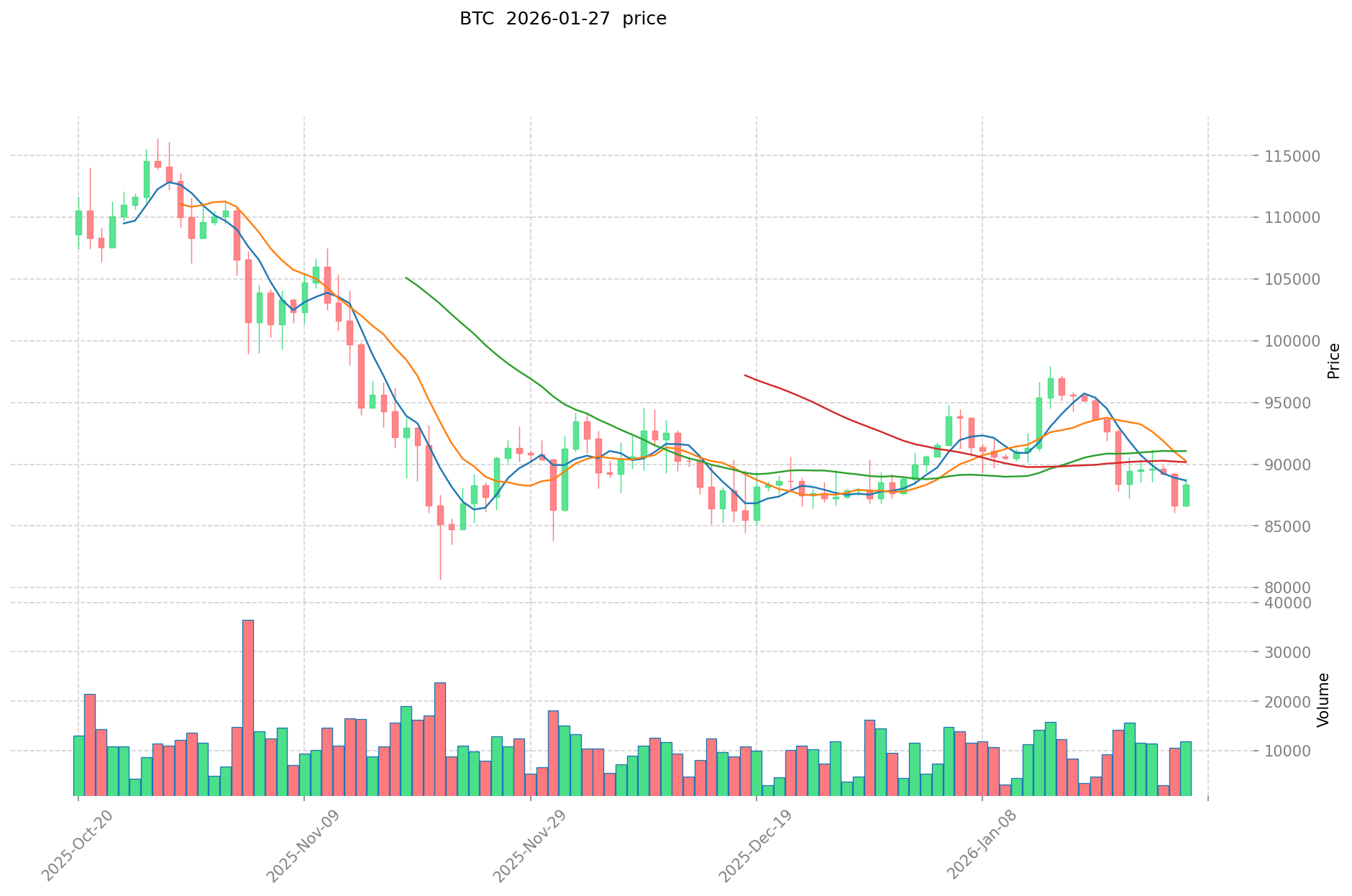
Kiyosaki's decision to exit his Bitcoin position demonstrates his commitment to building multiple income streams through cash-producing assets. He disclosed that he initially purchased the Bitcoin several years ago at approximately $6,000 per coin and exited his position at around $90,000, securing substantial gains that will now fuel his traditional business ventures. This strategic reallocation reflects his investment philosophy of converting capital appreciation into steady cash flow.
Key Takeaways:
- Kiyosaki sold $2.25M in Bitcoin and moved the profits into two surgery centers and a billboard business
- He expects $27,500 in monthly cash flow from these investments and still predicts Bitcoin will reach $250,000
- His sale comes as Bitcoin sits in "extreme fear" territory, down over 33% from its October peak
The timing of this transaction is particularly noteworthy, as it occurs during a period of significant market correction. Bitcoin has experienced a sharp decline from its all-time high, creating what some analysts view as both risk and opportunity in the cryptocurrency market. Kiyosaki's move illustrates how experienced investors navigate volatile markets by taking profits and reallocating capital into diversified income-generating assets.
Kiyosaki Turns Bitcoin Profits Into $27.5K Monthly Cash-Flow Plan
The proceeds from Kiyosaki's Bitcoin sale will be strategically invested into two surgery centers and a billboard business, ventures he projects will collectively generate $27,500 in tax-free monthly income by February 2026. This investment strategy aligns perfectly with his long-standing philosophy of prioritizing cash-producing assets over relying solely on capital appreciation. By converting cryptocurrency gains into tangible businesses with predictable cash flows, Kiyosaki demonstrates his commitment to building sustainable wealth through multiple income streams.
The choice of surgery centers and billboard businesses reflects careful consideration of industries with stable demand and proven revenue models. Surgery centers benefit from consistent healthcare demand and favorable reimbursement structures, while billboard businesses generate passive income through long-term advertising contracts. These traditional business investments provide the steady cash flow that Kiyosaki has long advocated for in his financial education teachings.
Despite liquidating a substantial Bitcoin position, Kiyosaki emphasized that his fundamental outlook on cryptocurrency remains unchanged. "I am still very bullish and optimistic on Bitcoin and will begin acquiring more with my positive cash flow," he stated, indicating that his sale was a strategic reallocation rather than a loss of faith in digital assets. This approach demonstrates how investors can take profits while maintaining long-term conviction in an asset class.
In recent statements, Kiyosaki reiterated his ambitious price target of $250,000 for Bitcoin by 2026, alongside a forecast of $27,000 per ounce for gold. These predictions underscore his continued commitment to hard-asset investing and his belief that both precious metals and cryptocurrencies will appreciate significantly in the coming years. His strategy of using cash flow from traditional businesses to accumulate more Bitcoin creates a self-reinforcing cycle of wealth building.
Kiyosaki's announcement arrives during one of the steepest drawdowns of the current cryptocurrency cycle. Bitcoin briefly dropped to $80,537 during the recent downturn before recovering toward $84,000, deepening concerns among traders who have already weathered a month-long selloff. The market correction has tested the resolve of many investors, with sentiment indicators reflecting widespread anxiety about near-term price action.
The Crypto Fear & Greed Index plummeted to 11, marking "extreme fear" and registering one of its lowest readings in recent years.
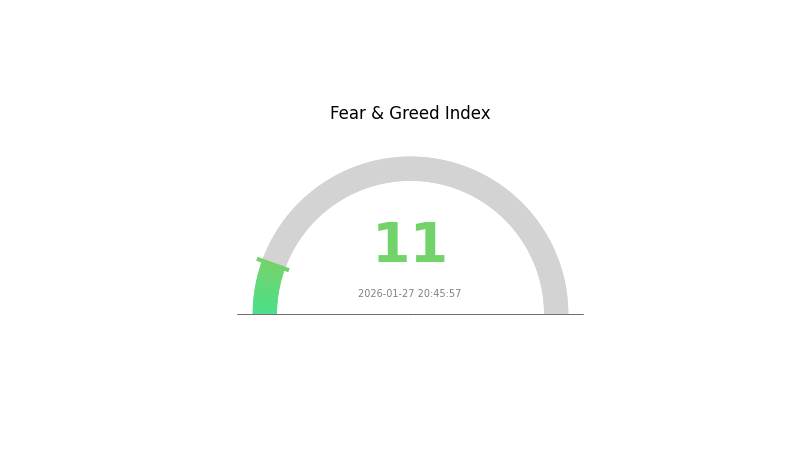 This sentiment indicator suggests that market participants are experiencing significant anxiety about Bitcoin's price trajectory. The index's extreme reading often signals capitulation among weaker hands, which some analysts interpret as a potential buying opportunity for long-term investors.
Bitcoin has fallen more than 33% from its October all-time high above $126,000, which was reached just days before the historic October 10 liquidation event that erased billions in leveraged positions. This dramatic decline has forced many traders to reassess their positions and risk management strategies. The liquidation cascade that followed the peak demonstrated the dangers of excessive leverage in cryptocurrency markets and served as a reminder of Bitcoin's inherent volatility.
Market analysts remain divided on whether the current decline represents a short-lived washout or the beginning of a more prolonged downturn. Veteran trader Peter Brandt recently noted that Bitcoin could still reach $200,000 by Q3 2029, arguing that market corrections are healthy for establishing long-term structural support. His perspective suggests that the current pullback may be creating accumulation opportunities for patient investors with longer time horizons.
Analysts at a major cryptocurrency exchange echoed this constructive view, noting that record outflows from Bitcoin ETFs reflect short-term positioning adjustments rather than fading institutional interest or weakening fundamental drivers. They argue that institutional investors remain committed to cryptocurrency exposure but are managing their positions tactically in response to market volatility. This interpretation suggests that the current weakness may be temporary rather than indicative of a fundamental shift in institutional sentiment.
Bitcoin Approaches 'Fire Sale' Zone
A prominent cryptocurrency researcher has warned that Bitcoin may still have additional downside before reaching its true cycle bottom, pointing to a "max-pain" zone between $73,000 and $84,000. This price range represents what he characterizes as "fire sale" levels, corresponding to the cost bases of major institutional players and strategic corporate holders. The analysis suggests that these support levels could serve as critical inflection points for Bitcoin's next major move.
The identified range is particularly significant because it aligns with the entry points of several high-profile institutional investors. A major Bitcoin ETF has an average cost basis around $84,000, while a prominent corporate Bitcoin holder made substantial purchases near $73,000. These institutional cost bases create natural support levels where these large holders have strong incentives to defend their positions or add to them, potentially stabilizing prices.
According to this analysis, Bitcoin's final bottom is "very likely" to form somewhere within this critical price band. The researcher argues that these levels represent maximum pain for recent buyers while offering attractive entry points for long-term accumulation. This framework suggests that the current market correction may need to test these institutional cost bases before establishing a durable bottom and beginning the next leg higher.
These comments have landed as traders continue debating whether the market has already experienced full capitulation following Bitcoin's slide from its October peak near $125,000. Some market participants argue that institutional investors will not allow a deeper crash that could harm their own clients' portfolios, suggesting that institutional buying will emerge to support prices at current levels. This view holds that the presence of regulated financial products has changed Bitcoin's market dynamics.
Others contend that the market has not yet fully flushed out excessive leverage and that further downside may be necessary to clear speculative positions. This perspective suggests that until leveraged traders are completely washed out, the market cannot establish a sustainable bottom. The debate reflects mounting tension in the cryptocurrency community as Bitcoin trades in what many participants view as a fragile and uncertain price range.
The discussion around Bitcoin's potential bottom has intensified as the asset tests critical support levels. Technical analysts are closely monitoring trading volumes, on-chain metrics, and derivatives data for signs of capitulation or accumulation. The resolution of this debate will likely determine whether Bitcoin can stabilize and resume its long-term uptrend or if further consolidation is required before the next bull phase can begin.
Kiyosaki's strategic decision to convert Bitcoin profits into cash-flowing businesses while maintaining his long-term bullish outlook exemplifies a balanced approach to cryptocurrency investing. By taking profits at elevated levels and reinvesting into traditional assets, he demonstrates how investors can benefit from Bitcoin's volatility while building diversified income streams. His continued conviction in Bitcoin's long-term potential, combined with his practical approach to wealth building, offers a blueprint for navigating the cryptocurrency market's inherent volatility while maintaining financial stability through traditional business investments.
FAQ
Why does Robert Kiyosaki sell Bitcoin and invest in real-world businesses?
Kiyosaki sold $2.25M in Bitcoin to generate stable monthly cash flow from real businesses. He invested profits in surgical centers and billboard operations, expecting $27,500 monthly tax-free income by February 2026, while remaining bullish on Bitcoin for long-term appreciation.
What are the advantages and disadvantages of Bitcoin and cryptocurrency investments compared to real-world business investments?
Cryptocurrency offers 24/7 market access, high liquidity, and lower entry barriers. Real-world businesses provide tangible assets and steady cash flow. Crypto excels in growth potential and accessibility, while businesses offer stability and operational control. Choose based on your risk tolerance and investment horizon.
What is Robert Kiyosaki's investment philosophy? What can ordinary investors learn from it?
Kiyosaki advocates building passive income through asset ownership and financial literacy. Investors should diversify income streams, invest in income-generating assets, and prioritize financial education to achieve independence.
Should you move from cryptocurrency to real-world assets like Kiyosaki in the current economic environment?
Yes. Kiyosaki's strategy balances both assets: he sold $2.25M Bitcoin at $90,000, reinvesting profits into businesses generating $27,500 monthly cash flow, while remaining bullish on Bitcoin for long-term growth. This diversified approach maximizes wealth through stable income and appreciation potential.
Kiyosaki所说的'现实业务'通常指哪些类型的投资?
Kiyosaki's 'real business' typically refers to traditional investments like real estate, stocks, and small business ownership. He emphasizes focusing on building assets that generate passive income rather than relying solely on employment income to achieve financial freedom and escape the 'rat race.'
* The information is not intended to be and does not constitute financial advice or any other recommendation of any sort offered or endorsed by Gate.