This comprehensive comparison examines SAND versus BCH to help investors understand their distinct investment profiles. SAND, launched in 2017, focuses on metaverse and GameFi ecosystems with current price of $0.1238, while BCH emerged from a Bitcoin hard fork as a scalable peer-to-peer payment system now trading at $613.87. The article analyzes historical price trends, supply mechanisms, institutional adoption, and technical ecosystems across both cryptocurrencies. Key differences include SAND's application in virtual gaming and digital asset creation versus BCH's positioning as electronic cash with enhanced scalability. Price forecasts through 2031 suggest different growth trajectories based on sector development and market adoption rates. The analysis addresses critical investment considerations including risk management, liquidity profiles ($310K versus $9.4M daily volume), and suitability for conservative versus aggressive investors. Whether suited for payment infrastructure exposure or metaverse ecosyst
Introduction: SAND vs BCH Investment Comparison
In the cryptocurrency market, the comparison between SAND vs BCH remains a topic of ongoing interest among investors. These two assets differ significantly in market capitalization ranking, application scenarios, and price performance, representing distinct positioning within the crypto asset landscape.
SAND (SAND): Launched in 2017, this token has gained market recognition through its focus on virtual gaming ecosystems and digital asset creation within decentralized metaverse environments.
BCH (BCH): Emerging in 2017 through a Bitcoin hard fork, it has been positioned as a scalable peer-to-peer electronic cash system, maintaining its presence among widely traded cryptocurrencies.
This article examines the investment value comparison between SAND vs BCH through the lens of historical price trends, supply mechanisms, institutional adoption, technical ecosystems, and future outlook, aiming to address the question that concerns investors:
"Which is the better buy right now?"
I. Historical Price Comparison and Current Market Status
Historical Price Trends of SAND (Coin A) and BCH (Coin B)
- 2021: SAND experienced significant price movement, reaching an all-time high of $8.40 in November 2021, driven by growing interest in the metaverse and NFT gaming sectors.
- 2017: BCH emerged from a Bitcoin hard fork in July 2017, launching at approximately $555.89 and reaching its all-time high of $3,785.82 in December 2017 during the broader cryptocurrency market rally.
- Comparative Analysis: During the 2021-2026 market cycle, SAND declined from its peak of $8.40 to the current level of $0.1238, representing a substantial contraction. In contrast, BCH moved from its 2017 high of $3,785.82 to the current price of $613.87, showing a different trajectory with periodic fluctuations across multiple market cycles.
Current Market Situation (2026-01-15)
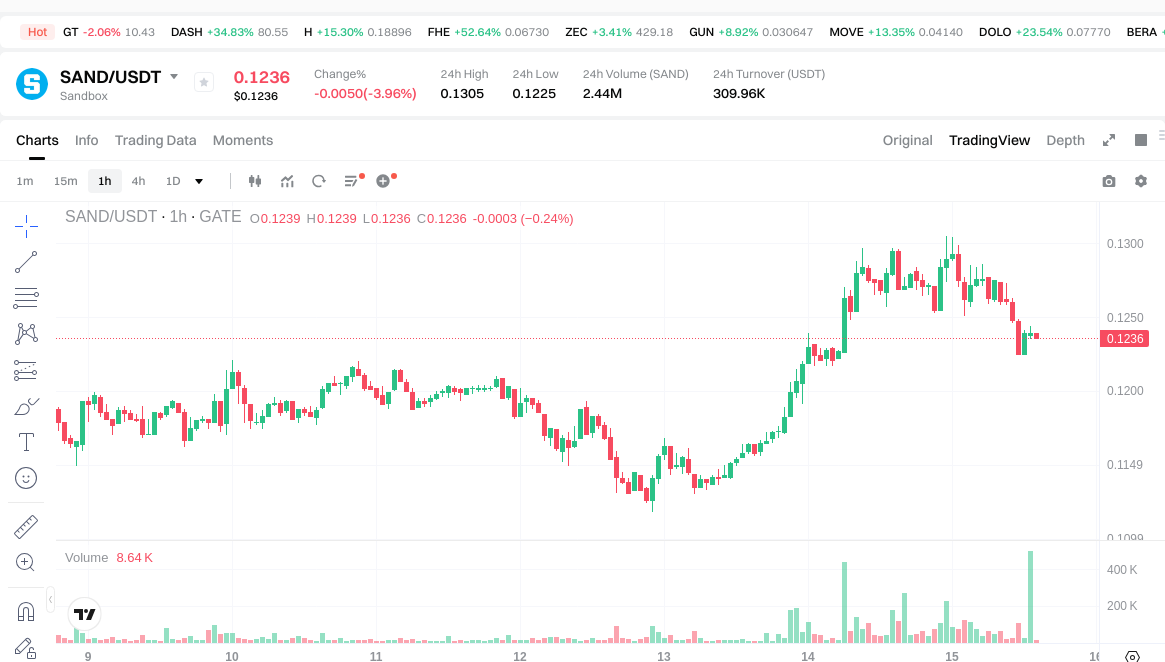
- SAND Current Price: $0.1238
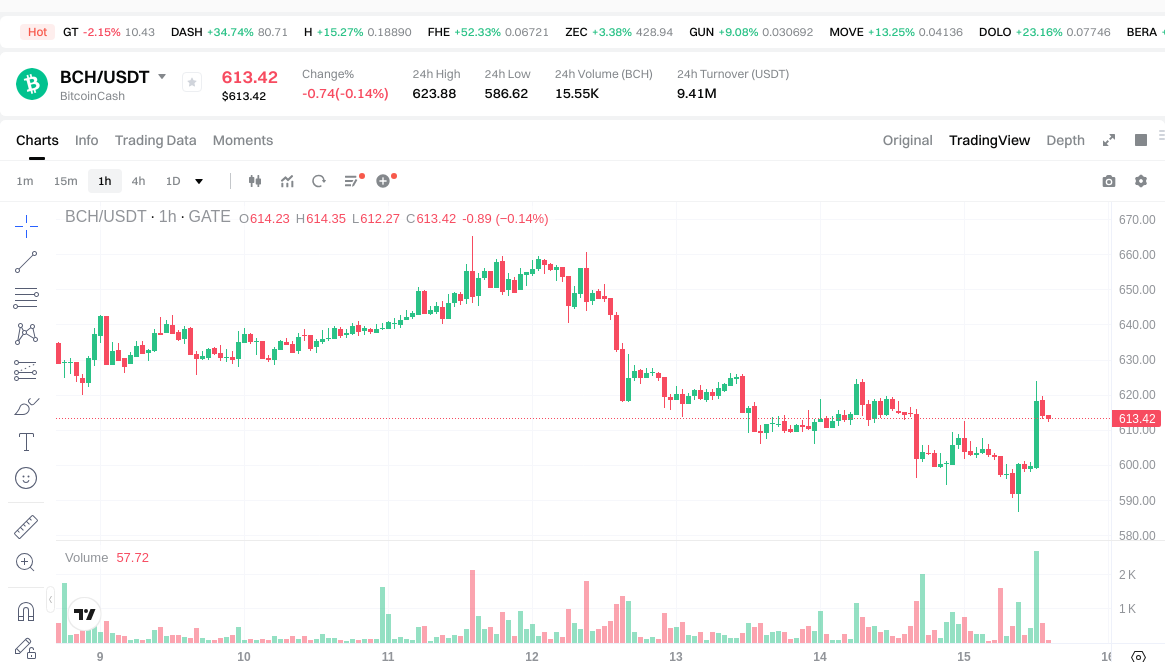
- BCH Current Price: $613.87
- 24-Hour Trading Volume: SAND recorded approximately $310,825.68, while BCH demonstrated higher activity with around $9,413,245.05
- Market Sentiment Index (Fear & Greed Index): 61 (Greed)
View real-time prices:
II. Core Factors Influencing SAND vs BCH Investment Value
Supply Mechanism Comparison (Tokenomics)
-
BCH: Bitcoin Cash operates with a fixed maximum supply of 21 million coins, mirroring Bitcoin's deflationary model. The network implements a halving mechanism approximately every four years, reducing block rewards and creating scarcity over time.
-
SAND: The Sandbox token features a finite supply cap, with token distribution designed to support metaverse ecosystem development and community engagement.
-
📌 Historical Pattern: Supply mechanisms have historically driven cyclical price movements, with halving events often preceding significant valuation changes in cryptocurrency markets.
Institutional Adoption and Market Application
-
Institutional Holdings: Available materials do not provide specific comparative data on institutional preference between BCH and SAND.
-
Enterprise Adoption: BCH has been positioned for payment and transaction applications, with emphasis on lower transaction fees and faster processing compared to Bitcoin. SAND's application centers on metaverse and gaming ecosystems.
-
Regulatory Environment: Materials indicate varying regulatory approaches across jurisdictions toward digital assets, though specific comparative policy positions on BCH versus SAND are not detailed in the reference sources.
Technological Development and Ecosystem Building
-
BCH Technical Evolution: Bitcoin Cash emerged from a 2017 hard fork, expanding block size from 1MB to 8MB to enhance blockchain scalability and reduce transaction costs. The network has experienced subsequent forks, including the 2018 split that created Bitcoin SV.
-
SAND Technical Development: Materials reference SAND's role within The Sandbox metaverse platform, though specific technical upgrade details are not provided in the reference sources.
-
Ecosystem Comparison: Reference materials mention BCH's focus on payment functionality, while SAND is associated with GameFi sector development and metaverse applications. Specific comparative data on DeFi, NFT, and smart contract implementations are not extensively covered.
Macroeconomic Factors and Market Cycles
-
Performance in Inflationary Environments: Materials do not provide comparative analysis of anti-inflation characteristics between BCH and SAND.
-
Macro Monetary Policy Impact: Reference sources note that cryptocurrency markets experience cyclical bull and bear phases, with prices subject to various influencing factors including macroeconomic conditions.
-
Geopolitical Considerations: Materials acknowledge the significance of cross-border transaction demand and international circumstances on digital asset markets, though specific comparative impacts on BCH versus SAND are not detailed in the provided sources.
III. 2026-2031 Price Forecast: SAND vs BCH
Short-term Forecast (2026)
- SAND: Conservative $0.0878-$0.1236 | Optimistic $0.1236-$0.1805
- BCH: Conservative $508.91-$613.14 | Optimistic $613.14-$864.53
Mid-term Forecast (2028-2029)
- SAND may enter a phase of moderate volatility, with projected price range of $0.1163-$0.2171 in 2028 and $0.1656-$0.2121 in 2029
- BCH may enter a phase of enhanced market activity, with projected price range of $440.09-$1142.68 in 2028 and $794.63-$1369.05 in 2029
- Key drivers: institutional capital flows, ETF developments, ecosystem expansion
Long-term Forecast (2030-2031)
- SAND: Baseline scenario $0.1394-$0.1991 (2030) and $0.1468-$0.2330 (2031) | Optimistic scenario $0.1991-$0.2668 (2030) and $0.2330-$0.2399 (2031)
- BCH: Baseline scenario $1000.37-$1163.22 (2030) and $613.95-$1180.67 (2031) | Optimistic scenario $1163.22-$1198.11 (2030) and $1180.67-$1676.55 (2031)
View detailed price predictions for SAND and BCH
Disclaimer: Price forecasts are based on historical data analysis and market modeling. Cryptocurrency markets involve significant volatility and risk. These projections should not be considered as investment advice or guarantees of future performance.
SAND:
| Year |
Predicted High Price |
Predicted Average Price |
Predicted Low Price |
Price Change |
| 2026 |
0.180456 |
0.1236 |
0.087756 |
0 |
| 2027 |
0.15810912 |
0.152028 |
0.13378464 |
22 |
| 2028 |
0.217095984 |
0.15506856 |
0.11630142 |
25 |
| 2029 |
0.21213379008 |
0.186082272 |
0.16561322208 |
50 |
| 2030 |
0.2668047615936 |
0.19910803104 |
0.139375621728 |
60 |
| 2031 |
0.239945088206304 |
0.2329563963168 |
0.146762529679584 |
88 |
BCH:
| Year |
Predicted High Price |
Predicted Average Price |
Predicted Low Price |
Price Change |
| 2026 |
864.5274 |
613.14 |
508.9062 |
0 |
| 2027 |
805.328733 |
738.8337 |
650.173656 |
20 |
| 2028 |
1142.68020042 |
772.0812165 |
440.086293405 |
25 |
| 2029 |
1369.0544130978 |
957.38070846 |
794.6259880218 |
55 |
| 2030 |
1198.114087602267 |
1163.2175607789 |
1000.367102269854 |
89 |
| 2031 |
1676.54547035062857 |
1180.6658241905835 |
613.94622857910342 |
92 |
IV. Investment Strategy Comparison: SAND vs BCH
Long-term vs Short-term Investment Strategies
-
SAND: May appeal to investors focused on metaverse ecosystem development and GameFi sector growth. The token's application in virtual gaming environments and digital asset creation presents exposure to emerging Web3 technologies.
-
BCH: May suit investors interested in payment infrastructure and peer-to-peer transaction systems. The asset's positioning as an electronic cash system with enhanced scalability characteristics aligns with utility-focused investment approaches.
Risk Management and Asset Allocation
-
Conservative Investors: A balanced approach might consider lower allocation to higher-volatility assets. Reference materials suggest diversification across different crypto asset categories, though specific allocation percentages should be determined based on individual risk tolerance and investment objectives.
-
Aggressive Investors: Those with higher risk appetite may explore varying allocation strategies between metaverse-focused tokens and payment-oriented cryptocurrencies, complemented by systematic rebalancing based on market conditions.
-
Hedging Instruments: Portfolio risk management may incorporate stablecoin positions for liquidity management, derivatives instruments where available, and cross-asset diversification strategies.
V. Potential Risk Comparison
Market Risk
-
SAND: Price movements have demonstrated correlation with metaverse and gaming sector sentiment. The token has experienced substantial volatility from peak levels, with 24-hour trading volume of approximately $310,825.68 indicating varying liquidity conditions.
-
BCH: Historical price data shows exposure to broader cryptocurrency market cycles and Bitcoin-related market dynamics. The asset demonstrates higher trading activity with approximately $9,413,245.05 in 24-hour volume, suggesting different liquidity characteristics.
Technical Risk
-
SAND: Materials reference the token's role within The Sandbox platform ecosystem, though specific technical infrastructure details regarding scalability and network stability are not extensively covered in the provided sources.
-
BCH: The network emerged from blockchain fork events, including the 2017 Bitcoin split and subsequent 2018 division that created Bitcoin SV. Block size expansion from 1MB to 8MB aimed to address scalability considerations, though ongoing technical evolution continues.
Regulatory Risk
- Global regulatory frameworks continue to evolve regarding digital assets, with varying approaches across jurisdictions. Payment-focused cryptocurrencies and gaming-related tokens may face different regulatory considerations depending on their functional classification and application scenarios. Materials note the significance of regulatory developments, though specific comparative policy positions between BCH and SAND are not detailed in reference sources.
VI. Conclusion: Which Is the Better Buy?
📌 Investment Value Summary:
-
SAND Characteristics: Association with metaverse and GameFi sector development, exposure to virtual gaming ecosystem growth, positioning within Web3 infrastructure evolution.
-
BCH Characteristics: Focus on payment and transaction functionality, established presence since 2017, positioning as scalable peer-to-peer electronic cash system with enhanced block capacity.
✅ Investment Considerations:
-
New Investors: Those entering cryptocurrency markets may benefit from understanding fundamental differences between utility-focused payment systems and metaverse ecosystem tokens. Educational resources and gradual exposure through smaller position sizes may support informed decision-making.
-
Experienced Investors: Individuals with market knowledge may evaluate these assets within broader portfolio context, considering sector diversification between payment infrastructure and gaming ecosystems, alongside technical and fundamental analysis approaches.
-
Institutional Participants: Organizations may assess these assets through frameworks encompassing liquidity requirements, regulatory compliance considerations, custody solutions, and alignment with institutional investment mandates.
⚠️ Risk Disclosure: Cryptocurrency markets involve substantial volatility and risk. This content does not constitute investment advice. Market participants should conduct independent research and consider consulting qualified financial professionals before making investment decisions.
VII. FAQ
Q1: What are the main differences between SAND and BCH in terms of use cases?
SAND focuses on metaverse and gaming applications, while BCH targets payment and transaction functionality. SAND serves as the utility token within The Sandbox virtual gaming ecosystem, enabling digital asset creation, NFT transactions, and GameFi interactions. BCH emerged from a 2017 Bitcoin hard fork with expanded block size (from 1MB to 8MB) to function as a scalable peer-to-peer electronic cash system with lower transaction fees and faster processing compared to Bitcoin.
Q2: Which asset demonstrates better liquidity based on current trading activity?
BCH shows significantly higher liquidity with approximately $9,413,245.05 in 24-hour trading volume compared to SAND's $310,825.68. This substantial difference indicates that BCH offers deeper market depth and potentially easier entry/exit positions for larger transactions. Higher trading volume typically correlates with tighter bid-ask spreads and reduced slippage, though liquidity conditions can vary across different exchanges and market conditions.
Q3: How do the supply mechanisms of SAND and BCH differ?
Both assets feature fixed maximum supply caps, but with different total quantities and distribution models. BCH mirrors Bitcoin's deflationary model with a 21 million coin cap and implements halving events approximately every four years to reduce block rewards. SAND operates with a finite token supply designed to support metaverse ecosystem development through structured distribution mechanisms, though the specific cap differs from BCH's 21 million limit.
Q4: What price performance patterns have SAND and BCH exhibited historically?
SAND reached its all-time high of $8.40 in November 2021 during the metaverse boom, declining to the current $0.1238 level. BCH peaked at $3,785.82 in December 2017 shortly after its hard fork launch, currently trading at $613.87. These patterns reflect different market cycles—SAND's movement correlates with metaverse sector sentiment from 2021-2026, while BCH has experienced longer cyclical fluctuations across multiple cryptocurrency market phases since 2017.
Q5: Which investment approach suits different types of cryptocurrency investors?
Conservative investors may consider balanced allocations with emphasis on risk management and diversification across different crypto asset categories. Those focused on payment infrastructure evolution might evaluate BCH's utility positioning, while investors interested in Web3 and gaming ecosystem growth could examine SAND's metaverse applications. Aggressive investors with higher risk tolerance may explore varying allocation strategies between these sectors, complemented by systematic rebalancing based on market conditions and individual investment objectives.
Q6: What are the primary risk factors to consider for each asset?
SAND faces risks tied to metaverse sector adoption, gaming platform competition, and Web3 technology development pace. BCH encounters risks related to Bitcoin market dynamics, blockchain fork history, payment cryptocurrency adoption rates, and competition from other scalable transaction systems. Both assets experience cryptocurrency market volatility, regulatory uncertainty across jurisdictions, technical infrastructure evolution challenges, and liquidity variations that investors should evaluate within their risk management frameworks.
Q7: How do price forecasts compare for SAND versus BCH through 2031?
According to modeling projections, SAND shows baseline scenarios ranging from $0.1236 (2026) to $0.2330 (2031), while BCH forecasts span from $613.14 (2026) to $1180.67 (2031) in baseline scenarios. Optimistic projections suggest SAND could reach $0.2399 and BCH could achieve $1676.55 by 2031. These forecasts reflect different volatility patterns and market positioning, with BCH showing higher absolute price levels due to its established market presence, while SAND demonstrates percentage growth potential tied to metaverse sector expansion. These projections involve significant uncertainty and should not be considered guarantees of future performance.
Q8: What factors should investors monitor when comparing SAND and BCH?
Key monitoring factors include sector-specific developments (metaverse adoption trends for SAND, payment system integration for BCH), trading volume and liquidity metrics, regulatory announcements affecting gaming tokens versus payment cryptocurrencies, technical infrastructure upgrades, institutional adoption patterns, macroeconomic conditions influencing cryptocurrency markets, and correlation dynamics with broader crypto market movements. Additionally, investors should track ecosystem growth indicators such as active users, transaction volumes, developer activity, and partnership announcements relevant to each asset's specific application domain.
* The information is not intended to be and does not constitute financial advice or any other recommendation of any sort offered or endorsed by Gate.