This article commemorates Bitcoin's 15-year evolution through Satoshi Nakamoto's prescient quotes, documenting its transformation from experimental digital currency to globally recognized store of value. The piece explores how Nakamoto's peer-to-peer vision has materialized, addressing traditional finance limitations through decentralization and accessibility for unbanked populations. It examines Bitcoin's remarkable journey from tech-enthusiast adoption to mainstream institutional acceptance, where major financial institutions now offer custody and trading services. The article emphasizes Bitcoin's role as digital gold, leveraging its fixed 21-million-coin supply to provide inflation protection and portfolio diversification. As the cornerstone of digital finance, Bitcoin has catalyzed ecosystem development including exchanges, derivatives markets, and blockchain innovations. Addressing contemporary challenges like scalability and sustainability, the piece validates Nakamoto's original vision while highlighti
Bitcoin's Journey Over the Past 15 Years
Fifteen years ago, Satoshi Nakamoto, the mysterious creator of Bitcoin, famously stated: "If you don't believe me or don't get it, I don't have time to try to convince you, sorry." This statement has proven remarkably prescient as Bitcoin has evolved from an experimental digital currency into a globally recognized store of value and medium of exchange.
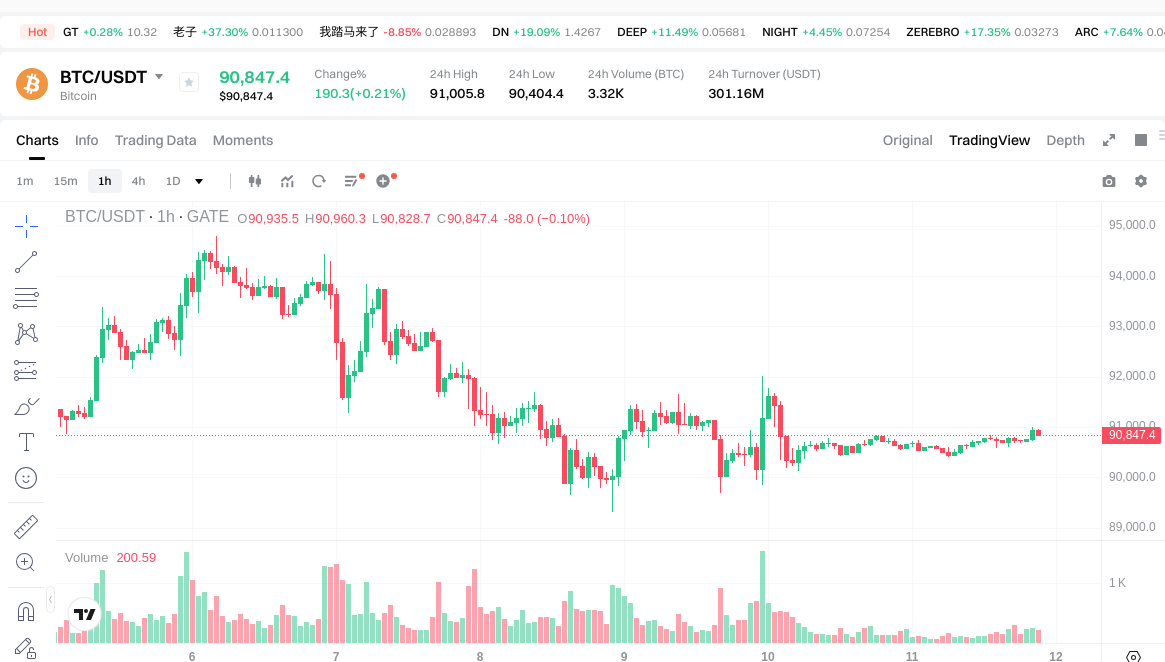 Over the past decade and a half, Bitcoin has transformed the financial landscape, challenging traditional banking systems and offering an alternative approach to monetary policy and value transfer.
The journey has been marked by significant milestones, from early adoption by tech enthusiasts to mainstream acceptance by major financial institutions. Bitcoin's resilience through market cycles, regulatory challenges, and technological evolution has demonstrated the robustness of its underlying blockchain technology and the validity of Nakamoto's original vision.
Satoshi's Vision and Its Realization
Satoshi Nakamoto's original whitepaper outlined a peer-to-peer electronic cash system that would operate without the need for trusted third parties. This vision addressed fundamental issues in traditional financial systems, including centralization risks, high transaction costs, and limited accessibility for unbanked populations. The statement "I don't have time to try to convince you" reflected Nakamoto's confidence in the self-evident nature of Bitcoin's value proposition.
Today, this vision has materialized in ways that validate Nakamoto's foresight. Bitcoin operates as a decentralized network secured by cryptographic principles and maintained by a global community of miners and nodes. The currency has proven its ability to function as both a medium of exchange and a store of value, particularly in regions experiencing currency instability or limited access to traditional banking services.
Global Adoption and Institutional Recognition
Bitcoin has achieved unprecedented levels of adoption across multiple sectors and demographics. Institutional investors, including hedge funds, asset managers, and publicly traded companies, have allocated significant portions of their portfolios to Bitcoin, recognizing it as "digital gold" and a hedge against inflation. Major financial institutions that once dismissed cryptocurrency have now integrated Bitcoin services, offering custody solutions, trading platforms, and investment products to their clients.
Individual investors worldwide have also embraced Bitcoin as part of their investment strategies. The cryptocurrency has become accessible through various channels, from dedicated exchanges to traditional brokerage platforms, making it easier than ever for retail investors to participate in the Bitcoin ecosystem. This widespread acceptance demonstrates how Bitcoin has transcended its origins as a niche technology to become a mainstream financial asset.
Bitcoin's evolution into a recognized store of value represents one of its most significant achievements. The cryptocurrency's fixed supply of 21 million coins creates scarcity similar to precious metals, leading many to describe it as "digital gold." This characteristic has attracted investors seeking protection against monetary inflation and currency devaluation, particularly during periods of economic uncertainty.
The store of value narrative has been reinforced by Bitcoin's performance over extended time horizons, despite short-term volatility. Long-term holders have been rewarded for their patience, and the concept of "HODLing" (holding onto Bitcoin through market fluctuations) has become a cornerstone of cryptocurrency investment philosophy. This behavior pattern demonstrates growing confidence in Bitcoin's long-term value proposition.
The Cornerstone of Digital Finance
Bitcoin has established itself as the foundational element of the broader digital finance ecosystem. As the first and most established cryptocurrency, it serves as a benchmark for the entire market and provides the infrastructure upon which countless innovations have been built. The Bitcoin blockchain has inspired the development of thousands of alternative cryptocurrencies and blockchain applications, each attempting to address specific use cases or improve upon Bitcoin's original design.
Moreover, Bitcoin's success has catalyzed the development of supporting infrastructure, including secure custody solutions, regulated exchanges, derivatives markets, and payment processing systems. This ecosystem has created new economic opportunities and employment sectors, from blockchain developers to cryptocurrency analysts, further cementing Bitcoin's role in the modern financial landscape.
Looking Forward
As Bitcoin continues to mature, its role in the global financial system becomes increasingly significant. The cryptocurrency faces ongoing challenges, including scalability concerns, regulatory uncertainty, and environmental considerations related to mining. However, the Bitcoin community continues to innovate, developing solutions such as the Lightning Network for faster transactions and exploring more sustainable mining practices.
Satoshi Nakamoto's words from 15 years ago serve as a reminder that revolutionary technologies often face skepticism before achieving widespread acceptance. Bitcoin's journey from a whitepaper to a trillion-dollar asset class validates the original vision and suggests that the cryptocurrency will continue to play a crucial role in shaping the future of finance. Whether as a store of value, a medium of exchange, or the foundation for further financial innovation, Bitcoin has proven that Nakamoto's confidence was well-founded, and the time for convincing skeptics has long passed.
FAQ
Who is Satoshi Nakamoto? Why did he disappear after creating Bitcoin?
Satoshi Nakamoto is Bitcoin's mysterious creator who released the protocol in January 2009. He disappeared in 2010 likely to protect his privacy and security, as his 1.1 million bitcoins (worth over 600 billion dollars) would make him a target. His true identity remains unknown to this day.
What is the core concept proposed by Satoshi Nakamoto in the Bitcoin whitepaper?
Satoshi Nakamoto's core concept is decentralized peer-to-peer electronic cash system that enables direct value transfer without intermediaries like banks. Bitcoin introduces blockchain technology as a transparent, distributed ledger where transactions are verified by network participants, eliminating the need for trusted central authorities.
What are the major development stages Bitcoin has experienced over the past 15 years?
Bitcoin's key milestones include: 2009 launch as peer-to-peer currency, 2013 first major rally, 2017 bull market reaching $20k, 2021 breaking $1 trillion market cap, and 2026 continued growth with expanding institutional adoption and technological maturation.
What predictions about Bitcoin made by Satoshi Nakamoto have been realized?
Satoshi's key predictions have materialized: Bitcoin operates as peer-to-peer electronic cash without intermediaries, achieves global adoption across millions of users, demonstrates resilience through market cycles, eliminates inflation concerns through fixed supply, and maintains decentralization while gaining institutional recognition and regulatory clarity worldwide.
If Satoshi Nakamoto were still active, what would he think of Bitcoin's ecosystem today?
Satoshi would likely be proud of Bitcoin's resilience and global adoption after 15 years. He'd appreciate the technological advancements, increased transaction volume, and institutional acceptance. However, he might have thoughts on scalability solutions and decentralization challenges. His vision of peer-to-peer electronic cash continues evolving.
What key features in Nakamoto's design did Bitcoin's success validate?
Bitcoin's success proved the effectiveness of decentralization, cryptographic security, and proof-of-work consensus mechanisms. Its 15-year resilience without central authority demonstrates these foundational principles remain sound and revolutionary.
What is the legacy of Satoshi Nakamoto's impact on modern cryptocurrency and blockchain technology?
Satoshi Nakamoto's legacy created Bitcoin and blockchain technology, revolutionizing decentralized finance and digital currency. His peer-to-peer vision inspired countless innovations across cryptocurrency and beyond. His anonymity enabled Bitcoin's independent, organic global development and adoption.
* The information is not intended to be and does not constitute financial advice or any other recommendation of any sort offered or endorsed by Gate.