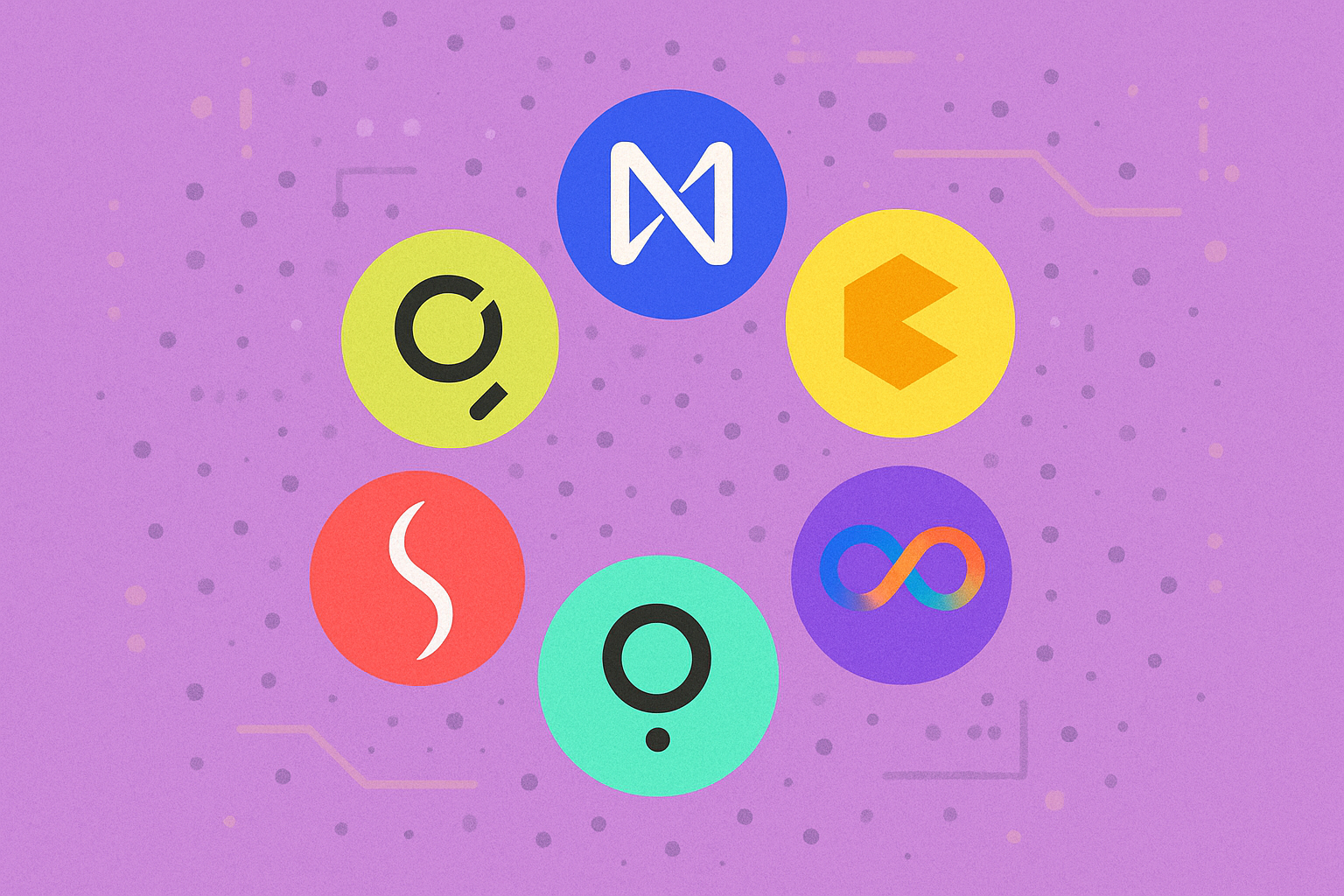
A complete guide to choosing and investing in AI cryptocurrencies. This resource provides detailed insights into six top tokens—such as NEAR, Render, and The Graph—covering their benefits, drawbacks, risk management, and step-by-step instructions for buying on platforms like Gate. Designed for both beginners and intermediate investors, it delivers the latest strategies for investing with Web3 and AI technologies.
AI-Related Cryptocurrencies: An Overview of Blockchain and AI Integration
AI-related cryptocurrencies are next-generation digital assets that leverage artificial intelligence to significantly enhance their functionality. These projects combine the advanced analytical capabilities of AI with the decentralized features of blockchain, enabling innovative use cases that traditional systems cannot deliver.
Notable real-world applications include:
Task Automation and Optimization
Trading bots analyze market data in real time, autonomously determining and executing optimal trades. This allows for rational investment decisions that are free from human emotion. High-speed, accurate processing of large data sets also streamlines blockchain data management and analysis.
Building Decentralized AI Applications
The fusion of AI and blockchain produces highly transparent systems that require no central authority. This improves data privacy and security, granting users full control over their personal information.
Practical Application Examples
AI-related cryptocurrencies are used across a broad spectrum of industries, including:
- Market Prediction: AI analyzes vast market data to forecast trends with high precision
- Fraud Detection: Instantly detects abnormal trading patterns to prevent illicit activity
- Algorithmic Trading: Calculates optimal timing and pricing through advanced computations
- Portfolio Management: Recommends ideal asset allocations based on individual risk profiles
- Smart Contract Optimization: Boosts contract execution efficiency and strengthens security
- Regulatory Compliance: Monitors transactions in real time to ensure legal compliance
- Identity Verification (KYC): Automates the KYC process for efficient, secure onboarding
- ICO Forecasting: Analyzes historical data to predict the likelihood of new project success
- Energy Consumption Optimization: Reduces mining energy use to minimize environmental impact
- Wallet Security: Detects anomalies to protect assets
Within AI-based platforms, these tokens primarily function as utility tokens. They serve not only as payment methods but also as incentives and rewards for active users. Typical uses include purchasing or renting AI models, accessing services, and rewarding contributions—supporting the vitality of the ecosystem.
Pros and Cons of AI-Related Tokens
Understanding the advantages and disadvantages of AI-related cryptocurrencies is essential before investing.
Main Advantages
- Lightning-Fast Data Processing and Analysis
AI enables instant processing of massive market data and real-time trend analysis. Investors can make faster decisions and respond more quickly to market shifts. Analyses that once took hours can now be completed in seconds.
- Significant Operational Efficiency Gains
Automation allows human resources to focus on creative and strategic tasks. Routine trade execution and monitoring can be handled by AI, freeing people for higher-level strategy development.
- Superior Scalability
AI systems manage high data volumes, maintaining performance as users and transactions grow. This is key to resolving scalability issues as platforms expand.
- Enhanced Security
AI-driven anomaly detection uncovers unauthorized access or fraud early, safeguarding assets. Machine learning models identify unusual patterns and proactively flag potential threats.
Main Disadvantages
- High Implementation and Operating Costs
Deploying AI requires high-performance hardware and specialized talent, leading to substantial upfront and ongoing expenses. Developing and maintaining advanced models demands significant capital.
- Immature Technology
The combination of AI and blockchain is relatively new, which means technical hurdles and unexpected challenges may arise—potentially increasing investment risk.
- Significant Market Volatility
Like other cryptocurrencies, AI tokens are highly volatile, and prices can swing sharply in short periods due to sentiment or technical developments.
- Data Privacy and Transparency Challenges
Processing large amounts of data raises concerns about personal information protection and transparency. Effective safeguards are essential.
Key Use Cases and Application Areas for AI Tokens
- AI Agents: Autonomously execute tasks and complete complex commands for users
- Decentralized Computing Systems: Share global computational resources efficiently to reduce costs
- Zero-Knowledge Machine Learning (zkML): Delivers high-performance AI computations while maintaining privacy
- AI Model Transactions: Securely trade and share AI models among developers to accelerate innovation
Overall, AI-related cryptocurrencies offer both technological breakthroughs and new business opportunities, but require deep expertise and careful risk management. Thoroughly research each project’s technical foundation, team, and market position before investing.
Six Leading AI Tokens to Watch
NEAR Protocol (NEAR): Listed on Japanese Exchanges
NEAR Protocol is a next-generation proof-of-stake (PoS) blockchain platform that utilizes the innovative “Nightshade” sharding technology to effectively solve scalability challenges.
Technical Features and Innovations
Nightshade sharding lets each node retain only a portion of the platform’s data, dramatically enhancing the network’s processing power. This increases transaction throughput and supports more simultaneous users.
NEAR Protocol is also highly interoperable with Ethereum, enabling two-way token transfers via the “Rainbow Bridge.” Its Layer 2 scaling solution, “Aurora,” lets developers deploy Ethereum-based dApps on NEAR, providing exceptional flexibility.
AI Integration: Advancing User-Owned AI
NEAR Protocol is gaining attention for its promotion of “User-Owned AI,” a framework that empowers users to fully control their data and assets within a decentralized AI ecosystem.
The NEAR Foundation emphasizes open, transparent AI development—eschewing closed, profit-driven models. This protects privacy while enabling users to benefit from AI-driven productivity, personalization, and new economic opportunities.
Past incubation programs supported projects such as Mizu, Pond, Nevermined, Hyperbolic, Ringfence, and Exhibits—each working to create new value at the intersection of AI and blockchain.
Render (RNDR): Listed on Japanese Exchanges
Render Network is a decentralized platform that maximizes GPU computing power, efficiently connecting creators who need high-quality 3D rendering with users who have idle GPUs for mutual benefit.
Platform Structure and Features
The RNDR token is the native utility token of Render Network, central to its decentralized rendering marketplace. Creators pay for rendering services with RNDR, while GPU owners earn RNDR for processing jobs.
This system optimizes global computing resources, creating a worldwide pool. Tasks once limited to expensive, dedicated hardware can now be performed affordably through a decentralized network.
Blockchain Technology in Action
Render Network leverages blockchain and smart contracts to build a secure, transparent marketplace. Smart contracts guarantee reliable, efficient transactions, with all records transparently stored on-chain.
RNDR tokens have migrated from Ethereum to Solana, resulting in faster transactions, lower fees, and a better user experience.
AI Integration and Future Outlook
Render Network’s GPU power can also train AI machine learning models, opening the door to new use cases at the intersection of AI and creative industries.
The Graph (GRT): Listed on Japanese Exchanges
The Graph is an innovative protocol for efficient blockchain data indexing and querying. Developers use it to access complex blockchain data, accelerating decentralized application (dApp) development.
Core Protocol Functions
Developers define data retrieval with subgraph manifests and use GraphQL to fetch indexed data—enabling efficient, structured processing of complex blockchain data.
The Graph now supports over 30 blockchain networks, streamlining data access across diverse ecosystems.
AI Partnership: Semiotic Labs
Semiotic Labs, a key development team for The Graph, is actively integrating AI and cryptography, developing tools to optimize indexer operations.
AutoAgora and Allocation Optimizer
AutoAgora is an AI-driven tool for automated price modeling, letting indexers dynamically adjust prices based on market conditions to maximize revenue. Allocation Optimizer assists with optimal resource allocation for efficient network operation.
Natural Language Processing Integration
Ambitiously, The Graph is developing AI-powered natural language access so even non-technical users can query blockchain data in everyday language. For example, users could ask, “Which token had the highest trading volume last week?” and receive results generated via AI-driven GraphQL queries.
Internet Computer (ICP): Listed on International Exchanges
Internet Computer Protocol (ICP) is a next-generation blockchain platform that introduces a breakthrough architecture designed to overcome the limitations of traditional blockchains.
Technical Foundation and Innovation
ICP uses advanced consensus algorithms such as threshold cryptography and state machine replication, delivering high-speed processing and large-scale scalability previously unattainable for blockchains.
Unifying Web3 and the Internet
ICP’s standout feature is its seamless integration with existing internet technologies to realize Web3. Smart contracts can host websites and respond directly to HTTP requests, enabling fully decentralized alternatives to conventional web services.
Promoting Decentralized AI (DeAI)
ICP champions decentralized AI (DeAI), an approach that boosts the reliability and transparency of AI models. ICP’s smart contracts ensure AI models are tamper-proof and manage data securely in a decentralized environment.
Real-World Projects
ELNA AI enables developers to build and monetize AI agents on ICP, publishing their models and earning revenue from users.
Kinic uses AI to learn user behavior and optimize the interface and features of Web3 apps, making them more accessible.
SingularityNET (AGIX): Listed on International Exchanges
SingularityNET is a decentralized marketplace designed to democratize access to AI services, making advanced AI available to users worldwide.
Platform Structure
Built on blockchain, the platform ensures transparency and trust for every transaction. AGIX tokens allow developers to publish and trade AI models and services, while users gain easy access to needed AI solutions.
Diverse AI Services
Developers can offer AI services—image recognition, voice processing, text analysis, predictive analytics, and more—enabling even small teams to reach a global user base and monetize their models.
Strategic Partnerships
SingularityNET is partnering with Cardano and Filecoin to continuously improve its platform, delivering faster and more efficient AI services.
Token Integration and the ASI Alliance
SingularityNET, Fetch.ai (FET), and Ocean Protocol (OCEAN) have begun integrating tokens to form the Artificial Superintelligence (ASI) Alliance, with AGIX and OCEAN migrating to FET and ultimately consolidating into the ASI token.
This milestone unifies the AI crypto ecosystem, combining the strengths of each project to build a more comprehensive AI service platform.
Bittensor (TAO): Listed on International Exchanges
Bittensor is a decentralized network connecting individually owned machine learning models globally, advancing the democratization and decentralization of AI for widespread benefit.
Technical Foundation and Architecture
Bittensor is built on the Substrate framework and interoperates with the Polkadot ecosystem, facilitating collaboration with other blockchain projects.
The network utilizes an energy-efficient proof-of-stake consensus mechanism to minimize environmental impact while maintaining high security and performance.
Data Privacy and Security
Data privacy and security are top priorities. Decentralized architecture distributes data across the network, greatly reducing the risk of data breaches.
Marketplace for Machine Intelligence
Bittensor’s core value is providing a platform where machine intelligence can be evaluated and traded. Researchers and developers can publish AI models and directly earn rewards for their contributions.
Consumers seeking AI services can easily find and utilize the best models for their needs, streamlining both development and adoption to accelerate innovation.
The Role of TAO Tokens
TAO tokens facilitate rewards, transaction fees, and governance participation within the Bittensor ecosystem.
Holders can propose and vote on network decisions, shaping the platform’s direction. This decentralized model enables the entire community to drive the project’s growth.
How to Buy AI Tokens in Japan: Exchanges and Process
The process for purchasing AI-related tokens varies by exchange type. Here’s a detailed guide for both international and domestic exchanges.
How to Buy on International Exchanges
International exchanges offer access to AI tokens unavailable domestically. The general process is as follows:
Step 1: Open an Account and Verify Your Identity
Sign up on the official website of your chosen international exchange. Set up your email and password, then complete the KYC process by submitting identification (passport or driver’s license).
Identity verification may take several hours to a few days, so complete it in advance of trading.
Step 2: Purchase and Transfer Cryptocurrency
Buy major cryptocurrencies like XRP or BTC at a Japanese exchange (e.g., Coincheck, Bitbank). XRP is preferred for overseas transfers due to speed and low fees.
Transfer your crypto to your international exchange wallet address. Ensure the address is correct, as mistakes can result in asset loss.
Step 3: Buy AI Tokens
Once your funds arrive, select your desired AI token trading pair (e.g., ICP/USDT, TAO/BTC) on the trading platform.
Choose market or limit order, input the amount, and execute your trade. Market orders fill instantly, while limit orders fill at your specified price.
How to Buy on Japanese Exchanges
AI tokens listed domestically (NEAR, RNDR, GRT, etc.) can be purchased with a simpler process.
Step 1: Register and Complete Identity Verification
Create an account on the official site of a Japanese exchange (Coincheck, Bitbank, etc.), set your email and password, and complete KYC.
With My Number cards or driver’s licenses, domestic KYC can sometimes be completed the same day.
Step 2: Deposit Japanese Yen
Deposit funds via bank transfer, quick deposit, or credit card. Bank transfers are best for larger sums due to lower fees.
Once your deposit is confirmed, you’re ready to trade.
Step 3: Buy AI Tokens
Select the JPY trading pair for your desired AI token (e.g., NEAR/JPY, RNDR/JPY) on the trading interface.
Enter the amount and price, and buy using a market or limit order. Domestic exchanges offer robust Japanese-language support, making trading accessible for beginners.
Key Security Tips
- Enable two-factor authentication (2FA) to strengthen account security
- Use complex, unique passwords and update them regularly
- Store significant crypto holdings in cold storage, such as hardware wallets
- Be vigilant against phishing scams—always verify official URLs
Summary
The convergence of AI and blockchain is shaping the future of the digital economy. AI-related cryptocurrencies have rapidly grown, enabling new and innovative use cases.
The six AI tokens featured in this article each offer unique strengths and technical features. By integrating AI with decentralized networks, these projects are unlocking opportunities impossible with legacy systems—especially in market prediction, fraud detection, automated trading, and decentralized AI services.
They deliver benefits like enhanced data privacy, faster processing, cost savings, and improved security. However, challenges include high implementation costs, technological immaturity, volatility, and data privacy concerns.
Key points to consider when investing:
- Comprehensive Research: Analyze each project’s technology, team, and roadmap
- Risk Management: Invest only what you can afford to lose and diversify your portfolio
- Long-Term Perspective: Focus on long-term growth potential over short-term price moves
- Ongoing Education: Stay informed on AI and blockchain trends
- Security: Use secure wallets and enable two-factor authentication
AI-related crypto assets may become central to the digital economy’s future. While their innovative potential is high, so are the risks. Investors should carefully weigh pros and cons and align decisions with their own goals and risk tolerance.
As technology and markets mature, the AI crypto ecosystem will continue to evolve. Ongoing research and timely decisions are key to success in this sector.
FAQ
What are AI-related cryptocurrencies, and how do they differ from traditional crypto?
AI-related cryptocurrencies are digital assets that support the development and deployment of artificial intelligence. Unlike traditional crypto, they directly drive AI innovation and adoption, making utility and technological advancement core to their value.
Which AI-related cryptocurrencies are available in Japan?
AI-related tokens available in Japan include Bitcoin (BTC), Ethereum (ETH), Solana (SOL), and Avalanche (AVAX). These have strong ties with AI technologies and are increasingly listed on domestic exchanges.
Which exchanges should I use to buy AI tokens in Japan?
3Commas and Bybit are recommended for buying AI tokens in Japan, offering broad token support and suitable for users of all experience levels.
What are the main risks when investing in AI-related crypto assets?
Main risks include rapid technological changes, high volatility, regulatory uncertainty, and security threats—all of which can lead to losses.
How do ChatGPT and AI technological advances impact AI crypto prices?
AI advancements tend to drive up AI token prices. After ChatGPT’s launch, these assets saw 10.7%–15.6% returns in one month and 35.5%–41.3% in two months, with further growth expected as technology advances.
Are AI cryptocurrencies more valuable investments than regular altcoins?
AI tokens may offer greater upside due to their growth and innovation potential, but altcoins typically have more mature markets. Choose based on your own risk profile.
What procedures and identity verification are required to buy AI tokens in Japan?
To buy AI tokens in Japan, submit government-issued ID (e.g., driver’s license) including both sides, and complete identity verification before purchasing.
* The information is not intended to be and does not constitute financial advice or any other recommendation of any sort offered or endorsed by Gate.