Comprehensive Guide to the Best Credit Cards for Buying Cryptocurrency. This guide covers credit card payment methods, fee comparisons, and security strategies for exchanges like Gate. Stay informed with the latest beginner-friendly insights to help you purchase crypto assets safely and cost-effectively.
Growth Overview of Six Leading Tokens (Initial Price, All-Time High, and Multipliers)
Over the past decade, the cryptocurrency market has delivered astonishing growth, with many tokens multiplying their initial value by hundreds or even thousands of times. Bitcoin stands out, reaching an unparalleled increase of at least one million times from its starting price—possibly tens of millions—by some estimates.
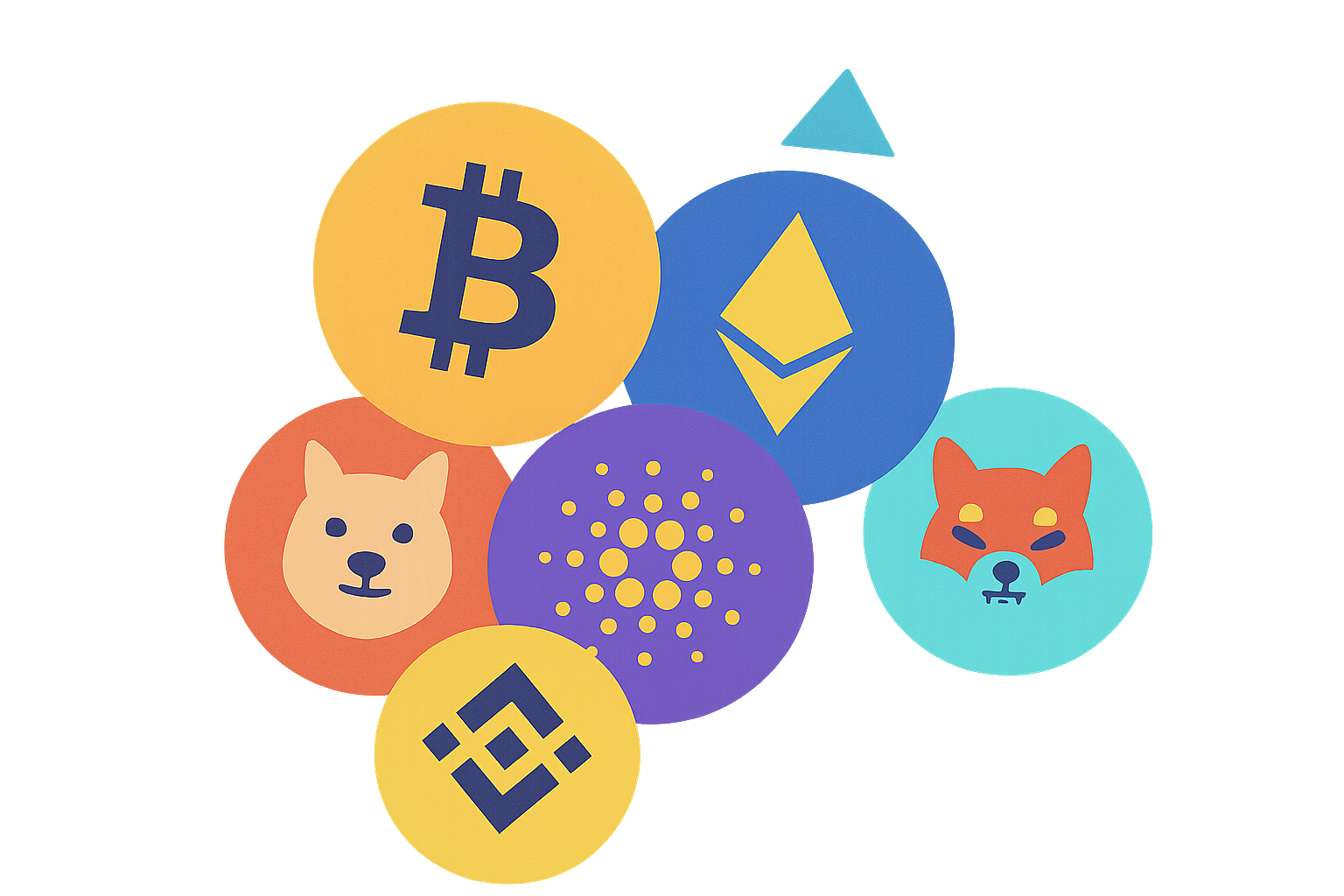
This section highlights six major crypto assets that have grown more than 1,000-fold in price between 2009 and 2025. The table below summarizes each token’s launch year, initial price, all-time high, and resulting multiplier.
| Token (Ticker) |
Launch Year |
Initial Price |
All-Time High (Date) |
Multiplier (from Initial Price) |
| Bitcoin (BTC) |
2009 |
$0.0008 (2010 assumed value) |
$109,350 (Jan 20, 2025) |
Approx. 136,687,500x |
| Ethereum (ETH) |
2015 |
$0.31 (2014 ICO price) |
$4,878 (Nov 2021) |
Approx. 15,736x |
| Binance Coin (BNB) |
2017 |
$0.15 (2017 ICO price) |
$690 (May 2021) |
Approx. 4,600x |
| Cardano (ADA) |
2017 |
$0.0024 (2015–2017 ICO price) |
$3.10 (Sep 2021) |
Approx. 1,291x |
| Dogecoin (DOGE) |
2013 |
$0.0004 (Dec 2013 initial trading) |
$0.74 (May 2021) |
Approx. 1,850x |
| Shiba Inu (SHIB) |
2020 |
$0.00000000051 (Aug 2020 initial trading) |
$0.0000885 (Oct 2021) |
Approx. 173,529x |
Each of these tokens features unique technology and market positioning, yet all have delivered extraordinary price appreciation in parallel with the crypto market’s expansion. The following sections provide an in-depth look at each token’s growth trajectory and the main contributing factors.
Bitcoin (BTC)
Launched in January 2009 by Satoshi Nakamoto, Bitcoin was the world’s first cryptocurrency. It serves as the industry’s benchmark and is widely known as “digital gold.”
Bitcoin’s maximum supply is strictly capped at 21 million BTC, and its scarcity and decentralized network security have established it as a widely recognized store of value. Bitcoin has evolved beyond a speculative asset, gaining traction as both an inflation hedge and a cross-border payment solution, with its status growing stronger every year.
Price History (Initial Price, All-Time High) and Multiplier
At launch, Bitcoin had virtually no monetary value and no trading venues. The first USD exchange rate was set in October 2009, when 5,050 BTC was sold for about $5, putting Bitcoin at roughly $0.0009 per BTC.
Trading began on exchanges in July 2010, with prices ranging from about $0.0008 to $0.08. By the end of 2010, Bitcoin reached around $0.50, surpassed $1 in 2011, and surged to nearly $29.6 in June 2011 amid extreme volatility.
Bitcoin’s price continued to move in four-year cycles, crossing $1,000 in late 2013 and reaching about $19,000 in December 2017. Its most recent all-time high came on January 20, 2025, when it hit $109,350.
From the initial trading price ($0.0008–$0.08), Bitcoin’s rise to its all-time high represents an increase of at least one million times, and in some estimates, tens of millions of times. This growth is a testament both to the crypto market’s expansion and Bitcoin’s unique technical and economic design.
Key Factors Behind Bitcoin’s Growth
Market Maturity and Reserve Asset Status
As the first cryptocurrency, Bitcoin has always been the market’s core asset. Institutions and corporations have established it as their “first choice,” and for years, Bitcoin has accounted for more than half of the total crypto market capitalization.
This reserve status makes Bitcoin the primary on-ramp for new market participants and shapes price discovery across the industry. Bitcoin’s price movements often determine the market’s overall trend, reflecting its reliability and liquidity.
Supply Constraints and Scarcity from Halving Events
Bitcoin’s four-year halving cycle is one of its defining economic features. Each halving cuts new issuance in half, suppressing inflation.
The 2012, 2016, and 2020 halvings each catalyzed price rallies. After the third halving in 2020, Bitcoin’s inflation-hedging appeal surged in the context of global monetary stimulus.
This built-in supply reduction, similar to gold’s scarcity, strengthens Bitcoin’s long-term value proposition.
Macroeconomic Factors and Safe-Haven Reassessment
Fiscal stimulus and quantitative easing in the wake of COVID-19 accelerated inflows to Bitcoin. By early 2021, Bitcoin was attracting attention as a risk asset alongside stocks and real estate, soaring from $29,000 at the end of 2020 to over $64,000 within a few months.
Once seen solely as a “risk asset,” Bitcoin is now being reevaluated by some investors as a “safe haven.” This shift suggests Bitcoin could serve as an alternative store of value during periods of fiat instability.
Institutional and Corporate Adoption
Institutional investors and major corporations have entered Bitcoin in force in recent years. MicroStrategy began amassing large BTC holdings in 2020, and Tesla announced a $1.5 billion purchase in 2021.
PayPal and major US banks have launched crypto services, and traditional financial institutions continue to follow. These trends highlight Bitcoin’s evolution from a speculative instrument to a fully recognized investment asset.
National-Level Legal Tender Recognition
In 2021, El Salvador adopted Bitcoin as legal tender, distributing wallets nationwide in a historic, large-scale initiative.
This decision demonstrated Bitcoin’s real-world payment potential to the world. If other countries follow, Bitcoin’s practical utility could rise further.
Global Recognition as Digital Gold
Bitcoin’s identity as “digital gold” is now globally established. In 2021, its market capitalization briefly exceeded $1 trillion, approaching the scale of the gold market.
Its capped supply and decentralization have increased its appeal as a long-term hold. In periods of heightened inflation risk, capital flows into Bitcoin tend to accelerate, reinforcing its digital gold status.
Trump Administration’s Bitcoin Reserve Proposal (April 2025)
The Trump administration indicated it may add BTC to US foreign currency reserves, citing “dollar hegemony” and competition with other nations’ digital asset policies as motivations.
Bitcoin set a new all-time high immediately after the report, again demonstrating the connection between policy and price. National-level Bitcoin reserves further validate its legitimacy as an asset.
Ethereum (ETH)
Ethereum launched in July 2015 as a blockchain platform and is second only to Bitcoin in market size.
While Bitcoin is “digital gold,” Ethereum is often called the “protocol for a decentralized internet.” It serves as the foundation for smart contracts and DApps and is central to trends like DeFi and NFTs. Numerous projects and tokens have launched on Ethereum.
Ethereum’s breakthrough is enabling programmable contracts and autonomous applications, making blockchain technology applicable to finance, gaming, art, and governance.
Price History (Initial Price, All-Time High) and Multiplier
Ethereum’s 2014 ICO priced ETH at about $0.31 and raised around $18 million. When the mainnet launched in July 2015, ETH began trading at a few dollars.
The 2017 ICO boom drove demand and pushed ETH to about $1,400 in January 2018 before crashing to the $80s by year-end. The market rebounded from 2020 as DeFi and NFTs grew, culminating in an all-time high of $4,878.26 on November 10, 2021. That’s more than a 15,000x multiplier for ICO investors.
This growth reflects Ethereum’s emergence as critical infrastructure for Web3.0, not just as a cryptocurrency.
Key Factors Behind Ethereum’s Growth
Innovation in Smart Contracts and DApps
Ethereum’s defining feature is smart contracts, allowing anyone to build tokens or applications atop the platform.
Since 2016, countless projects have launched on Ethereum, fueling the ICO boom and rapidly expanding the ecosystem.
Smart contracts automate transactions without intermediaries, enabling use cases in finance, supply chain management, digital identity, and more.
The Rise of DeFi
From around 2020, DeFi protocols like Uniswap and Compound on Ethereum have grown explosively. Yield farming has locked up ETH, driving price appreciation.
Ethereum is the “financial infrastructure” for DeFi, supporting decentralized lending, borrowing, exchange, insurance, and more. Total Value Locked (TVL) in DeFi surpassed $100 billion at its peak, with the majority on Ethereum.
NFT Mania and Surging Demand
In early 2021, NFT marketplaces like OpenSea expanded rapidly. ETH became the main medium for digital art and collectibles, attracting new users.
Network usage pushed gas fees higher, lifting ETH prices. NFTs have introduced blockchain to art, music, gaming, real estate, and more.
The NFT boom made Ethereum more accessible to mainstream users and boosted crypto market awareness overall.
Technical Progress: Ethereum 2.0 Transition
The August 2021 London upgrade introduced EIP-1559, which burns a portion of transaction fees, reducing ETH supply and creating deflationary pressure.
September 2022’s “The Merge” moved Ethereum from Proof of Work (PoW) to Proof of Stake (PoS), dramatically improving energy efficiency and building long-term investor confidence.
This technical evolution improves Ethereum’s sustainability, addresses environmental concerns, and encourages institutional adoption.
Institutional Use and Ecosystem Expansion
Ethereum has solidified its place as the second investment asset after Bitcoin. The 2017 founding of the Enterprise Ethereum Alliance, including Microsoft and JP Morgan, was a major milestone.
Since 2020, ETH futures have launched on CME, and custody services have expanded, attracting institutions. These moves show Ethereum’s shift from speculative asset to investment-grade asset.
Companies are deploying Ethereum for supply chain, digital identity, tokenized securities, and more—driving real-world enterprise adoption.
Binance Coin (BNB)
Binance Coin (BNB) is the native token of one of the world’s largest crypto exchanges.
Issued through an ICO in July 2017 alongside the exchange’s launch, BNB started as an ERC-20 token and later migrated to its own chain (Binance Chain → BNB Chain). It now serves as a utility token across the ecosystem, including for trading fee discounts and gas payments.
BNB’s uniqueness lies in its demand, which is tied to real trading activity—not just speculation—contributing to its relative price stability.
Price History (Initial Price, All-Time High) and Multiplier
BNB’s ICO price was $0.15, with about 100 million tokens sold. Its price surged in early 2021, hitting an all-time high of $690.93 on May 10, 2021—a 4,605x multiplier. By November 2024, ecosystem growth and regulatory momentum pushed a new high of $705, for a 7,016x increase from ICO.
Recently, BNB has traded between $500 and $700, reflecting a balance of utility and speculative demand.
Key Factors Behind BNB’s Growth
Rapid Exchange Expansion and User Growth
Since 2018, the leading exchange has dominated global trading volumes. BNB’s use for trading fee discounts ensures steady demand anchored in real utility.
Scandals at other exchanges since 2019 have boosted inflows, and exchange growth directly drives BNB’s value—a key differentiator among cryptocurrencies.
Expanding Use Cases and Fee Discounts
BNB is used for more than just spot fee discounts—IEOs, staking, lending, and more. Participation in Launchpad IEOs requires holding BNB, fueling price appreciation.
BNB’s utility continues to expand with the user base, including for travel bookings, gift cards, and payments outside the exchange.
Success of the BNB Chain
The main platform launched its own chain in 2019, making BNB the native token. The launch of Binance Smart Chain in 2020, which is Ethereum compatible and offers lower gas fees, spurred rapid DeFi and gaming development.
BNB Chain now hosts numerous dApps, earning a strong position as the leading smart contract platform after Ethereum, especially among users in emerging markets.
Deflation from Regular Token Burns
BNB’s supply will ultimately be reduced to 100 million tokens. The platform buys back and burns BNB quarterly, benefiting long-term holders and enhancing scarcity.
This deflationary mechanism is designed to drive BNB’s long-term value.
Brand Power and Community Strength
The founder’s charisma and user-centric marketing have built global support. Frequent airdrops and IEOs foster long-term loyalty, while operational reliability, including hack compensation, reinforces trust.
This trust is critical for exchange tokens and is a core driver of BNB’s competitiveness.
Cardano (ADA)
Cardano is a third-generation blockchain platform launched in 2017 (ticker: ADA), supporting smart contracts and DApps.
Developed under Charles Hoskinson, Cardano emphasizes academic peer review and formal methods, adopting the Proof of Stake (PoS) Ouroboros algorithm and evolving through phased upgrades (Byron, Shelley, Goguen, etc.).
Cardano’s scientific, cautious development process sets it apart, prioritizing safety and sustainability for the long term over rapid deployment.
Price History (Initial Price, All-Time High) and Multiplier
ADA’s ICO in January 2017 (mainly in Japan and Korea) priced tokens at about $0.0024. The mainnet launch in October 2017, coupled with the altcoin boom, nearly pushed ADA to $1. After a bear market, ADA rebounded in 2020–2021 with upgrades like Shelley (staking) and Alonzo (smart contracts), reaching an all-time high of $3.1 on September 2, 2021—a multiplier of over 1,300x.
This price growth reflects Cardano’s technical advances and its reputation as an “Ethereum killer.”
Key Factors Behind Cardano’s Growth
Milestone Upgrades
Shelley enabled decentralization and staking in 2020; Alonzo brought smart contracts in 2021. Each upgrade catalyzed price surges. The 2023 “Hydra” upgrade boosted scalability, supporting thousands of transactions per second and accelerating DeFi and NFT adoption.
These upgrades have proven Cardano’s reliability to investors.
Academic Approach and Reliability
Cardano’s peer-reviewed design earns long-term trust for security and stability, with a cohesive community and many long-term holders supporting its value.
“Ethereum Killer” Expectations
Cardano offers greater energy efficiency, lower fees, and higher security than Ethereum. It gained traction as an alternative during Ethereum’s gas fee spikes, and the “Hydra” upgrade further strengthened its positioning.
Known as “Ada Coin” in Japan, local listings have also been positive for adoption.
Real-World Use Cases
Partnerships, like one with Ethiopia’s government for digital ID and academic management for over five million students (expanded to over ten million by 2024), demonstrate Cardano’s societal impact. Additional projects in agricultural traceability, educational certification, and notary services bolster the case for national-scale adoption.
Staking Rewards for Long-Term Holders
ADA holders can earn annual yields through PoS staking. About 75% of the supply is staked, reducing market liquidity and supporting price stability. Stakers also strengthen network security.
Dogecoin (DOGE)
Dogecoin was created in 2013 as a joke, inspired by the Shiba Inu meme. Engineers Billy Markus and Jackson Palmer launched the project with no technical innovation, positioning it as a “joke currency with unlimited supply.”
Despite its playful origin, Dogecoin’s community embraced the brand. In 2021, it briefly reached the market cap top five, evolving from a meme to a legitimate crypto asset.
Dogecoin’s rise proves that community and culture can drive value in crypto, not just technology.
Price History (Initial Price, All-Time High) and Multiplier
DOGE launched at about $0.0004 in December 2013, rose 300% within days, and hit a low of $0.000086 in 2015 before rebounding in the 2017–2018 boom. In 2021, Elon Musk and retail investor enthusiasm pushed DOGE to $0.74—a 1,850x multiplier.
Hype around Tesla’s adoption in December 2024 drove DOGE to a new high of $1.23, a 3,075x multiplier. DOGE now ranges between $0.80 and $1.00.
Meme Culture and Community Strength
Dogecoin’s Shiba Inu logo and lighthearted branding attract beginners. It’s popular for tips and donations, establishing a “fun currency” niche. The “No highs, no lows, only Doge” culture and strong meme appeal on X and TikTok underpin price support.
Celebrity and Influencer Endorsements
Elon Musk, self-styled “Dogefather,” has driven price rallies, especially with Tesla payment adoption. Snoop Dogg and Mark Cuban have also publicly supported DOGE. Social media virality fueled the 2021 and 2024 rallies. Grayscale’s DOGE ETF filing further increased attention.
Alignment with Retail Investor Movements
The “WallStreetBets” movement rallied retail investors behind DOGE. The “To the Moon” slogan and “Doge Day” (April 20) drove surges in market cap. ETF speculation continues to attract retail capital.
Broader Exchange Listings
Major platforms like Robinhood and leading exchanges made DOGE widely accessible, especially to younger investors. Institutional participation has increased with ETF filings and expanded exchange support.
Hype as a Brand Asset
Dogecoin’s appeal endures even with limited utility or technical progress—its “fun” factor and constant headlines drive demand. Elon Musk changing the Twitter logo to a Shiba Inu and Tesla’s DOGE payment tests have kept it in the spotlight. Speculation around its use as “the currency of Mars” continues to fuel interest.
Shiba Inu (SHIB)
Shiba Inu Coin, launched in August 2020 by the anonymous “Ryoshi,” is a meme token inspired by Dogecoin and dubbed the “Dogecoin Killer.”
As an Ethereum-based ERC-20 token, SHIB’s ultra-low price and massive supply made it a sensation during the 2021 meme coin boom, creating countless millionaires and earning global recognition as a “dream coin.”
SHIB embodies speculative fervor in crypto and demonstrates the potential of community-driven projects.
Price History (Initial Price, All-Time High) and Multiplier
SHIB started trading on Uniswap in 2020 at $0.00000000051. After major listings in May 2021, SHIB soared to $0.00008845 in October—a gain of over 500,000x. Today, it trades between $0.00001 and $0.00003, still many orders of magnitude above its starting price.
Key Factors Behind SHIB’s Growth
Meme Appeal and “Doge Killer” Marketing
SHIB’s use of the Shiba Inu breed and “next Doge” branding went viral on social media, driving two massive rallies in 2021. Active meme culture and FOMO-driven speculation continue to boost its price.
Community Hype and Notable Endorsements
The “SHIB Army” amplifies every development. Elon Musk’s Shiba Inu tweets and Vitalik Buterin’s major SHIB burn captured headlines. A 410 trillion token burn has also supported prices.
Rapid Listings on Major Exchanges
Listings on leading exchanges in 2021 improved liquidity and legitimacy, transforming SHIB from a niche meme coin to a mainstream asset. Over 100 exchanges now list SHIB, further expanding its reach.
Low-Cost, Lottery-Like Appeal
Owning millions of SHIB for a modest sum appeals to many investors. Stories of modest investments turning into millions spread rapidly, fueling FOMO and sustained speculative interest.
Project Development and Expanding Utility
ShibaSwap (a DEX) launched in 2021, followed by Shibarium (layer-2) and “SHIB: The Metaverse” announcements. Utility expansion and a burn mechanism are designed to support prices and drive SHIB’s evolution from meme coin to utility project.
Summary: Future Outlook
The six leading tokens (BTC, ETH, BNB, ADA, DOGE, SHIB) that have grown over 1,000-fold since 2009 demonstrate that technological innovation, macroeconomic shifts, and social media all drive crypto growth.
Bitcoin has cemented its role as “digital gold.” Ethereum is the backbone for Web3.0. BNB’s value has tracked the expansion of the exchange ecosystem, while Cardano has earned long-term trust through its academic approach. Dogecoin and Shiba Inu have leveraged meme culture and community power for phenomenal growth.
The lesson: Crypto asset value is shaped not just by technology, but by community, utility, marketing, and macroeconomic factors.
Similar growth stories may repeat, but past success doesn’t guarantee future performance. The market remains highly volatile, with regulatory changes, technological challenges, and many uncertainties.
When investing, carefully evaluate each project’s technology, utility, community strength, and regulatory risk. Take a long-term perspective, invest responsibly, and only use funds you can afford to lose.
FAQ
What are the traits of crypto assets most likely to achieve 1,000x growth?
Tokens with innovative technology, strong communities, and clear use cases are most likely to achieve 1,000x growth. Leading projects like Bitcoin, Ethereum, BNB, and Cardano are prime examples. Market demand and innovation are essential for success.
Which crypto assets in history have achieved more than 1,000x growth?
Bitcoin, Ethereum, BNB, Cardano, Dogecoin, and Shiba Inu are the best-known examples of tokens that have grown over 1,000-fold.
How can investors identify early-stage crypto projects with high-multiplier potential?
Look for projects with innovative technology, a clear market vision, and active community support. Early-stage projects with rising trading volume and unique technical advantages often have the most growth potential.
What major risks should investors consider when targeting high-growth crypto assets?
High volatility, regulatory uncertainty, liquidity risks, and technical flaws are major risks. Sudden market shifts and project failures are possible. Thorough due diligence before investing is critical.
How long does it usually take for a crypto asset to achieve a 1,000x return?
It typically takes 3–10 years for a token to achieve 1,000x returns. Small initial market caps and high innovation increase the odds. Timelines vary widely based on market volatility and project maturity.
How can individual investors safely invest in high-growth crypto assets?
Diversify and limit exposure to under 30% of total assets, combining established and promising tokens. Use stop-loss and take-profit orders, avoid emotional trading, choose secure platforms and hardware wallets, and keep learning about the market.
* The information is not intended to be and does not constitute financial advice or any other recommendation of any sort offered or endorsed by Gate.