This comprehensive analysis compares SKX and BCH, two distinct blockchain platforms with different market positioning and risk profiles. SKX, launched in 2021, focuses on WEB3.0 ecosystems and small business tokenization, while BCH emerged in 2017 as a payment-oriented Bitcoin hard fork. The article examines historical price performance, tokenomics, institutional adoption, and technical development, revealing SKX's extreme volatility (98.3% drawdown) versus BCH's relative stability. Long-term price projections through 2031 indicate divergent growth trajectories for both assets. Investment strategies vary significantly based on risk tolerance, with conservative investors favoring BCH allocation over SKX. The analysis addresses critical considerations for novice and experienced investors, including liquidity differences, regulatory risks, and portfolio allocation strategies suitable for different investor profiles seeking cryptocurrency market exposure.
Introduction: Investment Comparison Between SKX and BCH
In the cryptocurrency market, the comparison between SKX and BCH continues to be a topic of interest for investors. The two assets exhibit notable differences in market cap ranking, use cases, and price performance, representing distinct positioning within the crypto asset landscape.
SKX (SKPANAX): Launched in 2021, SKX positions itself within the WEB3.0 ecosystem, focusing on supporting small business branding and creating a token system usable across online platforms and offline stores.
BCH (Bitcoin Cash): Since its launch in 2017 through a Bitcoin hard fork, BCH has been recognized for its focus on on-chain scaling and payment efficiency, becoming one of the widely traded cryptocurrencies in the market.
This article provides a comprehensive analysis of the investment value comparison between SKX and BCH, examining historical price trends, supply mechanisms, institutional adoption, technical ecosystems, and future outlook, while attempting to address the question many investors are considering:
"Which is the better buy right now?"
I. Historical Price Comparison and Current Market Status
SKPANAX (SKX) and Bitcoin Cash (BCH) Historical Price Trends
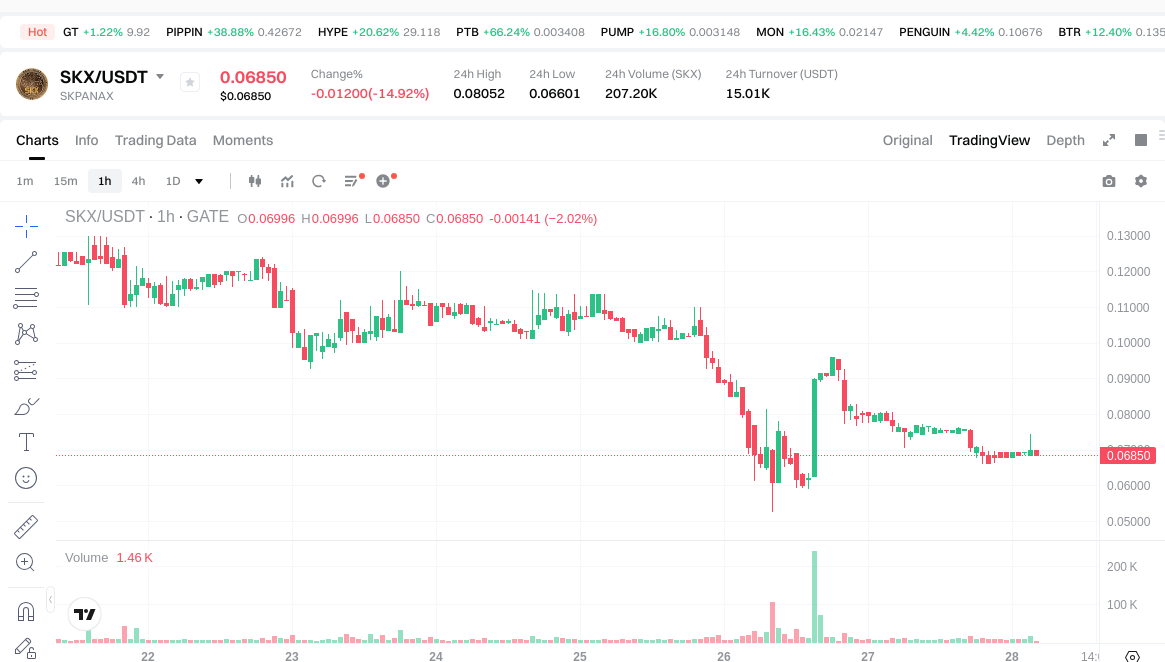
- 2025: SKX experienced notable volatility following its launch in July 2024, with the price reaching a peak of $3.00 on September 30, 2025, before entering a sustained downtrend.
- 2017: BCH emerged from a Bitcoin hard fork in August 2017 at an initial price of approximately $555.89, subsequently reaching its all-time high of $3,785.82 on December 20, 2017.
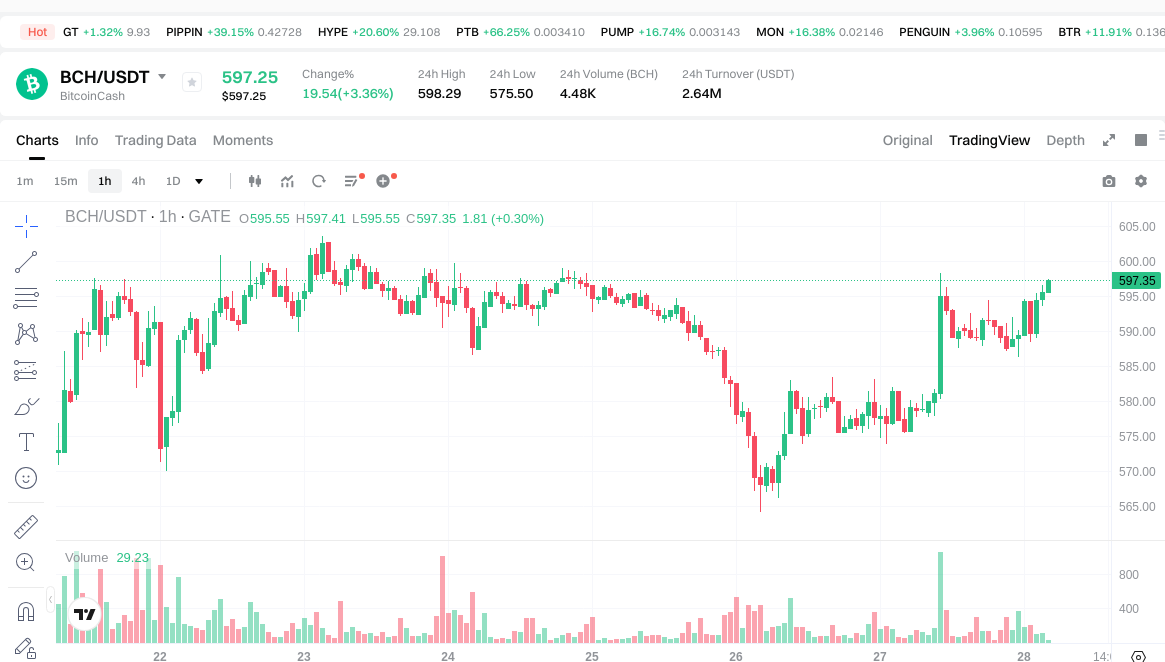
- Comparative Analysis: During the recent market cycle, SKX declined from its peak of $3.00 to a low of $0.05022 on January 15, 2026, representing a drawdown of approximately 98.3%. In contrast, BCH has demonstrated relative stability, with its current price of $596.43 reflecting a 40.23% increase over the past year.
Current Market Status (January 28, 2026)
- SKX Current Price: $0.0685
- BCH Current Price: $596.43
- 24-Hour Trading Volume: SKX recorded $15,015.83, while BCH reached $2,631,799.47
- Market Sentiment Index (Fear & Greed Index): 29 (Fear)
View real-time prices:
II. Core Factors Influencing SKX vs BCH Investment Value
Supply Mechanism Comparison (Tokenomics)
- SKX: The reference materials do not provide specific information about SKX's supply mechanism or tokenomics structure.
- BCH: According to available data, BCH exhibits relatively low technical iteration frequency, with GitHub data indicating core code updates averaging 8-12 times per month in 2025.
- 📌 Historical Pattern: Supply mechanisms can influence price cycle dynamics through scarcity effects and predictable emission schedules.
Institutional Adoption and Market Application
- Institutional Holdings: The reference materials mention that major Wall Street institutions have increased their exposure to Bitcoin ETFs, with holdings growing from $710 million to $1.57 billion, representing 121.1% growth. However, specific institutional preference data for SKX or BCH is not available in the provided materials.
- Enterprise Adoption: The materials do not contain comparative information regarding SKX or BCH adoption in cross-border payments, settlements, or investment portfolios.
- National Policies: Regulatory attitudes vary across jurisdictions. The materials reference Japan's registration system implemented since 2017 for virtual currency trading platforms, which has established operational guidelines. However, specific policy stances toward SKX or BCH are not detailed.
Technical Development and Ecosystem Building
- SKX Technical Upgrades: Fundamental analysis for Skycoin emphasizes network adoption, institutional investment, and macroeconomic factors as key value drivers. Specific technical upgrade plans are not mentioned in the reference materials.
- BCH Technical Development: BCH demonstrates slower technical iteration, with development activity characterized by lower update frequency compared to some other blockchain projects.
- Ecosystem Comparison: The materials do not provide detailed comparative information regarding DeFi, NFT, payment systems, or smart contract implementation between SKX and BCH.
Macroeconomic Conditions and Market Cycles
- Performance in Inflationary Environments: The materials do not contain specific data comparing inflation-hedging characteristics of SKX versus BCH.
- Macroeconomic Monetary Policy: Interest rates and USD index movements can influence cryptocurrency valuations. However, the reference materials do not provide differentiated impact analysis for SKX and BCH specifically.
- Geopolitical Factors: Cross-border transaction demand and international developments can affect cryptocurrency adoption. The materials note increasing global usage of virtual currencies, driven by blockchain technology proliferation across various industries, though specific geopolitical impact analysis for SKX and BCH is not provided.
III. 2026-2031 Price Prediction: SKX vs BCH
Short-term Prediction (2026)
- SKX: Conservative $0.050005-$0.0685 | Optimistic $0.0685-$0.07809
- BCH: Conservative $477.928-$597.41 | Optimistic $597.41-$692.9956
Mid-term Prediction (2028-2029)
- SKX may enter a gradual growth phase, with projected price range of $0.0527828445375-$0.08717166749375
- BCH may enter a volatile expansion phase, with projected price range of $394.8641136-$862.3832241024
- Key drivers: institutional capital inflows, ETF developments, ecosystem expansion
Long-term Prediction (2030-2031)
- SKX: Baseline scenario $0.050310847984993-$0.089840799973203 | Optimistic scenario $0.089840799973203-$0.103316919969183
- BCH: Baseline scenario $558.92288730110976-$873.317011407984 | Optimistic scenario $873.317011407984-$1013.04773323326144
View detailed price predictions for SKX and BCH
Disclaimer
SKX:
| Year |
Predicted High Price |
Predicted Average Price |
Predicted Low Price |
Price Change |
| 2026 |
0.07809 |
0.0685 |
0.050005 |
-1 |
| 2027 |
0.07549385 |
0.073295 |
0.058636 |
4 |
| 2028 |
0.08555358875 |
0.074394425 |
0.0580276515 |
6 |
| 2029 |
0.08717166749375 |
0.079974006875 |
0.0527828445375 |
14 |
| 2030 |
0.096108762762031 |
0.083572837184375 |
0.055993800913531 |
19 |
| 2031 |
0.103316919969183 |
0.089840799973203 |
0.050310847984993 |
28 |
BCH:
| Year |
Predicted High Price |
Predicted Average Price |
Predicted Low Price |
Price Change |
| 2026 |
692.9956 |
597.41 |
477.928 |
0 |
| 2027 |
671.010912 |
645.2028 |
619.394688 |
8 |
| 2028 |
881.86318704 |
658.106856 |
394.8641136 |
10 |
| 2029 |
862.3832241024 |
769.98502152 |
716.0860700136 |
29 |
| 2030 |
930.449900004768 |
816.1841228112 |
783.536757898752 |
36 |
| 2031 |
1013.04773323326144 |
873.317011407984 |
558.92288730110976 |
46 |
IV. Investment Strategy Comparison: SKX vs BCH
Long-term vs Short-term Investment Strategies
- SKX: May be considered by investors with high risk tolerance seeking early-stage project exposure and potential growth opportunities in emerging WEB3.0 ecosystems, though substantial price volatility has been observed.
- BCH: May attract investors interested in established cryptocurrency assets with longer operational history and relatively higher liquidity in payment-oriented use cases.
Risk Management and Asset Allocation
- Conservative Investors: SKX 10-20% vs BCH 80-90% - Conservative portfolio construction may favor established assets with demonstrated market presence and liquidity.
- Aggressive Investors: SKX 30-40% vs BCH 60-70% - Higher risk tolerance portfolios may include increased allocation to emerging projects while maintaining core positions in established assets.
- Hedging Tools: Stablecoin allocation for liquidity management, options strategies for downside protection, cross-asset diversification across different cryptocurrency categories.
V. Potential Risk Comparison
Market Risk
- SKX: Recent price action demonstrates significant volatility, with drawdowns exceeding 98% from peak levels, indicating elevated market risk and liquidity concerns reflected in lower 24-hour trading volumes.
- BCH: While showing more stable price patterns compared to SKX, remains subject to broader cryptocurrency market cycles and sentiment shifts, as evidenced by current Fear & Greed Index readings.
Technical Risk
- SKX: Limited information available regarding network scalability, development activity, and technical infrastructure stability in reference materials.
- BCH: Technical iteration frequency appears lower compared to some blockchain projects, with GitHub data indicating moderate development activity averaging 8-12 core code updates monthly.
Regulatory Risk
- Global regulatory frameworks continue evolving, with jurisdictions adopting varied approaches. Japan's registration system for virtual currency platforms represents one regulatory model, though specific policy impacts on SKX and BCH may differ based on classification, usage patterns, and jurisdictional interpretations.
VI. Conclusion: Which Is the Better Buy?
📌 Investment Value Summary:
- SKX Characteristics: Represents early-stage exposure to WEB3.0 concepts and small business tokenization initiatives, though accompanied by substantial volatility and limited market liquidity.
- BCH Characteristics: Offers longer operational track record since 2017, higher daily trading volumes, and established positioning within payment-focused cryptocurrency segments.
✅ Investment Considerations:
- Novice Investors: May consider starting with assets demonstrating higher liquidity and longer operational history before exploring emerging projects. Comprehensive education on cryptocurrency fundamentals and risk management remains essential.
- Experienced Investors: Portfolio allocation decisions should reflect individual risk tolerance, investment timeframes, and thorough analysis of both technical fundamentals and market dynamics for each asset.
- Institutional Investors: Asset selection considerations typically encompass liquidity depth, regulatory compliance frameworks, custody solutions, and alignment with investment mandates and fiduciary responsibilities.
⚠️ Risk Disclosure: Cryptocurrency markets exhibit extreme volatility. This analysis does not constitute investment advice. Investors should conduct independent research and consult qualified financial advisors before making investment decisions.
VII. FAQ
Q1: What are the main differences between SKX and BCH in terms of market positioning?
SKX and BCH occupy distinctly different positions in the cryptocurrency market. SKX, launched in 2021, focuses on the WEB3.0 ecosystem with emphasis on small business branding and creating a token system for both online and offline commerce. In contrast, BCH emerged in 2017 as a Bitcoin hard fork, positioning itself as a payment-oriented cryptocurrency with focus on on-chain scaling and transaction efficiency. The key distinction lies in their maturity levels: BCH represents an established asset with a longer operational history and higher liquidity ($2.63 million in 24-hour volume), while SKX remains an emerging project with significantly lower trading volume ($15,015.83 daily) and is still developing its ecosystem infrastructure.
Q2: How do the price volatilities of SKX and BCH compare?
SKX exhibits substantially higher volatility compared to BCH. Since its launch in July 2024, SKX experienced a dramatic price decline from its peak of $3.00 on September 30, 2025, to a low of $0.05022 on January 15, 2026, representing a drawdown of approximately 98.3%. Meanwhile, BCH has demonstrated relative stability, with its current price of $596.43 reflecting a 40.23% increase over the past year. This volatility differential reflects the maturity gap between the two assets: SKX's emerging status makes it susceptible to sharp price swings and liquidity constraints, while BCH's established market presence provides greater price stability and trading depth.
Q3: What are the projected price ranges for SKX and BCH through 2031?
Price projections indicate different growth trajectories for both assets. For SKX, conservative estimates suggest a range of $0.050005-$0.0685 in 2026, potentially reaching $0.050310847984993-$0.089840799973203 by 2030 under baseline scenarios, with optimistic projections extending to $0.103316919969183 by 2031. BCH projections show conservative ranges of $477.928-$597.41 for 2026, expanding to $558.92288730110976-$873.317011407984 by 2030 under baseline scenarios, with optimistic projections reaching $1013.04773323326144 by 2031. These projections assume various factors including institutional adoption, ecosystem development, and macroeconomic conditions, though actual results may vary significantly due to market volatility.
Q4: How should different investor types approach allocation between SKX and BCH?
Portfolio allocation strategies should align with individual risk profiles and investment objectives. Conservative investors might consider a 10-20% SKX allocation versus 80-90% BCH allocation, favoring established assets with demonstrated market presence. Aggressive investors with higher risk tolerance could potentially increase SKX exposure to 30-40% while maintaining 60-70% in BCH. However, these allocations should be adjusted based on personal circumstances, investment timeframes, and comprehensive risk assessment. Novice investors are generally advised to begin with higher-liquidity assets like BCH before exploring emerging projects such as SKX, ensuring thorough understanding of cryptocurrency fundamentals and risk management principles.
Q5: What technical development differences exist between SKX and BCH?
Technical development activities show notable differences between the two projects. BCH demonstrates relatively lower technical iteration frequency, with GitHub data indicating core code updates averaging 8-12 times per month in 2025, suggesting a more mature but slower-paced development approach. For SKX, specific technical development metrics are limited in available reference materials, though fundamental analysis emphasizes network adoption and institutional investment as key value drivers. The technical development pace typically reflects project maturity: established projects like BCH may prioritize stability and gradual improvements, while emerging projects might focus on rapid feature development and ecosystem expansion.
Q6: What regulatory considerations affect SKX and BCH investments?
Regulatory frameworks continue evolving globally, with varying approaches across jurisdictions affecting cryptocurrency investments differently. Japan's registration system implemented since 2017 for virtual currency trading platforms represents one regulatory model that has established operational guidelines. However, specific regulatory impacts on SKX and BCH may differ based on asset classification, primary use cases, and jurisdictional interpretations. BCH's longer operational history means it has been subject to more regulatory scrutiny and has established compliance frameworks in various markets. SKX, as a newer project focused on WEB3.0 applications, may face evolving regulatory considerations as authorities develop frameworks for emerging token categories. Investors should monitor regulatory developments in their respective jurisdictions and consider consulting legal advisors for compliance guidance.
Q7: What are the primary risk factors investors should consider for each asset?
Both assets present distinct risk profiles requiring careful consideration. SKX's primary risks include extreme price volatility (98.3% drawdown from peak), limited market liquidity reflected in low trading volumes, and uncertainty regarding technical infrastructure stability and development activity. Additionally, SKX's emerging status means limited historical data for performance analysis and ecosystem validation. BCH faces different risk considerations, including moderate technical iteration pace compared to some blockchain projects, exposure to broader cryptocurrency market cycles, and competition from other payment-focused cryptocurrencies. Both assets remain subject to regulatory uncertainty as global frameworks continue developing. Market risk remains significant for both, evidenced by current Fear & Greed Index readings of 29 (Fear), indicating prevailing market caution. Investors should implement comprehensive risk management strategies including position sizing, diversification, and continuous monitoring of project developments.
Q8: How do institutional adoption patterns differ between SKX and BCH?
Institutional adoption patterns show significant differences between the two assets, though specific institutional preference data remains limited in available materials. The reference materials indicate major Wall Street institutions have increased exposure to Bitcoin-related products, with holdings in Bitcoin ETFs growing from $710 million to $1.57 billion, representing 121.1% growth. While this trend benefits the broader cryptocurrency market, BCH's longer operational history and higher liquidity make it more accessible for institutional portfolios compared to SKX. BCH's positioning in payment infrastructure and established market presence provide clearer institutional adoption pathways. SKX, focusing on WEB3.0 and small business tokenization, represents a more specialized use case that may attract different institutional interest patterns as the ecosystem matures. Institutional investors typically prioritize liquidity depth, regulatory compliance frameworks, and custody solutions—factors where BCH currently demonstrates advantages over emerging projects like SKX.
* The information is not intended to be and does not constitute financial advice or any other recommendation of any sort offered or endorsed by Gate.