This comprehensive analysis compares SMTX and IMX, two distinct cryptocurrency assets serving different market segments. SMTX focuses on institutional DeFi credit infrastructure and real-world asset tokenization through PayFi lending protocols, while IMX operates as a Layer 2 scaling solution for NFTs and blockchain gaming. The article examines historical price trends, tokenomics, institutional adoption patterns, and technological ecosystems. As of January 30, 2026, SMTX trades at $0.03768 with $32,441.51 daily volume, while IMX trades at $0.204 with $301,123.43 volume. Through comparative analysis of market risks, technical considerations, and regulatory landscapes, the guide provides investment recommendations for novice, experienced, and institutional investors. Key differences include IMX's established gaming ecosystem versus SMTX's emerging credit infrastructure, offering distinct risk-reward profiles for portfolio diversification strategies aligned with sector-specific adoption drivers.
Introduction: Investment Comparison Between SMTX and IMX
In the cryptocurrency market, the comparison between SMTX vs IMX has become a topic of interest for investors. Both tokens exhibit notable differences in market capitalization ranking, application scenarios, and price performance, representing distinct positioning within the crypto asset landscape.
Swarm Markets (SMTX): Launched in August 2021, this token has gained recognition for its focus on real-world asset (RWA) tokenization and trading, including stocks, bonds, gold, and carbon certificates.
Immutable (IMX): Since its inception in November 2021, this token has been positioned as a Layer 2 scaling solution for NFTs on Ethereum, offering instant transactions and zero gas fees for minting and trading.
This article will provide a comprehensive analysis of SMTX vs IMX investment value comparison, examining historical price trends, supply mechanisms, institutional adoption, technological ecosystems, and future projections, attempting to address the question investors care about most:
"Which is the better buy right now?"
I. Historical Price Comparison and Current Market Status
Historical Price Trends of SMTX (Coin A) and IMX (Coin B)
- March 2024: SMTX reached a price peak of $1.489, representing a significant milestone in its trading history.
- November 2021: IMX achieved its historical high of $9.52, reflecting strong market interest during the broader cryptocurrency market expansion.
- February 2024: SMTX recorded its historical low of $0.0208, marking a notable decline from previous levels.
- January 2026: IMX touched its historical low of $0.200115, representing substantial downward movement from its peak.
- Comparative analysis: Throughout the recent market cycles, SMTX has experienced price fluctuations ranging from $0.0208 to $1.489, while IMX has demonstrated a broader range from $0.200115 to $9.52.
Current Market Status (2026-01-30)
- SMTX current price: $0.03768
- IMX current price: $0.204
- 24-hour trading volume: SMTX $32,441.51 vs IMX $301,123.43
- Market sentiment index (Fear & Greed Index): 16 (Extreme Fear)
View real-time prices:
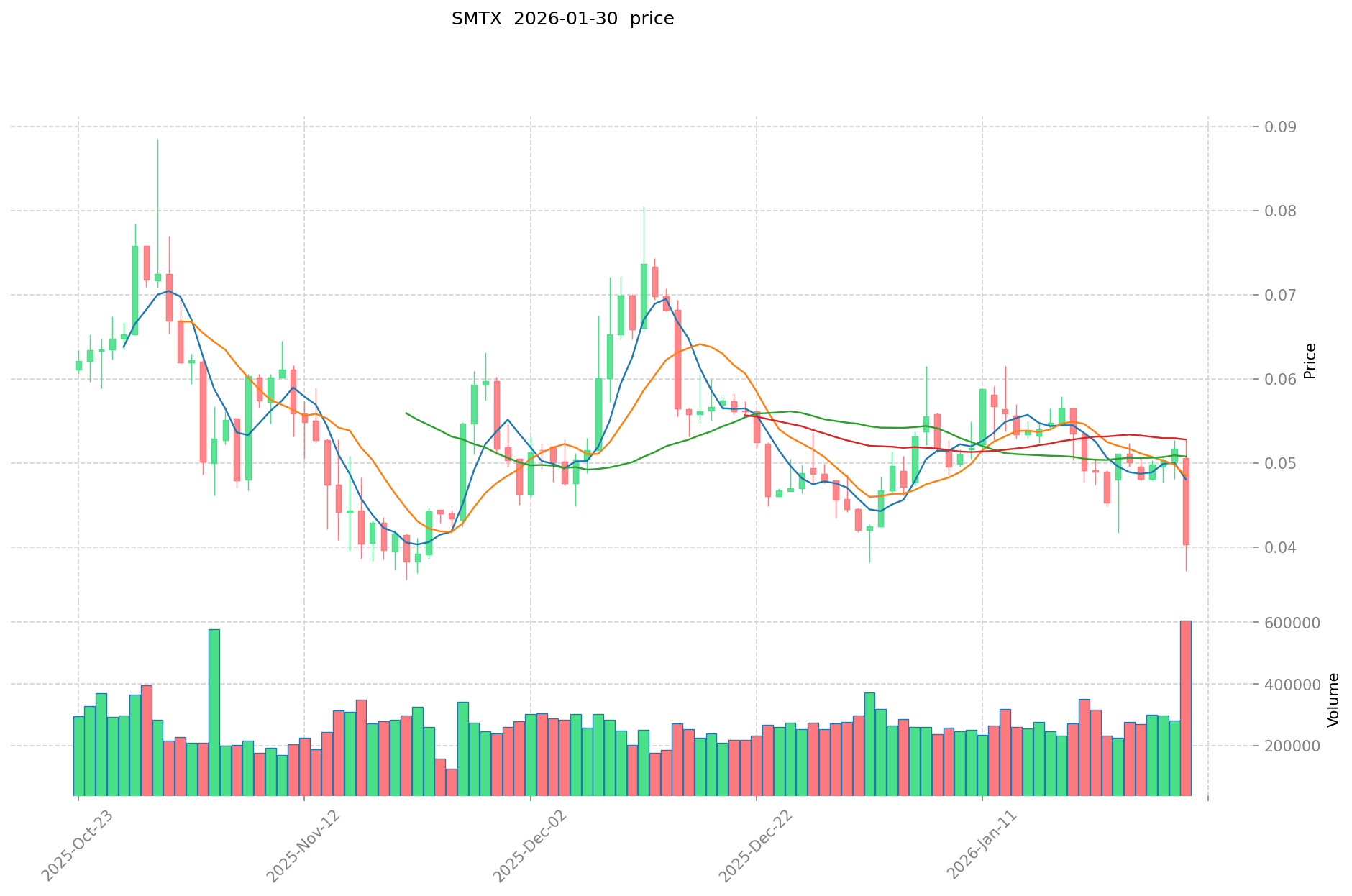
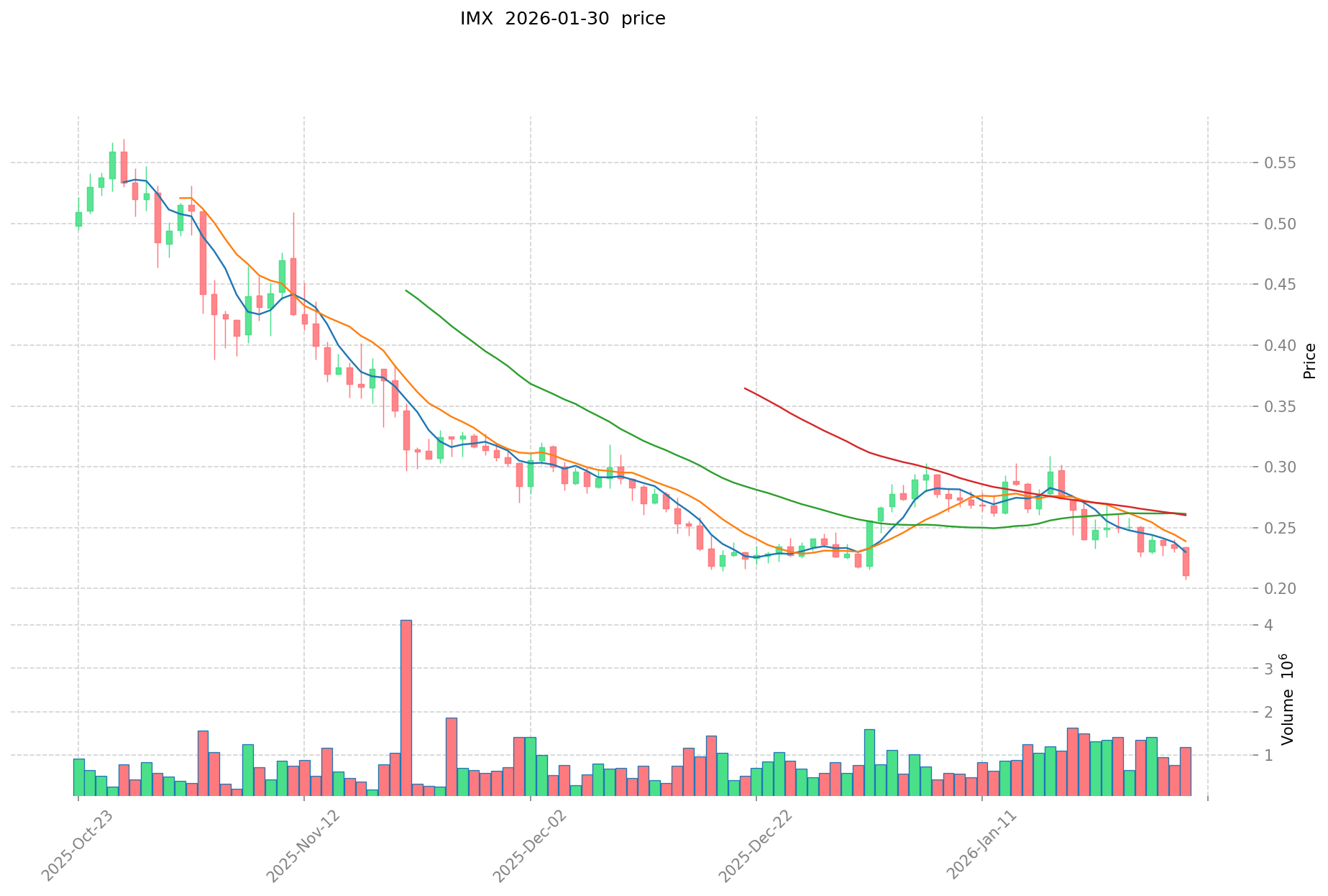
II. Core Factors Influencing SMTX vs IMX Investment Value
Supply Mechanism Comparison (Tokenomics)
- SMTX: Information regarding the supply mechanism is not detailed in available materials.
- IMX: The tokenomics are directly tied to the Immutable X platform's native token model, with value influenced by platform adoption rates.
- 📌 Historical Pattern: Token supply dynamics typically correlate with platform usage cycles, where increased developer adoption and game deployment can drive demand-side pressure.
Institutional Adoption and Market Applications
- Institutional Holdings: IMX demonstrates growing appeal among game developers and blockchain gaming projects, with platform selection increasingly dependent on technical infrastructure and cost efficiency.
- Enterprise Adoption: SMTX shows institutional engagement through Clearpool's collaboration with Cicada, a credit risk management company, aimed at institutionalizing PayFi lending through risk-managed credit pools. IMX focuses on gaming sector applications, particularly in mobile and esports domains.
- Regulatory Landscape: Both assets operate within evolving regulatory frameworks, with IMX having navigated regulatory scrutiny while maintaining ecosystem development momentum.
Technology Development and Ecosystem Building
- SMTX Technology Development: The project advances through strategic partnerships focused on credit infrastructure, particularly the Cicada collaboration designed to enhance on-chain credit risk management capabilities.
- IMX Technology Development: Platform growth correlates with gaming industry expansion, particularly in mobile gaming and esports segments. Technical infrastructure supports NFT deployment and game development integration.
- Ecosystem Comparison: IMX demonstrates concentrated focus on gaming, NFT, and entertainment applications. SMTX positions within DeFi lending infrastructure, specifically targeting institutional credit markets. The ecosystems serve distinct market segments with different adoption drivers.
Macroeconomic Context and Market Cycles
- Inflationary Environment Performance: Asset performance characteristics vary based on use case applicability. Gaming-focused tokens respond to entertainment sector dynamics, while lending protocol tokens correlate with credit market conditions.
- Macroeconomic Monetary Policy: Interest rate environments and dollar strength influence both assets through different transmission mechanisms—gaming revenue cycles for IMX and credit demand cycles for SMTX.
- Geopolitical Factors: Cross-border digital asset adoption patterns and international regulatory developments affect both tokens, though through distinct channels based on their primary use cases.
III. 2026-2031 Price Prediction: SMTX vs IMX
Short-term Forecast (2026)
- SMTX: Conservative $0.0358 - $0.0373 | Optimistic $0.0373 - $0.0410
- IMX: Conservative $0.1101 - $0.2039 | Optimistic $0.2039 - $0.2977
Mid-term Forecast (2028-2029)
- SMTX may enter a growth phase, with estimated prices ranging from $0.0266 to $0.0620 in 2028, and $0.0312 to $0.0692 in 2029
- IMX may enter an expansion stage, with estimated prices ranging from $0.2642 to $0.3216 in 2028, and $0.1735 to $0.4353 in 2029
- Key drivers: institutional capital inflows, ETF developments, ecosystem expansion
Long-term Forecast (2030-2031)
- SMTX: Baseline scenario $0.0403 - $0.0610 (2030), $0.0421 - $0.0738 (2031) | Optimistic scenario $0.0867 (2030), $0.0975 (2031)
- IMX: Baseline scenario $0.3476 - $0.3698 (2030), $0.2385 - $0.3976 (2031) | Optimistic scenario $0.4253 (2030), $0.4413 (2031)
View detailed price predictions for SMTX and IMX
Disclaimer
SMTX:
| Year |
Predicted High Price |
Predicted Average Price |
Predicted Low Price |
Price Change |
| 2026 |
0.04103 |
0.0373 |
0.035808 |
-1 |
| 2027 |
0.04817295 |
0.039165 |
0.03407355 |
3 |
| 2028 |
0.0620099445 |
0.043668975 |
0.02663807475 |
15 |
| 2029 |
0.0692196922725 |
0.05283945975 |
0.0311752812525 |
40 |
| 2030 |
0.086661997935975 |
0.06102957601125 |
0.040279520167425 |
61 |
| 2031 |
0.097476438805168 |
0.073845786973612 |
0.042092098574959 |
95 |
IMX:
| Year |
Predicted High Price |
Predicted Average Price |
Predicted Low Price |
Price Change |
| 2026 |
0.297694 |
0.2039 |
0.110106 |
0 |
| 2027 |
0.32352813 |
0.250797 |
0.13543038 |
22 |
| 2028 |
0.3216220728 |
0.287162565 |
0.2641895598 |
40 |
| 2029 |
0.435281016027 |
0.3043923189 |
0.173503621773 |
49 |
| 2030 |
0.425312167583025 |
0.3698366674635 |
0.34764646741569 |
81 |
| 2031 |
0.441307603450821 |
0.397574417523262 |
0.238544650513957 |
94 |
IV. Investment Strategy Comparison: SMTX vs IMX
Long-term vs Short-term Investment Strategies
-
SMTX: Suited for investors focusing on institutional DeFi infrastructure development and credit market tokenization, particularly those seeking exposure to emerging PayFi lending protocols and real-world asset tokenization narratives. The asset may appeal to those with longer time horizons aligned with institutional adoption cycles in credit markets.
-
IMX: Suited for investors targeting gaming sector expansion and NFT infrastructure development, particularly those interested in Layer 2 scaling solutions and blockchain gaming adoption. The asset may attract investors seeking exposure to entertainment industry blockchain integration and mobile gaming market growth.
Risk Management and Asset Allocation
-
Conservative Investors: SMTX 20-30% vs IMX 70-80%. This allocation reflects IMX's relatively larger market presence and established gaming ecosystem, while maintaining limited exposure to SMTX's emerging credit infrastructure development.
-
Aggressive Investors: SMTX 40-50% vs IMX 50-60%. This balanced approach allows participation in both gaming ecosystem expansion and institutional credit market development, with allocation flexibility based on individual risk tolerance and sector outlook.
-
Hedging Tools: Stablecoin allocation for portfolio stability, options strategies for downside protection, cross-asset diversification incorporating both gaming-focused and DeFi-oriented tokens to reduce concentration risk.
V. Potential Risk Comparison
Market Risks
-
SMTX: Exposure to institutional adoption pace uncertainties in credit markets, sensitivity to regulatory developments affecting tokenized lending protocols, liquidity constraints reflected in relatively lower trading volumes, and dependency on partnership execution success, particularly regarding credit infrastructure collaborations.
-
IMX: Correlation with gaming industry revenue cycles and NFT market sentiment fluctuations, competition from alternative Layer 2 solutions and gaming-focused blockchains, sensitivity to broader entertainment sector spending patterns, and exposure to shifts in gaming developer preferences regarding blockchain infrastructure selection.
Technical Risks
-
SMTX: Platform scalability requirements as credit infrastructure expands, network stability considerations during institutional integration phases, and technical dependencies on partner protocols and credit risk management systems.
-
IMX: Layer 2 infrastructure maintenance and upgrade requirements, potential network congestion during high-activity gaming periods, security considerations inherent in NFT minting and trading operations, and technical integration challenges with diverse gaming platforms.
Regulatory Risks
- Global regulatory developments affect both assets through distinct channels. SMTX faces regulatory considerations surrounding tokenized credit products, institutional lending frameworks, and cross-border financial service regulations. IMX encounters regulatory attention regarding NFT classification, gaming asset ownership frameworks, and entertainment sector digital asset guidelines. Both assets operate within evolving international regulatory landscapes that may introduce compliance requirements or market access constraints.
VI. Conclusion: Which Is the Better Buy?
📌 Investment Value Summary:
-
SMTX Advantages: Positioning within emerging institutional credit infrastructure development, exposure to real-world asset tokenization narratives, strategic partnerships targeting PayFi lending market expansion, and potential beneficiary status from traditional finance-blockchain convergence trends.
-
IMX Advantages: Established presence in gaming sector blockchain infrastructure, technical positioning as Layer 2 scaling solution for NFTs, demonstrated ecosystem development momentum in mobile gaming and esports segments, and correlation with entertainment industry blockchain adoption trajectories.
✅ Investment Recommendations:
-
Novice Investors: Consider prioritizing IMX due to its relatively established ecosystem presence and clearer gaming sector use case visibility. Begin with smaller position sizes and focus on understanding fundamental drivers such as gaming platform adoption metrics and NFT transaction volumes before allocation expansion.
-
Experienced Investors: Evaluate portfolio diversification opportunities through balanced exposure to both assets, with allocation adjustments based on sector outlook assessments. Monitor institutional adoption signals for SMTX and gaming ecosystem expansion metrics for IMX. Consider implementing staged entry strategies during market volatility periods.
-
Institutional Investors: Conduct comprehensive due diligence on technical infrastructure, regulatory compliance frameworks, and ecosystem development roadmaps. Assess alignment with portfolio mandates regarding exposure to gaming infrastructure versus credit market tokenization. Evaluate liquidity profiles and market depth considerations for position sizing decisions.
⚠️ Risk Disclaimer: Cryptocurrency markets demonstrate substantial volatility characteristics. This content does not constitute investment advice. Investors should conduct independent research and consult qualified financial advisors before making investment decisions.
VII. FAQ
Q1: What is the primary difference between SMTX and IMX in terms of their core use cases?
SMTX focuses on institutional DeFi credit infrastructure and real-world asset (RWA) tokenization, while IMX operates as a Layer 2 scaling solution specifically designed for NFTs and blockchain gaming. SMTX positions itself within the PayFi lending sector through partnerships like the Cicada collaboration for credit risk management, targeting traditional finance-blockchain convergence. In contrast, IMX provides technical infrastructure for gaming developers, offering instant transactions and zero gas fees for NFT minting and trading, with concentrated adoption in mobile gaming and esports segments. These distinct positioning strategies mean SMTX correlates with credit market conditions and institutional adoption cycles, whereas IMX performance ties to gaming industry revenue cycles and entertainment sector blockchain integration trends.
Q2: Which token demonstrates better liquidity and trading volume characteristics?
IMX exhibits significantly higher liquidity with 24-hour trading volume of $301,123.43 compared to SMTX's $32,441.51 as of January 30, 2026. This approximately 9x difference in trading volume indicates IMX maintains substantially deeper market liquidity, which translates to lower slippage risk for position entry and exit, tighter bid-ask spreads, and greater ease of execution for larger order sizes. The liquidity disparity reflects IMX's more established ecosystem presence and broader market participation. Investors should consider this liquidity differential when determining position sizing strategies, particularly for larger allocations where execution quality and market impact become critical factors. Lower liquidity assets like SMTX may require more cautious position management and longer execution timeframes.
Q3: What are the key risks specific to each token that investors should monitor?
SMTX faces institutional adoption pace uncertainties in credit markets, regulatory developments affecting tokenized lending protocols, liquidity constraints due to lower trading volumes, and execution risk related to partnership dependencies, particularly the Cicada credit infrastructure collaboration. IMX encounters competition from alternative Layer 2 solutions and gaming-focused blockchains, correlation with gaming industry revenue cycles and NFT market sentiment fluctuations, sensitivity to entertainment sector spending patterns, and potential technical integration challenges with diverse gaming platforms. Both assets operate within evolving regulatory landscapes—SMTX regarding tokenized credit products and cross-border financial services, IMX concerning NFT classification and gaming asset ownership frameworks. Investors should establish monitoring frameworks for sector-specific metrics: institutional credit market indicators for SMTX, gaming platform adoption and NFT transaction volumes for IMX.
Q4: How do the price prediction ranges compare between SMTX and IMX through 2031?
IMX demonstrates substantially higher absolute price projections across all timeframes. For 2026, IMX conservative estimates range $0.1101-$0.2039 versus SMTX's $0.0358-$0.0373. By 2031, IMX baseline scenarios project $0.2385-$0.3976 compared to SMTX's $0.0421-$0.0738, with optimistic scenarios reaching $0.4413 for IMX versus $0.0975 for SMTX. However, percentage growth trajectories differ: SMTX projections indicate 95% growth from current levels by 2031, while IMX shows 94% growth, representing similar proportional expansion potential despite vastly different absolute price levels. These projections reflect distinct risk-reward profiles—IMX offers higher absolute returns with established ecosystem presence, while SMTX presents comparable percentage growth potential from a lower base with higher execution risk tied to emerging institutional credit infrastructure adoption.
Q5: What portfolio allocation strategy is recommended for different investor profiles?
Conservative investors should consider 20-30% SMTX versus 70-80% IMX allocation, reflecting IMX's relatively larger market presence and established gaming ecosystem while maintaining limited exposure to SMTX's emerging credit infrastructure development. Aggressive investors may implement 40-50% SMTX versus 50-60% IMX allocation, allowing balanced participation in both gaming ecosystem expansion and institutional credit market development. These recommendations incorporate liquidity considerations, ecosystem maturity differentials, and sector-specific adoption risk profiles. Investors should complement core allocations with hedging tools including stablecoin reserves for portfolio stability, options strategies for downside protection, and cross-asset diversification beyond gaming and credit sectors to reduce concentration risk. Allocation adjustments should respond to monitoring signals: institutional credit adoption metrics for SMTX weighting, gaming platform integration progress for IMX positioning.
Q6: How have historical price movements differed between SMTX and IMX?
IMX reached a historical high of $9.52 in November 2021 during the broader cryptocurrency market expansion, while SMTX peaked at $1.489 in March 2024, representing vastly different absolute price ranges. IMX's historical low of $0.200115 (January 2026) versus SMTX's $0.0208 (February 2024) demonstrates IMX maintaining higher absolute price floors. The percentage declines from peaks tell different stories: IMX experienced approximately 97.9% drawdown from peak to trough, while SMTX showed 98.6% decline, indicating similar proportional volatility characteristics despite different absolute price levels. These patterns suggest both assets demonstrate high-beta characteristics relative to broader crypto markets, with correlation to sector-specific catalysts—gaming adoption cycles for IMX, institutional credit infrastructure development for SMTX—overlaying general market sentiment drivers reflected in the current Fear & Greed Index reading of 16 (Extreme Fear).
Q7: What technological developments differentiate the two platforms' growth trajectories?
IMX focuses on Layer 2 scaling infrastructure specifically optimized for NFT deployment and game development integration, providing instant transactions and zero gas fees that address Ethereum mainnet cost and speed limitations for gaming applications. This technical positioning targets mobile gaming and esports segments where transaction speed and cost efficiency directly impact user experience. SMTX advances through strategic partnerships emphasizing credit infrastructure, particularly the Cicada collaboration designed to enhance on-chain credit risk management capabilities for institutional PayFi lending applications. The technological development paths diverge fundamentally: IMX builds horizontal infrastructure serving multiple gaming platforms and developers, while SMTX develops vertical integration within institutional credit markets. Growth trajectories depend on distinct adoption drivers—gaming industry blockchain integration pace for IMX, traditional finance institutions' willingness to adopt tokenized credit protocols for SMTX.
Q8: What macroeconomic factors should investors monitor for each token?
IMX performance correlates with entertainment sector spending patterns, gaming industry revenue cycles, and broader consumer discretionary spending trends that influence gaming platform adoption and NFT transaction volumes. Interest rate environments affect gaming companies' development budgets and consumer entertainment spending capacity. SMTX sensitivity centers on credit market conditions, institutional lending demand cycles, and regulatory developments affecting cross-border financial services and tokenized credit products. Dollar strength impacts both through different transmission mechanisms: international gaming revenue translation for IMX, cross-border institutional lending flows for SMTX. Investors should establish macroeconomic monitoring frameworks incorporating gaming industry metrics (mobile gaming revenue growth, esports viewership trends) for IMX positioning, and credit market indicators (institutional lending volumes, traditional finance blockchain adoption signals) for SMTX allocation decisions. Both assets face regulatory evolution risks requiring ongoing compliance framework assessment.
* The information is not intended to be and does not constitute financial advice or any other recommendation of any sort offered or endorsed by Gate.