This comprehensive investment guide compares Solana (SOL) and Cardano (ADA) blockchain platforms to help investors determine which offers superior potential in 2024. SOL, launched in 2020, excels as a high-performance protocol with DeFi TVL exceeding $1.6 billion and transaction speeds of several hundred per second. ADA, established in 2017, emphasizes academic rigor and formal verification through its Ouroboros consensus mechanism, with TVL below $200 million. The article analyzes historical price trends, tokenomics differences, institutional adoption, technical ecosystems, and detailed forecasts through 2031. SOL currently trades at $138.77 with stronger market momentum, while ADA at $0.3872 offers methodical development-focused investment. The guide provides portfolio allocation strategies for conservative, aggressive, and institutional investors, compares regulatory risks, and addresses key investment considerations on Gate. Detailed FAQ sections clarify technical distinctions, risk factors, and recommend
Introduction: Investment Comparison Between SOL and ADA
In the cryptocurrency market, the comparison between Solana (SOL) and Cardano (ADA) has consistently been a topic of interest among investors. Both assets exhibit notable differences in market capitalization ranking, application scenarios, and price performance, representing distinct positions within the crypto asset landscape.
Solana (SOL): Launched in 2020, Solana has gained market recognition as a high-performance blockchain protocol focused on providing scalability without compromising decentralization or security.
Cardano (ADA): Since its launch in 2017, Cardano has positioned itself as a layered technology platform capable of running financial applications, built with flexibility for maintenance and upgrade capabilities through soft forks.
This article will provide a comprehensive analysis of the investment value comparison between SOL and ADA, examining historical price trends, supply mechanisms, institutional adoption, technical ecosystems, and future projections, attempting to address the question investors care about most:
"Which is the better buy right now?"
I. Historical Price Comparison and Current Market Status
Historical Price Trends of SOL (Coin A) and ADA (Coin B)
- 2021: SOL experienced notable price growth, supported by expanding DeFi ecosystem activity and NFT market development. The price showed upward momentum during this period.
- 2021: ADA reached its all-time high of $3.09 in September 2021, driven by the introduction of smart contract functionality through the Alonzo upgrade.
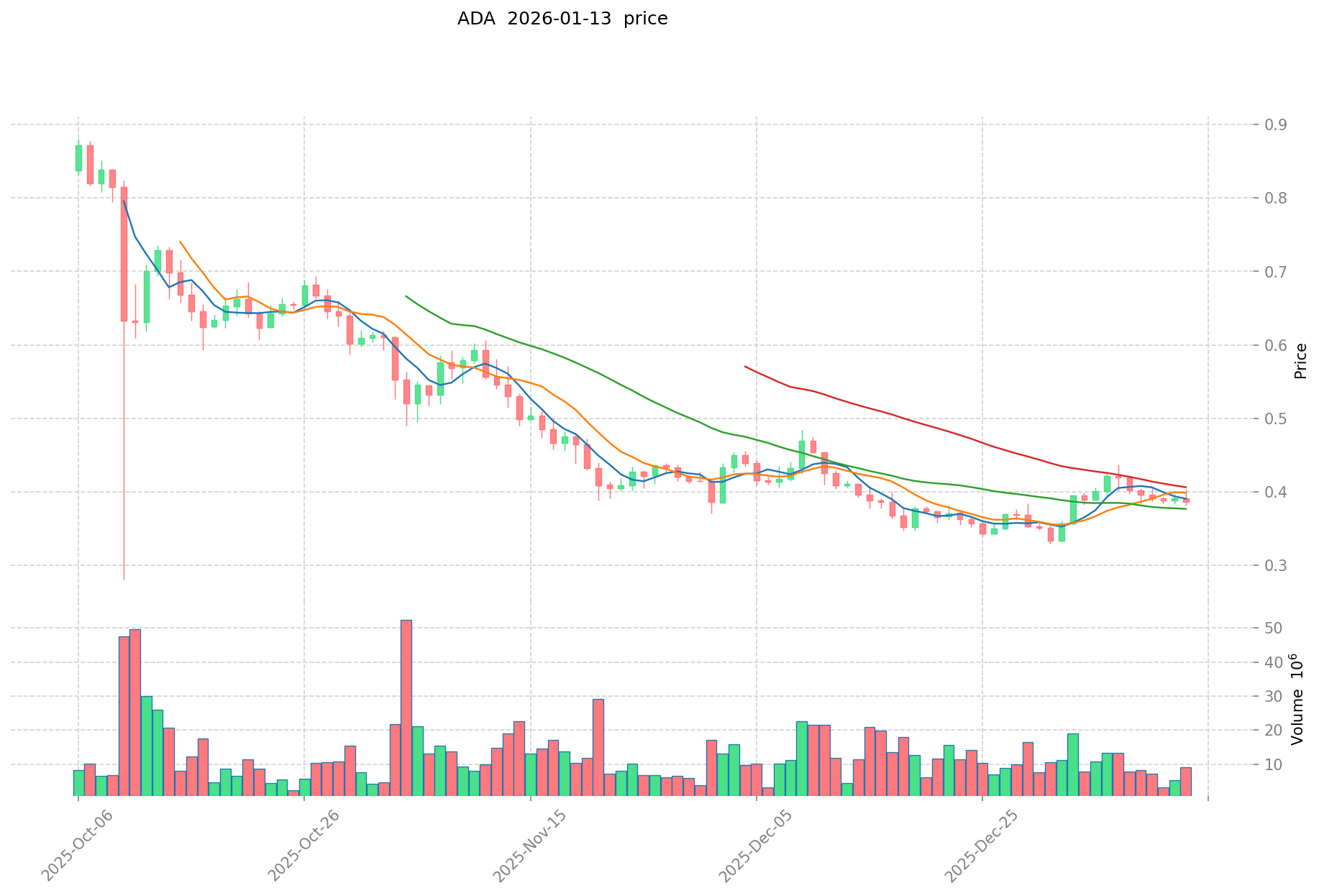
- Comparative Analysis: During the broader market cycle, SOL recorded an all-time high of $293.31 on January 19, 2025, before declining to its current levels. Meanwhile, ADA has retraced from its 2021 peak of $3.09 to current trading ranges around $0.39.
Current Market Status (January 13, 2026)
- SOL current price: $138.77
- ADA current price: $0.3872
- 24-hour trading volume: SOL recorded $142,166,340.99 compared to ADA's $3,088,872.31
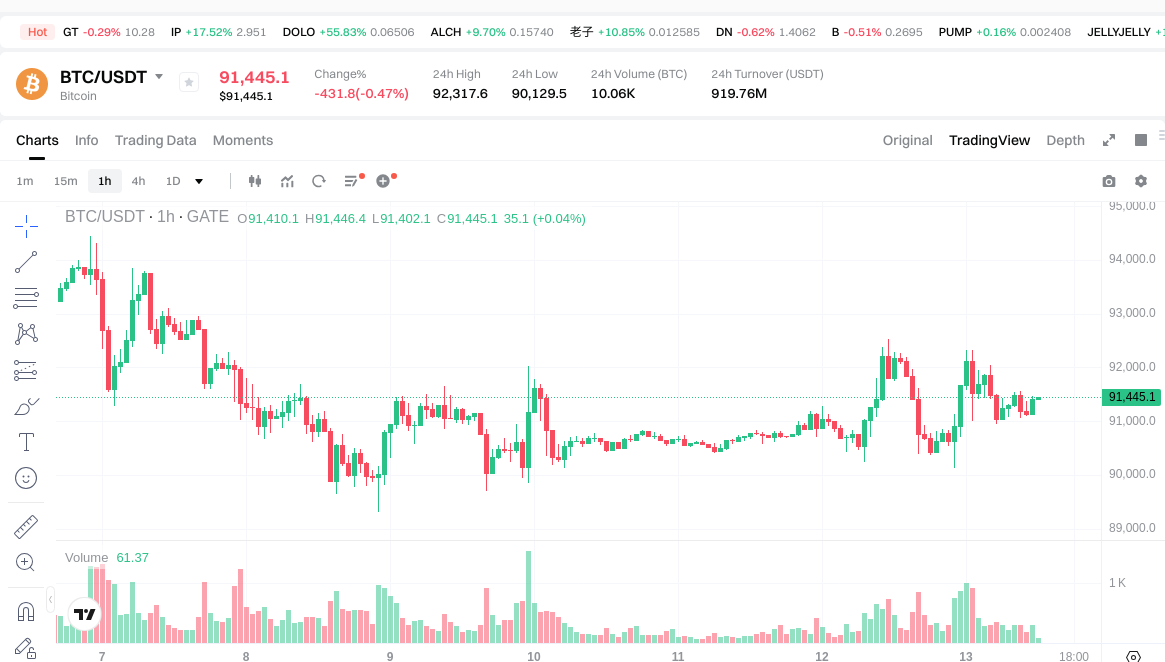
- Market Sentiment Index (Fear & Greed Index): 26 (Fear)
View real-time prices:
- Check SOL current price Market Price
- Check ADA current price Market Price
II. Core Factors Influencing SOL vs ADA Investment Value
Supply Mechanism Comparison (Tokenomics)
-
SOL: Features a fixed supply cap mechanism that directly influences price dynamics and investment value. Historical patterns indicate that supply adjustments have contributed to multiple price increases for SOL.
-
ADA: Implements an annual inflation rate of approximately 2-3% through staking rewards, which gradually decreases over time. The total supply is capped at 45 billion tokens, with ongoing distribution through validation rewards.
-
📌 Historical Pattern: Supply mechanisms have demonstrated their ability to drive cyclical price movements, with scarcity models typically supporting upward price pressure during periods of increasing demand.
Institutional Adoption and Market Application
-
Institutional Holdings: According to reference materials, Solana's token distribution shows significant venture capital involvement, with nearly 50% of SOL tokens held by venture capital entities, blockchain developers, and Solana Labs. This concentration suggests strong institutional backing but raises questions about decentralization.
-
Ecosystem Adoption: Solana's DeFi ecosystem has demonstrated substantial liquidity with Total Value Locked (TVL) exceeding $1.6 billion, reflecting the platform's capacity to support various DeFi operations and attracting users seeking efficiency. In contrast, Cardano's TVL remains below $200 million, indicating a more limited ecosystem development stage.
-
Strategic Positioning: SOL has focused on meme coin development and high-throughput applications, while ADA is exploring privacy-focused sidechains and attempting to bridge liquidity from other ecosystems.
Technical Development and Ecosystem Building
-
ADA Technical Upgrades: Founder Charles Hoskinson has shifted focus toward technical upgrades, particularly the Midnight project, aiming to expand into privacy-focused applications through sidechains and liquidity bridging. The platform utilizes the Ouroboros consensus mechanism, which has undergone peer review and academic validation.
-
SOL Technical Development: Solana employs a Proof-of-History (PoH) combined with Proof-of-Stake consensus mechanism, enabling theoretical transaction speeds of several hundred transactions per second. The platform's high-performance architecture supports rapid transaction processing.
-
Ecosystem Comparison:
- DeFi: Solana demonstrates stronger DeFi infrastructure with higher TVL, while Cardano's DeFi ecosystem remains in earlier development stages.
- Smart Contracts: Both platforms support smart contract functionality, though Cardano emphasizes academic rigor and formal verification, while Solana prioritizes throughput and speed.
- Application Development: Solana has gained traction in areas requiring high transaction speeds, while Cardano focuses on governance, sustainability, and research-backed development.
Macroeconomic Environment and Market Cycles
-
Performance Under Economic Conditions: Both assets exhibit correlation with broader cryptocurrency market trends, particularly Bitcoin price movements. The materials suggest that individual investment decisions should consider risk tolerance and market analysis rather than relying solely on one asset's characteristics.
-
Monetary Policy Influence: Reference materials indicate that regulatory developments, such as potential classification of ADA as a commodity under proposed U.S. legislation (CLARITY Act), could influence institutional access through mechanisms like spot ETF approval.
-
Market Positioning: The investment value of both SOL and ADA depends on factors including technological innovation, market demand, team execution capability, and broader adoption patterns within the cryptocurrency ecosystem.
III. 2026-2031 Price Forecast: SOL vs ADA
Short-term Forecast (2026)
- SOL: Conservative $98.55-$138.80 | Optimistic $138.80-$176.28
- ADA: Conservative $0.38-$0.39 | Optimistic $0.39-$0.51
Mid-term Forecast (2028-2029)
- SOL may enter a growth phase, with estimated price range of $91.45-$255.17
- ADA may enter a consolidation phase, with estimated price range of $0.39-$0.63
- Key drivers: institutional capital inflows, ETF developments, ecosystem expansion
Long-term Forecast (2030-2031)
- SOL: Baseline scenario $191.70-$255.61 | Optimistic scenario $255.61-$337.40
- ADA: Baseline scenario $0.39-$0.67 | Optimistic scenario $0.67-$0.76
View detailed price predictions for SOL and ADA
Disclaimer
SOL:
| Year |
Predicted High Price |
Predicted Average Price |
Predicted Low Price |
Price Change |
| 2026 |
176.276 |
138.8 |
98.548 |
0 |
| 2027 |
181.1687 |
157.538 |
130.75654 |
13 |
| 2028 |
245.5623575 |
169.35335 |
91.450809 |
22 |
| 2029 |
255.1731601125 |
207.45785375 |
149.3696547 |
49 |
| 2030 |
279.8917633868125 |
231.31550693125 |
203.5576460995 |
66 |
| 2031 |
337.39679840992125 |
255.60363515903125 |
191.702726369273437 |
84 |
ADA:
| Year |
Predicted High Price |
Predicted Average Price |
Predicted Low Price |
Price Change |
| 2026 |
0.512028 |
0.3879 |
0.376263 |
0 |
| 2027 |
0.46796256 |
0.449964 |
0.4049676 |
16 |
| 2028 |
0.6012418968 |
0.45896328 |
0.3855291552 |
18 |
| 2029 |
0.630822080196 |
0.5301025884 |
0.47709232956 |
36 |
| 2030 |
0.76040565793038 |
0.580462334298 |
0.4353467507235 |
49 |
| 2031 |
0.730773055764467 |
0.67043399611419 |
0.38885171774623 |
73 |
IV. Investment Strategy Comparison: SOL vs ADA
Long-term vs Short-term Investment Strategies
-
SOL: Suitable for investors focused on high-performance DeFi ecosystems, NFT market participation, and platforms prioritizing transaction speed and throughput. The asset appeals to those seeking exposure to rapidly evolving blockchain applications requiring scalability.
-
ADA: Suitable for investors emphasizing academic rigor, formal verification processes, and platforms with research-backed development approaches. The asset may attract those interested in governance-focused projects and methodical ecosystem expansion.
Risk Management and Asset Allocation
-
Conservative Investors: SOL 30-40% vs ADA 60-70%
- Rationale: ADA's longer operational history since 2017 and academic foundation may provide a more established risk profile for conservative portfolios
-
Aggressive Investors: SOL 60-70% vs ADA 30-40%
- Rationale: SOL's substantial DeFi TVL exceeding $1.6 billion and demonstrated ecosystem momentum may appeal to growth-oriented strategies
-
Hedging Tools: Stablecoin allocation for liquidity management, options contracts for downside protection, cross-asset portfolio diversification across multiple blockchain protocols
V. Potential Risk Comparison
Market Risks
-
SOL: Exposure to high-volatility meme coin market segments, correlation with broader DeFi market cycles, sensitivity to NFT market sentiment shifts. The concentration of approximately 50% token holdings among venture capital entities and development teams presents centralization considerations.
-
ADA: Limited DeFi ecosystem development with TVL below $200 million may constrain near-term growth catalysts. Price performance remains substantially below the September 2021 peak of $3.09, currently trading around $0.39, indicating prolonged consolidation periods.
Technical Risks
-
SOL: Network stability considerations during periods of high transaction volume, potential scalability challenges as ecosystem adoption increases, dependencies on Proof-of-History mechanism performance
-
ADA: Ecosystem development pace relative to competing platforms, smart contract adoption rates following Alonzo upgrade implementation, execution speed of sidechain initiatives including the Midnight project
Regulatory Risks
- Potential classification differences under evolving regulatory frameworks, such as proposed commodity designations under legislation like the CLARITY Act, could create divergent institutional access pathways including spot ETF approval mechanisms. Both assets face exposure to jurisdiction-specific policy developments affecting cryptocurrency market operations.
VI. Conclusion: Which Is the Better Buy?
📌 Investment Value Summary:
-
SOL Strengths: Demonstrated DeFi ecosystem strength with TVL exceeding $1.6 billion, high-performance technical architecture supporting rapid transaction processing, active participation in emerging sectors including NFTs and meme coins, substantial institutional backing from venture capital entities
-
ADA Strengths: Academic research foundation with peer-reviewed consensus mechanism, established operational history since 2017, formal verification emphasis in smart contract development, methodical approach to protocol upgrades through governance processes, ongoing privacy-focused initiatives through sidechain development
✅ Investment Recommendations:
-
New Investors: Consider gradual portfolio entry through dollar-cost averaging strategies, prioritize understanding fundamental differences in platform architectures and use cases, maintain diversification across multiple assets to mitigate concentration risks
-
Experienced Investors: Evaluate allocation based on individual risk tolerance and market cycle analysis, monitor ecosystem development metrics including TVL trends and application adoption rates, consider tactical rebalancing opportunities during market volatility periods
-
Institutional Investors: Assess regulatory landscape developments affecting asset classification and custody solutions, evaluate liquidity profiles across multiple trading venues, consider correlation characteristics within broader portfolio construction frameworks
⚠️ Risk Disclaimer: The cryptocurrency market exhibits substantial volatility characteristics. This content does not constitute investment advice. Investment decisions should incorporate comprehensive risk assessment, independent research, and consideration of individual financial circumstances.
VII. FAQ
Q1: Which cryptocurrency has better long-term growth potential, SOL or ADA?
Based on current market fundamentals, SOL demonstrates stronger near-term growth potential due to its established DeFi ecosystem with TVL exceeding $1.6 billion and active participation in high-growth sectors like NFTs and meme coins. However, long-term potential depends on individual investment goals and risk tolerance. SOL's price forecasts suggest a baseline scenario reaching $191.70-$255.61 by 2030-2031, while ADA's academic approach and formal verification processes may appeal to investors prioritizing methodical, research-backed development. The 2026-2031 projections indicate SOL could achieve higher percentage gains, though ADA's established operational history since 2017 provides a different risk-reward profile.
Q2: How do the supply mechanisms of SOL and ADA differ, and what impact does this have on investment value?
SOL employs a fixed supply cap mechanism that creates scarcity-driven price dynamics, historically contributing to multiple price increases during demand surges. In contrast, ADA implements an annual inflation rate of approximately 2-3% through staking rewards, with a total supply capped at 45 billion tokens gradually distributed through validation rewards. SOL's scarcity model typically supports upward price pressure during bullish market conditions, while ADA's controlled inflation provides predictable token economics that may appeal to investors seeking stable, long-term staking yields. The key difference lies in SOL's emphasis on supply scarcity versus ADA's focus on sustainable token distribution for network security.
Q3: What are the main technical differences between Solana and Cardano that investors should understand?
Solana utilizes a Proof-of-History (PoH) combined with Proof-of-Stake consensus mechanism, enabling theoretical transaction speeds of several hundred transactions per second and prioritizing throughput for high-performance applications. Cardano employs the Ouroboros consensus mechanism, which has undergone peer review and academic validation, emphasizing formal verification and research-backed development. For investors, this means SOL is positioned for applications requiring rapid transaction processing (DeFi, NFTs, gaming), while ADA focuses on governance, sustainability, and methodical protocol upgrades. SOL's DeFi TVL exceeding $1.6 billion versus ADA's TVL below $200 million reflects these different technical approaches and current ecosystem maturity levels.
Q4: What is the recommended portfolio allocation between SOL and ADA for different investor profiles?
For conservative investors, a 30-40% SOL versus 60-70% ADA allocation is recommended, as ADA's longer operational history since 2017 and academic foundation may provide a more established risk profile. Aggressive investors might consider 60-70% SOL versus 30-40% ADA to capture SOL's substantial DeFi momentum and ecosystem growth potential. This allocation strategy reflects SOL's higher volatility and growth characteristics versus ADA's more methodical development approach. Both allocations should incorporate hedging tools such as stablecoin reserves for liquidity management, options contracts for downside protection, and broader portfolio diversification across multiple blockchain protocols to manage risk effectively.
Q5: What are the key regulatory risks affecting SOL and ADA investments?
Both assets face exposure to evolving regulatory frameworks that could significantly impact their investment profiles. A critical consideration is potential classification differences under proposed legislation like the CLARITY Act, which might designate ADA as a commodity, potentially opening pathways for institutional access through mechanisms like spot ETF approval. SOL faces additional scrutiny due to its substantial venture capital holdings (approximately 50% of tokens held by VCs and development entities), which raises centralization questions that could attract regulatory attention. Investors should monitor jurisdiction-specific policy developments affecting cryptocurrency operations, custody solutions, and trading venue regulations. The divergent regulatory treatment could create different institutional adoption trajectories for each asset, making regulatory monitoring essential for investment decision-making.
Q6: How do current market conditions affect the investment case for SOL versus ADA?
As of January 13, 2026, the market sentiment index shows 26 (Fear), indicating cautious market conditions. SOL currently trades at $138.77 with 24-hour trading volume of $142.17 million, while ADA trades at $0.3872 with volume of $3.09 million—showing substantially lower trading activity. SOL's current price represents a significant decline from its all-time high of $293.31, while ADA remains far below its September 2021 peak of $3.09. The fear sentiment and trading volume disparity suggest SOL maintains stronger market interest despite current bearish conditions. Both assets exhibit correlation with broader cryptocurrency market trends, particularly Bitcoin price movements, meaning investment decisions should consider macroeconomic factors, monetary policy developments, and overall market cycle positioning rather than isolated asset characteristics.
Q7: What ecosystem development factors should investors monitor when comparing SOL and ADA?
Investors should track several key ecosystem metrics: For SOL, monitor DeFi TVL trends (currently exceeding $1.6 billion), NFT marketplace activity, meme coin sector performance, and network stability during high-volume periods. For ADA, key indicators include progress on the Midnight privacy-focused sidechain project, smart contract adoption rates following the Alonzo upgrade, DeFi ecosystem expansion from current TVL below $200 million, and liquidity bridging initiatives from other blockchains. Additionally, both platforms' developer activity, application deployment rates, and strategic partnerships provide insight into long-term viability. The substantial gap in current DeFi TVL (SOL $1.6B+ versus ADA <$200M) represents a critical ecosystem maturity differential that investors should weigh against their investment timeframes and growth expectations.
Q8: What are the main advantages and disadvantages of investing in SOL versus ADA right now?
SOL advantages include proven DeFi ecosystem strength, high transaction throughput supporting diverse applications, active participation in high-growth sectors (NFTs, meme coins), and substantial institutional backing. Disadvantages include network stability concerns during peak usage, high token concentration among VCs (approximately 50%), and elevated volatility exposure to speculative market segments. ADA advantages include academic research foundation with peer-reviewed technology, established operational history, formal verification emphasis, and methodical governance-driven development. Disadvantages include limited DeFi ecosystem development, significantly lower trading volumes, prolonged price consolidation since 2021 peak, and slower ecosystem expansion pace relative to competitors. The choice ultimately depends on whether investors prioritize established momentum and ecosystem activity (SOL) or academic rigor and methodical development (ADA).
* The information is not intended to be and does not constitute financial advice or any other recommendation of any sort offered or endorsed by Gate.