This comprehensive analysis compares STRK and FIL as two distinct blockchain infrastructure assets within the cryptocurrency ecosystem. STRK operates as an Ethereum Layer 2 ZK-Rollup scaling solution for DeFi applications, while FIL functions as a decentralized storage network for Web3 data infrastructure. The article examines historical price trends, current market status, tokenomics mechanisms, and institutional adoption patterns to help investors understand their relative investment value. STRK currently trades at $0.09078 with lower liquidity, while FIL trades at $1.583 with superior trading volume of $4.96 million daily on Gate. Through 2031 price analysis, long-term and short-term investment strategies, and risk assessments, the guide addresses which asset suits different investor profiles—from conservative to aggressive allocations—while providing transparent risk disclosures about cryptocurrency market volatility and regulatory uncertainties affecting both projects.
Introduction: Investment Comparison Between STRK and FIL
In the cryptocurrency market, the comparison between STRK vs FIL has consistently been a topic investors cannot overlook. The two differ markedly in market cap ranking, application scenarios, and price performance, while representing distinct positioning within the crypto asset landscape.
Starknet (STRK): Launched in 2024, it has gained market recognition through its positioning as an Ethereum-based ZK-Rollup Layer 2 scaling solution.
Filecoin (FIL): Since its launch in 2020, it has been recognized for its decentralized storage network positioning, becoming one of the notable projects in the distributed storage sector.
This article will provide a comprehensive analysis of the investment value comparison between STRK vs FIL, focusing on historical price trends, supply mechanisms, institutional adoption, technological ecosystems, and future projections. We aim to address the question that concerns investors most:
"Which is the better buy right now?"
I. Historical Price Comparison and Current Market Status
STRK (Starknet) and FIL (Filecoin) Historical Price Trends
-
2024: STRK experienced significant price movement following its mainnet launch in February 2024, reaching an all-time high of $4.00 on February 20, 2024. The token has since declined substantially from this peak.
-
2021: FIL reached its historical high of $236.84 on April 1, 2021, during the broader cryptocurrency market bull run. The token has experienced considerable volatility since this milestone.
-
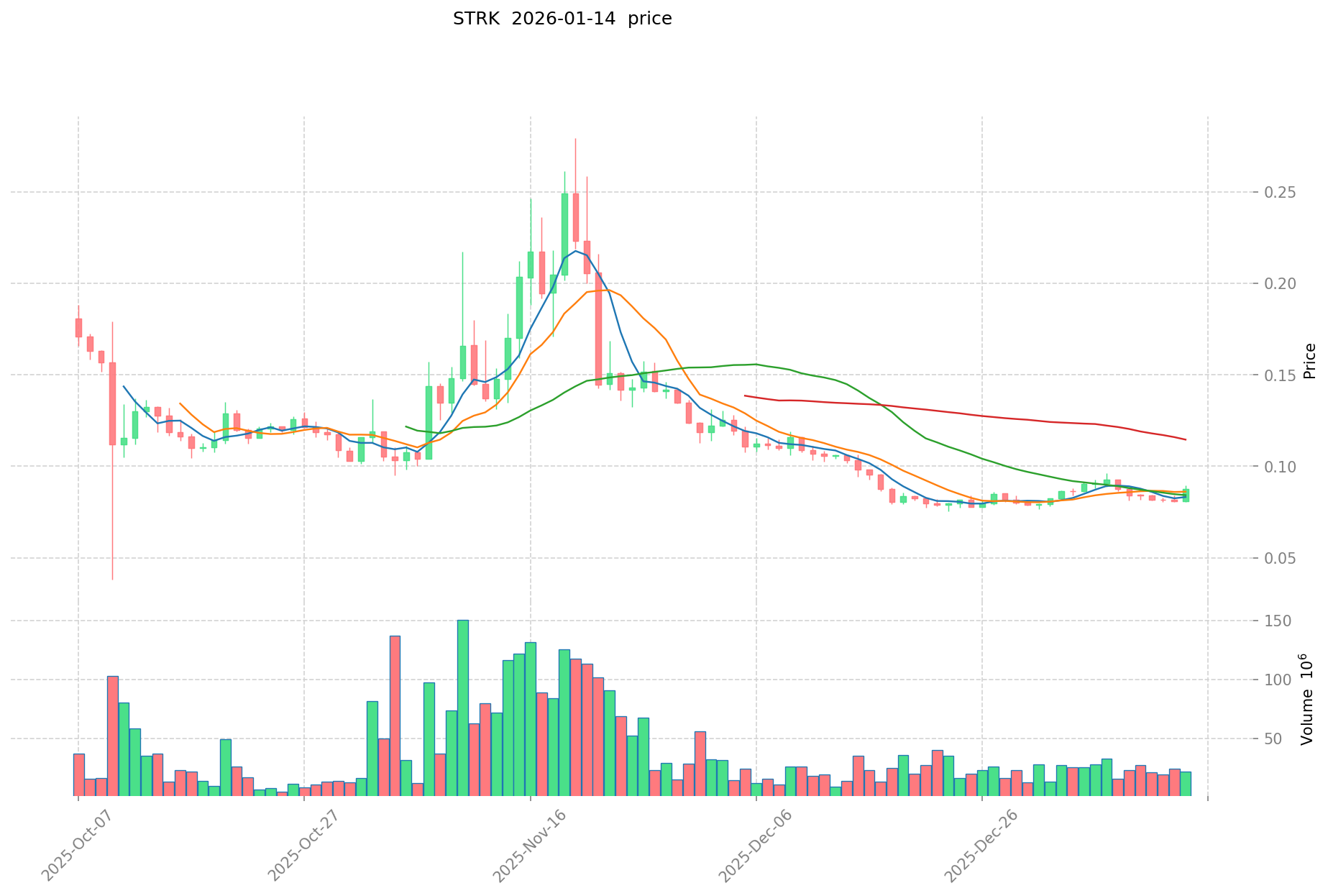
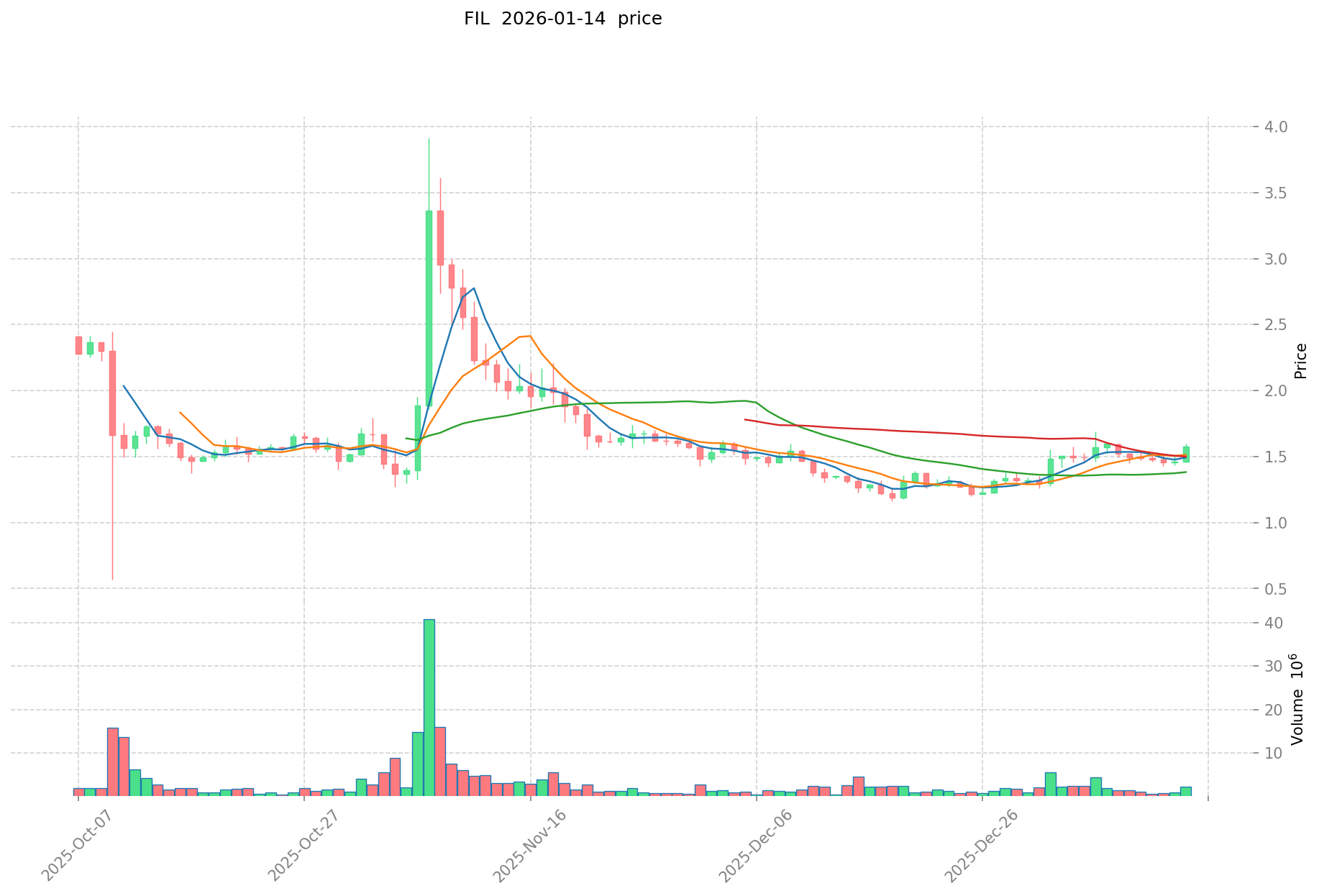
Comparative Analysis: During the 2024-2025 market cycle, STRK declined from its peak of $4.00 to a low of $0.03799 (recorded on October 10, 2025), representing a decline of over 99%. In comparison, FIL has declined from its 2021 high of $236.84 to a low of $0.848008 (recorded on October 11, 2025), demonstrating a similar pattern of substantial correction from peak levels.
Current Market Status (January 15, 2026)
- STRK Current Price: $0.09078
- FIL Current Price: $1.583
- 24-Hour Trading Volume: STRK recorded $1,698,308.04, while FIL demonstrated higher liquidity with $4,963,482.99
- Market Sentiment Index (Fear & Greed Index): 48 (Neutral)
View real-time prices:
II. Core Factors Influencing STRK vs FIL Investment Value
Supply Mechanism Comparison (Tokenomics)
-
STRK: According to reference materials, on January 15, Starknet (STRK) unlocked 4.83% of its circulating supply, valued at $10.6 million. The token unlock schedule represents a key supply mechanism that may influence short-term price dynamics.
-
FIL: Reference materials mention that when FIL experiences pullbacks, acquiring spot positions at lower price levels could potentially yield returns. The materials discuss market participants evaluating entry points around the 7-8 price range.
-
📌 Historical Pattern: Token unlock events and supply distribution schedules have historically created periods of increased market volatility, as newly released tokens enter circulation.
Institutional Adoption and Market Application
-
Institutional Holdings: Reference materials indicate that both assets are being evaluated by market participants, though specific institutional preference data was not provided in the available materials.
-
Enterprise Adoption: The materials note that Filecoin has maintained focus on infrastructure and ecosystem development, particularly in areas of data storage, cross-chain interoperability, and fee optimization.
-
National Policies: The reference materials mention regulatory developments in the broader crypto market, including the UK Financial Conduct Authority (FCA) opening a regulatory sandbox for stablecoin issuers with an application deadline of January 18, though specific policies affecting STRK or FIL were not detailed.
Technical Development and Ecosystem Building
-
STRK Technical Positioning: Reference materials characterize STRK as a DeFi token, with analysis focusing on its market position and investment value within the DeFi sector context. Market observers have noted STRK's role in the decentralized finance ecosystem.
-
FIL Technical Development: According to available materials, Filecoin has continued advancing infrastructure and ecosystem construction, with emphasis on data storage capabilities, cross-chain interoperability features, and transaction fee optimization initiatives.
-
Ecosystem Comparison: The materials reference both projects as part of the broader legacy crypto projects that have shown development activity. FIL's ecosystem development centers on decentralized storage infrastructure, while STRK operates within the DeFi application layer.
Macroeconomic Environment and Market Cycles
-
Performance Under Inflation: The reference materials discuss broader market conditions, including US inflation data scheduled for release on January 13 (with estimates of 2.7% year-over-year for overall CPI and core CPI at 0.3% month-over-month). However, specific comparative performance data for STRK and FIL under inflationary conditions was not provided.
-
Macroeconomic Monetary Policy: Materials note that according to CME FedWatch data as of January 9, the probability of the Federal Reserve cutting rates by 25 basis points in January stood at 12.6%, with an 87.4% probability of maintaining current rates. These broader monetary policy factors influence the overall crypto market environment.
-
Geopolitical Factors: The materials reference various global events potentially affecting crypto markets, though specific impacts on cross-border transaction demand for STRK or FIL were not detailed in the available sources.
III. 2026-2031 Price Forecast: STRK vs FIL
Short-term Forecast (2026)
- STRK: Conservative $0.061 - $0.091 | Optimistic $0.091 - $0.119
- FIL: Conservative $1.27 - $1.59 | Optimistic $1.59 - $2.33
Mid-term Forecast (2028-2029)
- STRK may enter a consolidation phase, with projected price range of $0.068 - $0.145
- FIL may enter a growth phase, with projected price range of $1.36 - $2.48
- Key drivers: institutional capital inflows, ETF developments, ecosystem expansion
Long-term Forecast (2030-2031)
- STRK: Base scenario $0.093 - $0.133 | Optimistic scenario $0.141 - $0.171
- FIL: Base scenario $2.11 - $2.34 | Optimistic scenario $2.39 - $3.74
View detailed price predictions for STRK and FIL
Disclaimer
STRK:
| Year |
Predicted High Price |
Predicted Average Price |
Predicted Low Price |
Price Change |
| 2026 |
0.1188694 |
0.09074 |
0.0607958 |
0 |
| 2027 |
0.116333217 |
0.1048047 |
0.068123055 |
15 |
| 2028 |
0.13047137103 |
0.1105689585 |
0.105040510575 |
21 |
| 2029 |
0.144624197718 |
0.120520164765 |
0.0819537120402 |
32 |
| 2030 |
0.160412339302215 |
0.1325721812415 |
0.09280052686905 |
46 |
| 2031 |
0.171395944518073 |
0.146492260271857 |
0.140632569860983 |
61 |
FIL:
| Year |
Predicted High Price |
Predicted Average Price |
Predicted Low Price |
Price Change |
| 2026 |
2.32995 |
1.585 |
1.268 |
0 |
| 2027 |
2.29024575 |
1.957475 |
1.7617275 |
23 |
| 2028 |
2.27253060125 |
2.123860375 |
1.35927064 |
34 |
| 2029 |
2.48396090158125 |
2.198195488125 |
1.3628812026375 |
38 |
| 2030 |
3.277509472794375 |
2.341078194853125 |
2.106970375367812 |
47 |
| 2031 |
3.736360798985587 |
2.80929383382375 |
2.387899758750187 |
77 |
IV. Investment Strategy Comparison: STRK vs FIL
Long-term vs Short-term Investment Strategies
-
STRK: May be considered by investors focused on DeFi ecosystem development and Layer 2 scaling solutions. The token's positioning within the Ethereum scaling infrastructure presents exposure to developments in decentralized finance applications.
-
FIL: May appeal to investors evaluating decentralized storage infrastructure and data economy opportunities. The project's focus on distributed storage networks represents exposure to Web3 infrastructure development.
Risk Management and Asset Allocation
-
Conservative Investors: Considering STRK: 30% vs FIL: 70% allocation reflects FIL's longer operational history and established infrastructure positioning compared to STRK's more recent market entry.
-
Aggressive Investors: Considering STRK: 50% vs FIL: 50% allocation provides balanced exposure to both DeFi scaling solutions and decentralized storage infrastructure.
-
Hedging Tools: Portfolio diversification approaches may include stablecoin allocations for liquidity management, options strategies for downside protection, and cross-asset cryptocurrency combinations to reduce concentration risk.
V. Potential Risk Comparison
Market Risks
-
STRK: The token experienced substantial price decline of over 99% from its February 2024 peak of $4.00 to $0.03799 in October 2025. Token unlock events, such as the January 15 unlock of 4.83% of circulating supply valued at $10.6 million, may create periods of increased volatility as newly released tokens enter circulation.
-
FIL: The asset has demonstrated considerable volatility, declining from its April 2021 high of $236.84 to $0.848008 in October 2025. Market participants have observed price movements responding to broader cryptocurrency market cycles and macroeconomic conditions.
Technical Risks
-
STRK: As a Layer 2 scaling solution operating within the Ethereum ecosystem, technical considerations include network performance parameters, scalability metrics, and integration stability with the broader DeFi infrastructure.
-
FIL: The decentralized storage network faces technical considerations related to infrastructure maintenance, data storage reliability, cross-chain interoperability implementation, and transaction fee optimization processes.
Regulatory Risks
- Global regulatory developments continue to evolve across jurisdictions. The reference materials note regulatory initiatives such as the UK Financial Conduct Authority opening a regulatory sandbox for stablecoin issuers, reflecting the broader regulatory environment affecting cryptocurrency projects. Both assets operate within this evolving regulatory landscape, though specific regulatory frameworks may differ based on their respective classifications and operational structures.
VI. Conclusion: Which Is the Better Buy?
Investment Value Summary:
-
STRK Characteristics: The token represents exposure to Ethereum Layer 2 scaling infrastructure and DeFi ecosystem development. Its positioning within the decentralized finance sector provides access to developments in blockchain scalability solutions. Market data shows current price of $0.09078 with 24-hour trading volume of $1,698,308.04.
-
FIL Characteristics: The asset represents exposure to decentralized storage infrastructure and Web3 data economy development. Its focus on distributed storage networks provides access to developments in blockchain-based data storage solutions. Market data shows current price of $1.583 with 24-hour trading volume of $4,963,482.99, demonstrating higher liquidity levels.
Investment Considerations:
-
Beginning Investors: May consider starting with smaller position sizes while developing understanding of each project's technical infrastructure, ecosystem development, and market dynamics. Dollar-cost averaging approaches could help manage entry timing across different market conditions.
-
Experienced Investors: May evaluate portfolio allocation based on existing exposure to DeFi infrastructure versus decentralized storage sectors. Analysis of token unlock schedules, ecosystem development milestones, and broader market cycle positioning could inform strategic decisions.
-
Institutional Investors: May assess both assets within broader cryptocurrency portfolio construction frameworks, considering factors such as liquidity profiles, market capitalization characteristics, infrastructure development progress, and alignment with strategic investment theses around blockchain scaling solutions and decentralized storage networks.
⚠️ Risk Disclosure: Cryptocurrency markets exhibit substantial volatility. This analysis does not constitute investment advice. Market participants should conduct independent research and consider individual risk tolerance, investment objectives, and financial circumstances before making investment decisions.
VII. FAQ
Q1: What are the main differences between STRK and FIL in terms of their core technology and use cases?
STRK operates as an Ethereum Layer 2 scaling solution using ZK-Rollup technology focused on DeFi applications, while FIL functions as a decentralized storage network for distributed data storage. STRK's primary purpose is to enhance Ethereum's transaction processing capabilities and reduce costs for decentralized finance applications, positioning it within the blockchain scalability infrastructure sector. In contrast, FIL concentrates on providing decentralized storage infrastructure, enabling users to store and retrieve data across a distributed network, placing it firmly in the Web3 data economy space. These fundamental differences mean STRK appeals to investors interested in DeFi ecosystem growth, while FIL attracts those evaluating decentralized storage infrastructure opportunities.
Q2: How have STRK and FIL performed since their respective launches?
STRK has experienced significant volatility since its February 2024 mainnet launch, declining over 99% from its all-time high of $4.00 to $0.03799 by October 2025, currently trading at $0.09078 as of January 15, 2026. FIL has similarly demonstrated substantial price movements, declining from its April 2021 peak of $236.84 to $0.848008 by October 2025, currently trading at $1.583. Both assets have shown considerable volatility patterns consistent with broader cryptocurrency market cycles. FIL's longer operational history since 2020 provides more extensive price data compared to STRK's recent market entry in 2024, though both have experienced significant corrections from their respective peak valuations.
Q3: What impact do token unlock events have on STRK's price performance?
Token unlock events represent periods of increased supply entering circulation, which may create short-term price volatility. On January 15, 2026, STRK unlocked 4.83% of its circulating supply valued at $10.6 million, exemplifying how scheduled token releases can influence market dynamics. These unlock events introduce newly available tokens into the market, potentially affecting supply-demand dynamics and creating pressure on price levels during the unlock period. Historical patterns across various cryptocurrency projects suggest that significant unlock events often correlate with increased trading volatility as market participants adjust positions in response to the expanded circulating supply. Investors evaluating STRK should monitor the token unlock schedule as part of their risk assessment framework.
Q4: Which asset offers better liquidity based on current trading metrics?
FIL demonstrates higher liquidity levels with 24-hour trading volume of $4,963,482.99 compared to STRK's $1,698,308.04 as of January 15, 2026. This approximately 2.9x difference in trading volume suggests FIL provides enhanced liquidity for market participants seeking to enter or exit positions with potentially lower price impact. Higher liquidity generally facilitates smoother transaction execution and narrower bid-ask spreads, which may be particularly relevant for larger position sizes or institutional participants. FIL's longer market presence since 2020 and established infrastructure positioning contribute to its deeper liquidity profile compared to STRK's more recent market entry in 2024.
Q5: What are the projected price ranges for STRK and FIL through 2031?
According to the analysis, STRK's short-term 2026 forecast ranges from $0.061-$0.091 (conservative) to $0.091-$0.119 (optimistic), with long-term 2031 projections of $0.093-$0.133 (base scenario) to $0.141-$0.171 (optimistic scenario). FIL's 2026 forecast ranges from $1.27-$1.59 (conservative) to $1.59-$2.33 (optimistic), with 2031 projections of $2.11-$2.34 (base scenario) to $2.39-$3.74 (optimistic scenario). These forecasts suggest FIL may demonstrate higher absolute price appreciation potential, while STRK's percentage growth could be influenced by ecosystem development and DeFi sector expansion. However, these projections carry inherent uncertainty and should be considered as analytical estimates rather than guaranteed outcomes.
Q6: How should different investor types approach allocation between STRK and FIL?
Conservative investors may consider a 30% STRK to 70% FIL allocation, reflecting FIL's longer operational history and established infrastructure positioning. Aggressive investors might evaluate a more balanced 50% STRK to 50% FIL allocation, providing equal exposure to both DeFi scaling solutions and decentralized storage infrastructure. Beginning investors should consider starting with smaller position sizes while developing understanding of each project's technical infrastructure and market dynamics, potentially utilizing dollar-cost averaging approaches. Experienced and institutional investors may assess allocation based on existing portfolio exposure to DeFi versus decentralized storage sectors, analyzing token unlock schedules, ecosystem development milestones, and broader market cycle positioning to inform strategic decisions.
Q7: What are the primary risks associated with investing in STRK versus FIL?
STRK faces market risks including substantial historical volatility (99% decline from peak), token unlock events creating supply pressure, and technical considerations related to Layer 2 network performance and DeFi infrastructure integration. FIL encounters market risks including significant price volatility (decline from $236.84 to current levels), and technical considerations involving infrastructure maintenance, data storage reliability, and cross-chain interoperability implementation. Both assets operate within an evolving global regulatory landscape affecting cryptocurrency projects, though specific frameworks may differ based on their respective classifications. Additionally, both face broader macroeconomic risks related to monetary policy changes, inflation dynamics, and cryptocurrency market cycle fluctuations that influence overall market sentiment and capital flows.
Q8: How do current macroeconomic conditions affect STRK and FIL investment considerations?
The current macroeconomic environment features neutral market sentiment (Fear & Greed Index at 48), with Federal Reserve rate policy showing 87.4% probability of maintaining current rates in January 2026 according to CME FedWatch data. US inflation estimates stand at 2.7% year-over-year for overall CPI, creating a broader context for cryptocurrency market dynamics. These conditions influence both assets through their impact on risk asset valuations, institutional capital allocation decisions, and overall market liquidity. While specific comparative performance data under various macroeconomic scenarios was not detailed in available materials, both assets operate within this broader monetary policy and inflation environment. Investors should consider how evolving macroeconomic conditions may affect cryptocurrency market cycles when evaluating investment timing and portfolio construction decisions for both STRK and FIL.
* The information is not intended to be and does not constitute financial advice or any other recommendation of any sort offered or endorsed by Gate.