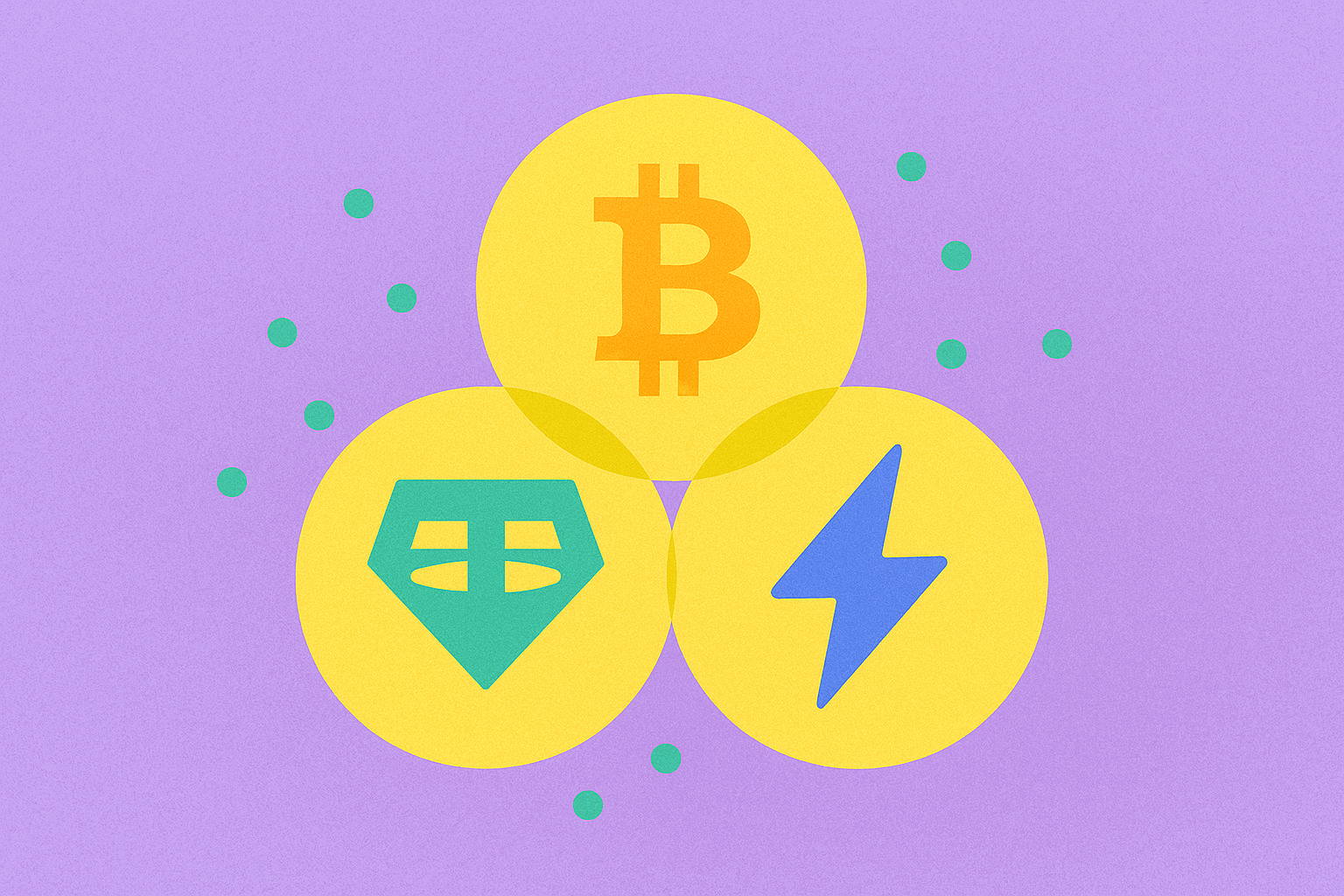
This article explores how Tether's strategic integration of USDT with Bitcoin and Lightning Network enhances stablecoin security and usability for retail investors. It examines the technical foundation provided by Taproot Assets and RGB protocols, which enable cost-efficient, programmable transactions while preserving Bitcoin's core security. The article demonstrates practical use cases including micropayments, cross-border remittances, and international settlements that benefit from near-instant processing and minimal fees. By leveraging Bitcoin's decentralized architecture and Lightning Network's scalability, USDT on Bitcoin offers retail investors access to fast, secure, and affordable financial services. The integration represents a transformative evolution in digital currency infrastructure, positioning Bitcoin as a comprehensive payment layer while democratizing financial access for merchants, developers, and users globally, particularly in emerging markets seeking financial stability.
Why Tether is Bringing USDT to Bitcoin and Lightning
Tether's strategic decision to integrate USDT with Bitcoin and the Lightning Network represents a significant evolution in the stablecoin ecosystem. This move is driven by several compelling factors that address both current limitations and future opportunities in the cryptocurrency space.
Decentralization and Security: Bitcoin's decentralized architecture and proven security model provide an ideal foundation for stablecoins like USDT. With over a decade of operation without a successful attack on its core protocol, Bitcoin offers unparalleled trust and resilience. By anchoring USDT to Bitcoin's infrastructure, Tether ensures that its stablecoin benefits from the most battle-tested blockchain network in existence.
Scalability and Speed: The Lightning Network represents a breakthrough solution to Bitcoin's historical scalability challenges. By enabling off-chain transactions that settle on the Bitcoin blockchain, Lightning facilitates near-instant payments with fees often measured in fractions of a cent. This makes USDT on Lightning practical for everyday transactions, from purchasing coffee to sending remittances across borders.
Expanding Use Cases: The integration unlocks transformative applications that were previously impractical on traditional blockchain networks. Microtransactions become economically viable, enabling new business models such as pay-per-use content, streaming payments, and micropayments for digital services. Cross-border remittances, which traditionally incur high fees and lengthy settlement times, can now be completed in seconds at minimal cost. Additionally, merchants can accept USDT payments without worrying about network congestion or prohibitive transaction fees.
The Role of the Taproot Assets Protocol
The Taproot Assets protocol, developed by Lightning Labs, serves as the technical foundation enabling stablecoins like USDT to operate seamlessly on Bitcoin's network. This protocol represents a significant advancement in Bitcoin's capabilities while maintaining its core principles.
Enhanced Functionality: Taproot Assets extends Bitcoin's utility beyond simple value transfer by enabling the tokenization of various assets and the execution of programmable contracts. This means that USDT can exist as a native Bitcoin asset, inheriting all the security properties of the underlying blockchain while gaining additional programmability. The protocol supports complex financial operations such as atomic swaps, multi-signature arrangements, and conditional payments.
Preservation of Bitcoin's Integrity: A critical design principle of Taproot Assets is that it operates as a layer on top of Bitcoin without modifying the base protocol. This ensures that the core blockchain remains secure, decentralized, and resistant to changes that could compromise its fundamental properties. Users and validators of the Bitcoin network are not required to understand or validate Taproot Assets transactions, maintaining the simplicity and security of the base layer.
Cost Efficiency: Transactions utilizing the Taproot Assets protocol are optimized for minimal on-chain footprint, resulting in lower fees compared to traditional token implementations. By batching multiple asset transfers into single Bitcoin transactions and leveraging the Lightning Network for frequent operations, the protocol achieves cost efficiency that makes high-frequency use cases economically viable.
The RGB Protocol: A Game-Changer for Token Issuance
Complementing the Taproot Assets protocol, the RGB protocol introduces revolutionary innovations for issuing digital assets and smart contracts on Bitcoin and Lightning. This next-generation infrastructure fundamentally reimagines how tokens can operate on Bitcoin.
Client-Side Validation: RGB's most distinctive feature is its client-side validation model, which represents a paradigm shift from traditional blockchain architectures. Instead of requiring every network participant to validate every transaction, RGB validates transaction data on the user's device. This approach dramatically enhances both privacy and scalability, as transaction details are only shared between involved parties rather than broadcast to the entire network.
User-Controlled Token Issuance: The RGB protocol empowers users to issue and manage tokens with unprecedented privacy and control. Token issuers can define custom rules and conditions for their assets without requiring permission from any central authority. This democratization of token issuance reduces the on-chain data footprint, as most token-related information is stored off-chain and only essential commitments are recorded on Bitcoin.
Scalability: By minimizing the amount of data stored on the blockchain, RGB ensures that the system can scale to support millions of tokens and billions of transactions without congesting the Bitcoin network. This architecture allows for complex financial instruments and applications to be built on Bitcoin while maintaining the base layer's simplicity and security.
Use Cases for USDT on Bitcoin and Lightning
The integration of USDT with Bitcoin and Lightning creates opportunities for practical applications that were previously difficult or impossible to implement efficiently.
Microtransactions: The Lightning Network's combination of low fees (often less than one satoshi) and instant settlement makes it ideal for microtransactions. Content creators can charge small amounts for individual articles, videos, or music tracks. Online platforms can implement pay-per-use models where users pay fractions of a cent for each service interaction. Gaming applications can facilitate in-game purchases and rewards with minimal friction. For example, a reader could tip a journalist $0.10 for an insightful article, with the transaction completing in seconds and the journalist receiving nearly the full amount after negligible fees.
Remittances: USDT on Bitcoin and Lightning transforms the remittance industry by offering a fast, affordable alternative to traditional money transfer services. A worker in the United States can send $500 to family in the Philippines in seconds, with fees under $0.01, compared to traditional services that might charge $20-40 and take several days. Recipients can immediately convert USDT to local currency through peer-to-peer exchanges or spend it directly at merchants accepting cryptocurrency.
Cross-Border Settlements: Businesses engaged in international trade can leverage USDT to settle transactions quickly and securely, reducing reliance on correspondent banking networks and their associated delays and costs. A manufacturer in China and a retailer in Europe can complete a $100,000 transaction in minutes rather than days, improving cash flow and reducing foreign exchange risk. The transparency of blockchain-based settlements also simplifies accounting and compliance processes.
Tether's Strategic Investments in Bitcoin Infrastructure
Tether's integration of USDT with Bitcoin and Lightning is part of a comprehensive strategy to establish Bitcoin as the primary foundation for stablecoin operations. The company has demonstrated this commitment through substantial investments in Bitcoin ecosystem development.
Mining Operations: Tether has invested in Bitcoin mining infrastructure, contributing to the network's security and decentralization. These investments not only generate revenue but also give Tether a deeper stake in Bitcoin's long-term success and governance.
Ecosystem Development: The company actively supports developers building applications and services on Bitcoin and Lightning. This includes funding for open-source projects, educational initiatives, and partnerships with technology providers. By fostering a robust ecosystem, Tether ensures that the infrastructure supporting USDT continues to improve and innovate.
Phasing Out Less Scalable Blockchains
As part of this strategic realignment, Tether is systematically phasing out support for blockchains that do not meet its standards for scalability, security, and adoption. Networks like Omni, EOS, and Algorand, which have seen declining usage and limited ecosystem growth, are being deprecated. This consolidation allows Tether to concentrate technical resources and liquidity on high-demand ecosystems like Bitcoin, Ethereum, and Tron, where user activity and developer interest are strongest. The move reflects a pragmatic approach to resource allocation, ensuring that Tether can provide the best possible service on the most relevant platforms.
Broader Trends in Stablecoin Adoption
The integration of USDT with Bitcoin and Lightning aligns with significant global trends in stablecoin adoption, particularly in emerging markets where traditional financial systems face challenges.
Emerging Market Adoption: In regions experiencing currency instability, such as parts of Latin America, Africa, and Southeast Asia, stablecoins like USDT have become essential tools for preserving wealth and conducting commerce. Citizens in countries with high inflation or capital controls increasingly use USDT as a store of value and medium of exchange, often accessing it through peer-to-peer platforms. By leveraging Bitcoin's infrastructure, which is accessible globally without requiring permission from financial intermediaries, Tether can serve these underserved populations more effectively.
Universal Acceptance: Tether's vision extends beyond cryptocurrency enthusiasts to universal acceptance among merchants, financial institutions, and everyday users. Bitcoin's established infrastructure, including thousands of nodes worldwide and robust wallet software, provides a foundation for achieving this goal. As more merchants integrate Lightning Network payment processors, accepting USDT becomes as simple as accepting Bitcoin, creating a seamless experience for both businesses and consumers.
Regulatory and Scalability Advantages
Bitcoin-based stablecoins offer distinct advantages over alternatives issued on other blockchain networks, particularly regarding regulatory compliance and technical scalability.
Regulatory Clarity: Bitcoin's status as a decentralized commodity rather than a security in many jurisdictions provides clearer regulatory pathways for stablecoins built on its network. Regulators have had over a decade to study Bitcoin and develop frameworks for its oversight, creating more predictable legal environments for Bitcoin-based financial products. This regulatory clarity reduces compliance risks and facilitates partnerships with traditional financial institutions.
Scalability: The Lightning Network's architecture enables Bitcoin-based stablecoins to scale to meet global demand. With theoretical capacity for millions of transactions per second across the network and the ability to open payment channels instantly using technologies like channel factories, Lightning can support mainstream adoption without compromising on speed or cost. This scalability is achieved without sacrificing Bitcoin's core security properties, as Lightning transactions ultimately settle on the Bitcoin blockchain.
The Future of Bitcoin-Native Stablecoins
Tether's integration of USDT with Bitcoin and Lightning is expected to catalyze broader adoption of Bitcoin-based stablecoins, creating a new paradigm for digital currency operations.
Network Effects: As USDT gains traction on Bitcoin and Lightning, it creates powerful network effects that attract additional users, merchants, and developers. Each new participant increases the utility of the network for everyone else, creating a virtuous cycle of adoption. Other stablecoin issuers may follow Tether's lead, further enhancing Bitcoin's role as a multi-asset settlement layer.
Innovation Catalyst: The availability of stablecoins on Bitcoin opens new possibilities for financial innovation. Developers can build decentralized exchanges, lending protocols, and derivative markets that combine Bitcoin's security with stablecoin liquidity. These applications can operate with minimal trust assumptions, as they inherit Bitcoin's decentralization and resistance to censorship.
Merchant and Developer Adoption
The integration is poised to drive significant adoption among merchants and developers, creating a more robust ecosystem for Bitcoin-based commerce.
Merchant Benefits: Merchants accepting USDT on Lightning enjoy several advantages over traditional payment methods. Transaction fees are dramatically lower than credit card processing fees (typically 2-3%), with Lightning fees often under 0.1%. Settlement is instant rather than taking days as with traditional banking. Chargebacks, a significant source of fraud losses for merchants, are eliminated. Additionally, merchants can accept payments from anywhere in the world without currency conversion fees or international payment processing complexities.
Developer Opportunities: The Bitcoin and Lightning ecosystem provides developers with powerful tools for building innovative applications. The combination of Bitcoin's security, Lightning's speed, and stablecoin functionality enables new categories of financial services. Developers can create savings applications that automatically convert volatile Bitcoin into stable USDT, payment processors that offer instant fiat-to-crypto conversion, or decentralized marketplaces where buyers and sellers transact in stablecoins without intermediaries. The open-source nature of Bitcoin and Lightning protocols ensures that developers can build without permission or platform risk.
Conclusion
Tether's strategic move to integrate USDT with Bitcoin and the Lightning Network represents a transformative moment in the evolution of both stablecoins and Bitcoin itself. By leveraging advanced protocols like Taproot Assets and RGB, Tether is not only enhancing the functionality and utility of its stablecoin but also pioneering a new model for how digital assets can operate on the world's most secure and decentralized blockchain network.
This integration addresses fundamental challenges that have limited cryptocurrency adoption, including scalability, transaction costs, and practical utility for everyday financial activities. By combining Bitcoin's unmatched security and decentralization with the Lightning Network's speed and efficiency, USDT on Bitcoin offers a compelling value proposition for users ranging from individuals in emerging markets seeking financial stability to businesses requiring efficient cross-border payment solutions.
The broader implications extend beyond Tether and USDT. This integration demonstrates Bitcoin's potential to evolve beyond a pure store of value into a comprehensive financial infrastructure supporting diverse assets and applications. As merchants, developers, and users increasingly adopt Bitcoin-based stablecoins, we may witness a fundamental reshaping of the global financial landscape, where decentralized, permissionless networks provide the foundation for everyday commerce and finance.
Looking ahead, the success of USDT on Bitcoin and Lightning could establish a template for other assets to migrate to Bitcoin's infrastructure, solidifying its role as the cornerstone of the digital economy. This evolution has the potential to make Bitcoin not just a revolutionary technology for storing value, but a practical, accessible tool for billions of people worldwide to participate in the global economy on their own terms.
FAQ
What is USDT and what is the significance of its integration with Bitcoin and Lightning Network?
USDT is a stablecoin pegged to the US dollar. Its integration with Bitcoin and Lightning Network enables fast, low-cost cross-chain transactions, enhancing Bitcoin's utility for payments while maintaining price stability and expanding USDT's accessibility across blockchain networks.
What are the advantages of USDT integration with the Lightning Network compared to traditional USDT transfers?
Lightning Network enables near-instant USDT transactions with significantly lower fees and improved scalability. Transfers settle in seconds rather than minutes, making micropayments viable while reducing on-chain congestion and transaction costs by up to 99%.
How to trade USDT on Bitcoin and Lightning Network?
Install a compatible wallet supporting USDT on Bitcoin and Lightning Network. Deposit USDT, then use the wallet interface to send transactions. Lightning Network enables fast, low-cost transfers, while Bitcoin layer ensures settlement security.
How much improvement does USDT on Lightning Network have in transaction fees and speed compared to the main chain?
Lightning Network enables near-instant USDT transactions with minimal fees, typically under 1 cent, compared to Bitcoin mainchain fees that can reach several dollars. Transaction speed improves from 10+ minutes to near-instant settlements, making it ideal for micropayments and frequent transfers.
What are the technical risks and security considerations of Tether's integration of USDT into the Bitcoin ecosystem?
Key risks include smart contract vulnerabilities on Bitcoin layers, bridge security concerns, liquidity concentration, and potential network congestion. Cross-chain atomic swaps require robust cryptographic protocols. Security audits, multi-signature wallets, and gradual rollout mitigate these risks effectively.
What impact will this integration have on the Bitcoin ecosystem and stablecoin market?
This integration significantly enhances Bitcoin's utility by enabling faster, cheaper USDT transactions via Lightning Network. It strengthens Bitcoin's ecosystem adoption, increases transaction volume, and positions USDT as the leading stablecoin for Bitcoin-based commerce, driving broader mainstream adoption.
* The information is not intended to be and does not constitute financial advice or any other recommendation of any sort offered or endorsed by Gate.