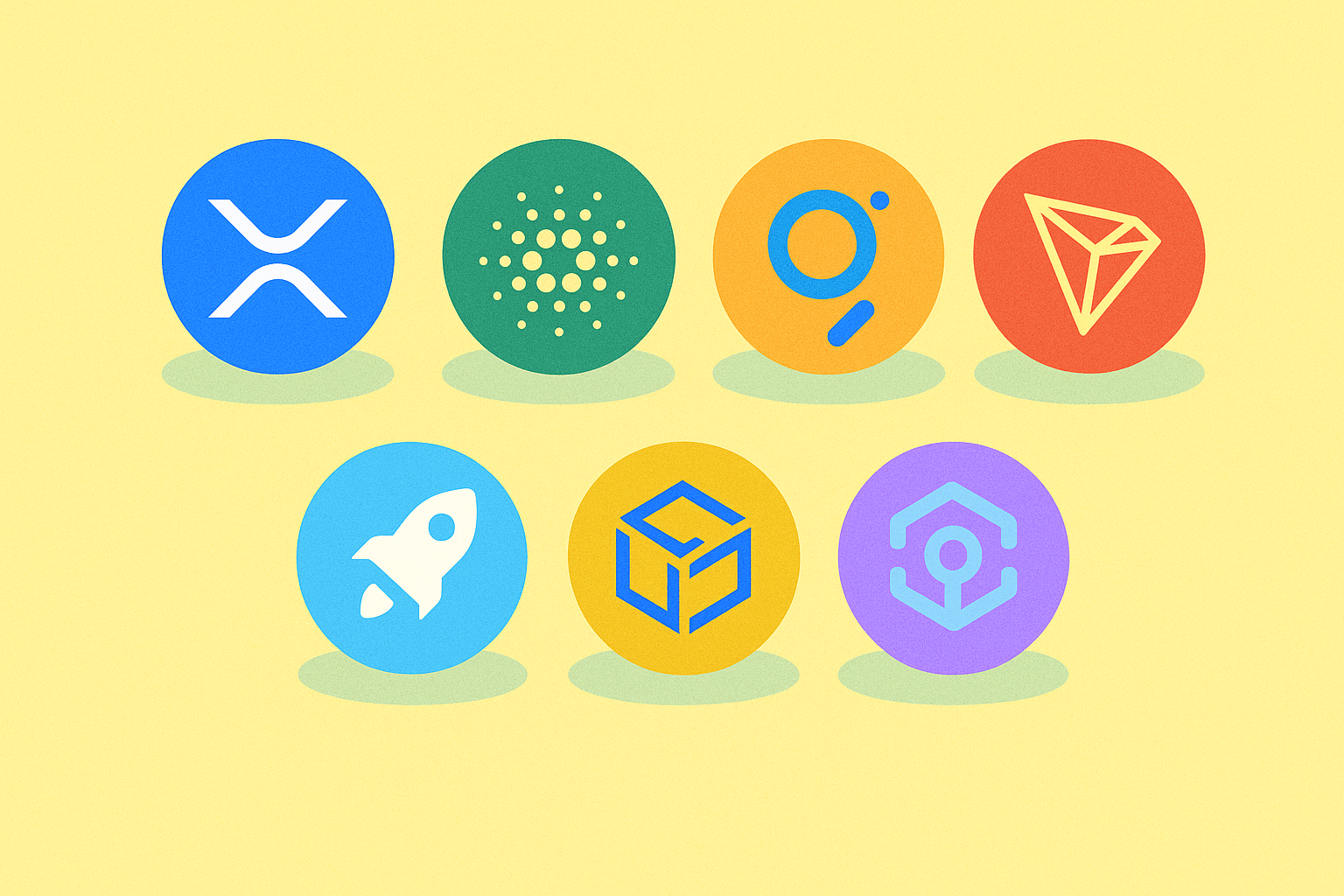
Explore the 7 most affordable cryptocurrencies to invest in for 2024. This complete guide covers low-priced coins with strong growth prospects, including XRP, ADA, TRX, and others. Purchase on Gate with budget-friendly capital. Start investing today!
The 7 Cheapest Cryptocurrencies to Buy in 2025
Many believe investing in cryptocurrencies requires substantial capital. In reality, this view is misleading. While Bitcoin (BTC) has set record highs above $73,000 and boasts a market cap over $1.3 trillion—making it the world’s most expensive cryptocurrency—there are countless affordable alternatives that offer accessible investment opportunities for the average investor.
The key questions are: which cryptocurrencies are the cheapest to buy, and which ones genuinely offer growth potential? This guide addresses both, providing a thorough analysis of today’s low-cost options in the crypto market.
The Cheapest Cryptocurrencies Worldwide
The cryptocurrency landscape is vast, with more than 2.4 million coins tracked on CoinMarketCap. Within this vast ecosystem, some cryptocurrencies trade at virtually negligible prices.
On the lowest end of the price spectrum, you’ll find various meme coins inspired by public figures and internet personalities, often trading at infinitesimal values. These assets carry high risk, though some can eventually experience notable price surges.
Other extremely low-priced coins include tokens issued by startups offering regional crypto brokerage and custody services. These tokens often have circulations in the trillions of units, resulting in modest market values despite their large supply.
In the same low price range are coins based on internet culture themes. It’s important to distinguish these niche projects from their original, higher-capitalization counterparts.
Rounding out this category are deflationary tokens launched on compatible blockchains. These projects, with massive total supplies, often position themselves with missions focused on environmental sustainability and renewable energy.
7 Inexpensive Cryptocurrencies Worth Buying
While the coins above have exceptionally low prices, they also come with significant investment risk. Always verify a project’s legitimacy and assess its market performance before investing. The following seven cryptocurrencies offer both affordable entry points and strong growth potential.
Ripple (XRP)
Ripple (XRP) is a groundbreaking peer-to-peer payments platform designed to replace legacy systems like SWIFT. It enables instant, cross-border transfers in multiple currencies, reducing transaction costs by cutting out unnecessary intermediaries.
XRP, the native token, has seen substantial appreciation over its history, but in recent years, it’s generally traded below $1. XRP remains one of the most accessible large-cap digital assets, with a maximum supply of 100 billion units and a market cap that places it among the most established cryptocurrencies.
XRP’s combination of practical utility and affordable price makes it an attractive entry point for new investors seeking exposure to established blockchain payments technologies.
Cardano (ADA)
Cardano (ADA) is a leading proof-of-stake (PoS) blockchain focused on scalability and computational efficiency. It supports smart contracts and is theoretically capable of processing millions of transactions per second—far exceeding many rivals.
Founded by Charles Hoskinson and launched in 2017, Cardano is built on rigorous, peer-reviewed research. Its native token ADA ranks among the most valuable cryptocurrencies in the low-price category.
ADA has delivered consistently strong performance, with extended periods of appreciation as tracked by leading crypto analytics platforms. This growth signals increasing confidence in Cardano’s technology and long-term outlook.
The Graph (GRT) is a vital component of blockchain infrastructure, serving as the indexing protocol that allows decentralized apps to efficiently query data across multiple blockchains. Often called the “Google of blockchains,” The Graph enables decentralized applications to access and analyze blockchain data at scale.
Initially launched as a proof-of-concept, GRT’s native token now powers a multi-chain ecosystem with robust decentralized governance, ensuring sustainable protocol development.
GRT is one of the most affordable major cryptocurrencies by market capitalization, strategically positioned for accessibility. Its price history is highly volatile, offering smart investors attractive entry opportunities.
Tron (TRX)
Tron (TRX) is an ambitious blockchain platform aiming to decentralize the Internet using delegated proof-of-stake (DPoS) consensus. This architecture allows for greater energy efficiency and scalability compared to many alternatives.
Launched in 2017, Tron migrated to its own independent blockchain, gaining autonomy and enhanced scalability. TRX remains one of the lowest-priced coins among the world’s largest cryptocurrencies by market cap.
TRX has shown consistent appreciation over long periods, making it a compelling option for those seeking affordable coins with strong growth potential.
Stellar (XLM)
Stellar (XLM) is an open-source payments network built for fast, low-cost, and reliable cross-border transactions. Since its 2014 launch with native token XLM, Stellar has sustained steady growth and operational consistency for more than a decade.
The network has processed billions of successful transactions and established strategic partnerships with leading financial institutions, validating Stellar’s utility in promoting global financial inclusion.
XLM remains among the most affordable large-cap cryptocurrencies. It has experienced periodic price appreciation, underscoring renewed investor confidence in its international payments value proposition.
Gala (GALA)
Gala (GALA) is a pioneering blockchain gaming ecosystem, granting users direct control over in-game elements, assets, and gameplay. This decentralized model stands in sharp contrast to traditional, centrally managed gaming platforms.
The GALA token is used for in-game asset purchases and platform governance. It’s one of the lowest-priced tokens in the decentralized entertainment segment, with noteworthy market capitalization.
[GALA](https://www.gate.com/blog/9185/what-is-gala-and-how-does-this-cryptocurrency-work) consistently sees high trading volumes, reflecting strong demand among crypto traders and ongoing interest in blockchain gaming. Current prices offer an appealing entry point for those interested in decentralized gaming opportunities.
Ankr (ANKR)
Ankr Network (ANKR) was founded in 2017 to simplify and democratize Web3 development. It delivers cross-chain blockchain infrastructure supporting the growth of decentralized finance (DeFi) applications.
Ankr’s staking protocol allows users to earn income and provide liquidity by participating in blockchain networks, offering passive returns while enhancing network security.
The ANKR token is one of the world’s most affordable major cryptocurrencies, with a stable market valuation and significant total value locked. Its current price reflects sustained recovery from past lows, demonstrating long-term upward momentum.
Conclusion
You don’t need deep pockets to invest in cryptocurrencies. While Bitcoin continues to draw headlines for its price and market cap, the crypto space offers many low-cost alternatives with substantial growth prospects for strategic investors.
The cryptocurrencies covered in this guide are among the most affordable to buy today, each with a unique value proposition. From Ripple’s payment infrastructure and Cardano’s scalable blockchain to The Graph’s data indexing protocol, these projects create distinct opportunities for both new and seasoned investors seeking diversified blockchain exposure.
However, it’s essential to remember that low price alone doesn’t guarantee positive returns. Always conduct thorough research, assess long-term project viability, understand the technology, and account for risks before investing. Informed investors who maintain discipline and align their strategies with personal financial goals will be better equipped to navigate the crypto market and capture opportunities that truly fit their risk and return profiles.
FAQ
What are the cheapest cryptocurrencies in Latin America?
The cheapest cryptocurrencies in Latin America include regional tokens and budget-friendly altcoins like Dogecoin, Shiba Inu, and local blockchain projects. These options provide greater accessibility for investors with limited resources, though their availability depends on region and exchange.
You can acquire affordable cryptocurrencies on decentralized exchanges (DEXs) during periods of low volatility and high liquidity. The optimal timing is typically when the market corrects—usually between 00:00 and 08:00 UTC, when buying pressure is lower. Monitor daily charts to spot key support levels.
Is it safe to invest in devalued or low-value cryptocurrencies?
Low-value cryptocurrencies can be a safe investment if you thoroughly research the project, its technology, and its team. Price alone doesn’t determine risk; instead, focus on strong fundamentals, adoption potential, and real-world use cases. Diversify your portfolio and only invest what you can afford to lose.
How do emerging cheap cryptocurrencies differ from weak developed ones?
Emerging, low-priced cryptocurrencies generally have higher growth potential and volatility, while weak developed coins tend to be more stable but less dynamic. Emerging coins offer greater opportunities for long-term appreciation.
* The information is not intended to be and does not constitute financial advice or any other recommendation of any sort offered or endorsed by Gate.