Explore investment opportunities in the Litecoin ETF with an in-depth analysis of Canary Litecoin’s performance, projected price ranges between $1,000 and $2,000, effective investment strategies, and anticipated LTC market trends for 2026–2027. This comprehensive guide is tailored for cryptocurrency investors.
Litecoin Overview
Litecoin (LTC) is a cryptocurrency launched in 2011 as a fork of Bitcoin, designed to deliver faster transactions and lower fees. Often called “digital silver” compared to Bitcoin’s “digital gold,” Litecoin has an established place among first-generation digital assets. Over the years, LTC has stayed relevant through ongoing technology upgrades and an active community of developers and users.
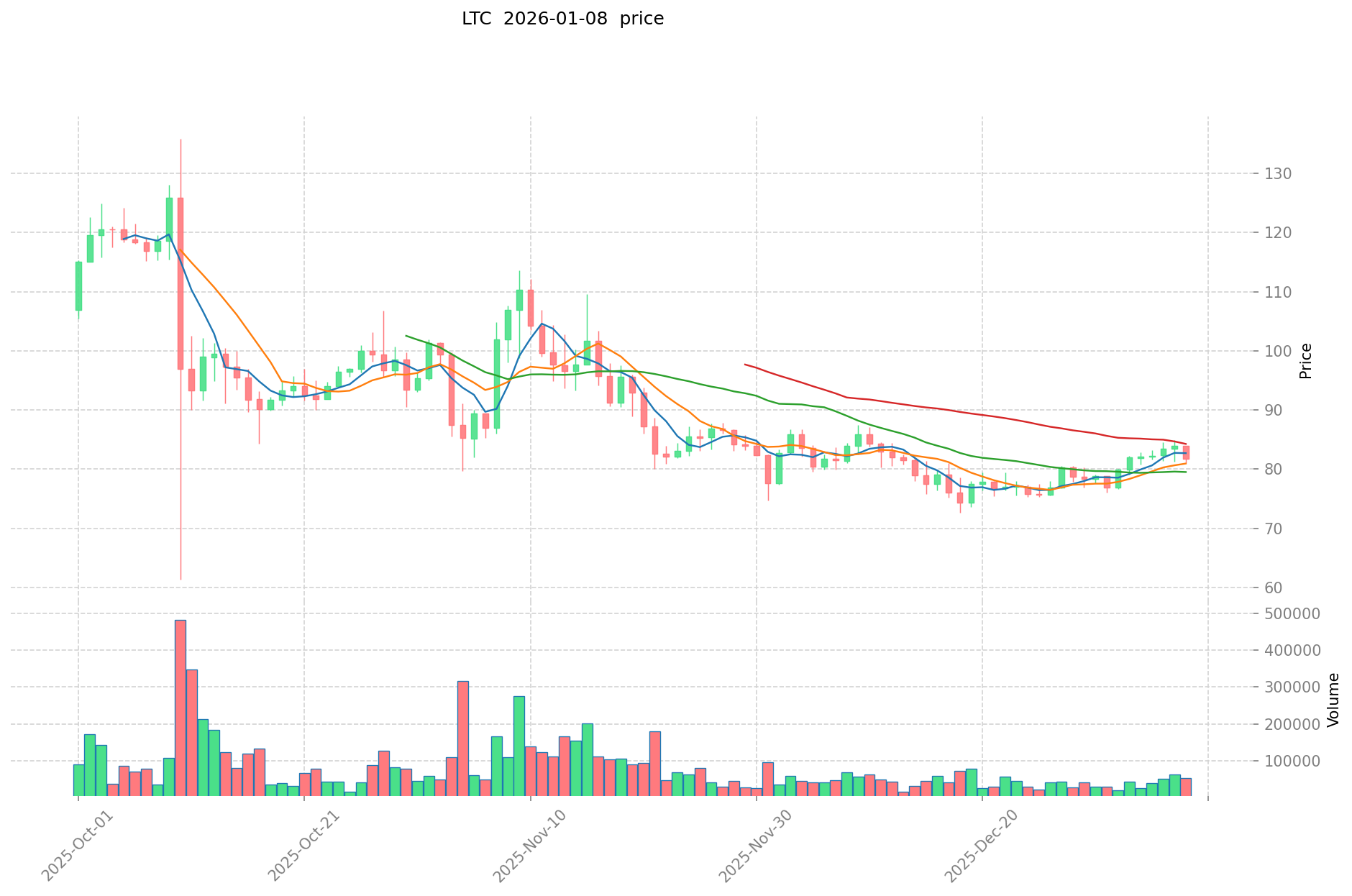
Currently, Litecoin trades near $84.94, reflecting the complex interplay of institutional adoption and market sentiment. The recent rollout of regulated financial vehicles like ETFs (Exchange-Traded Funds) marks a major milestone in legitimizing LTC as a mainstream investment asset.
Data from Cryptonewsland shows that the Canary Litecoin ETF (LTCC) has underperformed since its October 28 debut. For five straight trading sessions, the fund recorded zero inflows, keeping its net assets at $7.44 million. This lack of new capital highlights early institutional hesitation toward Litecoin-based derivatives.
Several factors may explain the ETF’s slow start. The crypto ETF market is still in its infancy, and institutional investors typically tread carefully with new offerings. Litecoin also faces stiff competition from other digital assets that attract more media coverage. Additionally, the ETF launch may have coincided with a market consolidation phase, dampening investor enthusiasm.
Despite this slow beginning, it’s important to remember that ETFs generally need time to gain investor traction. In other asset classes, early ETF results rarely predict long-term outcomes.
Market Analysis and Price Forecasts
Despite disappointing ETF inflows, analysts remain bullish on Litecoin’s outlook. Some forecasts project LTC could reach $1,000 to $2,000 during the 2026–2027 market cycle, based on a mix of fundamental and technical drivers.
Technical data indicates a 30% surge in Litecoin trading volume, signaling heightened trader interest. Increased volume often precedes major price moves, as it reflects rising market participation. Historical crypto market cycles also suggest established assets like Litecoin tend to benefit from prolonged bull runs.
Litecoin’s core fundamentals reinforce this optimism. The blockchain reliably processes transactions with competitive fees, sustaining its real-world utility. Meanwhile, growing institutional crypto adoption could generate structural demand for assets like LTC, especially if regulated products such as ETFs gain traction.
Upcoming Litecoin ETFs and Market Impact
The Litecoin ETF ecosystem is growing, with major industry players preparing their own products. Grayscale, CoinShares, and REX-Osprey are among the firms developing spot Litecoin ETFs—offerings that could significantly reshape LTC’s liquidity and institutional demand.
Multiple Litecoin ETFs could benefit the market in several ways. Competition among providers may drive down fees and inspire product innovation, making Litecoin investments more accessible. A broader set of ETF options would also let institutional investors select products tailored to their strategies and regulatory needs.
Spot ETFs are especially attractive—they hold the underlying asset directly, avoiding risks tied to futures and other derivatives, and providing pure Litecoin exposure. If these ETFs receive approval and launch successfully, they could spark a surge in institutional investment, boosting LTC market liquidity overall.
The combined effect of several Litecoin ETFs could also enhance price discovery and reduce long-term volatility. A more diverse investor base tends to stabilize markets by dampening short-term speculative swings.
Factors Influencing Litecoin’s Price
Litecoin’s price is shaped by a range of macroeconomic and crypto-specific forces. Understanding these dynamics is key to evaluating bullish price forecasts.
Macro conditions—such as central bank policy, inflation rates, and geopolitical stability—directly affect investor appetite for risk assets like crypto. Extended periods of loose monetary policy and low interest rates often favor digital asset investment.
Regulatory shifts are another core driver. ETF approvals and other regulatory greenlights signal growing official acceptance of crypto, gradually unlocking institutional capital that was once sidelined by compliance barriers.
Technology upgrades within the Litecoin ecosystem also impact its value. Protocol improvements, scalability enhancements, and feature integrations strengthen LTC’s utility proposition. Adoption by merchants and payment platforms further boosts practical use, underpinning long-term demand.
Finally, overall crypto market sentiment and Bitcoin’s price action exert major influence. Litecoin has historically tracked Bitcoin’s movements, though with varying degrees of volatility.
Outlook
Litecoin’s medium- and long-term prospects reflect a balance of opportunity and risk. The expansion of the ETF ecosystem, rising institutional interest, and strong technical fundamentals create a promising environment for potential price growth.
Reaching the $1,000–$2,000 target would demand a dramatic increase in Litecoin’s market cap, requiring not just significant capital inflows but also a shift in LTC’s status as an investment-grade asset. Financial history shows this kind of transformation is possible—especially when new, regulated investment channels emerge.
Still, investors must weigh inherent risks. Crypto’s signature volatility remains, with sharp, unpredictable price swings. Unfavorable regulatory changes, security breaches, or disruptive new technologies could all undermine Litecoin’s trajectory.
Early underperformance by the Canary Litecoin ETF isn’t a definitive guide to the future. Financial markets need time to absorb new products, and additional ETFs from established managers could rekindle demand. How liquidity, institutional adoption, and technology trends evolve in the coming years will ultimately determine whether bullish analyst forecasts play out.
FAQ
What is Litecoin (LTC)? How does it differ from Bitcoin?
Litecoin is a cryptocurrency offering faster transactions and lower fees than Bitcoin, optimized for everyday payments. Bitcoin is focused on long-term value storage.
What is a Litecoin ETF? What are the benefits and risks of investing in a Litecoin ETF?
A Litecoin ETF is an exchange-traded fund linked to Litecoin. It offers easier market access and lower costs. Risks include crypto market volatility and regulatory uncertainty, though there’s potential for LTC to rise to $1,000–$2,000.
Why do analysts predict Litecoin will rise to $1,000–$2,000? What supports this view?
Analysts cite Litecoin’s stability and widespread adoption, along with expectations of a highly publicized bull market (FOMO). Litecoin is viewed as a reliable safe haven within the crypto space.
Why is the Litecoin ETF struggling to attract investment inflows?
The Litecoin ETF faces weak inflows due to regulatory uncertainty and questions around its security status. Institutional investors remain cautious about legal risks. Adoption still trails behind Bitcoin and Ethereum ETFs.
Purchase a Litecoin ETF via a brokerage platform to hold shares backed by Litecoin. Your broker acquires and stores LTC to support your position. You own the ETF, not the underlying Litecoin itself.
What is Litecoin’s position and outlook in the crypto market?
Litecoin is a leading asset for fast and reliable payments. Analysts anticipate LTC could reach $1,000–$2,000, reflecting its rising investment appeal in the crypto ecosystem.
What are Litecoin’s technical features and use cases?
Litecoin offers faster transaction confirmations (2.5 minutes) and lower fees than Bitcoin. With a capped supply of 84 million coins, it’s used for day-to-day payments, value storage, and cross-border transfers. Its robust infrastructure supports both micropayments and large-scale commercial transactions.
* The information is not intended to be and does not constitute financial advice or any other recommendation of any sort offered or endorsed by Gate.