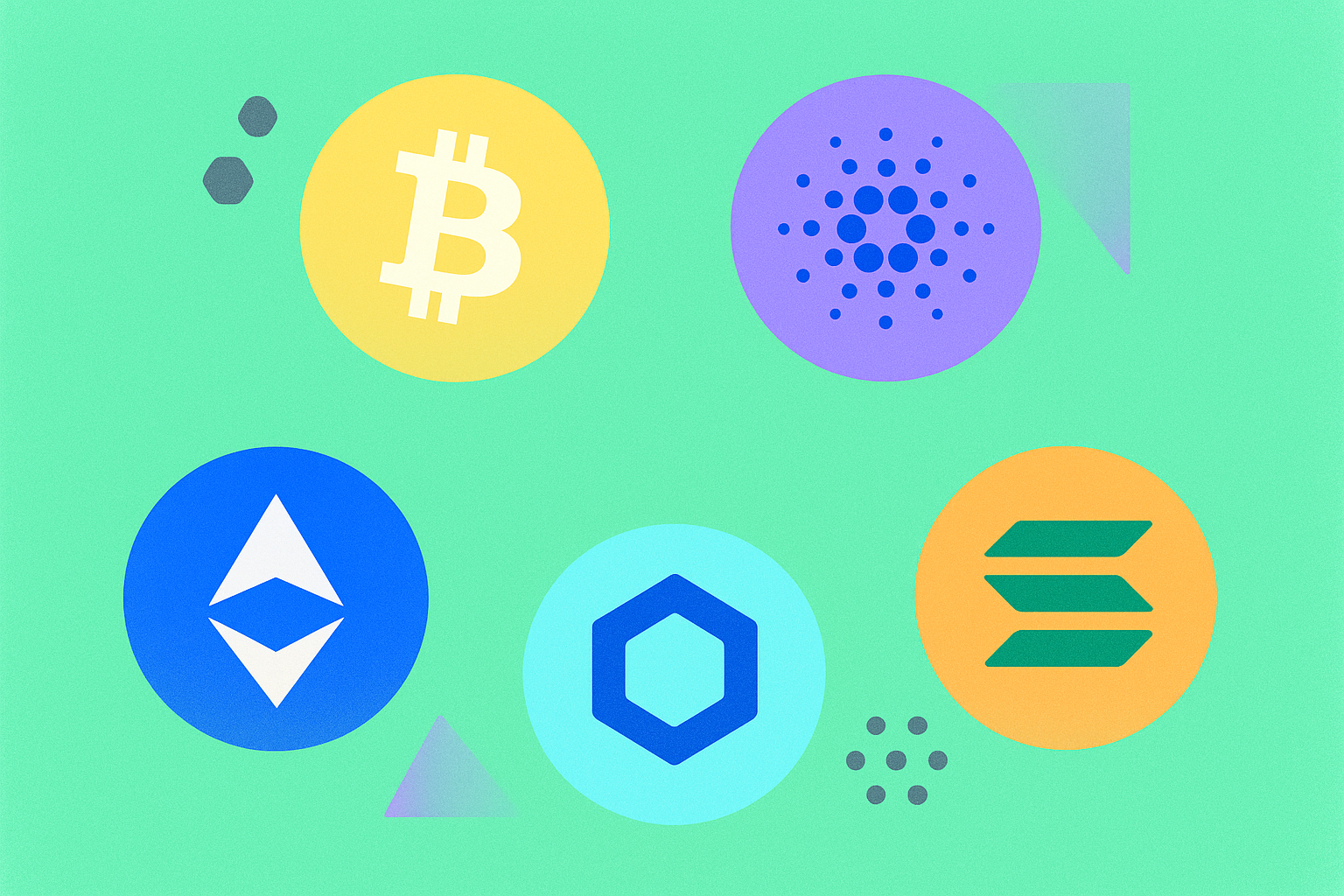
Explore the top cryptocurrencies for 2024, including Bitcoin, Ethereum, Solana, XRP, and Layer 2 solutions. Access expert growth predictions, investment strategies, and in-depth analysis of emerging crypto projects tailored for traders and investors. Identify the best altcoins for your portfolio on Gate.
Most Promising Cryptocurrencies for 2025: Expert Selection
The cryptocurrency market continues to evolve rapidly, offering investors an extensive array of digital assets. As supply increases, choosing the most promising cryptocurrencies for investment is becoming increasingly challenging. The BeInCrypto editorial team surveyed leading industry experts to identify the top digital assets for near-term investment.
Rafik Mamin, CEO of Minestream, highlights four key cryptocurrencies with the highest growth potential: Ethereum, XRP, Solana, and Bitcoin, which maintains its dominant market position. He emphasizes that Bitcoin remains the "lead performer" in the crypto industry due to its established reputation, widespread institutional recognition, and digital gold status.
"I believe Bitcoin has every chance to reach $150,000, and under favorable conditions—sustained market momentum and regulatory progress—even surpass $180,000," he shared.
This optimistic outlook is driven by several factors: growing institutional interest in cryptocurrencies, regulatory framework development in major economies, and Bitcoin's strengthening role as a store of value amid macroeconomic instability.
Regarding Ethereum, Rafik Mamin underscores its fundamental role in the decentralized application (dApp) ecosystem. Ethereum remains the leading platform for smart contracts and is the foundation for most DeFi projects, NFT marketplaces, and other blockchain innovations. He forecasts Ethereum's price could reach $5,700 in the near term and up to $5,800 with extremely positive market dynamics. These projections are tied to ongoing network upgrades, including scalability enhancements via Layer 2 solutions and further optimization following the switch to Proof-of-Stake consensus.
Mamin pays special attention to the outlook for XRP from Ripple. The cryptocurrency's potential hinges largely on the outcome of Ripple’s ongoing legal dispute with US regulators, which has persisted for years.
"If Ripple wins, it would be a powerful catalyst, likely pushing XRP's price to the $4–5 range. XRP has tremendous potential for cross-border payments, and regulatory clarity is crucial here," Mamin asserts.
A favorable court ruling could eliminate regulatory uncertainty surrounding XRP and set an important precedent for the industry. Ripple's technology is already leveraged by several financial institutions for fast, low-cost international transfers, demonstrating its practical value.
Discussing Solana, Mamin notes the network’s impressive technical features. High throughput, low transaction fees, and a growing decentralized application ecosystem make SOL an appealing investment.
"I expect SOL’s price to range from $200–550, with the prospect of reaching $700 under ideal conditions," he explained.
Solana's popularity stems not only from technical advantages but also from the dynamic growth of its ecosystem—including DeFi protocols, NFT projects, and gaming applications. Despite previous technical challenges, the development team continues to improve platform stability and performance.
Aleksey Bykov, Head of Client Data Management at Strifor, partially agrees with Mamin’s picks but presents a broader list of promising cryptocurrencies. His near-term investment portfolio includes six digital assets, each with unique characteristics and growth potential.
1. Ethereum. Bykov emphasizes Ethereum's continued leadership, driven by upcoming upgrades expected to greatly enhance scalability, reduce transaction costs, and improve energy efficiency. Smart contracts and decentralized apps remain key growth drivers. High innovation, robust developer support, and a strong global community make ETH attractive for long-term investment. The transition to Proof-of-Stake has significantly reduced energy consumption, improving Ethereum’s environmental profile and attracting sustainability-minded institutional investors.
2. Optimism. This Layer 2 solution for Ethereum, based on Optimistic Rollups, helps offload the main network and substantially lower transaction fees. Top projects like Uniswap and Synthetix already utilize this platform, highlighting its reliability and growing potential. Optimism offers users transactions with the same security as Ethereum’s mainnet but at much lower costs and faster speeds. The expanding Optimism ecosystem and a rising number of projects deploying on it signal strong long-term growth prospects.
3. StarkNet. Another innovative Layer 2 platform for Ethereum, StarkNet uses zk-rollups to boost transaction speed and security. Bykov notes that the STRK token is trading at historic lows, which adds appeal for long-term investors seeking growth potential. Zero-knowledge proofs underpin StarkNet, considered one of the most promising solutions for scaling Ethereum, delivering high privacy and security with minimal costs.
4. Polygon. Polygon tackles Ethereum's critical scalability challenges, offering fast, low-cost transactions. Its ecosystem is expanding rapidly, attracting more developers and investors. Upcoming protocol upgrades may further strengthen its market position. Polygon is already integrated with many major projects and platforms, including gaming applications, NFT marketplaces, and DeFi protocols. Partnerships with recognized brands demonstrate Polygon’s rising status within traditional business sectors.
5. Bitcoin. Despite steady growth among altcoins, Bitcoin remains the "digital gold" of the crypto market. Its integration into traditional finance keeps deepening, serving as a reliable asset for long-term investment. Limited supply (21 million coins), rising institutional acceptance, and its status as the first cryptocurrency give Bitcoin a unique place in the digital economy. The launch of Bitcoin ETFs in different jurisdictions opens new opportunities for traditional investors and further legitimizes the crypto market.
6. Solana. Solana continues to attract attention with high transaction speeds and low fees. The popularity of decentralized applications and NFTs on Solana supports strong demand for the token. The Solana ecosystem encompasses many innovative projects in DeFi, GameFi, and Web3, creating additional growth drivers for SOL.
Ilya Makar, financial expert and investor, also singles out Bitcoin as the primary candidate for near-term growth. He attributes BTC’s prospects to rising institutional interest and network scalability potential via Layer 2 solutions such as Lightning Network. Infrastructure development—including improved payment systems and expanded storage options—makes Bitcoin increasingly accessible to a wider audience.
Among altcoins, Makar specifically highlights Ethereum, whose team is actively enhancing its technical capabilities. He also identifies Cardano as a promising project.
"Cardano could become a leading platform for smart contracts and dApps, especially as the team emphasizes environmental and social significance," he explained.
Cardano is distinguished by its scientific approach, with every update undergoing thorough peer review. This methodical process ensures high network security and reliability, though it slows the pace of new feature adoption.
Among other original altcoins, Makar singles out Polkadot, Chainlink, Solana, Avalanche, Polygon, Cosmos, and Near Protocol. He believes these promising cryptocurrencies could see substantial near-term growth due to their unique technological solutions and expanding ecosystems.
Polkadot delivers innovative architecture for cross-chain interoperability; Chainlink remains a leader in smart contract oracles; Avalanche attracts developers with high speed and Ethereum compatibility; Cosmos is building the "Internet of Blockchains." Near Protocol stands out for its developer-friendly environment and low barrier to entry for decentralized app creation.
Alexander Vais, serial FinTech and DeFi entrepreneur, developer, and analyst, recommends investors focus on Layer 2 solution coins and fundamental projects with strong technical foundations. His top picks are TON, Solana, and Sui.
TON (The Open Network), initially developed by the Telegram team, is a high-performance blockchain with unique architecture. Sui, a relatively new project, offers an innovative approach to transaction processing and digital asset management. Both projects demonstrate technological advantages that could secure competitive market positions.
Pavel Butenko, crypto trading expert at Crypto Academy SoulTeam, advises investors to pay special attention to Ethereum. He believes the current price does not yet reflect its fundamental value, creating growth potential. He also highlights Arbitrum and Optimism tokens from the Ethereum ecosystem as promising assets benefiting from rising Layer 2 solution demand.
Arbitrum, like Optimism, dramatically reduces transaction costs while maintaining mainnet security. The increasing number of projects migrating to or launching on these platforms signals rising demand for their ecosystem tokens.
Butenko also names the RWA (Real World Assets) segment as a promising area. Tokenizing real assets is one of blockchain's most promising trends, allowing digital representations of traditional assets such as real estate, securities, or commodities. In this segment, he highlights staking projects like Lido Finance and Synthetix.
Lido Finance offers liquid staking for Ethereum and other cryptocurrencies, letting users earn rewards without locking their assets. Synthetix is a platform for creating synthetic assets, expanding trading and investment options for various asset classes via blockchain.
In the DePIN (Decentralized Physical Infrastructure Networks) segment, Butenko recommends IOTA. This project focuses on infrastructure for the Internet of Things (IoT) and could benefit from rising demand for decentralized solutions to manage physical devices and sensor networks.
Summary: Which Cryptocurrency to Invest in for the Near Term
Expert analysis highlights several key cryptocurrencies and sectors with high near-term growth potential. Consensus points to Bitcoin as the main candidate for growth, with forecasts of $150,000 and even $180,000 under favorable market conditions and regulatory progress. Its "digital gold" status, growing institutional acceptance, and limited supply support a sustained bullish trend for the first cryptocurrency.
Ethereum remains popular and is a favorite among experts, thanks to ongoing upgrades aimed at scalability, reduced transaction costs, and improved energy efficiency. Ethereum's role as a foundation for decentralized apps, DeFi protocols, and NFT projects ensures steady demand for ETH. Experts expect prices to rise to $5,700–5,800 in an optimistic scenario.
XRP is also a promising asset, especially given the potential positive outcome of Ripple’s legal dispute with US regulators. A court victory could be a major catalyst, pushing prices to the $4–5 range. XRP’s technological advantages in cross-border payments and partnerships with financial institutions provide a solid foundation for long-term growth.
Solana continues to attract attention with high transaction speeds, low fees, and a rapidly expanding ecosystem. Experts forecast that SOL's price could climb to $700 under favorable conditions. The growing popularity of decentralized applications, NFTs, and GameFi on Solana sustains strong demand for the token.
Beyond market leaders, experts recommend Ethereum Layer 2 solutions. Polygon, Optimism, Arbitrum, and StarkNet offer significant benefits for scalability and transaction costs, making them attractive for long-term investment. These projects are well-positioned to grow as demand for efficient Ethereum blockchain solutions increases with more users and applications.
Additional promising projects include Cardano, which stands out for its scientific approach and focus on environmental and social value. Polkadot, Chainlink, Avalanche, Cosmos, and Near Protocol deserve attention for their unique technological solutions and expanding ecosystems. Each project tackles specific industry challenges and could see significant growth if their roadmaps are successfully executed.
Relatively new projects such as TON and Sui, which provide innovative technological solutions, are also noteworthy. Experts suggest considering tokens in RWA (Lido Finance, Synthetix) and DePIN (IOTA) segments—areas representing promising blockchain developments.
When building an investment portfolio, consider both growth potential and risks—such as cryptocurrency market volatility, regulatory uncertainty, and technological challenges. Diversifying across categories—from established leaders to promising altcoins—can help balance risk and potential returns. Always conduct independent research, assess fundamentals, and monitor technology and regulatory developments before making investment decisions.
FAQ
Which cryptocurrencies are considered most promising for investment in 2025?
Bitcoin (BTC) and Ethereum (ETH) remain market leaders. Promising projects include DeFi, AI-oriented tokens, and Layer 2 solutions with strong growth potential for 2025.
What factors should you consider when choosing a cryptocurrency for investment?
Consider technological potential, trading volume, project stability, and development team qualifications. Analyze market trends, partnerships, and long-term prospects. Evaluate innovation and community support to gauge growth potential.
What are the main risks of investing in cryptocurrencies, and how can you minimize them?
Main risks include price volatility, regulatory changes, and technical failures. Minimize risk through portfolio diversification, investing only what you can afford, and researching the market before buying.
How do Bitcoin and altcoins differ in terms of investment potential?
Bitcoin is a more stable and liquid asset with high market capitalization and lower volatility. Altcoins offer greater growth potential but also higher risks and volatility. The choice depends on your risk profile.
What is the cryptocurrency market outlook for 2025 according to analysts?
Analysts expect the bullish cycle to continue in 2025, with a mid-term peak in the first quarter, followed by a possible market correction. Increased trading activity and volatility are anticipated in the crypto market.
* The information is not intended to be and does not constitute financial advice or any other recommendation of any sort offered or endorsed by Gate.