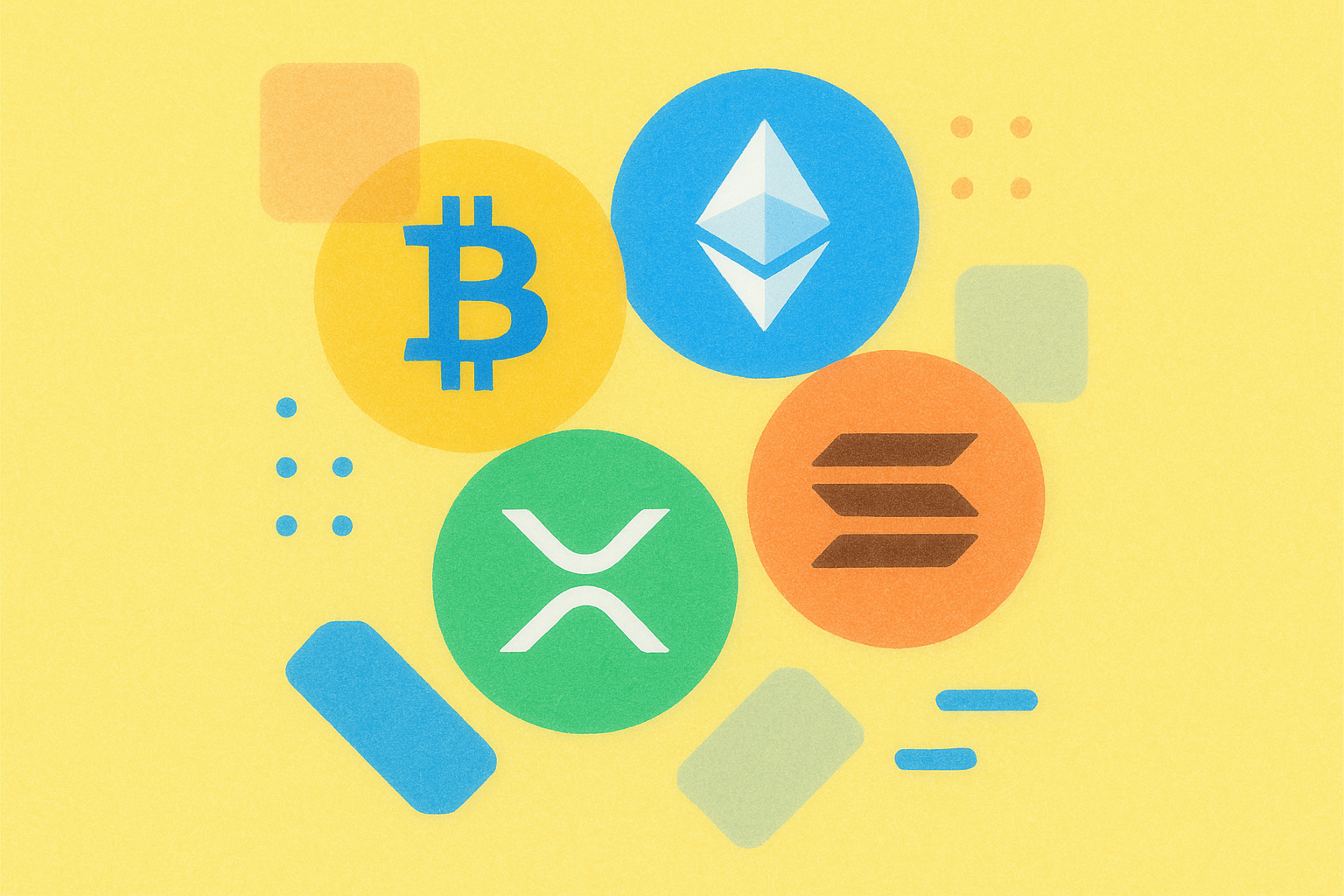
Top Cryptocurrencies to Watch in 2024: Bitcoin, Ethereum, Solana, and Leading Altcoins for Investment. Expert Insights, Price Predictions, and Strategic Guidance on Gate. Which Cryptos Are Worth Buying?
Top Cryptocurrencies to Watch: Expert Selections
The crypto market is evolving at a rapid pace, delivering a wealth of profit opportunities for investors. As the number of digital assets grows, identifying the best investment options becomes more complex. The BeInCrypto editorial team consulted leading industry experts to get their insights on the most promising cryptocurrencies for near-term investment.
Rafik Mamin, CEO of Minestream, identifies Ethereum, XRP, Solana, and Bitcoin as the top candidates for maximum profit, with Bitcoin set to retain its leading position in the crypto market. In his view, Bitcoin will continue to solidify its reputation as digital gold and as a core asset for institutional investors.
“I believe Bitcoin has a strong chance of reaching $150,000, and with sustained market momentum and regulatory progress, could even surpass $180,000,” the expert predicted.
This outlook is driven by several factors: growing institutional interest in crypto, Bitcoin’s capped supply, and a more favorable regulatory landscape in major jurisdictions. Together, these factors create strong conditions for the long-term appreciation of the original cryptocurrency.
According to Rafik Mamin, Ether will maintain its leadership as the foundational platform for decentralized applications (dApps). He sees potential for the cryptocurrency to rise to $5,700—and, in a highly optimistic scenario, to $5,800. Ongoing technical upgrades continue to drive Ethereum’s development, targeting greater network scalability and lower transaction fees.
Mamin attributes XRP’s potential to the likelihood of resolving its long-running dispute with US regulators. A favorable court ruling could serve as a major growth catalyst.
“If the company prevails, it would be a powerful catalyst that could push XRP’s price to the $4–5 range. XRP holds immense potential in cross-border payments, and regulatory clarity is critical,” emphasized Rafik Mamin.
XRP specializes in fast, low-cost international transfers, making it attractive to financial institutions. Resolving legal hurdles could open the door for Ripple’s technology to see widespread adoption in banking.
The expert expects Solana to rally on the back of higher network performance, infrastructure expansion, and a growing number of blockchain applications. The platform is recognized for its high transaction speed and low fees, both of which appeal to developers of decentralized apps and NFT projects.
“I expect SOL’s price to range between $200 and $550, with a shot at $700 in the best-case scenario,” he said, outlining his upbeat forecast for Solana.
Alexey Bykov, Head of Client Data Management at Strifor, largely concurs with Mamin’s picks but offers an expanded list of six cryptos for investment, providing detailed reasoning for each.
1. Ethereum. Ethereum maintains its leadership thanks to upcoming upgrades focused on greater scalability, reduced transaction costs, and better energy efficiency. Smart contracts and dApps remain the main engines of network growth. Robust innovation and an active developer community make ETH a compelling long-term investment. The switch to Proof-of-Stake has slashed the network’s energy usage and enhanced its environmental profile.
2. Optimism. This Layer-2 solution for Ethereum leverages Optimistic Rollups to offload the main network and sharply reduce transaction fees. Flagship projects like Uniswap and Synthetix already use Optimism, signaling both reliability and strong growth prospects. The technology enables transactions to be processed off-chain while retaining Ethereum’s high security standards.
3. StarkNet. Another promising Ethereum Layer-2 platform, StarkNet utilizes zk-rollup technology to boost both transaction speed and security. The STRK token is trading near all-time lows, making it attractive to long-term investors seeking growth potential. Zero-knowledge proofs deliver high privacy and scalability.
4. Polygon. Polygon effectively tackles Ethereum’s scalability challenges, delivering quick and inexpensive transactions. Its ecosystem is expanding rapidly, attracting developers and investors from various sectors. Upcoming upgrades could further cement Polygon’s market position. The platform supports a wide range of dApps and gaming projects.
5. Bitcoin. While other altcoins show steady growth, Bitcoin remains the gold standard of the crypto market. It’s integrated with the traditional financial system and stands out as a reliable long-term investment. Institutions continue to view Bitcoin as a hedge against inflation and a tool for portfolio diversification.
6. Solana. Solana’s network draws interest due to its high throughput and low fees. The rising popularity of dApps and NFTs on Solana is fueling consistent demand for the token. Its rapidly growing DeFi ecosystem and major partnerships also add to its appeal.
Financial expert and investor Ilya Makar also shared his perspective on promising cryptocurrencies. Asked which crypto is likely to rise first, he named Bitcoin. He attributes BTC’s growth prospects to surging institutional interest and the potential for greater network scalability via Layer-2 solutions like the Lightning Network.
Among altcoins, Makar singles out Ethereum—which continues to advance technically—and Cardano, a platform driven by a research-based development approach.
“In the near future, Cardano could become one of the leading smart contract and dApp platforms, especially given its team’s focus on sustainability and social impact,” he explained.
Cardano stands apart for its peer-reviewed, research-led development. It uses an energy-efficient consensus mechanism and is building out its DeFi infrastructure.
For investors seeking original altcoins, Makar recommends Polkadot, Chainlink, Solana, Avalanche, Polygon, Cosmos, and Near Protocol. He sees strong short-term growth potential for these projects, crediting their sound technical foundations and rising demand for real-world solutions.
Each crypto mentioned here solves distinct blockchain challenges: Polkadot enables cross-chain interoperability, Chainlink supplies reliable oracles for smart contracts, Avalanche excels in fast financial applications, and Cosmos is building the “internet of blockchains.”
Alexander Vais, serial FinTech and DeFi entrepreneur, developer, and analyst, suggests investors focus on Layer-2 coins and a handful of core projects, naming TON, Solana, and Sui as his top picks. These platforms represent the next generation of blockchain technology, offering enhanced performance and user experience.
TON (The Open Network) stands out for its integration with a popular messenger app and its mass adoption potential. Sui brings a novel approach to transaction processing, enabling high network throughput.
Pavel Butenko, crypto trading expert at Crypto Academy SoulTeam, recommends Ethereum as the best buy, arguing that its current price does not reflect its true value given the ecosystem’s scale and active developer base. He also points to Arbitrum and Optimism—both part of the Ethereum ecosystem—as promising investment options.
These Layer-2 solutions significantly enhance Ethereum user experience by cutting transaction costs and boosting speed. The growing migration of dApps to these platforms underscores their technological edge.
Butenko also highlights RWA (Real World Assets)—the tokenization of tangible assets—as another promising trend. Notable tokens in this domain include Lido Finance, which specializes in liquid staking, and Synthetix, which offers synthetic asset access. In the DePIN (Decentralized Physical Infrastructure Networks) segment, he singles out IOTA.
The RWA space bridges traditional finance with crypto, allowing real estate, securities, and other real-world assets to be tokenized. DePIN projects create decentralized physical infrastructure, unlocking new blockchain applications.
In Summary: Where to Invest in Crypto
For the near term, experts point to several cryptocurrencies with strong growth prospects. Bitcoin remains the market’s leading candidate, with forecasts calling for potential gains to $150,000—and even $180,000 in a bullish scenario. It continues to solidify its role as the primary vehicle for institutional investment and inflation hedging.
Ethereum remains popular, thanks to upgrades focused on scalability and cost reduction. The platform is still the top ecosystem for dApps, smart contracts, and NFT projects. Ongoing Layer-2 development only adds to its appeal for developers and end-users.
XRP also looks promising, especially if Ripple can resolve its legal standoff with US regulators favorably. Successful legal outcomes could pave the way for mass banking adoption and a significant increase in token value.
Solana, with its high-speed transactions and low costs, continues to rank among the top decentralized app platforms. Experts believe the token could reach $700 in an optimistic scenario. Solana’s rapidly expanding ecosystem and growing project base support its long-term potential.
Beyond the market leaders, other promising cryptos are also in focus. Alexey Bykov highlights Polygon, Optimism, StarkNet, and Cardano as attractive long-term investments, citing their technical advantages such as scalability solutions and low fees. Each project offers a unique approach to blockchain’s biggest challenges.
Ilya Makar flags Polkadot, Chainlink, Avalanche, and Cosmos for their robust tech and rising platform demand. These coins could see strong gains thanks to stable ecosystem growth and the adoption of innovative technologies. Each platform has carved out a distinct niche in the crypto industry, addressing specific technical problems.
Experts also recommend investors watch TON, Sui, Arbitrum, and Optimism—projects ushering in a new era of blockchain technology. Special attention is warranted for the RWA sector and tokens like Lido Finance, Synthetix, and DePIN projects such as IOTA.
It’s critical to remember that crypto investing entails significant risks. Investment decisions should be made after thorough analysis and with an understanding of individual risk tolerance. Portfolio diversification and a long-term approach can help minimize potential losses and maximize profit opportunities in the fast-changing crypto market.
FAQ
What are the most promising cryptocurrencies to invest in for 2024?
The leading cryptocurrencies for 2024 are Bitcoin, Ethereum, and Solana. These projects offer strong technology, rising trading volumes, and are attracting substantial institutional investment.
How do you evaluate a crypto project’s investment potential?
Review the project’s white paper and roadmap, assess the development team, analyze technological innovation, and examine market demand and trading volume. Projects with solid fundamentals offer the greatest growth prospects.
How should new investors get started with crypto investing?
Begin by learning blockchain basics and different asset types. Build up savings or find supplemental income. Choose a reputable platform, create an account, and complete verification. Start small—only invest what you can afford to lose. Use secure storage for assets and employ risk management strategies.
What are the main risks of crypto investing and how can you avoid them?
Key risks include price volatility, cyber threats, user error, and regulatory shifts. Minimize risk by using reputable multi-signature wallets, enabling two-factor authentication, and storing assets securely.
Which is better for long-term investment: Bitcoin or Ethereum?
Ethereum is more promising for long-term growth. It offers broader functionality through smart contracts and dApps, while Bitcoin primarily serves as a store of value. The Ethereum ecosystem holds greater growth potential.
What are altcoins, and how risky is it to invest in them?
Altcoins are all cryptocurrencies other than Bitcoin. They can offer high returns but are highly volatile. Careful analysis of the technology and project is essential before investing.
What is the DCA strategy in crypto investing and how do you use it?
DCA (Dollar-Cost Averaging) is a strategy of investing a fixed amount at regular intervals, regardless of price. This reduces volatility risk and helps you systematically accumulate assets—ideal for long-term growth.
How can you buy and store crypto safely?
Choose reputable platforms with a strong track record. For storage, use hardware wallets and avoid online wallets. Enable two-factor authentication and keep private keys secure.
* The information is not intended to be and does not constitute financial advice or any other recommendation of any sort offered or endorsed by Gate.