Top Cryptocurrencies to Watch for Investment in 2024. Expert Analysis of Leading Altcoins with Strong Growth Potential. Find Out Which Cryptocurrencies Are Worth Buying: Bitcoin, Ethereum, XRP, Solana, and Layer 2 Solutions. Cryptocurrency Rankings and Investment Recommendations.
Most Promising Cryptocurrencies: Experts’ Top Picks
The cryptocurrency market continues to experience robust growth, providing investors with a broad array of digital assets. As the selection expands, it is becoming increasingly challenging for participants in the crypto community to identify the most promising investment opportunities. The BeInCrypto editorial team consulted leading industry experts to determine which cryptocurrencies warrant special attention in the medium term.
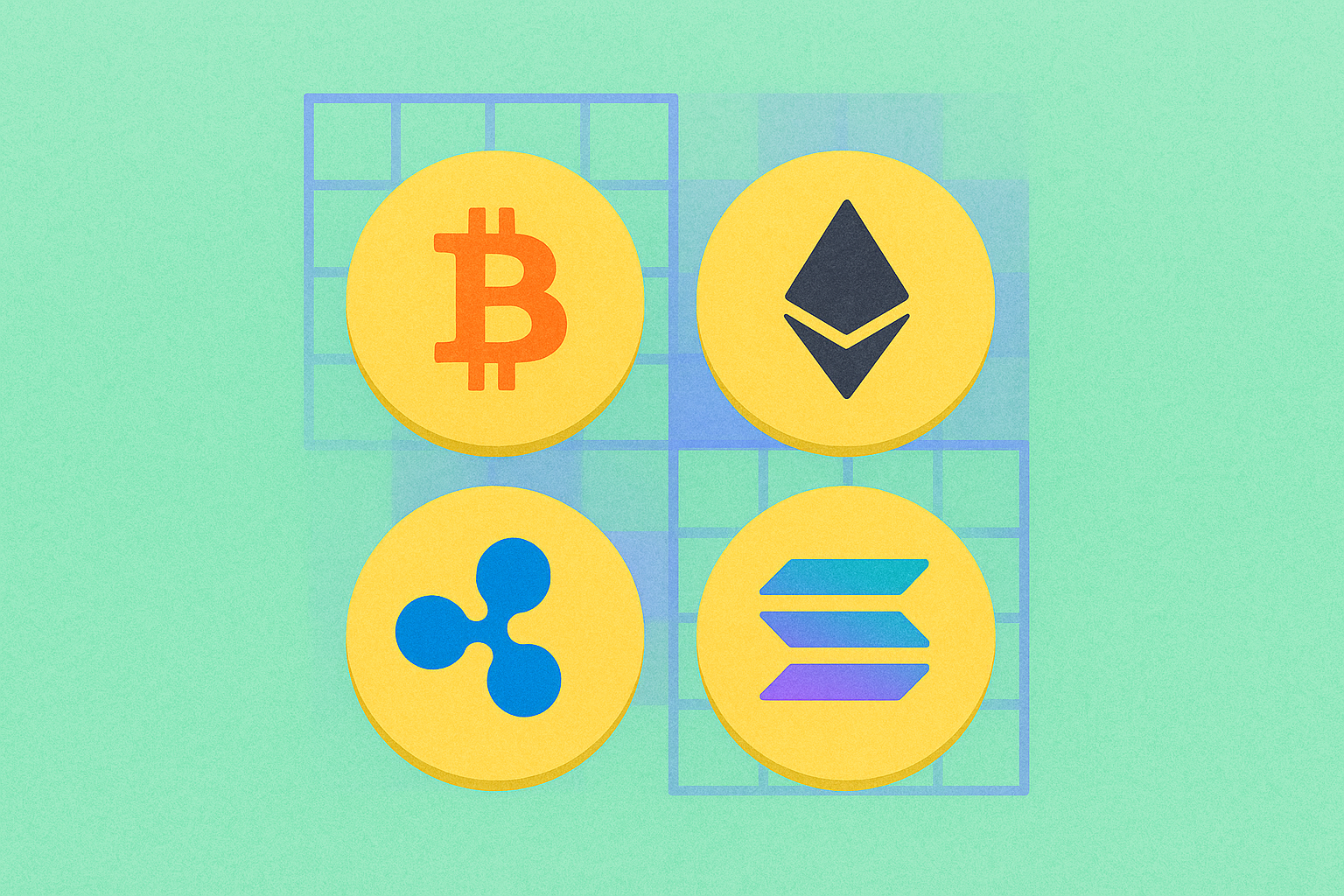
Rafik Mamin, CEO of Minestream, highlights several key assets he believes have the highest growth potential. At the forefront are Ethereum, XRP, Solana, and Bitcoin, which remains the dominant asset in the cryptocurrency market. These projects are distinguished by their strong technical foundations, established ecosystems, and high levels of institutional investor trust.
“I believe Bitcoin has every chance to reach $150,000, and with favorable conditions—sustained market momentum and advances in regulation—could exceed $180,000,” he predicts.
This view is driven by several factors: increasing institutional interest in Bitcoin, its limited issuance, and its role as the digital equivalent of gold. Bitcoin is increasingly viewed as a hedge against inflation and a tool for portfolio diversification.
For Ethereum, Rafik Mamin emphasizes its foundational role as the backbone for decentralized applications (dApps). The platform continues to enhance its infrastructure by implementing solutions to improve scalability and reduce transaction costs. The expert sees potential for Ethereum to reach $5,700, and, in an extremely positive scenario, $5,800. These projections are linked to anticipated protocol upgrades that should significantly enhance network performance and attract new developers.
Regarding XRP, our expert cites the likelihood of a resolution in the long-standing dispute between Ripple and US regulators as a key driver. The lawsuit between Ripple and the US Securities and Exchange Commission (SEC) has persisted for several years, significantly impacting the token’s price.
“If the company prevails, it will serve as a powerful catalyst, driving XRP’s price toward the $4–5 range. XRP has tremendous potential in cross-border payments, and regulatory clarity remains decisive,” asserts Rafik Mamin.
Ripple’s technology is already used by many financial institutions for international transactions, demonstrating the project’s practical value. A favorable legal outcome could create new opportunities for XRP’s integration into the traditional financial system.
For Solana, our expert expects growth due to increased performance, infrastructure development, and a rising number of blockchain-based applications. Solana is renowned for its high transaction throughput and low fees, making it an appealing platform for developers of decentralized applications and NFT projects.
“I expect SOL’s price to range from $200 to $550, with the potential to reach $700 under optimal conditions,” he explained, outlining his positive outlook.
Solana’s popularity is linked to rapid ecosystem expansion, including DeFi protocols, NFT marketplaces, and gaming projects. Despite past technical challenges, the team continues to work on improving the platform’s stability and scalability.
Alexey Bykov, Head of Client Data Management at Strifor, partially agreed with Rafik Mamin’s coin selection. He offered a broader investment list of six cryptocurrencies and detailed his reasoning.
Top 6 Cryptocurrencies According to Alexey Bykov
1. Ethereum
Ethereum maintains its leadership due to upcoming upgrades designed to boost scalability, reduce transaction costs, and enhance energy efficiency. The transition to the Proof-of-Stake consensus mechanism has already reduced the network’s energy consumption, and further improvements—such as sharding—promise to make the platform even more efficient.
Smart contracts and decentralized applications remain the primary drivers of network growth. Ethereum is the foundation for most DeFi protocols, NFT platforms, and other blockchain projects. High innovation and a strong developer community make ETH an attractive long-term investment. Additionally, growing institutional interest and the introduction of Ethereum-based ETFs reflect the platform’s acceptance by traditional financial markets.
2. Optimism
Optimism is a Layer 2 solution for Ethereum based on Optimistic Rollups technology. This technology helps offload the main Ethereum network and significantly lowers transaction fees while maintaining high security standards.
Popular projects like Uniswap and Synthetix already utilize the platform, demonstrating its reliability and growth potential. Optimism is rapidly expanding its ecosystem, attracting new developers through grants and technical support. As demand on Ethereum rises, the need for Layer 2 solutions will continue to increase, creating favorable conditions for the OP token’s value to grow.
3. StarkNet
StarkNet is another Layer 2 platform on Ethereum, leveraging zk-rollups to enhance transaction speed and security. Unlike Optimistic Rollups, zk-rollups offer instant transaction confirmation using zero-knowledge cryptographic proofs.
The STRK token is trading near historic lows, making it attractive to long-term investors seeking growth potential. StarkNet is expanding its infrastructure and attracting developers by providing an efficient Ethereum scaling solution. Zk-rollups technology is widely considered one of the most promising for blockchain’s future, which adds to the project’s positive outlook.
4. Polygon
Polygon successfully addresses Ethereum’s scalability challenges by enabling low-cost, high-speed transactions. The platform uses sidechains and other technologies to create a multi-layered, Ethereum-compatible ecosystem.
Polygon’s ecosystem is growing rapidly, attracting developers and investors globally. Hundreds of projects, including DeFi protocols, NFT marketplaces, games, and enterprise solutions, have launched on the platform. Future upgrades, such as Polygon 2.0, could further strengthen the project’s market position. Polygon also collaborates with major corporations and brands, driving widespread blockchain adoption.
5. Bitcoin
Despite other altcoins’ steady growth, Bitcoin remains the digital gold of the crypto market. It’s integrated into the traditional financial system and serves as a reliable asset for long-term investment.
Bitcoin is the most liquid cryptocurrency, recognized by institutional investors as a risk hedge. Its limited supply of 21 million coins creates scarcity, supporting long-term price appreciation. Infrastructure advancements, including the Lightning Network for fast, low-cost payments, are expanding Bitcoin’s everyday use cases.
6. Solana
Solana stands out for its high speed and low fees. The platform can process thousands of transactions per second, making it one of the most efficient blockchain networks.
Growing interest in decentralized applications and NFTs on Solana fuels demand for the token. Its ecosystem spans successful projects in DeFi, NFTs, gaming, and social networking. Solana continues to build partnerships with major companies and attracts investments from leading venture funds, strengthening trust in the project.
Opinions from Other Experts
Financial expert and investor Ilya Makar also identifies Bitcoin as a priority investment asset. He attributes BTC’s growth prospects to increasing institutional interest and network scaling potential via new technologies like Taproot and the Lightning Network.
Among altcoins, Ilya Makar highlights Ethereum—whose team continues to develop the cryptocurrency’s technical foundation—and Cardano, known for its scientific approach to development and focus on security and scalability.
“In the medium term, Cardano could become one of the leading platforms for smart contracts and dApps, especially given the team’s emphasis on sustainability and social impact,” he explains.
Cardano employs the unique Ouroboros consensus mechanism, delivering high energy efficiency and network security. The project actively forms partnerships in developing countries, focusing on solving real-world social and economic challenges.
Among other promising altcoins, Ilya Makar notes:
- Polkadot — a platform for cross-blockchain interoperability, enabling different blockchains to exchange data and assets
- Chainlink — the leading oracle for smart contracts, linking blockchains with external data
- Avalanche — a high-performance platform for creating custom blockchains and dApps
- Cosmos — an ecosystem of interconnected blockchains using Inter-Blockchain Communication (IBC)
- Near Protocol — a platform focused on developer-friendly decentralized application creation
According to the expert, these promising cryptocurrencies have significant growth potential due to strong technical fundamentals and rising demand for their solutions. Each of these projects addresses a specific blockchain industry challenge: scalability, interoperability, data availability, or ease of development.
Alexander Vais, serial FinTech and DeFi entrepreneur, developer, and analyst, believes investors should pay attention to Layer 2 tokens and several foundational projects. His favorites are TON, Solana, and Sui.
TON (The Open Network) is a blockchain platform originally developed by the Telegram team, recognized for its high speed and scalability. Sui is a relatively new project that employs an innovative approach to transaction processing, targeting high-performance applications.
Pavel Butenko, a crypto trading expert at Crypto Academy SoulTeam, advises focusing on Ethereum. He believes the token’s current price does not match its real value, given the ecosystem’s scale and the platform’s development speed. He also highlights Arbitrum and Optimism tokens from the Ethereum ecosystem as promising Layer 2 solutions.
Pavel Butenko also identifies RWA (Real World Assets)—the tokenization of real assets—as a highly promising segment. This trend is gaining traction as it enables traditional financial instruments to be transferred onto the blockchain. Among these tokens, he points to staking-related projects like Lido Finance, which allows users to earn ETH staking rewards without locking their funds, and Synthetix—a platform for creating synthetic assets.
In the DePIN (Decentralized Physical Infrastructure Networks) sector, he considers IOTA noteworthy. This project focuses on the Internet of Things (IoT) and offers solutions for a machine economy where devices can interact and transact autonomously.
Conclusion: Which Cryptocurrencies Deserve Investment
An analysis of leading crypto industry experts’ opinions points to several key investment directions for the medium term. Bitcoin remains the main candidate for substantial growth, with forecasts suggesting it could reach $150,000 or even $180,000 under favorable market conditions. This outlook is based on rising institutional interest, limited supply, and Bitcoin’s strengthening role as digital gold.
Ethereum continues to be popular due to ongoing upgrades aimed at improving scalability and reducing transaction costs. The platform is the foundation for most decentralized applications, DeFi protocols, and NFT projects, ensuring steady demand for ETH. Experts predict Ethereum could increase to the $5,700–5,800 range, making it an attractive choice for long-term investors.
XRP is also viewed as a promising asset, especially if the legal case between Ripple and US regulators is resolved. A positive outcome could serve as a powerful catalyst, pushing the token’s price to $4–5. Ripple’s technology has already demonstrated effectiveness in cross-border payments, and resolving regulatory issues would open new avenues for XRP adoption.
Solana, with its high transaction speed and low fees, continues to hold a strong market position. Experts believe SOL could rise to $700 under favorable conditions. The rapid development of Solana’s ecosystem—including DeFi protocols, NFT marketplaces, and gaming projects—supports an optimistic outlook for the platform’s future.
Alternative Promising Assets
Beyond market leaders, experts suggest considering several other cryptocurrencies with high growth potential:
Ethereum Layer 2 Solutions:
- Polygon — delivers efficient scalability with a growing ecosystem
- Optimism — implements Optimistic Rollups to reduce fees
- StarkNet — uses zk-rollups for enhanced speed and security
- Arbitrum — a leading Layer 2 solution with an expanding ecosystem
These projects benefit from Ethereum’s popularity and address critical scalability challenges, making them attractive for long-term investment.
Smart Contract Platforms:
- Cardano — known for its scientific development approach and sustainability focus
- Polkadot — enables cross-blockchain interoperability
- Avalanche — offers high performance and flexibility
- Cosmos — builds an ecosystem of interconnected blockchains
- Near Protocol — prioritizes usability and developer experience
These platforms compete with Ethereum by offering improved performance, scalability, or specialized features.
Infrastructure Projects:
- Chainlink — the leading oracle for smart contracts, essential for DeFi operations
- TON — a high-speed blockchain with mass adoption potential
- Sui — an innovative platform with a new approach to transaction processing
Specialized Segments:
- RWA tokens (Lido Finance, Synthetix) — enable tokenization of real-world and synthetic assets
- DePIN projects (IOTA) — decentralized physical infrastructure networks and the Internet of Things
Investor Recommendations
When constructing a cryptocurrency investment portfolio, consider these key factors:
-
Diversification — Don’t put all your funds in a single asset, even Bitcoin or Ethereum. Spreading investments across categories (large caps, Layer 2 solutions, smart contract platforms) helps mitigate risk.
-
Fundamental Analysis — Study the project’s technology, developer team, roadmap, and real-world use cases before investing. Projects with strong technical bases and active communities are more likely to succeed long term.
-
Risk Management — The crypto market is highly volatile, so only invest what you can afford to lose. Use stop-losses and take profits at certain levels to protect your capital.
-
Long-Term Perspective — Most experts advise treating crypto investments as a long-term strategy. While short-term price swings can be dramatic, fundamentally sound projects deliver growth over time.
-
Regulatory Risks — Monitor possible regulatory changes that may impact asset values. Projects with transparent legal structures and regulatory collaboration have an advantage.
-
Technology Trends — Watch emerging trends such as Layer 2 solutions, RWA tokenization, DePIN, and cross-chain interoperability for early investment opportunities in high-potential projects.
In conclusion, the cryptocurrency market offers ample medium-term investment opportunities. Bitcoin and Ethereum remain solid core portfolio assets, while altcoins and specialized projects can provide additional growth potential. The key to successful investing is thorough analysis, diversification, and understanding long-term blockchain industry trends.
FAQ
Which cryptocurrencies have the greatest potential in 2024–2025?
The most promising cryptocurrencies include Zcash, ZBCN, and Monero. These assets have demonstrated strong growth potential and high trading volumes during the forecast period.
How can I evaluate whether a cryptocurrency is a good investment?
Analyze fundamental metrics: trading volume, market capitalization, and historical price movements. Assess project compliance with regulations and review the development team. Study the technology and its competitive advantages in the market.
What are the main risks of investing in new cryptocurrencies?
The main risks include extreme price volatility, security breaches, and regulatory changes. Investors must manage private keys and choose reliable platforms. Regulatory policy changes can significantly affect asset prices.
What advantages do other cryptocurrencies offer over Bitcoin and Ethereum?
Alternative cryptocurrencies provide higher transaction speeds and lower fees. Ripple specializes in cross-border payments, Litecoin delivers fast processing. Many new projects offer better scalability and unique features for specific use cases.
How much starting capital is needed to invest in cryptocurrencies?
You can begin investing in cryptocurrencies with as little as $5. Many platforms offer low entry thresholds for beginners. The minimum investment depends on the specific platform and cryptocurrency.
How do I choose a secure platform for cryptocurrency trading?
Select a platform with two-factor authentication, cold storage, and compliance with regulations. Check for low fees, high trading volumes, an intuitive interface, and 24/7 customer support.
* The information is not intended to be and does not constitute financial advice or any other recommendation of any sort offered or endorsed by Gate.