This comprehensive investment analysis compares Celestia (TIA) and Quant (QNT), two distinct Layer-1 blockchain tokens with different market positioning. TIA focuses on modular blockchain infrastructure and data availability solutions, while QNT specializes in enterprise blockchain interoperability through its Overledger operating system. The article evaluates historical price trends—TIA declined 97.1% from peak while QNT dropped 82.4%—supply mechanisms, institutional adoption, technological ecosystems, and risk profiles. Detailed price forecasts through 2031 project QNT maintaining higher price levels while both assets show growth potential. Investment strategies accommodate varying risk tolerances, from conservative allocations favoring QNT's established market presence to aggressive positions emphasizing TIA's emerging infrastructure opportunities. Suitable for investors seeking informed decision-making on Layer-1 blockchain token selection.
Introduction: Investment Comparison Between TIA and QNT
In the cryptocurrency market, the comparison between TIA vs QNT has consistently been a topic investors cannot overlook. Both exhibit notable differences in market cap ranking, application scenarios, and price performance, representing distinct positioning within the crypto asset landscape.
Celestia (TIA): Since its emergence, it has gained market recognition through its modular blockchain network approach, providing pluggable data availability layer solutions.
Quant (QNT): Since its launch in 2018, it has been positioned as an interoperability solution provider through its Overledger operating system, serving enterprises, regulators, and governments.
This article will comprehensively analyze the investment value comparison of TIA vs QNT across historical price trends, supply mechanisms, institutional adoption, technological ecosystems, and future projections, attempting to address investors' most pressing question:
"Which is the better buy right now?"
I. Historical Price Comparison and Current Market Status
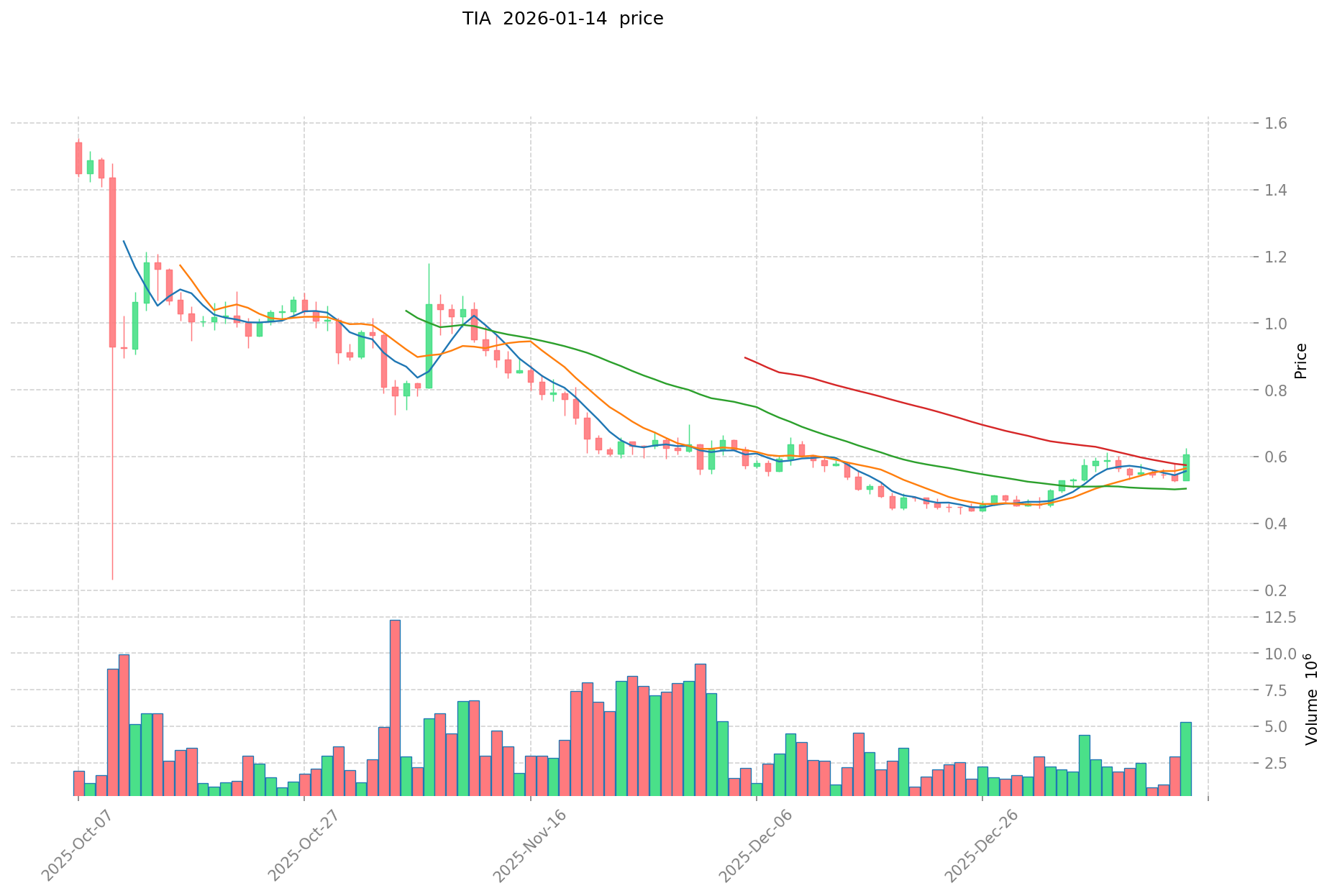
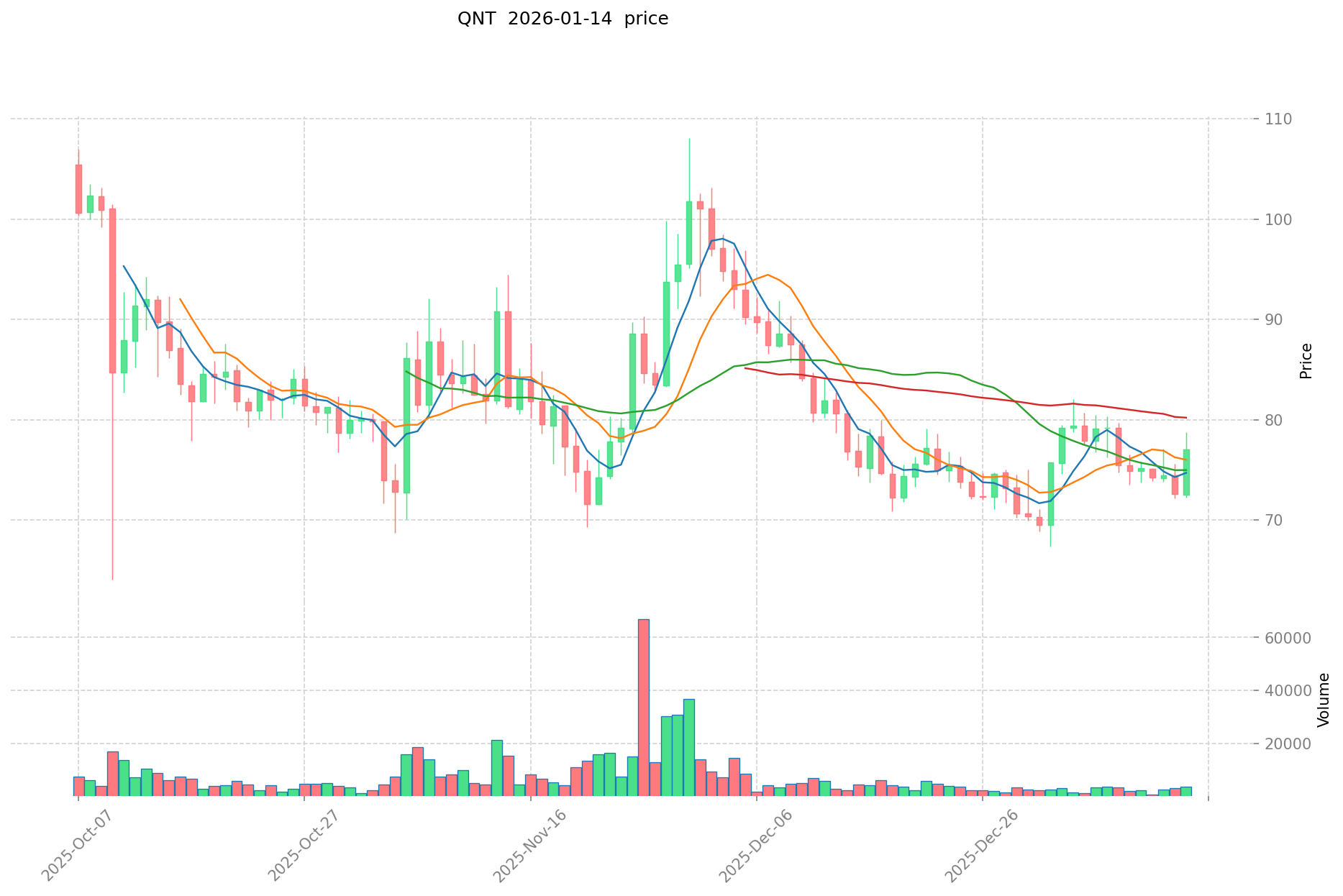
TIA (Coin A) and QNT (Coin B) Historical Price Trends
-
2021: QNT experienced notable price movement during September 2021, reaching its all-time high of $427.42. During this period, the broader crypto market was experiencing bullish momentum.
-
2024: TIA recorded its all-time high of $21.129 in February 2024, reflecting initial market enthusiasm following its launch and adoption.
-
2025: TIA reached its historical low of $0.2319 in October 2025, representing significant downward pressure. Meanwhile, QNT has demonstrated relative stability compared to its peak levels.
-
Comparative Analysis: During recent market cycles, TIA has declined from its peak of $21.129 to its current level of $0.6094, representing approximately a 97.1% decline from its all-time high. In contrast, QNT has decreased from $427.42 to $75.31, marking approximately an 82.4% decline from its historical peak. Both assets have experienced substantial corrections from their respective highs, though QNT has maintained a higher absolute price level.
Current Market Status (2026-01-15)
- TIA Current Price: $0.6094
- QNT Current Price: $75.31
- 24-Hour Trading Volume: TIA recorded $3.85M compared to QNT's $474.13K
- Market Capitalization: TIA shows $528.23M in circulating market cap, while QNT demonstrates $1.095B
- Market Sentiment Index (Fear & Greed Index): 48 (Neutral)
View real-time prices:
- Check TIA current price Market Price
- Check QNT current price Market Price
II. Core Factors Influencing TIA vs QNT Investment Value
Supply Mechanism Comparison (Tokenomics)
- TIA: The reference materials do not provide specific information regarding TIA's supply mechanism or tokenomics structure.
- QNT: The reference materials do not contain detailed information about QNT's supply model or token distribution mechanisms.
- 📌 Historical Pattern: Supply mechanisms can influence price cycles through scarcity dynamics and token release schedules, though specific data for these assets is not available in the provided materials.
Institutional Adoption and Market Application
- Institutional Holdings: The reference materials mention QNT among various tokens listed on certain platforms, suggesting market presence, but do not provide comparative institutional holding data between TIA and QNT.
- Enterprise Adoption: Available materials do not specify concrete use cases for either TIA or QNT in cross-border payments, settlements, or institutional investment portfolios.
- National Policies: Regulatory attitudes toward these specific tokens across different jurisdictions are not addressed in the reference materials.
Technology Development and Ecosystem Building
- TIA Technology Upgrades: Reference materials mention TIA as an exchange-traded note product providing investment opportunities without owning underlying assets, but technical development details are not provided.
- QNT Technology Development: The provided materials do not contain information about QNT's technical roadmap or recent developments.
- Ecosystem Comparison: Specific implementation details regarding DeFi, NFT, payment systems, or smart contract deployment for either token are not available in the reference materials.
Macroeconomic Environment and Market Cycles
- Performance in Inflationary Environments: The reference materials do not provide comparative analysis of how TIA or QNT perform as inflation hedges.
- Macroeconomic Monetary Policy: The materials do not discuss how interest rates or US dollar index movements specifically affect these two tokens.
- Geopolitical Factors: While the materials mention cross-border transaction risks in OTC trading contexts, specific geopolitical impacts on TIA or QNT are not documented.
III. 2026-2031 Price Forecast: TIA vs QNT
Short-term Forecast (2026)
- TIA: Conservative $0.49-$0.61 | Optimistic $0.61-$0.79
- QNT: Conservative $44.53-$75.48 | Optimistic $75.48-$97.37
Medium-term Forecast (2028-2029)
- TIA may enter a consolidation phase with projected price range of $0.59-$1.02
- QNT may enter an expansion phase with projected price range of $85.09-$152.41
- Key drivers: institutional capital inflows, ETF developments, ecosystem growth
Long-term Forecast (2030-2031)
- TIA: Baseline scenario $0.51-$0.92 | Optimistic scenario $0.92-$1.45
- QNT: Baseline scenario $73.19-$128.40 | Optimistic scenario $128.40-$208.87
View detailed price predictions for TIA and QNT
Disclaimer
TIA:
| Year |
Predicted High Price |
Predicted Average Price |
Predicted Low Price |
Price Change |
| 2026 |
0.793 |
0.61 |
0.4941 |
0 |
| 2027 |
0.806725 |
0.7015 |
0.61732 |
15 |
| 2028 |
0.897393875 |
0.7541125 |
0.58820775 |
23 |
| 2029 |
1.015676420625 |
0.8257531875 |
0.437649189375 |
35 |
| 2030 |
1.261379281565625 |
0.9207148040625 |
0.506393142234375 |
51 |
| 2031 |
1.451092566942703 |
1.091047042814062 |
0.927389986391953 |
79 |
QNT:
| Year |
Predicted High Price |
Predicted Average Price |
Predicted Low Price |
Price Change |
| 2026 |
97.3692 |
75.48 |
44.5332 |
0 |
| 2027 |
89.017338 |
86.4246 |
82.967616 |
14 |
| 2028 |
121.05493722 |
87.720969 |
85.08933993 |
16 |
| 2029 |
152.4064115406 |
104.38795311 |
97.0807963923 |
38 |
| 2030 |
181.040027078673 |
128.3971823253 |
73.186393925421 |
70 |
| 2031 |
208.870116347681775 |
154.7186047019865 |
82.000860492052845 |
105 |
IV. Investment Strategy Comparison: TIA vs QNT
Long-term vs Short-term Investment Strategies
-
TIA: May appeal to investors focused on emerging modular blockchain infrastructure and data availability solutions, particularly those with higher risk tolerance given its early-stage market positioning and price volatility patterns.
-
QNT: May suit investors seeking exposure to enterprise blockchain interoperability solutions with established market presence since 2018, particularly those prioritizing relatively higher market capitalization stability.
Risk Management and Asset Allocation
-
Conservative Investors: TIA 20-30% vs QNT 70-80% allocation may reflect risk-adjusted positioning based on market capitalization differences and historical volatility patterns.
-
Aggressive Investors: TIA 50-60% vs QNT 40-50% allocation could reflect higher growth potential expectations balanced against established market presence.
-
Hedging Tools: Stablecoin reserves for capital preservation, options strategies for downside protection, cross-asset portfolio diversification across multiple cryptocurrency sectors.
V. Potential Risk Comparison
Market Risks
-
TIA: Experienced approximately 97.1% decline from all-time high of $21.129 to current levels, demonstrating significant volatility exposure. Lower market capitalization of $528.23M may indicate higher susceptibility to market sentiment shifts and liquidity constraints.
-
QNT: Recorded approximately 82.4% decline from peak of $427.42, showing substantial correction patterns though maintaining higher absolute price levels. Market capitalization of $1.095B suggests relatively higher liquidity compared to TIA.
Technical Risks
-
TIA: Current 24-hour trading volume of $3.85M indicates active market participation, though scalability and network stability considerations remain relevant for emerging infrastructure projects.
-
QNT: Lower 24-hour trading volume of $474.13K may reflect reduced short-term trading activity, while long-term technical development stability remains a consideration for established platforms.
Regulatory Risks
- Both assets operate within evolving global regulatory frameworks that may differentially impact infrastructure-focused projects versus enterprise interoperability solutions. Jurisdictional variations in digital asset classification and compliance requirements represent ongoing considerations for both tokens.
VI. Conclusion: Which Is the Better Buy?
📌 Investment Value Summary:
-
TIA Advantages: Higher 24-hour trading volume ($3.85M) indicates active market participation; positioning in modular blockchain infrastructure represents exposure to emerging technological architecture trends.
-
QNT Advantages: Higher market capitalization ($1.095B) suggests established market presence; enterprise-focused positioning since 2018 reflects longer operational track record in blockchain interoperability solutions.
✅ Investment Recommendations:
-
Beginner Investors: Consider starting with smaller position sizes across both assets as part of diversified portfolio approach; prioritize understanding fundamental differences in technological positioning and market dynamics before allocation.
-
Experienced Investors: May evaluate risk-adjusted allocations based on individual portfolio objectives, technical analysis patterns, and assessment of infrastructure versus enterprise solution value propositions within broader cryptocurrency market context.
-
Institutional Investors: Could assess both assets through framework of infrastructure development trends and enterprise adoption patterns, while maintaining comprehensive risk management protocols aligned with institutional investment mandates.
⚠️ Risk Disclosure: Cryptocurrency markets exhibit extreme volatility characteristics. This content does not constitute investment advice. Market participants should conduct independent research and consult qualified financial advisors before making investment decisions.
VII. FAQ
Q1: What are the key differences between TIA and QNT in terms of market positioning?
TIA focuses on modular blockchain infrastructure providing data availability layer solutions, while QNT specializes in enterprise blockchain interoperability through its Overledger operating system. TIA represents emerging blockchain architecture with a market cap of $528.23M and has been positioned in the modular blockchain space since its launch. QNT, established in 2018, serves enterprises, regulators, and governments with interoperability solutions and maintains a higher market capitalization of $1.095B, reflecting its longer operational history and established market presence in enterprise blockchain connectivity.
Q2: How do the historical price performances of TIA and QNT compare?
TIA has declined approximately 97.1% from its all-time high of $21.129 (February 2024) to its current price of $0.6094, while QNT has decreased approximately 82.4% from its peak of $427.42 (September 2021) to $75.31. Both assets have experienced substantial corrections from their respective highs, though QNT has demonstrated relatively better price retention and maintains a significantly higher absolute price level. TIA's steeper decline reflects higher volatility patterns typical of newer projects, while QNT's performance suggests relatively greater price stability despite overall market downturns.
Q3: Which cryptocurrency shows higher trading activity between TIA and QNT?
TIA demonstrates significantly higher trading activity with 24-hour trading volume of $3.85M compared to QNT's $474.13K. This approximately 8x volume difference indicates more active market participation and potentially better short-term liquidity for TIA. However, higher trading volume doesn't necessarily indicate superior investment quality, as it may also reflect increased speculative activity. QNT's lower trading volume might suggest a more stable holder base with less frequent trading, which can be characteristic of established projects with institutional or long-term investor participation.
Q4: What investment allocation strategy should I consider for TIA vs QNT?
Conservative investors might consider a 20-30% TIA and 70-80% QNT allocation, reflecting risk-adjusted positioning based on market capitalization differences and volatility patterns. Aggressive investors seeking higher growth potential might opt for 50-60% TIA and 40-50% QNT allocation, balancing emerging infrastructure exposure against established market presence. The allocation strategy should align with individual risk tolerance, investment timeframe, and portfolio diversification objectives. Both positions should be sized appropriately within a broader cryptocurrency portfolio that includes risk management tools such as stablecoin reserves and potentially options strategies for downside protection.
Q5: What are the price forecasts for TIA and QNT through 2031?
For 2026, TIA's conservative forecast ranges from $0.49-$0.61, with optimistic scenarios reaching $0.61-$0.79. QNT's 2026 conservative projection spans $44.53-$75.48, with optimistic estimates of $75.48-$97.37. By 2031, TIA's baseline scenario projects $0.51-$0.92 (optimistic: $0.92-$1.45), while QNT's baseline forecast ranges from $73.19-$128.40 (optimistic: $128.40-$208.87). These projections suggest QNT may maintain higher absolute price levels, while both assets show potential for growth from current levels, subject to institutional adoption, ecosystem development, and broader market conditions.
Q6: What are the primary risks associated with investing in TIA versus QNT?
TIA's primary risks include higher volatility evidenced by its 97.1% decline from peak, lower market capitalization ($528.23M) suggesting greater susceptibility to market sentiment shifts, and execution risks typical of emerging infrastructure projects. QNT faces risks including its 82.4% correction from all-time high, lower current trading volume ($474.13K) indicating reduced short-term liquidity, and potential technological obsolescence in the rapidly evolving blockchain interoperability sector. Both assets face regulatory uncertainties as global frameworks for digital assets continue developing, with potential differential impacts based on their distinct positioning as infrastructure versus enterprise solutions.
Q7: How should beginners approach investing in TIA and QNT?
Beginners should start with smaller position sizes across both assets as part of a diversified cryptocurrency portfolio, allocating only capital they can afford to lose given extreme market volatility. Priority should be understanding the fundamental technological differences—TIA's modular blockchain infrastructure versus QNT's enterprise interoperability solutions—before making allocation decisions. New investors should research both projects' development roadmaps, community engagement, and market adoption patterns while maintaining risk management protocols including setting stop-loss levels and avoiding emotional decision-making during market fluctuations. Consulting qualified financial advisors before investment decisions is strongly recommended.
Q8: What macroeconomic factors might influence TIA and QNT price movements?
Both TIA and QNT may be influenced by broader cryptocurrency market cycles, institutional capital flows into digital assets, and regulatory developments across major jurisdictions. Interest rate policies from central banks can affect risk asset appetite, potentially impacting cryptocurrency valuations including both tokens. Global economic uncertainty might drive demand for alternative assets, though cryptocurrency markets have historically shown correlation with risk-on sentiment rather than functioning purely as hedges. Technological adoption trends, enterprise blockchain investment patterns, and infrastructure development initiatives may differentially impact these assets based on their distinct positioning in modular architecture versus enterprise interoperability sectors.
* The information is not intended to be and does not constitute financial advice or any other recommendation of any sort offered or endorsed by Gate.