The complete guide to short selling Bitcoin. This beginner-friendly resource explains six trading methods—margin trading, futures, CFDs, options, and more. Master strategies to profit from downward markets with practical tips on technical analysis, risk management, and effective stop-loss settings.
What Is Short Selling in Cryptocurrency?
Short selling Bitcoin means selling BTC at a given price—either at market or via a limit order—then aiming to buy it back later at a lower price to pocket the difference. This inverts the standard "buy low, sell high" investment principle. Traders use short selling as a strategy to profit when they expect Bitcoin’s price to decline.
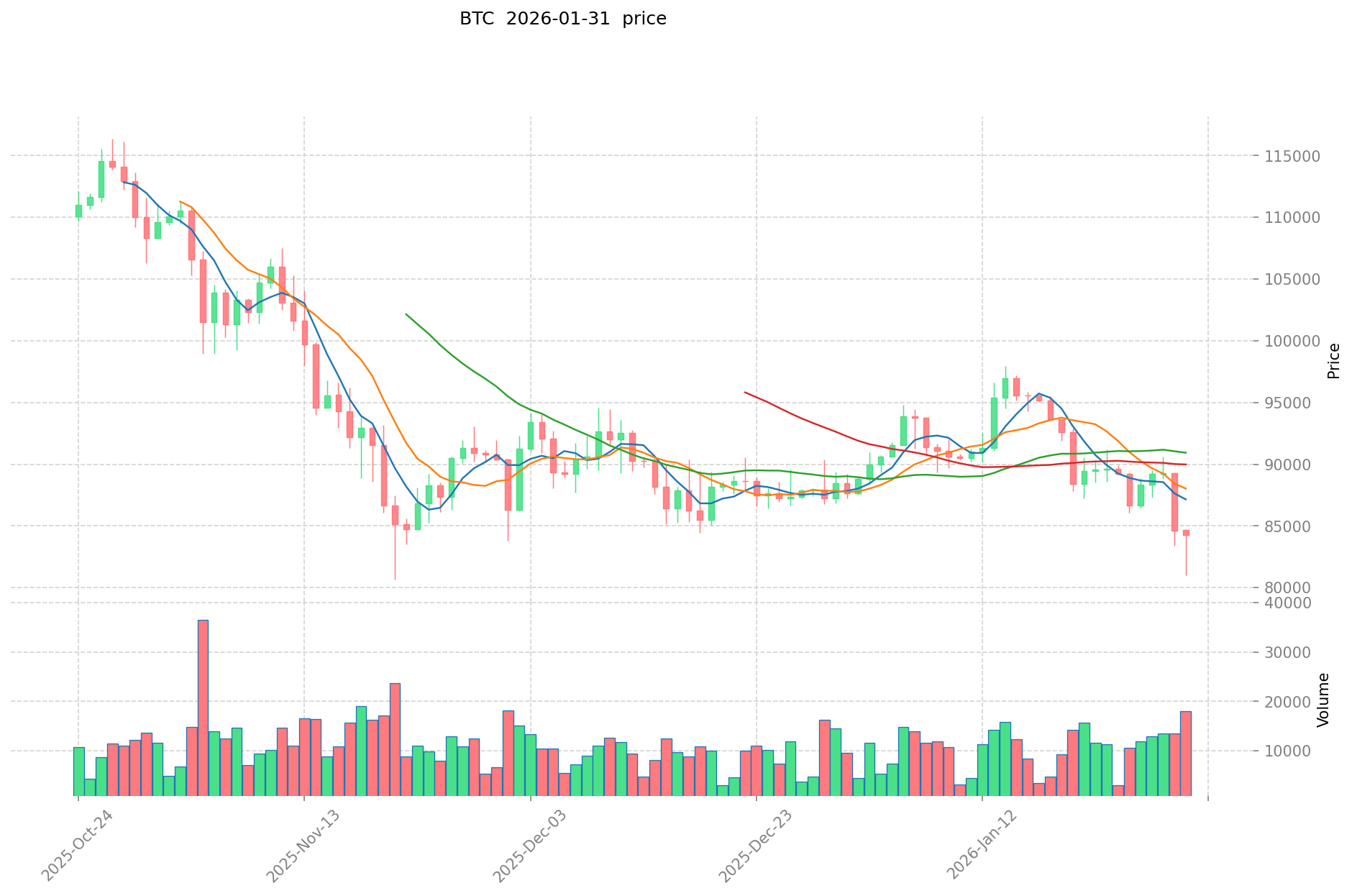
The crypto market is known for its much higher price volatility compared to traditional financial markets. This volatility creates significant opportunities for short sellers. The more the price swings, the more chances traders have to profit from market downturns. Simply put, the higher the volatility, the greater the opportunity for short selling.
Short selling isn’t just a speculative tactic—it’s a key risk management tool for crypto portfolios. Opening short positions can hedge against downside risk for long-term crypto holdings, helping to reduce losses when the broader market falls.
How Bitcoin Short Selling Works
To short Bitcoin, you first borrow BTC from a trading platform to open a short position—a process known as “margin.” Once you’ve borrowed the BTC, you sell it at the current market price. When the price drops, you buy it back, close your position, and your profit is the difference between your sell and buy prices.
The basic short selling process is as follows: deposit collateral with your trading platform; use that collateral to borrow Bitcoin and sell it on the market; once the price falls, buy back the cheaper BTC and return it to the lender. The spread between your selling and repurchasing prices is your profit.
Several important caveats apply. You cannot short sell assets you already own—if you do, you’re simply selling, which means you lose the opportunity to benefit from buying back later at a lower price. Short selling therefore almost always involves borrowing.
You can compare borrowing limits and terms by opening accounts with different exchanges or brokers. Note that all borrowing requires collateral and accrues interest over the borrowing period. Margin interest is a key consideration when calculating the profitability of a short sale.
If you prefer not to trade BTC directly or want maximum flexibility, you can short via derivatives. Derivative products let you profit from price declines without ever borrowing Bitcoin itself.
Benefits of Short Selling Cryptocurrency
Hedging Unrealized Losses
During Bitcoin downtrends, mid- and long-term holders can face significant unrealized losses—especially those with large positions. Short selling provides a way to hedge and reduce these losses.
Profits from a short position can offset losses on spot holdings, functioning like insurance. This means investors can hold their assets with more confidence, even in uncertain markets. While it’s impossible to eliminate risk entirely, short selling can significantly limit potential losses.
Profiting from Volatility
Market volatility isn’t always a negative. While beginners may fear price swings, experienced traders see volatility as an opportunity. With the right skills, you can profit by shorting during downtrends and closing the position as prices rebound.
Short selling is a classic way to capitalize on volatility. The crypto market trades 24/7, reacting instantly to global news and events. By understanding these dynamics and opening short positions at the right moments, you can accumulate steady profits even in bear markets.
Supporting Fair Price Discovery
Short selling also reinforces the integrity of the market. It helps correct overinflated prices. Short sellers add to market supply, balancing supply and demand, and helping steer prices to more reasonable levels.
This moderates bubble-like surges and boosts overall market stability. Markets with active short sellers are less prone to runaway price moves, making them more mature and transparent. For investors, this improves the environment for long-term decision-making.
Trade with Less Capital
You don’t need a large capital outlay to short Bitcoin. Many exchanges offer leverage of 2x, 3x, even up to 5x or more. Leverage allows you to control larger positions with less money and amplify your profits regardless of market direction.
But leverage is a double-edged sword. While it magnifies profits, it also increases losses. Beginners should start with low leverage, then scale up as they gain experience. When paired with sound risk management, leverage can be a powerful profit tool.
Risks of Short Selling Crypto
Unlimited Loss Risk
In spot trading, your maximum loss is limited to your investment—you might lose your principal, but nothing more. With short selling, potential losses are theoretically unlimited.
That’s because you’re selling borrowed assets. If the price surges, your cost to buy back and close the position rises without limit. For example, if you short Bitcoin at 1,000,000 JPY and it doubles or triples, your liability grows in lockstep. Since there’s no cap on price appreciation, losses can be infinite in theory.
To manage this risk, always set stop-loss orders to close your position automatically if losses reach a certain threshold. Also, keep leverage in check and avoid taking on excessive risk.
Margin Interest
Borrows accrue margin interest, typically calculated hourly or daily by the platform. The longer you hold a short, the greater your total interest cost. While often overlooked, this can be a significant drag on profits—especially in long-term trades.
If the market moves against you and you’re forced to hold your position, interest costs can quickly outweigh gains. Compare projected profits with interest costs before entering a short, and make sure your trade remains viable.
During periods of high volatility or thin liquidity, margin rates may spike. Always check the current rate structure before you trade, and understand the impact on your overall returns.
How to Short Sell Crypto: 6 Core Methods
1. Margin Trading
The most common short selling method is margin trading. Here, you borrow Bitcoin from a trading platform, sell it, and buy it back after the price falls. Your profit is the difference between the selling and repurchase price.
The biggest advantage of margin trading is its simplicity—it closely resembles spot trading. However, borrowing and repayment introduce interest and risk management factors you need to understand. Leading exchanges offer margin trading as a standard feature, making it easy to get started.
2. Futures Markets
If you’d rather not trade Bitcoin directly, you can short via the futures market. Futures contracts let you agree to buy or sell assets at a set price on a future date. This lets you implement flexible strategies without physical delivery.
If you expect Bitcoin to fall, you open a “short” futures contract. If the price drops, you buy in the market and deliver at the higher contract price for a profit.
The main benefits of futures trading are easy access to leverage and clear settlement dates. However, if the market moves against you before expiry, losses are realized.
3. Binary Options
Binary options let you short Bitcoin using flexible, non-obligatory contracts. These derivatives let you bet on future price moves. Unlike futures, you’re not required to exercise your right and can let the contract expire if conditions aren’t favorable.
A “call option” gives you the right to buy Bitcoin at a low price; a “put option” gives you the right to sell at a high price. For short selling, you’d typically buy puts or sell calls to profit from downturns.
The standout advantage of options trading is defined risk. If you buy an option, the maximum loss is the premium you pay, while potential profit is theoretically unlimited. But options can be complex and require advanced knowledge and experience.
4. Inverse ETPs
Standard ETPs (Exchange Traded Products) track the underlying asset price upward. Inverse ETPs move in the opposite direction of Bitcoin—if Bitcoin falls, the inverse ETP rises in value.
The chief benefit: you don’t need to borrow Bitcoin or use complex derivatives. You can profit from price declines much like buying a stock. If you have an exchange account, these products are generally accessible for beginners.
However, holding inverse ETPs long-term can lead to divergence from the underlying asset due to compounding effects. They’re best suited for short-term trades, not long-term investments.
5. Bitcoin CFDs
CFDs (Contracts for Difference) are a type of derivative similar to futures. There’s no actual transfer of Bitcoin; instead, you speculate on the difference between opening and closing prices over a set period. This means you can profit from price moves without owning or managing the asset itself.
The main advantages are high leverage and relatively low trading costs. You can go long or short, creating opportunities in any market condition.
Major brokers offer Bitcoin CFDs, making them easy to access. Remember, high leverage means higher risk, so robust risk management is essential.
6. Standard Short Sale of Owned Bitcoin
You can also short sell by simply selling the Bitcoin you already own on an exchange or wallet. This is the most straightforward approach—no specialized knowledge or complex procedures required. Sell your Bitcoin at the market price, then buy it back if the price falls.
The main benefit here is that you don’t pay interest as you would in margin trading. And because you’re using your own assets, there’s no risk of forced liquidation. However, profits are limited to the size of your Bitcoin holdings.
If the price rises after you sell, you’ll need to pay more to buy back, resulting in opportunity costs. This method is best for short-term price adjustments or temporary cash conversion.
Tools for Short Selling Crypto
Success in short selling relies on using proper analytical tools and methods. To accurately predict market moves and identify optimal entry and exit points, combine multiple analytical approaches. The three core methods are technical analysis, sentiment analysis, and fundamental analysis.
Technical Analysis
Timing is everything in short selling. That means mastering chart analysis. By examining historical price action and using multiple indicators, you can forecast trends and use candlestick patterns to spot good short entries.
Technical analysis forecasts price movements using past price and volume data. Market psychology and behavior tend to repeat, so understanding past patterns helps anticipate future moves.
RSI (Relative Strength Index)
The RSI is a standard momentum indicator for spotting trend reversals in Bitcoin and other cryptocurrencies. The RSI ranges from 0 to 100; values above 70 indicate overbought conditions, below 30 indicate oversold.
If Bitcoin’s price keeps climbing but RSI falls, it signals waning upward momentum and a likely price drop ahead. This “divergence” is a key reversal signal.
For short entry, a typical trigger is the RSI crossing back below 70. Don’t rely on RSI alone—always combine it with other indicators for confirmation.
Bollinger Bands
Bollinger Bands visualize volatility by plotting bands above and below a moving average based on standard deviation. Roughly 95% of price action occurs within these bands.
When the bands narrow (“squeeze”), it signals a likely upcoming volatility spike. Touching the upper band signals overbought conditions; the lower band signals oversold. Both are potential reversal points.
A common short strategy is to enter when price hits the upper band and then retreats inside. A sudden band expansion often signals the start of a new trend—watch these closely.
Moving Averages
Moving averages smooth out price data to reveal trends. The Simple Moving Average (SMA) weights all periods equally; the Exponential Moving Average (EMA) gives more weight to recent data.
Crossovers are classic reversal signals—for example, a “death cross” (short-term average crossing below long-term) is a bearish trigger for shorts.
If price deviates far above a moving average, a correction is likely—potential entry for shorts. Using multiple MAs (e.g., 5-, 25-, 75-day) enables more nuanced analysis.
Standard Deviation
Given Bitcoin’s high volatility, tools for measuring price swings are essential. Standard deviation quantifies price dispersion, helping you predict future volatility. The higher it is, the bigger the price swings.
When shorting, you can use standard deviation to set stop-losses for risk control. For example, place a stop two standard deviations above the current price—it won’t trigger on normal moves, but will limit losses in extreme surges.
Spiking standard deviation signals rising market uncertainty and calls for caution. Falling standard deviation means a stable market, where trends are more likely to persist.
ADX
The Average Directional Index (ADX) measures trend strength on a 0–100 scale. Readings above 25 show a trend is present; below 25 means weak or absent trends.
ADX is especially useful for managing short risk. When ADX is high and price is falling, short setups are more likely to succeed. When ADX is low, trend clarity is lacking—avoid shorts in these conditions.
Pair ADX with the +DI and -DI indicators for deeper analysis. When -DI overtakes +DI and ADX rises, it strongly signals a new downtrend.
Sentiment Analysis
Beyond price, market sentiment is crucial for short selling. Trader emotions and expectations drive short-term moves. Sentiment analysis uses data visualization, social media trends, and news analytics to gauge the market mood.
One of the best sentiment tools for Bitcoin is the Bitcoin Fear and Greed Index, which scores market sentiment from 0 (extreme fear) to 100 (extreme greed).
A high index (75+) signals excessive optimism and a likely correction—prime conditions for shorts. Conversely, a low index (25 or below) suggests extreme pessimism and a potential rebound.
Changes in social media mentions and sentiment swings also matter. If positive mentions spike, the market may be overheating—a shorting opportunity.
Fundamental Analysis
Alongside sentiment, fundamental analysis is vital for short selling. This approach judges the intrinsic value and outlook for crypto assets. While technical analysis shows “when” to trade, fundamental analysis explains “why” price moves occur.
Look at global news, regulatory developments, volume and activity shifts, supply-demand changes, and Bitcoin’s halving cycles. By analyzing these elements, you can judge whether a cryptocurrency is fairly valued and gauge its long-term prospects.
For example, regulatory crackdowns in major economies often trigger short-term price drops—vital information for timing shorts. Whale moves or large exchange deposits can also foreshadow price declines.
Bitcoin’s halving cycle is another key factor. Every four years, mining rewards are halved, slowing supply growth. While prices tend to rise after halving, corrections often occur beforehand. Understanding these cycles enables more strategic short selling.
How to Start Short Selling Bitcoin
To begin short selling Bitcoin, first open an account with a reputable trading platform. The general process is as follows:
Step 1: Register on a major exchange and complete identity verification (KYC). If you’re using the mobile app, log in with your credentials or scan a QR code.
Step 2: In the platform’s menu, find the “Trade” section and select “Margin Trading.” Most platforms clearly separate spot and margin trading features.
Step 3: Before trading, transfer funds from your main wallet to your margin trading wallet—these funds serve as collateral for shorts.
Step 4: On the margin trading screen, select the crypto pair you want to trade (e.g., BTC/USDT), then choose “Sell” or “Short.”
Step 5: Set your borrowing amount and position size. Most platforms show the max you can borrow based on collateral. Beginners should start with small positions.
Step 6: Choose your order type. Limit orders let you set your own price; market orders execute immediately at the current price. Limit orders give price control but may not fill if the price doesn’t reach your target.
Step 7: Review your order, and if all details are correct, execute the trade. Once filled, your open position will be displayed.
Step 8: Close your position when the price drops and you realize a profit, or to cut losses. This is done by buying back the crypto you shorted. The difference between your sell and buy price is your gain or loss.
Remember, you’ll incur margin interest while holding a short. If the market moves sharply against you, you may receive a margin call for additional collateral. In the worst case, your position could be forcibly liquidated—so always manage your risk carefully.
Short Selling Crypto: Key Principles and Best Practices
Short selling Bitcoin means selling at a given price, then buying back after the price falls to capture the profit. While this inverts “buy low, sell high,” grasping the concept is step one for any short seller.
Short selling is not a get-rich-quick shortcut. On the contrary, it demands advanced knowledge, skill, and disciplined judgment. Leverage can magnify both profits and risks. Fully understand all potential pitfalls before you trade.
To succeed as a short seller, master the basics and study Bitcoin shorting in-depth. Combining technical, fundamental, and sentiment analysis enables more accurate trading decisions.
Regardless of your chosen method, always stay within your risk tolerance. Never put all your capital into a single trade. Proper fund management and position sizing are crucial for long-term success.
Before going live, build experience through demo accounts or small trades. Get comfortable with the trading platform and test your strategies with minimal risk—this helps prevent large losses.
Finally, the crypto market operates 24/7 and can swing sharply on unexpected news or events. Always stay up to date and maintain flexibility to navigate changing market conditions—this is fundamental for any successful short seller.
FAQ
What is short selling in crypto, and how is it different from spot trading?
Short selling uses leverage to open a sell position, allowing you to profit from a price drop. In spot trading, you can’t sell assets you don’t own; with short selling, you use margin as collateral to start with a sale. If the price drops, you make a profit.
What are the basic steps to short selling Bitcoin or other cryptocurrencies?
After opening an account, use leverage to open a short position and close it when the price falls. Carefully manage your trade size and set stop-losses to control risk.
What are effective strategies or best practices for profiting from short selling crypto?
Borrow assets via margin trading, sell them, then buy back if the price falls. Use technical analysis to confirm a downtrend and set a clear stop-loss. Keep your trade size tightly managed.
What risk management steps are essential when using leverage for short selling?
When shorting with leverage, strictly control your position size, set stop-losses in advance, monitor your margin ratio, and be prepared for rapid price swings. Practice disciplined capital management to avoid losses beyond your available funds.
Which major exchanges or platforms support short selling crypto?
Major exchanges with leverage trading support short selling. In Japan, platforms operated by GMO Internet Group offer both spot and leveraged trading with high security and a wide range of services.
How can I set effective stop-losses to minimize losses on short positions?
Dynamic stop-losses that take market volatility into account are key. Avoid fixed stops; instead, set them at appropriate levels for current conditions and adjust as the market changes to minimize losses.
* The information is not intended to be and does not constitute financial advice or any other recommendation of any sort offered or endorsed by Gate.