This comprehensive analysis compares TNSR and ETH investment potential across multiple dimensions. TNSR, Solana's NFT marketplace platform launched April 2024, demonstrates higher volatility with an 83.39% decline over the past year, while ETH, the established smart contract infrastructure since 2014, shows 11.33% decline with significantly deeper liquidity. The article evaluates historical price trends, supply mechanisms, institutional adoption, technical ecosystems, and provides detailed 2026-2031 price forecasts. Current market conditions reveal TNSR at $0.06293 versus ETH at $2,949.51. Investment strategies differentiate between asset allocation levels for conservative (TNSR 5-10%, ETH 20-30%) and aggressive investors (TNSR 15-25%, ETH 40-50%). While TNSR offers specialized NFT marketplace exposure, ETH provides broader blockchain infrastructure exposure with established adoption patterns on Gate.
Introduction: Investment Comparison Between TNSR and ETH
In the cryptocurrency market, the comparison between TNSR vs ETH continues to be a topic of interest for investors. The two differ significantly in market cap rankings, application scenarios, and price performance, representing distinct positioning within crypto assets.
TNSR (Tensor): Launched in April 2024, it positions itself as Solana's NFT marketplace platform serving both traders and creators.
ETH (Ethereum): Since its launch in July 2014, it has been recognized as a decentralized blockchain platform supporting smart contracts and decentralized applications (DApps), ranking as one of the cryptocurrencies with substantial global trading volume and market capitalization.
This article will analyze the investment value comparison of TNSR vs ETH across dimensions including historical price trends, supply mechanisms, institutional adoption, technical ecosystems, and future projections, while attempting to address investors' primary question:
"Which is the better buy right now?"
I. Historical Price Comparison and Current Market Status
Historical Price Trends of TNSR (Coin A) and ETH (Coin B)
- 2024: TNSR recorded its highest price at $3.89 on April 8, 2024, shortly after its initial trading period. The asset experienced notable price volatility during this early phase.
- 2025: TNSR reached its lowest price at $0.02852 on October 10, 2025, reflecting significant market correction.
- 2015: ETH established its historical low at $0.432979 on October 20, 2015, during its early development stage.
- 2025: ETH achieved its highest price at $4,946.05 on August 25, 2025, representing substantial growth from its initial levels.
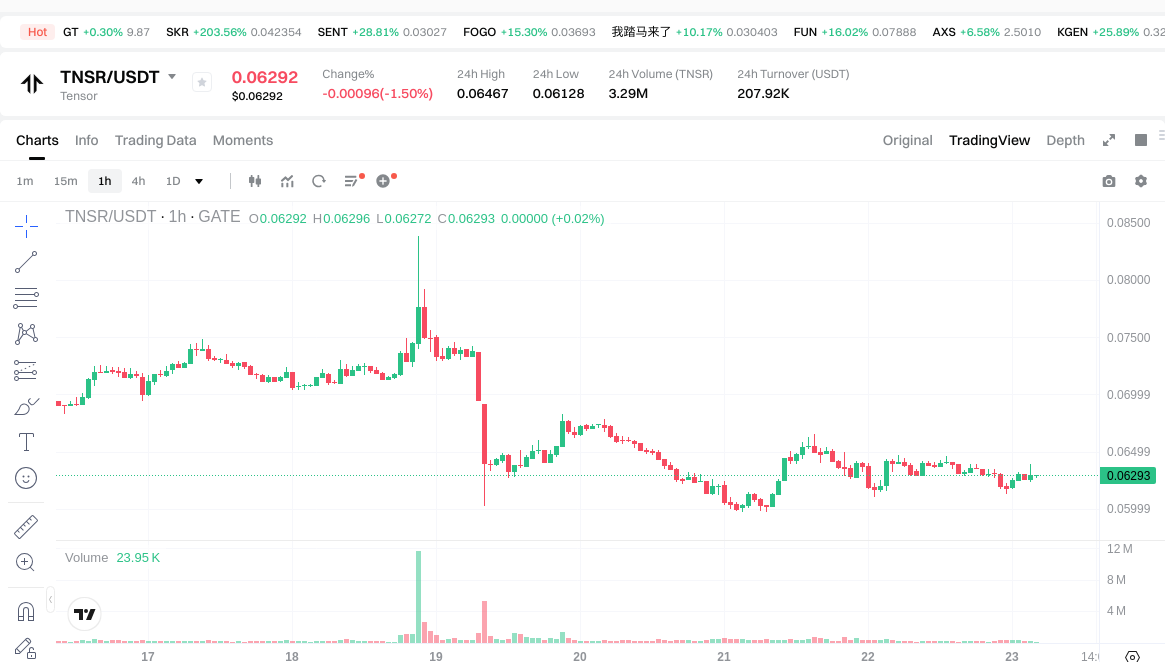
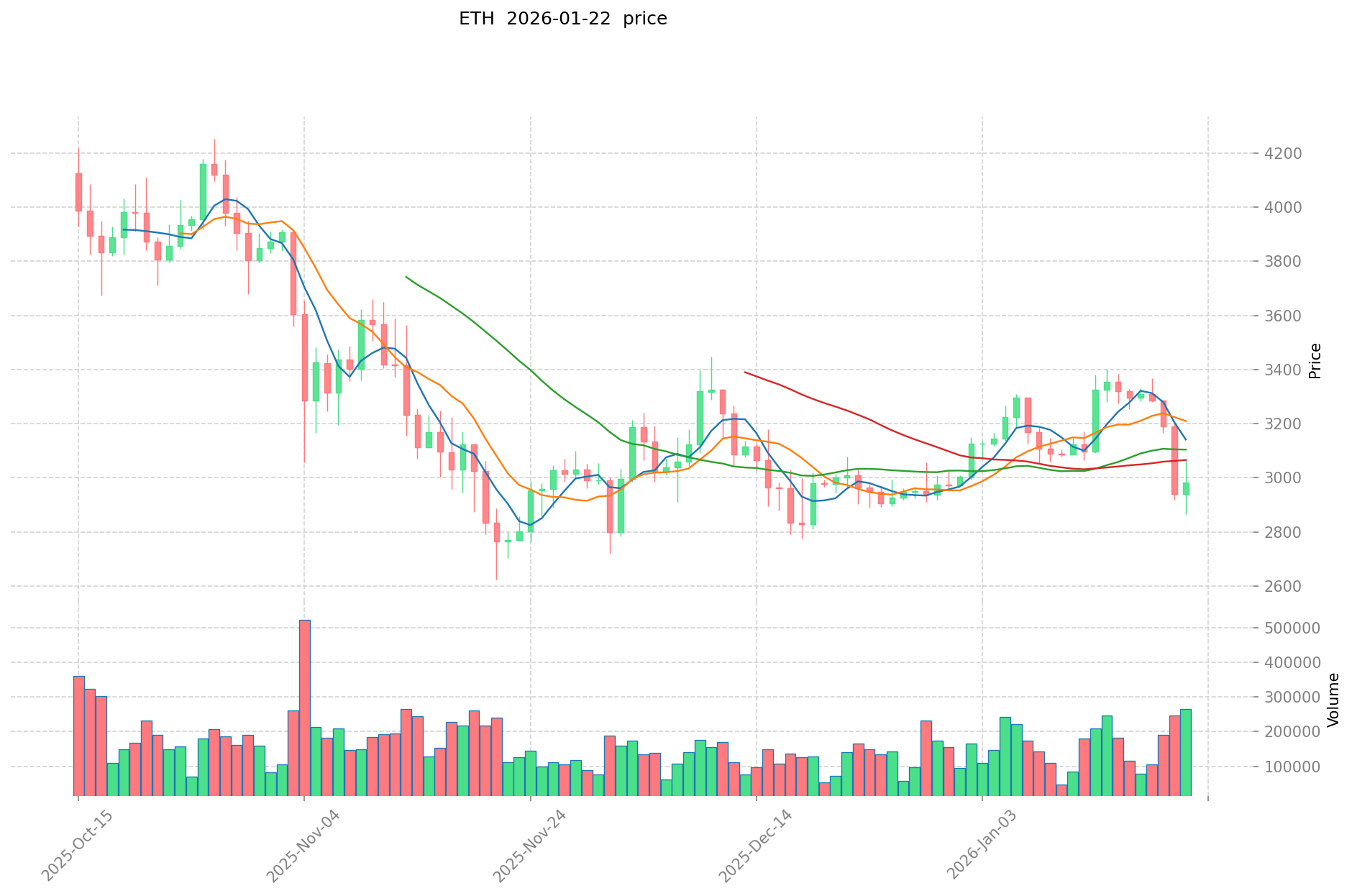
- Comparative Analysis: During recent market cycles, TNSR declined from $3.89 to $0.02852, demonstrating an 83.39% decrease over the past year. Meanwhile, ETH experienced an 11.33% decline over the same period, showing relatively different volatility patterns compared to TNSR.
Current Market Status (January 23, 2026)
- TNSR Current Price: $0.06293
- ETH Current Price: $2,949.51
- 24-Hour Trading Volume: TNSR recorded $210,622.15 compared to ETH's $480,911,937.68
- Market Sentiment Index (Fear & Greed Index): 20 (Extreme Fear)
View Real-Time Prices:
II. Core Factors Affecting TNSR vs ETH Investment Value
Supply Mechanism Comparison (Tokenomics)
Due to the absence of detailed tokenomics data in the provided materials, a comprehensive comparison of supply mechanisms between TNSR and ETH cannot be presented at this time.
Institutional Adoption and Market Application
Without specific information regarding institutional holdings, enterprise adoption, or regulatory positions across different jurisdictions for TNSR and ETH, a comparative analysis of their market applications and institutional preference cannot be established based on the available materials.
Technical Development and Ecosystem Building
The provided materials do not contain sufficient information about technical upgrades, development roadmaps, or ecosystem metrics (including DeFi, NFT, payment systems, and smart contract implementations) for either TNSR or ETH to enable a meaningful comparison.
Macroeconomic Conditions and Market Cycles
In the absence of historical performance data, correlation analyses with macroeconomic indicators, or comparative studies on inflation resistance, interest rate sensitivity, and geopolitical impacts, an assessment of how TNSR and ETH respond to different macroeconomic environments and market cycles cannot be provided based on the current reference materials.
III. 2026-2031 Price Forecast: TNSR vs ETH
Short-term Forecast (2026)
- TNSR: Conservative $0.0409-$0.0629 | Optimistic $0.0629-$0.0705
- ETH: Conservative $1,652-$2,951 | Optimistic $2,951-$3,394
Medium-term Forecast (2028-2029)
- TNSR may enter a growth phase with projected price range of $0.0659-$0.1139 in 2028, potentially reaching $0.0908-$0.1123 by 2029
- ETH may enter a consolidation phase with projected price range of $2,581-$4,130 in 2028, potentially advancing to $2,802-$4,430 by 2029
- Key drivers: institutional capital inflows, ETF developments, ecosystem expansion
Long-term Forecast (2030-2031)
- TNSR: Baseline scenario $0.0987-$0.1265 | Optimistic scenario $0.1019-$0.1480
- ETH: Baseline scenario $3,057-$4,704 | Optimistic scenario $2,136-$5,299
View detailed price predictions for TNSR and ETH
Disclaimer
TNSR:
| Year |
Predicted High Price |
Predicted Average Price |
Predicted Low Price |
Price Change |
| 2026 |
0.0704816 |
0.06293 |
0.0409045 |
0 |
| 2027 |
0.096056352 |
0.0667058 |
0.056032872 |
5 |
| 2028 |
0.1139335064 |
0.081381076 |
0.06591867156 |
29 |
| 2029 |
0.11230588488 |
0.0976572912 |
0.090821280816 |
55 |
| 2030 |
0.1480240391364 |
0.10498158804 |
0.1018321403988 |
66 |
| 2031 |
0.141683151218784 |
0.1265028135882 |
0.098672194598796 |
100 |
ETH:
| Year |
Predicted High Price |
Predicted Average Price |
Predicted Low Price |
Price Change |
| 2026 |
3393.604 |
2950.96 |
1652.5376 |
0 |
| 2027 |
3711.56994 |
3172.282 |
1617.86382 |
7 |
| 2028 |
4130.311164 |
3441.92597 |
2581.4444775 |
16 |
| 2029 |
4429.75872339 |
3786.118567 |
2801.72773958 |
28 |
| 2030 |
5299.24085230155 |
4107.938645195 |
2136.1280955014 |
39 |
| 2031 |
4985.8051336731715 |
4703.589748748275 |
3057.33333668637875 |
59 |
IV. Investment Strategy Comparison: TNSR vs ETH
Long-term vs Short-term Investment Strategies
- TNSR: May appeal to investors focused on NFT marketplace dynamics and Solana ecosystem development, particularly those with tolerance for elevated volatility in emerging platform tokens
- ETH: May appeal to investors seeking exposure to established smart contract infrastructure and decentralized application ecosystems, with interest in longer-term blockchain adoption trends
Risk Management and Asset Allocation
- Conservative investors: TNSR 5-10% vs ETH 20-30%
- Aggressive investors: TNSR 15-25% vs ETH 40-50%
- Hedging instruments: stablecoin allocation, options strategies, cross-asset portfolio diversification
V. Potential Risk Comparison
Market Risk
- TNSR: Exhibited substantial price fluctuations with an 83.39% decline over the past year, reflecting higher volatility characteristics typical of newer platform tokens with limited trading history
- ETH: Demonstrated an 11.33% decline over the same period, showing different volatility patterns influenced by broader market cycles and institutional participation levels
Technical Risk
- TNSR: Platform scalability considerations, network stability factors related to NFT marketplace infrastructure
- ETH: Network congestion patterns, gas fee variability, ongoing transition to proof-of-stake consensus mechanism
Regulatory Risk
- Global regulatory developments may affect both assets differently, with established platforms potentially facing distinct compliance requirements compared to newer marketplace-focused tokens
VI. Conclusion: Which Is the Better Buy?
📌 Investment Value Summary:
- TNSR advantages: Positioning within Solana NFT marketplace sector, potential for growth in specialized trading platform segment
- ETH advantages: Established infrastructure for smart contracts and decentralized applications, broader institutional recognition and adoption patterns
✅ Investment Considerations:
- Novice investors: May consider starting with more established assets showing longer price history and broader market participation before exploring emerging platform tokens
- Experienced investors: May evaluate portfolio diversification across different blockchain ecosystems and use cases, balancing exposure between established infrastructure and emerging marketplace platforms
- Institutional investors: May assess allocation based on risk management frameworks, compliance requirements, and strategic positioning within blockchain technology sectors
⚠️ Risk Disclosure: Cryptocurrency markets demonstrate substantial volatility. This content does not constitute investment advice.
VII. FAQ
Q1: What is the main difference between TNSR and ETH in terms of their core functions?
TNSR is a specialized NFT marketplace platform built on Solana launched in April 2024, while ETH is an established decentralized blockchain platform supporting smart contracts and DApps since July 2014. TNSR focuses specifically on NFT trading infrastructure within the Solana ecosystem, serving traders and creators in the digital collectibles space. In contrast, ETH provides the foundational layer for a broad range of decentralized applications, including DeFi protocols, NFT marketplaces, gaming platforms, and enterprise solutions, representing fundamentally different scopes of blockchain utility.
Q2: How do the price volatilities of TNSR and ETH compare over the past year?
TNSR experienced an 83.39% decline over the past year (from $3.89 to current levels), while ETH declined 11.33% during the same period. TNSR's substantially higher volatility reflects characteristics typical of newer platform tokens with limited trading history and concentrated exposure to the NFT marketplace segment. ETH's relatively lower volatility demonstrates patterns influenced by broader market participation, institutional involvement, and its established position as infrastructure for multiple blockchain use cases, though both assets remain subject to cryptocurrency market dynamics.
Q3: What are the projected price ranges for TNSR and ETH in 2026?
For 2026, TNSR's conservative forecast ranges from $0.0409 to $0.0629, with an optimistic scenario extending to $0.0705. ETH's conservative forecast for 2026 ranges from $1,652 to $2,951, with an optimistic scenario reaching $3,394. These projections reflect different market positioning, with TNSR's range representing potential recovery from recent lows in the NFT marketplace sector, while ETH's range reflects consolidation patterns typical of established blockchain infrastructure assets. Both forecasts remain subject to market cycles, adoption trends, and broader cryptocurrency market conditions.
Q4: How should investors approach asset allocation between TNSR and ETH?
Conservative investors may consider allocating 5-10% to TNSR versus 20-30% to ETH within their cryptocurrency portfolios, while aggressive investors might allocate 15-25% to TNSR versus 40-50% to ETH. This allocation framework reflects the different risk-return profiles, with TNSR representing exposure to emerging NFT marketplace infrastructure with higher volatility, and ETH providing exposure to established smart contract platforms with broader adoption. Investors should consider their risk tolerance, investment timeframes, and portfolio diversification objectives when determining appropriate allocation levels between these assets.
Q5: What are the primary risks associated with investing in TNSR versus ETH?
TNSR's primary risks include elevated price volatility (83.39% decline over the past year), platform scalability considerations specific to NFT marketplace infrastructure, and concentration risk within the Solana ecosystem. ETH faces different risk factors including network congestion patterns, gas fee variability, ongoing technical transitions, and regulatory developments affecting established blockchain platforms. Both assets are subject to broader cryptocurrency market risks, macroeconomic conditions, and regulatory uncertainties, though they manifest differently based on each asset's market position, adoption stage, and use case concentration.
Q6: Which cryptocurrency is more suitable for novice investors?
ETH may be more suitable for novice investors due to its longer price history since 2014, broader market participation, and established infrastructure supporting multiple use cases. ETH's relatively lower volatility (11.33% decline versus TNSR's 83.39% decline over the past year) and wider institutional recognition provide characteristics that align with typical risk considerations for investors beginning their cryptocurrency exposure. TNSR, while offering specialized exposure to the NFT marketplace sector, demonstrates volatility patterns and concentration risks that typically require greater market experience and risk tolerance to navigate effectively.
Q7: How do current market conditions affect the investment outlook for TNSR and ETH?
As of January 23, 2026, the market sentiment index stands at 20 (Extreme Fear), reflecting cautious market conditions that affect both assets. TNSR's current price of $0.06293 with 24-hour trading volume of $210,622.15 suggests limited liquidity conditions typical of smaller-cap platform tokens. ETH's current price of $2,949.51 with substantially higher trading volume of $480,911,937.68 demonstrates deeper market liquidity and broader participation. These market conditions influence near-term price dynamics differently, with lower liquidity assets like TNSR potentially experiencing amplified volatility during market stress periods compared to more liquid assets like ETH.
* The information is not intended to be and does not constitute financial advice or any other recommendation of any sort offered or endorsed by Gate.