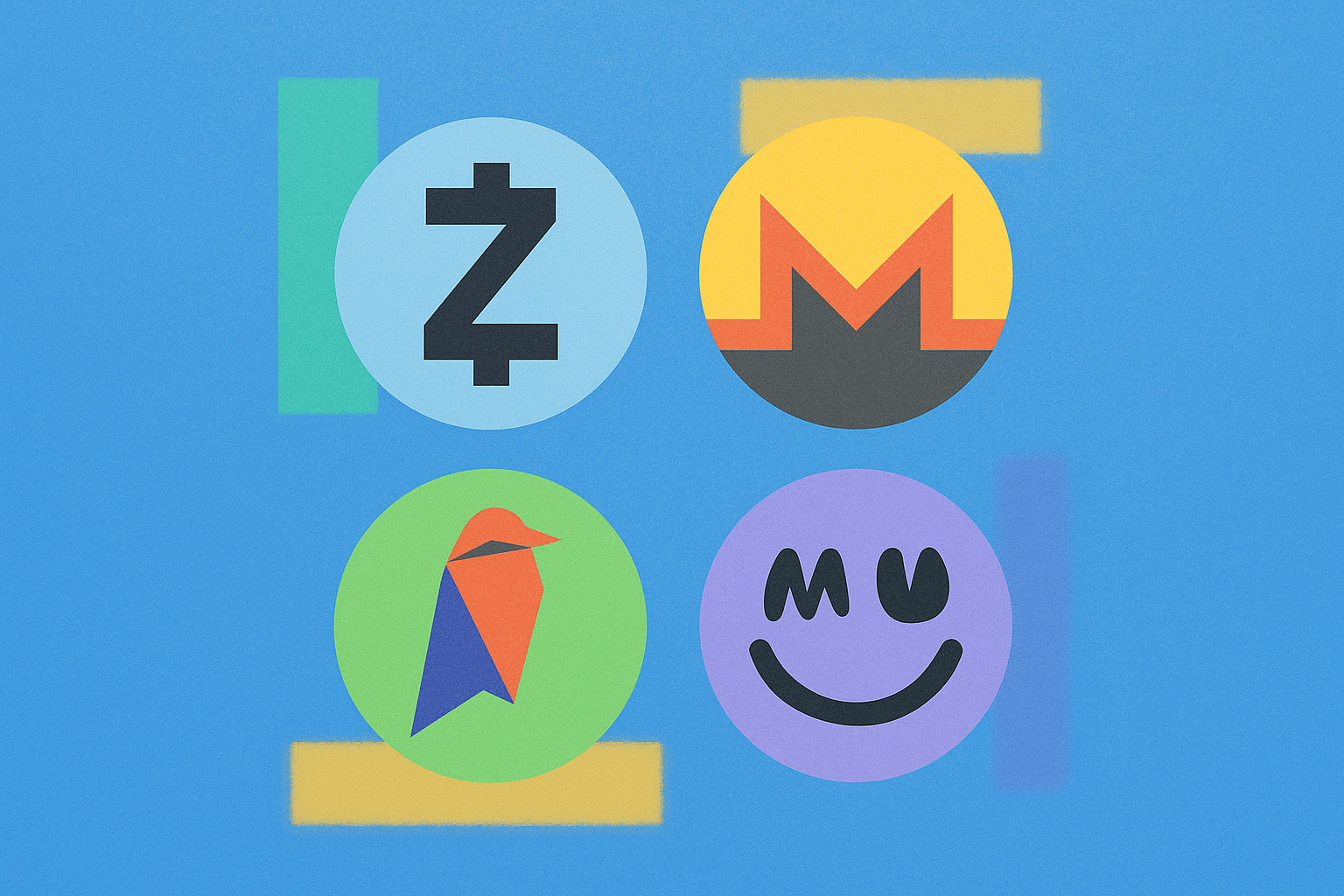
This comprehensive guide explores the most profitable cryptocurrencies to mine in 2024, covering essential mining fundamentals and four primary methods: CPU, GPU, ASIC, and cloud mining. Each approach is analyzed with detailed advantages and disadvantages to help miners select the optimal strategy based on initial investment and technical capabilities. The article establishes key profitability criteria including asset price, legality, and operational costs, then highlights four highly profitable mining candidates: Zcash, Ravencoin, Monero, and Grin. Beyond individual coins, the guide addresses crucial considerations such as mining pool participation, electricity cost optimization, and risk management. Whether you are a beginner exploring entry-level mining or an experienced investor seeking 2024 opportunities on Gate, this guide provides actionable insights to maximize mining returns while minimizing financial exposure.
What is Cryptocurrency Mining?
Cryptocurrency mining is the process of creating new digital currencies and validating transactions on a blockchain network. Taking Bitcoin as an example, miners perform two primary roles. First, they verify transactions and mine new bitcoins. Second, they confirm transactions on the blockchain whenever someone sends cryptocurrency to another person.
Miners validate transactions to ensure their legitimacy. They collect transactions from the memory pool and organize them into blocks. The memory pool functions as a waiting room within the blockchain network. When a transaction is submitted to the network, it is temporarily stored in the memory pool until it is included in a block. During this time, all transactions awaiting verification are stored in the memory pool. In subsequent stages, the protocol rewards miners with newly issued cryptocurrency as compensation for their efforts.
What is a Miner?
Miners are participants who collect and verify transactions, then organize them into blocks. They serve as the nodes that bind everything together in the network. For instance, in Bitcoin, miners are responsible for validating transactions and issuing new cryptocurrency.
Bitcoin is similar to traditional currencies, except that it is decentralized. In the case of the US dollar, the US government issues new bills with little to no input from citizens. With Bitcoin, miners distributed worldwide verify all transactions and secure the network.
Miners purchase high-performance specialized computers to process Bitcoin transactions. They fulfill this role by solving complex computational problems that link transaction blocks. Once a miner verifies a transaction and adds it to the blockchain, that transaction becomes immutable and irreversible. This work is directly connected to the network's security.
Mining is an essential part of the Bitcoin network that ensures the blockchain's fairness, stability, and security. In recognition of miners' efforts, the protocol rewards them with new bitcoins every 10 minutes. The issuance of Bitcoin is specified in the code. The only way to mine cryptocurrency is to verify transactions and include them in blocks.
Methods of Cryptocurrency Mining
There are several ways to acquire cryptocurrency through mining. In the following sections, we will explain CPU, GPU, ASIC, and cloud mining methods.
1. CPU Mining
CPU mining uses a computer's Central Processing Unit to mine cryptocurrency. In the early days of mining, CPU-based methods were primarily used, but their efficiency has become relatively low with the development of GPU and ASIC equipment. Nevertheless, CPU mining is still used for some specialized cryptocurrencies, small-scale mining, and personal learning purposes. To increase profitability, it is advisable to select cryptocurrencies and mining pools suitable for small-scale CPU mining.
Advantages of CPU Mining
- Low Initial Cost: No need to purchase separate equipment, as you can utilize your existing computer's CPU, resulting in minimal costs.
- Accessibility: Anyone can easily access it, making it suitable for small-scale or personal mining.
- Flexibility: CPUs can flexibly respond to various algorithms, allowing you to mine different types of cryptocurrencies.
Disadvantages of CPU Mining
- Low Computational Power: CPUs process complex hash operations much slower than GPUs or ASICs, making them less competitive.
- Lack of Power Efficiency: Due to the low mining efficiency of CPUs, relatively more power is consumed, which can reduce profitability.
- Overheating Issues: When processing high-load tasks for extended periods, CPUs can overheat, degrading computer performance and potentially requiring cooling systems.
Cryptocurrencies Suitable for CPU Mining
- Monero (XMR): A cryptocurrency favorable for CPU mining, using the ASIC-resistant RandomX algorithm that encourages CPU mining.
- VerusCoin (VRSC): Popular among those who prefer CPU mining, as it uses algorithms optimized for CPUs.
- Other CPU-Friendly Coins: Cryptocurrencies designed for small-scale miners and CPU miners that can be mined with low power consumption.
2. ASIC Mining
ASIC mining uses Application-Specific Integrated Circuit chips specifically designed for cryptocurrency mining. Because ASICs are custom-designed to process specific algorithms, they are highly effective for mining Proof of Work (POW) cryptocurrencies like Bitcoin. They process hash operations quickly, delivering much more efficient performance than GPUs and CPUs.
Advantages of ASIC Mining
- High Performance: ASICs are designed to process only specific operations, allowing them to mine much faster than GPUs or CPUs.
- Energy Efficiency: They require relatively less power to process the same amount of computation, reducing electricity costs.
- Profitability: Due to their superior performance, you can expect high mining rewards. They are advantageous even in high-difficulty mining like Bitcoin.
Disadvantages of ASIC Mining
- High Initial Cost: ASIC miners are expensive, and once purchased, they can only be used for specific cryptocurrencies, resulting in high initial investment costs.
- Lack of Flexibility: ASICs are specialized for specific algorithms and cannot be used to mine other cryptocurrencies. For example, a Bitcoin ASIC miner cannot be used for cryptocurrencies other than Bitcoin.
- Equipment Obsolescence: As mining difficulty increases, new ASIC models with better performance are released, and older equipment can lose profitability.
Cryptocurrencies Suitable for ASIC Mining
- Bitcoin: A representative cryptocurrency that uses the SHA-256 algorithm and is suitable for ASIC mining.
- Litecoin: Uses the Scrypt algorithm and is one of the altcoins suitable for ASIC mining.
- Bitcoin Cash: Uses the same algorithm as Bitcoin and is suitable for ASIC mining.
3. GPU Mining
GPU mining is a method of mining cryptocurrency using Graphics Processing Units. It was widely used in the early days of Bitcoin and remains effective for altcoin mining today. GPUs have superior parallel computing capabilities compared to regular CPUs, allowing them to process many calculations simultaneously, making them advantageous for mining. This characteristic makes them suitable for cryptocurrency mining that requires many hash operations.
- Computational Power: Higher computational efficiency than CPUs, allowing faster solving of complex hash problems.
- Flexibility: Can mine various cryptocurrencies and easily adapt to new mining algorithms.
- Scalability: Can maximize mining performance by using multiple GPUs simultaneously.
Disadvantages of GPU Mining
- Power Consumption: GPUs consume a lot of power and generate significant heat, requiring cooling systems. This increases long-term operating costs.
- Price: High-performance GPUs are expensive, resulting in high initial investment costs.
- Competition and Difficulty: GPU mining has relatively lower performance compared to ASIC mining (custom hardware developed to solve specific cryptocurrency hashes faster, like Bitcoin).
Cryptocurrencies Suitable for GPU Mining
- Ravencoin, Bitcoin Gold, Ergo: These cryptocurrencies use ASIC-resistant algorithms, making them suitable for GPU mining.
4. Cloud Mining
Cloud mining is similar to investing in stocks through a broker. The broker does the work, and you receive the profits. Cloud mining involves renting mining machines and expertise from mining service companies. Service providers perform maintenance and monitoring for a fee, and investors receive profits at the end of the agreed period.
Cloud mining is a popular way for investors to participate in mining without purchasing mining equipment. Cloud mining service providers have multiple specialized mining equipment with expertise and can operate them to maximize production. Each service company has different pricing plans and various costs. Cloud mining prices can start from $300.
Depending on the operation of the mined asset and market prices, you can reach the break-even point within 9-14 months, but this is calculated under the assumption that market prices remain constant and difficulty stays consistent. When selecting a service provider, you should carefully examine the contract period, allocated mining capacity, and maintenance costs. These factors determine profitability.
Representative cloud mining companies include major industry players offering various contract options and mining services.
Advantages of Cloud Mining
- No Equipment Management Required: No hassle of purchasing, setting up, and maintaining equipment, making it easy for beginners to participate.
- Low Initial Cost: Can participate in mining at a lower cost than directly purchasing mining machines, with no burden of equipment failure or replacement.
- Flexible Contract Terms: Most cloud mining services are flexibly configured to allow users to choose their desired contract period, hash rate, etc.
Disadvantages of Cloud Mining
- Uncertain Profitability: Profitability fluctuates depending on mining difficulty, cryptocurrency prices, and power costs, and there is a possibility of not recovering the initial investment.
- Fraud Risk: In a situation where there are many untrustworthy companies, making the wrong choice carries a high risk of losing your investment.
- Fixed Costs: Because costs are fixed during the contract period, it is difficult to respond flexibly to changes in mining difficulty or cryptocurrency prices.
Cryptocurrencies Suitable for Cloud Mining
- Bitcoin: The most commonly used cryptocurrency for cloud mining, with many companies providing Bitcoin cloud mining services.
- Litecoin, Dash, Bitcoin Cash: Also available for mining through cloud mining services.
How to Choose Cryptocurrencies Suitable for Mining
Whether an asset is good for mining depends on several factors. However, for most investors, the most important thing is profitability. To invest money and time in mining, it must be profitable unless you are mining as a hobby. Here are some important criteria for determining an asset's profitability.
1. Asset Price
Cryptocurrencies are highly volatile and often experience sharp rises and falls daily, so you need to check whether the cost of mining one coin is higher than the current market price. This principle is not absolute because miners may hold the cryptocurrency after acquiring it, hoping for future price increases. While this may not lead to immediate success, considering the volatile movements of the cryptocurrency market, a bull market will likely arrive in the near future.
2. Legality
Owning and mining cryptocurrency must also be legal in the relevant country. Some countries have restrictions on mining, while others appear to have no regulations on mining. In countries where cryptocurrency mining is legal, you can mine with cheap electricity without fear of crackdowns. For assets that depend on power, like Bitcoin, the cheaper the electricity bill, the higher the profit.
3. Costs
You must have the financial ability to pay electricity bills and high-performance mining equipment. All mining operations require equipment. Mining equipment can be as small as a computer or larger. Mining equipment can cost more than $3,000.
In addition to hardware, you also need to invest in software. However, if traditional mining is too complex, you can start mining on exchanges. This is a very good way to start mining without taking big risks.
Most Profitable Coins to Mine
1. Zcash (ZEC)
Zcash began operations in 2016. It is one of the most privacy-focused cryptocurrencies currently on the market. However, one of the impressive features of this asset is its substantial mining fees.
Zcash operates on the Equihash algorithm. This algorithm is not compatible with ASICs. Therefore, you do not need an ASIC to mine Zcash. This is good news if you are concerned about initial mining costs. Instead, you need a GPU or CPU to mine the asset.
While you can purchase a new CPU much cheaper, you also need to worry about cooling. If you use a GPU, you will spend a bit more on equipment. Zcash can be purchased on most major cryptocurrency exchanges and was trading at approximately $36.91 in recent periods. It uses proof-of-work mining technology, and the mining reward is 10 ZEC per block.
2. Ravencoin
Ravencoin is one of many cryptocurrencies derived from the original Bitcoin. Ravencoin is mined through proof-of-work mining techniques using the X16R algorithm. This algorithm alternates between SHA512 and X15 mining algorithms, with the order defined by the hash of the previous block. You can start mining Ravencoin by purchasing graphics cards from NVIDIA and AMD.
Ravencoin can be seamlessly exchanged on various platforms. Ravencoin is a cryptocurrency based on Bitcoin and Ethereum that focuses on asset transfer. In recent periods, RVN was trading at approximately $0.01681, and the block reward is 5000 RVN per block.
3. Monero
Monero's main feature is its excellent compatibility with Bitcoin. However, Monero provides a higher level of privacy, which is its greatest advantage. Monero is currently the 34th most valuable cryptocurrency with a market capitalization of over $2.8 billion, and its value has been steadily rising over the past few years.
Monero does not require ASICs for mining. Because of this, the initial mining cost is not large. Currently, Monero miners receive 4.99 XMR for verifying transactions on the blockchain, but the transaction fee is 0.06573 XMR. Monero uses proof-of-work mining technology. However, it adjusts the mining algorithm to allow miners to use both GPUs and CPUs for mining. It can be purchased on most exchanges, and in recent periods, the Monero price was approximately $157.
4. Grin (GRIN)
Grin is a relatively new cryptocurrency. It is an asset based on the Mimblewimble consensus algorithm that ensures transaction privacy. GRIN has unlimited coins, making it preferred by miners. Mining difficulty varies depending on network hash, and the asset itself is based on proof-of-work mining technology.
Written in the Rust programming language, GRIN uses the Equihash algorithm. It has strong resistance to ASICs, requiring hard forks every six months to avoid ASICs. GPUs from AMD and NVIDIA can facilitate the mining process. The mining reward is 60 GRIN per block.
In recent periods, GRIN was trading at approximately $0.02507 and can be purchased on major cryptocurrency exchanges including 24 different platforms. Therefore, there are no major issues with withdrawals.
FAQ
What is cryptocurrency mining? What is the principle of mining?
Cryptocurrency mining is a process that validates transactions and adds them to the blockchain through computational power. Miners solve complex mathematical puzzles to confirm transactions. Successful miners receive rewards as incentives for their work.
Which cryptocurrencies were the most profitable for mining in 2024?
Bitcoin, Litecoin, Zcash, Ethereum Classic, and Filecoin were among the most profitable mining cryptocurrencies in 2024. Profitability depends on market value, mining difficulty, hardware costs, and electricity expenses. GPU-friendly options like Dogecoin and Ravencoin also offered competitive returns.
What hardware equipment is needed for mining? What is the difference between GPU and ASIC miners?
Mining requires GPU or ASIC hardware. GPUs use graphics cards for general computing, while ASIC miners feature specialized chips designed specifically for mining. ASIC miners offer superior efficiency, higher hash rates, and lower power consumption compared to GPUs, making them more profitable for large-scale operations.
What are the costs of mining? How to calculate actual mining returns?
Mining costs include hardware, electricity, and maintenance fees. Calculate returns by: (your hashrate / total pool hashrate) × (block rewards + transaction fees) × (1 - pool fee%). Subtract total costs for net profit.
What are the differences in mining difficulty and profitability rates among different cryptocurrencies?
Mining difficulty and profitability vary by coin algorithm and market demand. Bitcoin has high difficulty with stable returns, while altcoins often show greater volatility. Factors include network hash rate, block rewards, and current market prices.
Can individual mining still make money? Which is more cost-effective compared to mining pools?
Individual mining is generally unprofitable due to high hardware and electricity costs. Mining pools are more cost-effective as they combine computing power from multiple miners, increasing success rates and ensuring more consistent rewards with lower operational costs.
What are the main risks faced in cryptocurrency mining?
Key mining risks include rising network hash rates causing miner depreciation and operational costs exceeding profits. Increased hash power may render mining unprofitable, requiring shutdown. Market volatility and policy changes also pose significant threats.
What is the impact of electricity costs on mining profitability?
Electricity costs significantly impact mining profitability. High power expenses can reduce or eliminate profits for less efficient equipment. Miners must continuously evaluate operating costs and energy efficiency to maintain competitiveness in fluctuating markets.
* The information is not intended to be and does not constitute financial advice or any other recommendation of any sort offered or endorsed by Gate.