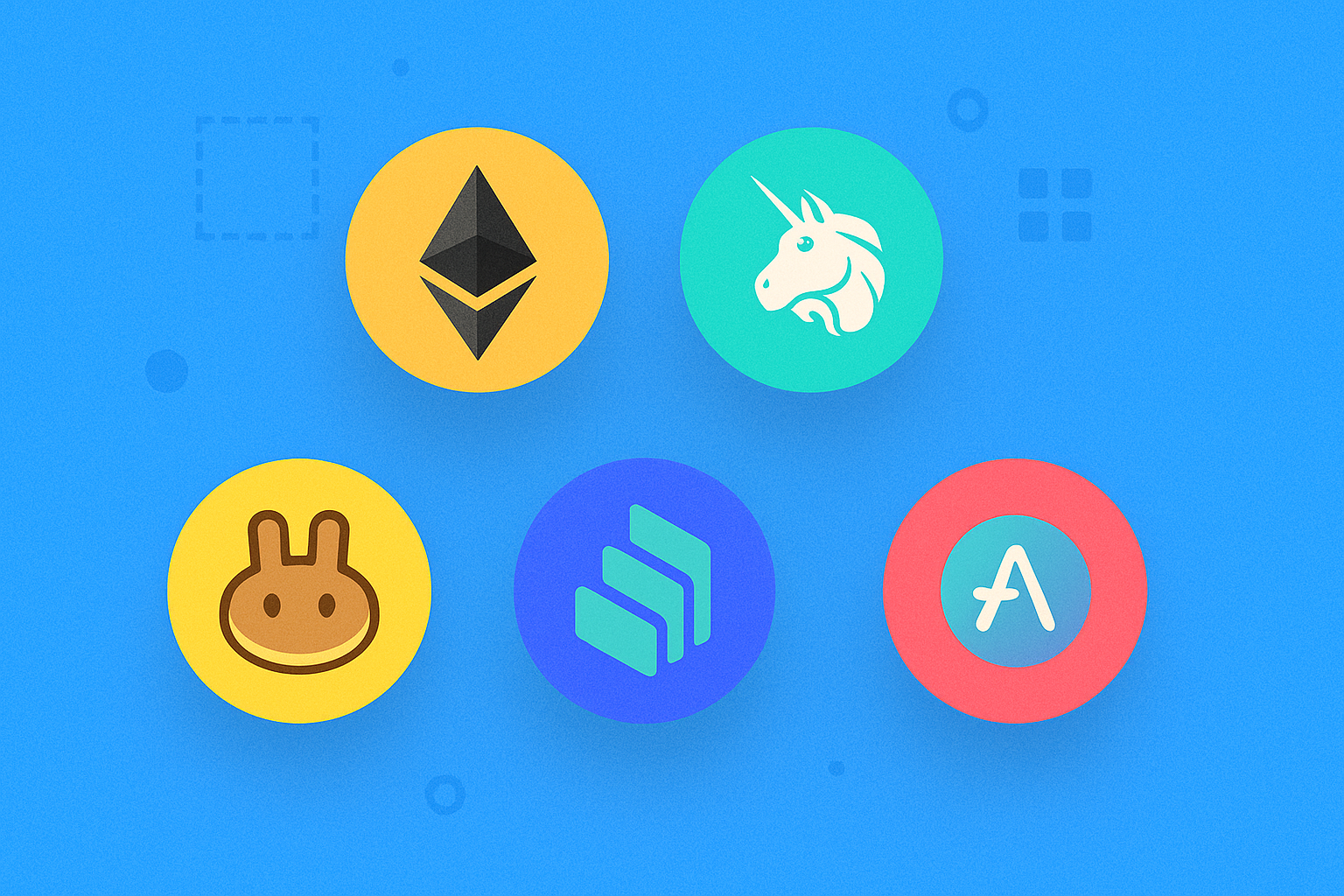
2024 DeFi Investment Guide: Top 5 Tokens—ETH, Uniswap, PancakeSwap, Compound, and Aave. Explore key DeFi investment strategies, methods for selecting tokens, and essential risk management skills. Invest securely in DeFi tokens on Gate, and take advantage of multiple yield opportunities like liquidity mining and governance tokens. This is a must-read DeFi handbook for beginner to intermediate traders.
What Is DeFi Investment?
DeFi (Decentralized Finance) is an innovative financial system that enables transactions without specific intermediaries or central authorities. Built on blockchain technology—primarily the Ethereum blockchain—it provides a foundation for decentralized financial products and services.
In DeFi, smart contracts—automated programs—deliver a wide array of financial services, giving users full control over their assets. Compared to traditional finance, DeFi offers major advantages: transparency, censorship resistance, anonymity, round-the-clock accessibility, and composability. These strengths position DeFi as a leading force in financial innovation.
DeFi stands out for three core features:
Decentralized Financial System Without Central Authorities
DeFi doesn’t depend on banks or corporations as central administrators. Instead, it uses autonomous blockchain programs to provide financial services. This decentralized model lets anyone access open financial services freely—without approval from legacy institutions. As a result, financial services become more accessible, allowing users worldwide to participate equally.
Composability
DeFi protocols are highly composable, letting users combine different services like building blocks to create new financial products. For example, you can borrow assets through crypto lending, trade them on decentralized exchanges, or earn returns via liquidity mining. This flexibility drives innovation in DeFi—something traditional finance rarely achieves.
Easy Access With a Wallet Connection
DeFi’s entry barrier is very low—just connect a crypto wallet and you can start using services. By linking your wallet to the blockchain network, you get instant access to decentralized financial products without identity checks or credit reviews. This convenience improves user experience and gives excluded groups a chance to participate, advancing true financial inclusion.
Top 5 DeFi Tokens to Consider for Investment
Among the many DeFi projects, these five tokens stand out for their technical strengths, ecosystem growth, and market performance:
- Ethereum (ETH)
- Uniswap (UNI)
- PancakeSwap (CAKE)
- Compound (COMP)
- Aave (AAVE)
DeFi Token Recommendation ①: Ethereum (ETH)
Ethereum is the flagship project in DeFi, offering smart contracts, high liquidity, and broad growth potential—making it the foundation of the DeFi ecosystem.
Ethereum’s smart contract technology is what makes it essential for DeFi. These programs execute automatically when set conditions are met, enabling highly transparent and secure transactions—without intermediaries. This breakthrough has fueled DeFi’s rapid expansion.
Ethereum also acts as a liquidity backbone for many DeFi services, with ETH serving as a vital pairing asset throughout the ecosystem. As DeFi and decentralized apps (DApps) gain adoption, demand for ETH is expected to keep growing.
Ethereum’s ongoing upgrades—including its move to Proof of Stake (PoS) and Layer 2 scaling—will boost network capacity and cut transaction costs, providing strong long-term support for ETH’s value.
DeFi Token Recommendation ②: Uniswap (UNI)
Uniswap, launched in recent years, is one of the world’s largest decentralized exchanges (DEX). Its native token UNI is a key player in DeFi. Uniswap’s greatest innovation is its automated market maker (AMM) model, which transformed the traditional trading paradigm.
Instead of matching buyers and sellers through order books, Uniswap uses liquidity pools. Users deposit crypto into these pools, and others trade directly—no need to wait for a counterparty. This boosts trading efficiency and creates earning opportunities for liquidity providers.
Uniswap has also rolled out its governance token UNI. Users earn UNI by providing liquidity, and UNI holders can vote on protocol decisions, influencing the platform’s future.
Uniswap continues to refine its AMM technology and develop new features. UNI’s use cases are expanding—including governance and staking mechanisms—which will fuel its long-term growth.
DeFi Token Recommendation ③: PancakeSwap (CAKE)
PancakeSwap is a decentralized exchange running on a major high-performance blockchain (BSC) developed by a leading exchange. Its native token is CAKE. BSC stands out for its Ethereum compatibility, faster processing, and lower transaction fees.
Thanks to BSC, PancakeSwap offers a more affordable trading experience than Ethereum-based DEXs. Lower fees make small and frequent trades viable, helping PancakeSwap rapidly attract users.
CAKE has several roles in the PancakeSwap ecosystem. Some trading fees are returned as CAKE; users can also earn CAKE by providing liquidity. This incentive drives participation and deepens the platform’s liquidity.
CAKE isn’t just a reward—it’s a governance token. Holders can vote on key platform decisions, shaping its future. This user empowerment builds community strength and makes CAKE a top investment choice for PancakeSwap users.
DeFi Token Recommendation ④: Compound (COMP)
Compound is a pioneering DeFi lending protocol, later launching its governance token COMP. Compound delivers simple, efficient crypto lending services.
Users earn interest by depositing assets, with rates adjusting dynamically based on asset type and market conditions. This flexibility ensures efficient capital allocation and competitive yields. Users can also use deposits as collateral to borrow other assets, offering convenient fund management.
Compound has built a reputation for safety and reliability—critical in an industry often targeted by hackers. Strong security standards have earned user trust.
COMP’s value is closely tied to protocol usage and total value locked (TVL). As DeFi lending demand grows, Compound’s market position should strengthen, and COMP may appreciate long-term. COMP holders also play a direct role in protocol governance, adding to its value.
DeFi Token Recommendation ⑤: Aave (AAVE)
Aave is one of the largest DeFi platforms, offering lending, liquidity provision, staking, and more. The AAVE token is central to the ecosystem.
AAVE is the platform’s governance token, giving holders voting rights on proposals, protocol changes, and new features. This decentralized governance aligns the platform’s direction with community interests and builds user loyalty.
Beyond governance, AAVE is part of a unique safety mechanism. If the protocol suffers losses, AAVE can be auctioned to cover shortfalls, connecting holders directly to the protocol’s security.
Aave is known for innovation, introducing features like flash loans and credit delegation. As user numbers and TVL grow, demand for AAVE is likely to rise, offering solid return potential.
How to Choose the Best DeFi Investments
With so many DeFi projects, selecting the right investments requires clear methods and standards. These two strategies can help investors make informed choices:
- Review Defillama’s Top 30 Ranked Projects
- Choose Tokens From DeFi Projects You’ve Personally Used
DeFi Investment Strategy ①: Review Defillama’s Top 30 Projects
Defillama is a leading DeFi analytics platform, tracking and visualizing each protocol’s total value locked (TVL). TVL measures the total assets secured in a protocol—an important gauge of scale and popularity.
Defillama covers protocols across Ethereum, BSC, Polygon, and more, displaying TVL, user counts, and trading volumes—objective data for investment decisions.
Top 30 DeFi protocols tend to have high TVL and active user bases, showing they’ve passed market scrutiny and gained recognition. These projects usually feature stronger security, professional development teams, and vibrant communities, reducing risks of hacks and major bugs.
From a security perspective, choosing projects in Defillama’s top 30 is a way to access relative safety. High rankings don’t mean zero risk, so investors should still research thoroughly—but it’s a reliable starting point for identifying quality projects.
DeFi Investment Strategy ②: Choose Tokens From Projects You’ve Used
Investing in tokens from DeFi projects you’ve tried firsthand is a more reliable approach. Direct use gives investors deeper, more comprehensive insight than just reading or listening to others.
By using DeFi platforms, investors can closely assess:
Hands-On Understanding of Platform Mechanisms
Direct experience reveals how funds move between lenders and borrowers, how fees work, and what risks exist. This helps evaluate user experience, technology maturity, and risk controls. You can gauge transaction speed, interface quality, and smart contract stability—all crucial for long-term success.
Real Community Conditions
Active participation lets you meet real users, assess activity levels, community makeup, and cohesion. A healthy community points to strong project potential. Community interactions reveal user experiences, problems, and opinions—valuable for investment decisions.
Investing in projects you’ve never used—relying only on news or recommendations—can lead to irrational decisions swayed by market sentiment. During volatility, uninformed investors are prone to panic selling or chasing price spikes, often resulting in losses.
It’s smart to test platforms with small amounts before committing more. Only invest larger sums when you appreciate the project’s value, believe in its direction, and understand its risks. While this approach takes more time and effort, it can cut risks and improve long-term returns.
Conclusion: Seize DeFi Opportunities for Optimal Returns
This article introduced five leading DeFi tokens and analyzed their features and investment value. DeFi, as an innovative system without intermediaries or central authorities, is reshaping finance.
DeFi’s advantages over traditional finance include higher yields, constant trading, and lower entry barriers—making it one of the most promising investment arenas in recent years.
Top tokens like Uniswap (UNI) and PancakeSwap (CAKE) are favored for their innovation, mature ecosystems, and market recognition, offering growth potential. Ethereum (ETH) is the backbone of DeFi’s infrastructure. Compound (COMP) and Aave (AAVE) have established stable positions in lending, providing sound investment options.
Still, DeFi investment carries risks: smart contract flaws, market swings, and regulatory changes can all impact returns. Investors should thoroughly study each project’s technology, team, market position, and risks before getting involved.
Diversify your portfolio—don’t put all your funds in one project. Focus on proven projects with active communities and ongoing development. With careful selection, smart allocation, and continuous learning, investors can achieve strong returns in DeFi and benefit from this financial revolution.
FAQ
What Is DeFi? How Are DeFi Tokens Different From Regular Tokens?
DeFi—decentralized finance—delivers financial services on blockchain with no intermediaries. DeFi tokens have specific functions like liquidity mining and governance; regular tokens mainly represent ownership or investment rights. DeFi tokens offer broader utility and greater earning potential.
What Key Metrics Should You Watch When Investing in DeFi Tokens? How Do You Judge Project Quality?
Monitor project valuation, code quality, team experience, and trading volume. Evaluate smart contract security, audit reports, and code testing. Top teams combine traditional tech and blockchain expertise, with strong execution as a key factor.
What Are the Main Risks in DeFi Investment? How Should You Manage Smart Contract, Liquidity, and Slippage Risks?
Major risks include smart contract bugs, low liquidity, and slippage. Prefer audited projects and diversify investments to limit contract risk; choose trading pairs with ample liquidity; use limit orders and monitor price movements to manage slippage.
What Are the Strengths and Use Cases of Popular DeFi Tokens (Uniswap, Aave, Curve)?
Uniswap enhances trading liquidity, Aave enables decentralized lending, and Curve specializes in stablecoin trading. These tokens power liquidity pools, lending, and stablecoin markets.
How Do DeFi Tokens Compare With CEX Platform Tokens (BNB, FTT) in Value and Risk?
DeFi tokens offer higher potential returns but greater risk, relying on ecosystem growth. Platform tokens are more stable, backed by exchanges. DeFi tokens offer greater long-term upside for risk-tolerant investors.
How Can Beginners Start DeFi Investing Safely? What Tools Do You Need and How Should You Manage Wallets and Private Keys?
Pick a reputable wallet and back up your mnemonic phrase offline—never copy and paste. Use cold wallets for secure storage and back up private keys regularly. Download official wallets cautiously and safeguard passwords and recovery phrases.
* The information is not intended to be and does not constitute financial advice or any other recommendation of any sort offered or endorsed by Gate.