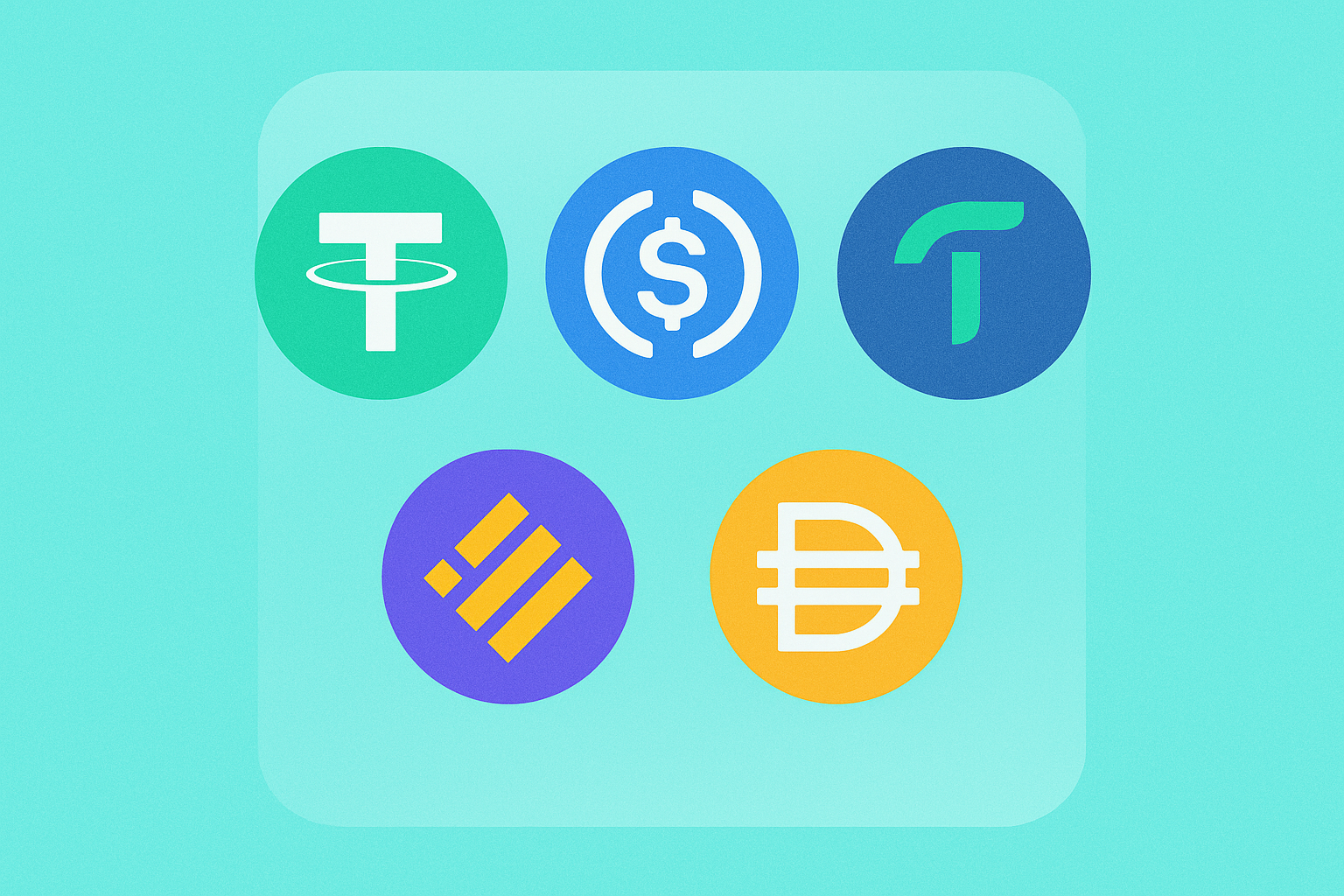
Learn what stablecoins are and how they function. This in-depth guide covers leading stablecoins—USDT, USDC, DAI, and others. Examine the advantages and risks of stablecoins in trading on Gate, their role in DeFi applications, and how they help mitigate volatility.
What Are Stablecoins
Stablecoins are a specialized category of cryptocurrency that track the value of another currency or asset class. Most stablecoins are pegged to fiat currencies like the US dollar or euro, though some are backed by commodities such as gold or other precious metals. This pegging mechanism means the stablecoin’s value is directly linked to the price of its underlying asset.
Because of this design, stablecoins act as a bridge between traditional fiat currencies and the highly volatile cryptocurrency market. They’re widely used for trading, asset preservation, and are a foundational element of today’s crypto ecosystem and trading infrastructure.
What Are Fiat-Backed Stablecoins
Fiat-backed stablecoins are digital representations of traditional fiat currencies on a blockchain. The creation process involves developers locking a set amount of fiat currency in reserve and issuing an equivalent value of cryptocurrency via smart contracts. For example, leading stablecoins such as USDC and USDT are pegged to the US dollar at a 1:1 ratio, meaning each stablecoin token should always equal one dollar.
This structure provides price stability and makes stablecoins a practical tool for storing funds and transacting within the crypto ecosystem, significantly reducing risks associated with the volatility of other cryptocurrencies.
Which Stablecoins Are Most Popular Today
The cryptocurrency market is led by two major stablecoins: USD Coin (USDC) and Tether (USDT). Both rank at the top in terms of market capitalization and trading volume. A milestone event occurred in November 2023, when a major crypto platform announced it would discontinue support for its own stablecoin, BUSD (a USD-pegged asset), which notably shifted the balance of the stablecoin market.
This move underscores the fast-paced nature of the stablecoin market and the importance of selecting reliable and resilient assets for long-term use.
USDT: Stablecoin Pioneer
USDT is among the oldest and most widely adopted stablecoins pegged to the US dollar. It was launched by Tether Limited in 2014, establishing its status as a trailblazer in the stablecoin sector. USDT maintains a 1:1 peg with the dollar, providing price stability for its users.
According to Tether’s official reserve report from September 2023, the company held over $86.3 billion in assets and $83.2 billion in liabilities. These figures reflect the scale of USDT’s operations and the level of user trust in the token. USDT is widely accepted across both centralized and decentralized trading platforms, making it one of the most liquid assets in the crypto space.
USDC: Institutionally Supported Stablecoin
USDC is a stablecoin pegged to the US dollar, launched by Circle in 2018. USDC is managed by the Centre consortium, which Circle founded. Other major industry participants, such as Bitcoin mining company Bitmain and a leading crypto trading platform, are also members of the consortium.
USDC is highly liquid and available on nearly all major centralized and decentralized exchanges (DEX). Its broad availability makes USDC a preferred choice for traders and investors seeking a reliable, readily convertible stablecoin. Circle regularly releases reserve reports to enhance transparency and user trust.
TUSD: Emphasizing Transparency and Trust
True USD (TUSD) is a newer stablecoin, launched in 2018 by TrustToken and PrimeTrust. TUSD was created to address key issues of trust and transparency in the stablecoin sector. Its standout feature: all user funds are managed in third-party escrow accounts, inaccessible to the issuing organizations.
TUSD maintains a 1:1 peg to the US dollar and provides real-time verification of its reserves from independent third-party auditors. This approach to transparency and security makes TUSD attractive for users who prioritize openness and reliability in stablecoin reserve management.
BUSD: Stablecoin With Institutional Partnership
BUSD is a native stablecoin issued through a partnership between a major crypto platform and the blockchain firm Paxos Trust. Its price is tied to the US dollar at a 1:1 ratio for reliable value retention. Paxos Trust oversees token issuance, management, and the burning process for BUSD when necessary.
BUSD is built on Ethereum and fully supports the BEP-2 standard, ensuring compatibility with multiple blockchains and broadening its utility. The token’s widespread adoption is driven by strong support from a major exchange and strict regulation by Paxos Trust, adding a layer of security and user confidence.
DAI: The Decentralized Alternative
DAI stands out as the only fully decentralized stablecoin in the market. Unlike centralized stablecoins such as USDT and FDUSD, which are managed by intermediaries, DAI is issued via a decentralized application (DApp) on Ethereum called Maker Protocol.
DAI was launched in 2018 by the decentralized autonomous organization MakerDAO. Its creators maintain that the system is entirely decentralized and backed only by crypto collateral, without fiat involvement. DAI uses a soft peg to the US dollar at a 1:1 ratio.
The Maker Protocol creates new DAI tokens by requiring users to collateralize crypto assets like Bitcoin or Ethereum. These assets are securely stored in Ethereum smart contracts known as Maker Vaults, ensuring transparency, security, and full decentralization in stablecoin issuance.
eUSD and peUSD by Lybra: Yield-Generating Stablecoins
Lybra Finance is a decentralized platform that provides access to innovative liquid staking tokens (Liquid Staking Tokens, LST). The platform has issued two distinct stablecoins: eUSD and peUSD, which leverage LSTs as collateral.
The defining feature of eUSD and peUSD is that they are yield-bearing stablecoins. Holders can earn passive income simply by owning these tokens—a rare benefit among stablecoins. This combination of price stability and income potential makes eUSD and peUSD especially attractive for long-term investors and users seeking to maximize returns on their crypto assets.
Synthetic USD: An Alternative to Traditional Banking
Synthetic USD is designed for users who need the stability of the US dollar but want to avoid traditional banks. Its central aim is to provide a stable dollar-equivalent price by anchoring and balancing two interconnected assets.
Galoy, a firm focused on building banking infrastructure using native Bitcoin, offers the Stablesats feature on its platform. This lets users maintain the value of their assets in dollar terms through blockchain, without the need for a conventional bank account. This solution is particularly valuable for people in countries with unstable financial systems or limited access to banking services.
Stablecoins are central to the fast-evolving decentralized finance (DeFi) sector. DeFi is a blockchain-based system of financial services operating without traditional intermediaries.
Stablecoins are foundational to DeFi, especially for peer-to-peer transactions. Unlike highly volatile coins like Bitcoin or Ethereum, which can see rapid price swings, stablecoins are designed to hold a relatively steady value. This stability makes them ideal for lending, borrowing, liquidity pools, and other DeFi activities where predictable asset pricing is crucial.
Benefits of Dollarization via Stablecoins
By pegging to the US dollar, stablecoins offer unique opportunities to earn dollar-denominated returns—especially relevant for people in developing economies. In regions with high inflation or volatile local currencies, investing in stablecoins helps maintain financial stability and protect against asset depreciation.
Stablecoins preserve purchasing power and can even offer gains from exchange rate differences when local currencies weaken. They also enable users in developing countries to participate fully in the global economy, overcoming barriers of legacy financial systems.
Blockchain with stablecoins enables fast, low-fee cross-border transfers, making global transactions accessible for many. This is especially important for migrant workers sending remittances and small businesses engaged in international trade.
Risks of Stablecoins
Despite their advantages, stablecoins carry risks that users must consider. Their reliability depends on the underlying asset’s stability and the issuer’s financial health and reputation.
If the asset backing a stablecoin drops sharply in value, or if the issuer faces severe financial or legal problems, the stablecoin can lose its peg and depreciate rapidly. Crypto market history includes cases where stablecoins lost their dollar peg due to reserve shortfalls or insufficient transparency.
Regulatory uncertainty is also a major risk. As crypto markets evolve quickly, many jurisdictions lack clear, consistent policies for stablecoins. New legislation can affect both stablecoin accessibility and usage.
Additionally, blockchain network congestion during periods of high activity can slow transaction processing and temporarily prevent users from instantly accessing funds, which may be critical in certain scenarios.
How to Acquire Stablecoins
There are several ways to obtain stablecoins, each with distinct benefits. The fastest and easiest way is buying stablecoins on a centralized crypto exchange with fiat currency. Most major platforms offer direct purchases with dollars, euros, or other fiat via bank transfer or payment card.
Users can also swap other cryptocurrencies, such as Bitcoin or Ethereum, for stablecoins. This method suits those who already hold crypto and want to lock in profits or temporarily store value in a stable asset.
Stablecoins are also available on decentralized exchanges (DEX) via P2P marketplaces. Many users prefer DEXs because they are non-custodial and do not hold user funds. This lets users retain full control over their private keys and crypto assets during transactions, boosting both security and privacy.
Conclusion
Stablecoins are a critical component of the crypto ecosystem, having played a key role in industry growth and remaining essential for the future. By linking to real assets—fiat or commodities—stablecoins provide a reliable bridge between traditional finance and the innovative crypto sector.
As crypto adoption accelerates worldwide, the influence and relevance of stablecoins will continue to expand. They create new opportunities for financial inclusion, cross-border payments, inflation protection, and participation in decentralized finance. Understanding stablecoin types, their advantages, and risks is an important step for anyone aiming to make the most of the modern crypto economy.
FAQ
What Are Stablecoins? How Do They Maintain Price Stability?
Stablecoins are cryptocurrencies pegged to stable assets, most commonly the US dollar. They’re supported by reserves or algorithms to maintain a $1 price. Stablecoins enable fast, inexpensive payments, unlike highly volatile cryptocurrencies.
Which Major Stablecoins Are on the Market? What Are the Features of USDT, USDC, and DAI?
Major stablecoins include: USDT (dollar-pegged, issued by Tether), USDC (dollar-pegged, issued by Circle), and DAI (managed by MakerDAO, independently dollar-pegged). USDT leads in trading volume, USDC excels in transparency, and DAI is fully decentralized.
What Are the Pros and Cons of Stablecoins Compared to Fiat and Other Cryptocurrencies?
Advantages: stable value, rapid transfers, 24/7 access. Disadvantages: dependence on collateral, liquidity risks, regulatory uncertainty, potential reserve realization issues.
What Risks Do Stablecoins Carry? How Can You Assess Issuer Credit Risk and Smart Contract Risk?
Stablecoins are exposed to issuer credit risk, smart contract risk, and liquidity risk. Assess credit risk by reviewing financial health, reserve transparency, and regulatory compliance. Smart contract risk is evaluated via code audits and historical protocol performance.
How Should You Choose and Use Stablecoins? Are There Differences Across Blockchains?
Choose stablecoins with transparent reserves and trusted issuers. USDC and USDT differ in regulatory oversight and blockchain support. Networks vary in fees and transaction speed. Review trading volumes and reputation before use.
What Is the Future for Stablecoins? Will CBDCs Impact Stablecoins?
Stablecoins will grow as demand for decentralized solutions increases, while CBDCs will introduce competition through government backing and reliability. Both will coexist, serving different user needs.
What Role Do Stablecoins Play in DeFi? Why Do Traders and Investors Need Stablecoins?
Stablecoins provide a stable medium of exchange and store of value in DeFi. They reduce volatility, ensure liquidity in pools, and allow traders to move assets quickly across platforms without currency risk.
* The information is not intended to be and does not constitute financial advice or any other recommendation of any sort offered or endorsed by Gate.