The Cup and Handle pattern is a proven bullish continuation pattern widely utilized in cryptocurrency trading to identify optimal entry opportunities. This comprehensive guide systematically explains pattern recognition through its distinctive U-shaped cup and handle formation, explores the psychological dynamics driving trader behavior, and provides actionable trading strategies including entry points, stop-loss placement, and profit targets. The pattern demonstrates approximately 80% success rates when meeting strict criteria, though traders must remain vigilant against false breakouts and low-volume formations. Combined with volume confirmation, moving averages, and MACD indicators, the Cup and Handle becomes a professional-grade tool for Bitcoin and altcoin traders. Success requires disciplined execution, proper risk management limiting exposure to 1-2% per trade, and patience for high-quality setups rather than forcing patterns onto charts indiscriminately.
Introduction
The Cup and Handle pattern is one of the most recognized bullish continuation chart patterns that traders frequently seek on price charts. As its name suggests, this pattern features a rounded "U"-shaped bottom resembling a teacup (the cup), followed by a smaller consolidation period on the right side (the handle). After the price breaks above the handle's resistance level, it often experiences a strong upward movement. This pattern is widely utilized not only in cryptocurrency markets but also in stock trading, and is recognized as a signal for continued uptrend momentum, making it particularly popular among breakout traders.
The Cup and Handle pattern was first formally introduced in the 1980s by technical analyst William J. O'Neil. This formation is primarily used to identify buying opportunities within an existing upward trend. For instance, Bitcoin and numerous other cryptocurrencies have demonstrated the Cup and Handle structure during bull markets, often followed by significant rally movements upon pattern completion.
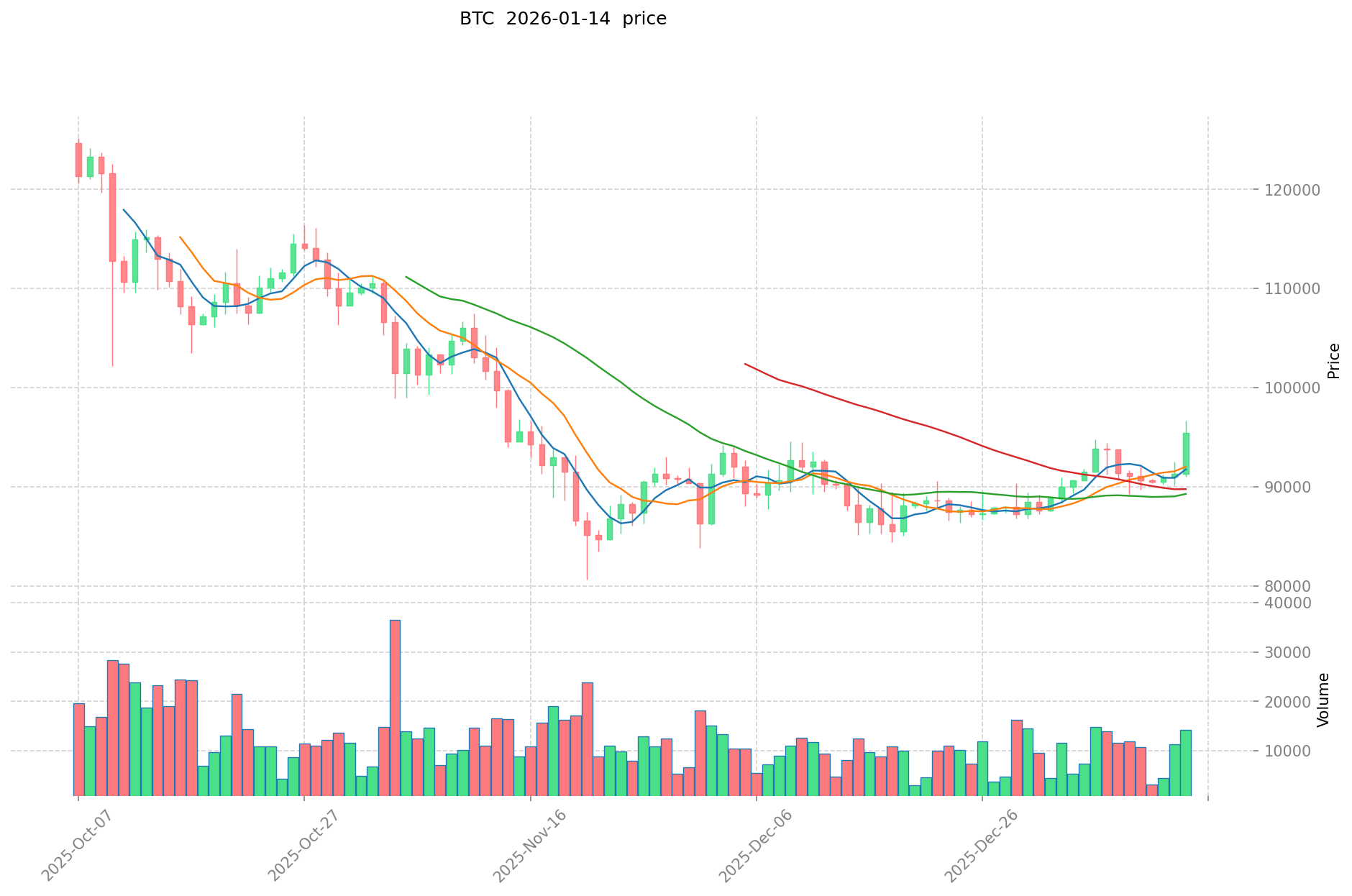 This comprehensive guide will systematically explain how to recognize, confirm, and trade the Cup and Handle pattern in cryptocurrency markets, along with its advantages, limitations, and historical background.
Understanding the Cup and Handle Pattern
The Cup and Handle is a chart pattern that resembles a teacup with a handle on the right side. The cup must form a smooth, rounded U-shaped bottom rather than a steep decline, and after the cup formation, when the price climbs back near the previous high, a brief consolidation or sideways movement called the handle develops. The handle typically shows a slight decline or flat movement, appearing like a small flag or short consolidation period at the right edge of the cup.
This pattern generally serves as a bullish continuation signal. In other words, after an asset experiences an upward trend (bull market) and goes through a rest and correction phase, the handle area becomes the final absorption zone for selling pressure. When the price breaks above the handle's upper resistance line, the pattern completes. Subsequently, upward momentum often emerges, prompting traders to use this breakout as a signal to enter long positions.
Conversely, an inverted Cup and Handle pattern (with the cup flipped upside down) indicates a bearish signal, but this guide focuses on the standard bullish formation. The key recognition points of this pattern include a clean U-shaped bottom in the cup section, a short handle forming near the cup's starting point, and the breakout above the handle's upper boundary.
The Cup and Handle pattern can manifest across various timeframes, from daily charts to weekly charts, making it a versatile tool for traders with different trading horizons. The pattern's reliability increases when formed over longer periods, as this indicates stronger market conviction and more significant accumulation phases. Understanding the fundamental structure helps traders distinguish genuine Cup and Handle formations from similar but less reliable patterns.
The Psychology Behind the Cup and Handle Pattern
The Cup and Handle pattern effectively reflects trader psychology within an upward trend. It typically occurs after a prolonged rally and embodies the following psychological structure: The asset rises to a peak where buying demand intensifies and some profit-taking occurs. As selling pressure diminishes, buyers gradually enter the market, creating the cup's rounded bottom (U-shape). The deepest part of the cup represents a consolidation zone where bearish sentiment is absorbed by bullish sentiment.
When the price recovers from the bottom and approaches the previous high, some traders engage in profit-taking again, forming the handle—a small correction period. During the handle phase, slight decline or sideways movement occurs, representing the market's cautiousness and skepticism before the breakout. If trading volume decreases during this period (especially in the handle section), it indicates weakening selling pressure.
Meanwhile, as selling pressure nearly disappears, bullish traders gain confidence. The prevailing sentiment becomes "all selling has been absorbed, so the price is now ready for a sharp rise." When the handle's upper boundary breaks with a surge in trading volume, substantial buying pressure flows in, establishing the power of this classic bullish continuation pattern. In essence, this pattern demonstrates the meticulous accumulation by bullish forces, with support established twice—at the cup's bottom and the handle's low point—increasing the likelihood of further upward movement.
This psychological dynamic creates a powerful setup because weak hands have been shaken out during the cup formation, and the handle represents the final test of conviction before the breakout. The patient accumulation during these phases often leads to explosive moves once the pattern completes, as there is minimal overhead resistance and strong demand waiting to push prices higher.
How to Identify the Cup and Handle Pattern
To locate a Cup and Handle formation on cryptocurrency charts, carefully observe the following signals:
Cup Shape: The bottom must form a smooth "U"-shape. Exclude sharp "V"-shaped rebounds. The longer and more gradual the cup, the higher the reliability. A well-formed cup typically takes several weeks to several months to develop, indicating thorough consolidation and strong base-building.
Handle Formation: After reaching the cup's high point, a small correction or sideways movement should appear on the right side. Ideally, the handle should not exceed one-third of the cup's depth. If the handle is too deep, the pattern may become invalidated. The handle usually forms over several days to several weeks, representing the final consolidation before the breakout.
Volume Pattern: Trading volume should gradually decrease during the cup's declining phase and further diminish in the handle section. A surge in volume when breaking above the handle's upper boundary serves as an excellent confirmation signal. This volume characteristic indicates that selling pressure has been exhausted during the consolidation phases, and fresh buying interest emerges at the breakout point.
Formation Period: The cup typically requires several weeks to several months, while the handle takes several days to several weeks. If the cup is excessively long or deep, it might represent a different pattern, so exercise caution. A medium-sized, clearly defined U-shaped curve is ideal. In the fast-moving cryptocurrency market, patterns forming within weeks to months tend to be more reliable than those taking years to develop.
Handle Position: The handle should form near the upper half of the cup. If the handle drops below the cup's midpoint, reliability decreases significantly. The handle should represent a minor pullback from the cup's right rim, typically retracing 10-15% from the peak.
Prior Trend: For the Cup and Handle to be a valid continuation pattern, there should be a clear uptrend preceding the cup formation. The pattern works best when it appears after a sustained advance, representing a pause before the next leg higher.
In practice, check charts after bullish rallies. If you notice a smoothly forming bottom with low-volume corrections, additionally verify handle characteristics. Patterns meeting these criteria represent typical Cup and Handle setups. Using multiple timeframe analysis can help confirm the pattern's validity and increase trading confidence.
Trading Strategy for the Cup and Handle Pattern
Trading the Cup and Handle pattern follows this systematic approach:
Pattern Confirmation: Always verify that the cup-handle conditions are met. It's advisable to wait patiently until the handle section is nearly complete. Premature entry before pattern completion significantly increases risk and reduces the probability of success.
Entry Point: Typically, place a buy-stop order slightly above the handle's upper boundary (just above the handle's highest point). This ensures entry only when an actual breakout occurs. Some traders prefer to wait for daily candle close confirmation above the breakout level before entering, reducing the risk of false breakouts.
Stop-Loss Placement: Set a stop-loss for risk management purposes. Common approaches include placing the stop at the handle's bottom or below the cup's midpoint. For example, setting the stop around half the cup's depth allows for some volatility tolerance. You can also place it tightly below the handle's lowest point, though this requires accepting potentially being stopped out by normal volatility.
Target Setting: Calculate the target price by adding the cup's depth to the breakout point. For instance, if the cup's depth (from bottom to rim) is $100 and the breakout line is at $200, the target would be approximately $300. You can also employ fixed risk-reward ratios or trailing stops for dynamic profit management. Many successful traders use multiple targets, taking partial profits at the measured move and letting the remainder run with a trailing stop.
Position Size Management: To prevent pattern failure from causing significant damage, risk only 1-2% of total capital per trade. Always factor in the stop-loss distance when calculating position size. This disciplined approach ensures that even a series of losing trades won't significantly impair your trading capital.
Volume Verification: Strong breakouts should be accompanied by increasing volume. If volume remains low during the breakout, exercise caution or wait for a retest of the breakout price. A second breakout (re-breakout) with confirmed signals can provide a re-entry opportunity with reduced risk.
Confirmation Indicators: Consider using additional technical indicators to confirm the breakout. Moving averages, RSI, MACD, or momentum oscillators can provide supporting evidence that the breakout is genuine and sustainable.
Trading Checklist Summary:
- Entry: Place buy-stop order slightly above handle's high
- Confirmation: Verify strong breakout candle accompanied by volume (optimal)
- Stop-Loss: Set below handle's low or below cup's midpoint
- Target: Add cup's depth to breakout point
- Alternative Entry: Aggressive traders may enter during handle formation, but this carries substantially higher risk
- Risk Management: Never risk more than 1-2% of capital per trade
- Post-Breakout Management: Consider scaling out at targets and using trailing stops for remaining position
Limitations and Cautionary Considerations
Despite its advantages, the Cup and Handle pattern has potential failure scenarios that traders must understand:
False Breakouts: Prices may reverse downward (decline) immediately after breaking above the handle's upper boundary, creating a trader trap. Always wait for confirmed breakouts and, if possible, for a successful retest of the breakout level. False breakouts are particularly common in low-liquidity markets or during periods of high volatility.
Pattern Clarity: What appears visually as a cup might actually be a rounding bottom without a handle or simple consolidation. Identifying the dominant trend in higher timeframes is essential. If the daily chart shows a downtrend, a small Cup and Handle formation may not work effectively, so exercise caution. Short-term Cup and Handle patterns that contradict the major trend should be approached with particular skepticism.
Formation Duration: If the cup is excessively long (over one year), market conditions may change by the time the handle forms. Given the rapid changes in cryptocurrency markets, patterns forming within weeks to months tend to be more reliable. Extended formation periods can lead to deteriorating pattern quality as market dynamics evolve.
Depth Variations: A very deep cup with a shallow handle might be recognized as a "cup and saucer" pattern, but if the handle descends below the cup's midline, it may be invalidated as a standard Cup and Handle. Proper proportions between the cup and handle are crucial for pattern reliability.
Volume Uncertainty: Ideally, volume should decrease during cup-handle formation and surge during breakout, but reality doesn't always align perfectly. Low-volume breakouts can succeed, and high-volume breakouts can fail, so use volume only as a supplementary signal rather than the sole confirmation. Context matters—in some market conditions, volume patterns may be less reliable.
Market Context: The broader market environment significantly impacts pattern success. A Cup and Handle forming during a strong bull market has higher probability of success than one forming during uncertain or bearish conditions. Always consider the macro crypto market sentiment and major trend direction.
Overtrading Risk: The pattern's popularity can lead traders to see Cup and Handle formations where none exist. Maintain strict criteria and avoid forcing patterns onto charts. Quality over quantity should be the guiding principle—wait for high-probability setups rather than trading every potential pattern.
In summary, utilizing the Cup and Handle pattern within these guidelines enables more successful trading outcomes, but discipline and risk management remain paramount.
Advanced Tips and Historical Context
William O'Neil's Legacy: O'Neil popularized the Cup and Handle pattern in his 1988 book "How to Make Money in Stocks." His principles—that the cup should be rounded and the handle shallow—along with his CANSLIM strategy, have proven effective in increasing success rates. O'Neil's research on thousands of winning stocks revealed that many exhibited this pattern before significant advances, establishing it as a cornerstone of growth stock investing.
Inverted Pattern Awareness: The inverse (upside-down) Cup and Handle serves as a bearish continuation signal. It can be utilized for short trading entries or hedging timing. Recognizing both standard and inverted patterns provides advantages in market analysis and enables traders to profit in both rising and falling markets.
Cryptocurrency Context: In cryptocurrency markets, Cup and Handle patterns are frequently observed on weekly charts. For example, Bitcoin's weekly Cup and Handle formations have often provided opportunities to identify major buying opportunities before significant rallies. Always cross-check data consistency across multiple exchanges and platforms, and account for cryptocurrency's high volatility, which can create more dramatic pattern variations than traditional markets.
Success Rates: When textbook-perfect Cup and Handle patterns form, they often precede powerful price trends. According to various studies, Cup and Handle patterns meeting strict criteria show approximately 80% success rates, though this depends on rigorous standard fulfillment and market conditions. In other words, near-perfect patterns can expect high success rates, but never 100%. The key is pattern quality—well-formed patterns with all characteristics present perform significantly better than marginal formations.
Pattern Variations: Cup and Handle patterns come in various sizes and forms. Variations include scalloped cups, double-bottom handles, and wedge handles. The basic principle remains the same (rounded bottom + short consolidation followed by breakout), so practice identifying various formations on actual Bitcoin and major altcoin charts. Understanding variations helps traders recognize opportunities that might not fit the textbook definition perfectly but still maintain the pattern's essential characteristics.
Complex Pattern Formation: Sometimes the handle may resemble a flag or mini head-and-shoulders pattern. A perspective that observes multiple patterns simultaneously is necessary. If a Cup and Handle fails, always check the chart for other potential signals like double bottoms or alternative continuation patterns.
Timeframe Considerations: The pattern can appear across multiple timeframes, from hourly to monthly charts. Longer timeframes generally provide more reliable signals but require more patience. Shorter timeframes offer more frequent opportunities but with reduced reliability. Many professional traders confirm patterns on higher timeframes before executing trades on lower timeframes.
Integration with Other Analysis: The Cup and Handle works best when combined with other forms of analysis. Consider fundamental factors, market sentiment, and broader trend analysis. A Cup and Handle forming at a key Fibonacci level or major support zone carries additional significance.
Conclusion
The Cup and Handle represents a proven bullish continuation pattern that enables traders to establish clear entry points, stop-losses, and targets for breakout strategies. The framework is straightforward: enter at the handle's upper breakout, place stop-loss at the handle or cup's lower boundary, and set approximate targets based on the cup's height. However, success rates depend on thorough self-discipline. Trade only when patterns are definitive, and always combine with additional confirmation signals and risk management protocols.
The more powerful the pattern, the more essential confirmation signals and stop-loss implementation become. Whether trading Bitcoin or altcoins, the Cup and Handle can become a professional-grade strategy when properly recognized and executed. Respect the rules: maintain patience, implement strict stop-losses, verify volume confirmation, and wait for quality setups. By practicing these principles, this classic pattern can be effectively applied to real-world cryptocurrency trading.
Remember that no pattern guarantees success, and the Cup and Handle is no exception. Markets are dynamic and constantly evolving. Continuous learning, adaptation, and disciplined execution separate successful traders from those who struggle. Use the Cup and Handle as one tool in a comprehensive trading toolkit, always prioritizing risk management and maintaining realistic expectations. With proper application and patience, this time-tested pattern can significantly enhance your cryptocurrency trading performance and help identify high-probability opportunities in the dynamic crypto markets.
FAQ
What is the Cup and Handle Pattern and how is it applied in cryptocurrency trading?
The Cup and Handle Pattern is a bullish continuation or reversal formation that identifies uptrends in crypto prices. It features a U-shaped cup and a handle section. When price breaks above the handle's resistance with increased trading volume, it typically triggers a new upward movement, signaling strong buying momentum.
How to identify and confirm the cup and handle pattern? What key features should be noted?
Identify the cup and handle pattern by looking for a U-shaped cup formation and a smaller handle positioned at one-third of the cup height. The cup's two rims should be at similar price levels. The handle should consolidate slightly downward. Once the handle completes and price breaks above it, the pattern confirms a bullish reversal signal.
Where should the best entry point and stop loss be set when trading cryptocurrencies using the Cup and Handle pattern?
Enter at the breakout above the handle's top with volume confirmation. Set stop loss below the handle's lowest point. Wait for volume expansion to confirm the breakout before entering the trade.
What are the advantages and disadvantages of the Cup and Handle pattern compared to other technical analysis patterns such as head and shoulders and triangles?
The Cup and Handle pattern excels at identifying bullish continuations with high accuracy and distinctive visual recognition. However, it requires extended formation periods, often months to years, potentially causing premature trade entries. Unlike triangles' quicker signals, the Cup and Handle demands patience but delivers superior reliability once confirmed.
In highly volatile cryptocurrency markets, how effective is the cup and handle pattern? What risks should be avoided?
Cup and handle patterns show moderate success rates in crypto markets but face challenges from dispersed trading volume across exchanges. Success depends on large-cap coins with strong followings, overall market trends, and proper volume confirmation during breakouts. Pattern reliability decreases with low-volume altcoins.
How to combine other technical indicators (such as trading volume, MACD, RSI) to enhance the accuracy of cup and handle pattern trading?
Combine high volume at breakout, MACD crossover, and RSI divergence for confirmation. Volume surge of 50%+ at breakout increases success rate to 82%. RSI positive divergence during cup formation and MACD signal line crossover at breakout strengthen reliability by approximately 23%.
* The information is not intended to be and does not constitute financial advice or any other recommendation of any sort offered or endorsed by Gate.