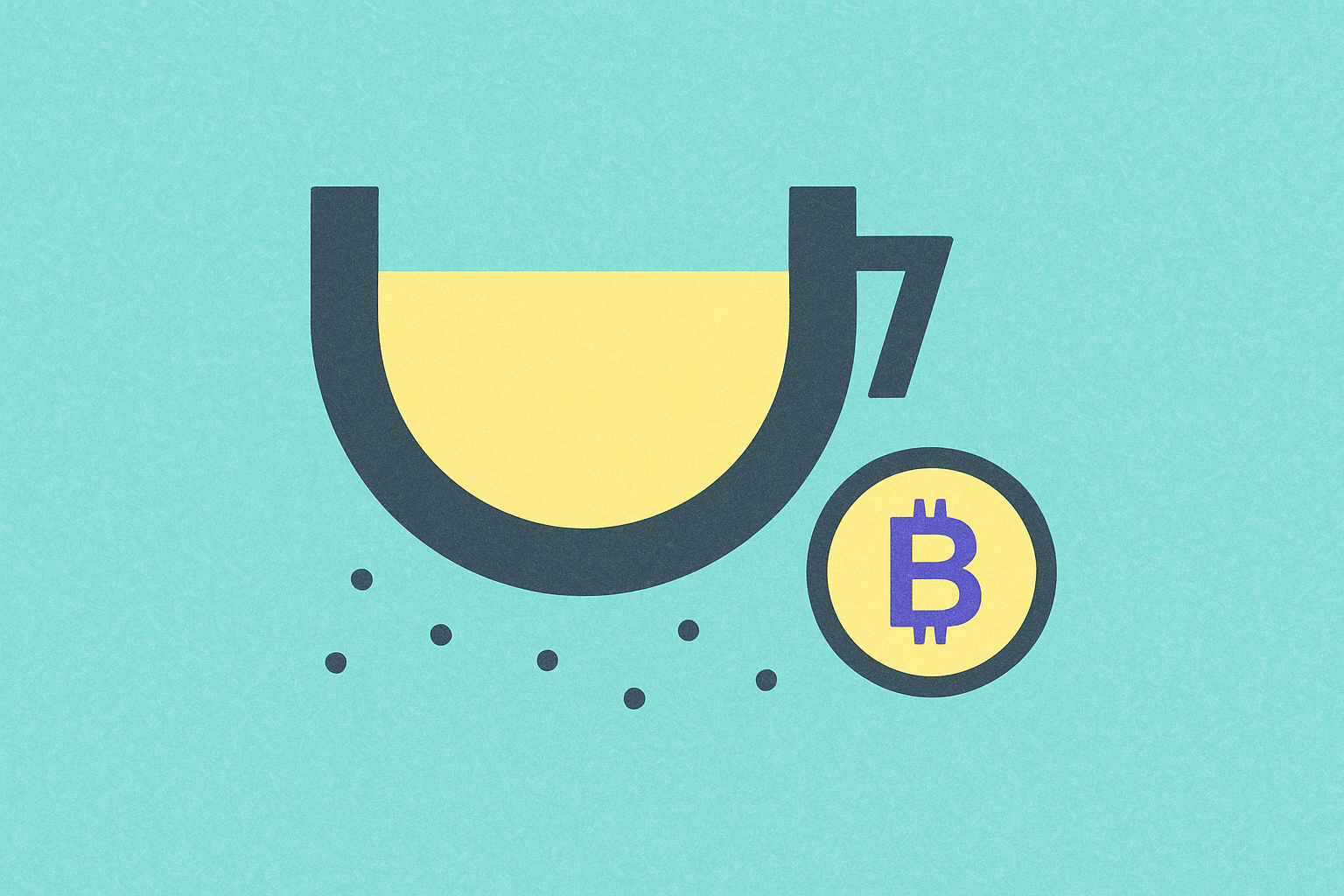
The Cup and Handle pattern is a bullish continuation chart formation that offers cryptocurrency traders clear entry signals, defined risk management, and logical profit targets. This comprehensive guide covers pattern identification through U-shaped cup structure, volume analysis, and handle formation mechanics. Learn the systematic trading approach: entering at handle breakout resistance, placing stop-losses below handle lows, and calculating price targets using cup depth. Understand the psychological dynamics driving buyer and seller behavior throughout each phase. The pattern demonstrates approximately 80% success rate when strict criteria are met. However, traders must recognize limitations including false breakouts, pattern ambiguity, and market-dependent performance. Combine Cup and Handle signals with additional technical indicators, proper position sizing (1-2% risk per trade), and sound capital management to maximize effectiveness in dynamic cryptocurrency markets.
Key Takeaways
The Cup and Handle pattern is a bullish continuation chart pattern in cryptocurrency trading that provides clear entry signals and manageable risk-reward ratios.
- This pattern features a gradual U-shaped bottom (the cup), a brief consolidation period (the handle), and increased trading volume upon breaking above the handle's resistance level.
- The basic trading strategy involves entering a long position at the handle breakout, placing a stop-loss at the handle's low or the cup's midpoint, and setting a price target equal to the cup's depth.
- When strict conditions are met, the pattern demonstrates approximately 80% success rate, and failure risks can be minimized through pattern clarity verification, volume confirmation, and proper risk management.
- The inverse pattern (upside-down version) can be utilized for short strategies and hedging signals, and the pattern is applicable across various timeframes including daily and weekly charts.
- Traders should be aware of limitations such as false breakouts, excessive pattern variations, and market volatility, always combining additional confirmation signals with capital management techniques.
Introduction
The Cup and Handle pattern stands as one of the most recognizable and frequently sought-after bullish continuation chart patterns among cryptocurrency traders. True to its name, this pattern resembles a teacup with its characteristic rounded "U"-shaped bottom (the cup) and a smaller consolidation area on the right side (the handle). Following a breakout above the handle's upper resistance, prices typically experience strong upward momentum.
The Cup and Handle pattern was first formally introduced in the 1980s by technical analyst William J. O'Neil. This pattern is primarily employed to identify buying opportunities within an existing uptrend, making it an essential tool for traders seeking to capitalize on trend continuation movements.
In cryptocurrency markets, where volatility and rapid price movements are common, understanding and properly identifying this pattern can provide traders with a significant edge. The pattern's clear structure and defined entry and exit points make it particularly valuable for both novice and experienced traders looking to implement systematic trading approaches.
What Is the Cup and Handle Pattern?
The Cup and Handle pattern is a chart formation that visually resembles a teacup with a handle attached to its right side. The cup portion must exhibit a smooth, gradual U-shaped bottom rather than a sharp V-shaped recovery, indicating healthy price consolidation. After the cup formation completes and prices rally back toward the previous high, a brief consolidation or sideways movement creates what is known as the handle.
This pattern is predominantly classified as a bullish continuation signal, meaning it typically appears during an uptrend when an asset undergoes a period of rest and consolidation before resuming its upward trajectory. The handle represents the final shakeout phase where weak hands exit their positions, and once prices break above the handle's resistance level with strong volume, the pattern is considered complete.
The structural integrity of the pattern is crucial for its reliability. A properly formed Cup and Handle demonstrates that despite temporary selling pressure creating the cup's bottom, buying interest remains strong enough to push prices back to previous highs. The handle then serves as a final test of resistance before the breakout occurs, often accompanied by increased trading volume that confirms genuine buying interest rather than a false move.
Psychology Behind the Cup and Handle Pattern
The Cup and Handle pattern effectively captures trader psychology throughout different market phases within an uptrend. Initially, an asset rallies to a peak where buying demand reaches a temporary exhaustion point, prompting some traders to take profits. This profit-taking creates selling pressure that pushes prices lower, forming the left side of the cup.
As prices decline and selling pressure diminishes, value-seeking buyers gradually enter the market, establishing support and creating the cup's rounded bottom. This gradual accumulation phase reflects a shift in sentiment from fear to cautious optimism, with buyers willing to step in at lower price levels.
When prices recover and approach the previous high, forming the right side of the cup, another wave of profit-taking emerges from traders who bought near the bottom or held through the decline. This creates the handle, a smaller consolidation that typically drifts downward or moves sideways. The handle represents the final test of conviction, where remaining weak hands exit and strong hands accumulate positions.
The breakout above the handle's resistance, particularly when accompanied by surging volume, signals that aggressive buying has overwhelmed remaining sellers. This volume spike indicates institutional or large-scale buying interest, validating the pattern and often leading to sustained upward movement as the bullish continuation unfolds.
How to Identify the Cup and Handle Pattern
Successfully identifying a Cup and Handle pattern in cryptocurrency charts requires careful attention to several key characteristics:
-
Cup Shape: The cup must exhibit a smooth, rounded "U"-shaped bottom. Sharp "V"-shaped reversals do not qualify, as they indicate impulsive buying rather than gradual accumulation. The cup's formation should demonstrate a natural ebb and flow of buying and selling pressure over time.
-
Handle Formation: After prices reach the cup's right rim, a smaller consolidation or downward drift should appear on the right side. Ideally, the handle should not retrace more than one-third of the cup's depth, indicating that selling pressure remains limited and the underlying trend remains intact.
-
Volume Patterns: Volume behavior provides crucial confirmation signals. During the cup's formation, volume should gradually decrease as prices decline, reflecting diminishing selling pressure. Volume should remain relatively low throughout the handle's formation, then surge dramatically upon the breakout above the handle's resistance, confirming genuine buying interest.
-
Formation Duration: Typically, the cup formation develops over several weeks to several months, while the handle forms over several days to several weeks. This timeframe allows for proper consolidation and accumulation, though cryptocurrency markets may sometimes form valid patterns more quickly due to increased volatility.
-
Handle Position: The handle should form near the upper half of the cup, preferably in the top third. A handle that forms too low suggests excessive selling pressure and weakens the pattern's bullish implications.
When evaluating potential Cup and Handle patterns, traders should also consider the overall market context, existing trend strength, and whether the pattern appears on appropriate timeframes for their trading strategy.
How to Trade the Cup and Handle Pattern
Trading the Cup and Handle pattern involves a systematic approach with clearly defined entry, exit, and risk management parameters:
-
Pattern Confirmation: Before initiating any trade, thoroughly verify that all Cup and Handle criteria are satisfied. Ensure the cup exhibits proper U-shaped structure, the handle forms appropriately, and volume patterns align with expectations.
-
Entry Point: The standard entry approach involves placing a buy-stop order slightly above the handle's highest point. This ensures entry only occurs upon a confirmed breakout, reducing the risk of false signals. Some traders prefer to wait for a candle close above resistance before entering, adding an extra layer of confirmation.
-
Stop-Loss Placement: Risk management is critical for Cup and Handle trades. Common stop-loss placement strategies include:
- Setting the stop-loss just below the handle's lowest point for tighter risk control
- Placing the stop-loss below the cup's midpoint for more conservative risk management
- Using a percentage-based stop-loss relative to entry price
-
Price Target Calculation: Calculate the price target by measuring the cup's depth (distance from the cup's lowest point to the resistance level) and adding this distance to the breakout point. This provides a logical profit target based on the pattern's structure.
-
Position Sizing: To protect capital and manage risk effectively, limit exposure to 1-2% of total trading capital per trade. This ensures that even if the pattern fails, losses remain manageable within the broader portfolio context.
-
Volume Verification: Strong breakouts should be accompanied by significantly increased trading volume, often 50-100% or more above recent average volume. Low-volume breakouts carry higher failure risk and should be approached with caution or avoided.
Trading Checklist:
- Entry: Place buy-stop order slightly above handle's high
- Confirmation: Verify strong breakout candle with increased volume
- Stop-loss: Set below handle's low or cup's midpoint
- Target: Add cup's depth to breakout point
- Position size: Risk only 1-2% of capital
Limitations and Risks to Consider
While the Cup and Handle pattern offers valuable trading opportunities, traders must remain aware of several limitations and potential failure scenarios:
-
False Breakouts: Prices may briefly breach the handle's resistance before quickly reversing lower, trapping traders who entered on the breakout. This often occurs in low-volume or manipulated market conditions, particularly in less liquid cryptocurrency pairs.
-
Pattern Ambiguity: Subjective interpretation can lead to identifying Cup and Handle patterns where none truly exist. What appears as a cup to one trader might represent a different formation to another, leading to inconsistent trading decisions.
-
Extended Formation Periods: When cup formation extends over excessively long periods, market conditions and fundamental factors may change significantly by the time the handle forms, potentially invalidating the pattern's original premise.
-
Handle Depth Variations: If the handle retraces more than one-third to one-half of the cup's depth, the pattern's reliability diminishes substantially. Deep handles suggest strong selling pressure that may prevent successful continuation.
-
Volume Inconsistencies: While volume confirmation strengthens pattern reliability, not all successful patterns exhibit textbook volume behavior. Some low-volume breakouts succeed, while some high-volume breakouts fail, making volume alone insufficient for trade decisions.
-
Market Environment: Broader market conditions significantly impact pattern success rates. Cup and Handle patterns forming during strong bull markets tend to perform better than those appearing during uncertain or bearish market phases.
-
Cryptocurrency-Specific Risks: In cryptocurrency markets, factors such as regulatory news, exchange issues, security breaches, or whale manipulation can invalidate technical patterns regardless of their quality, requiring traders to maintain awareness of fundamental developments.
Advanced Tips and Historical Context
-
William O'Neil's Legacy: William O'Neil popularized the Cup and Handle pattern in his 1988 book "How to Make Money in Stocks," establishing it as a cornerstone of his CANSLIM investment methodology. His research demonstrated the pattern's effectiveness across various market conditions and asset classes.
-
Inverse Pattern Recognition: The inverted Cup and Handle pattern (upside-down version) serves as a bearish continuation signal, useful for identifying short-selling opportunities or hedging existing long positions. This pattern exhibits the same structural characteristics but in reverse, with a dome-shaped top followed by an upward-sloping handle.
-
Cryptocurrency Context: In cryptocurrency markets, Cup and Handle patterns frequently appear on weekly charts during major bull cycles. Notable examples include Bitcoin's formations during past bull runs, where properly identified patterns led to substantial price appreciation.
-
Success Rate Considerations: Research suggests that Cup and Handle patterns meeting strict criteria achieve approximately 80% success rates, though this figure varies based on market conditions, timeframe, asset volatility, and trader discipline in pattern identification and execution.
-
Pattern Variations: Several variations exist beyond the classic Cup and Handle, including:
- Scalloped cups with multiple rounded bottoms
- Double-bottom handles showing two distinct lows
- Wedge-shaped handles with converging trendlines
- High-tight flags (extremely shallow handles)
-
Multi-Timeframe Analysis: Experienced traders often confirm Cup and Handle patterns across multiple timeframes. A pattern appearing on both daily and weekly charts typically carries greater reliability than one visible on only a single timeframe.
-
Combining with Other Indicators: While the Cup and Handle provides a complete trading framework, combining it with additional technical indicators such as RSI (for overbought/oversold conditions), moving averages (for trend confirmation), or Fibonacci retracements (for support/resistance levels) can enhance trading decisions and improve success rates.
Conclusion
The Cup and Handle pattern represents a time-tested and highly valuable bullish continuation formation that provides cryptocurrency traders with clear entry points, defined stop-loss levels, and logical profit targets. Its visual simplicity combined with its psychological foundation makes it accessible to traders at all experience levels while maintaining effectiveness in identifying high-probability trading opportunities.
However, successful implementation depends entirely on disciplined execution and thorough understanding. Traders must resist the temptation to force pattern identification where it doesn't truly exist, and should only execute trades when all criteria are convincingly met. The pattern works best when combined with proper risk management, including appropriate position sizing, stop-loss placement, and capital preservation strategies.
In the dynamic and volatile cryptocurrency markets, the Cup and Handle pattern serves as a reliable tool for identifying trend continuation opportunities. By understanding its formation, psychology, and proper trading methodology, while remaining aware of its limitations and potential failure modes, traders can incorporate this pattern into a comprehensive trading strategy that capitalizes on bullish momentum while managing risk effectively.
Remember that no pattern guarantees success, and the Cup and Handle should always be used in conjunction with additional confirmation signals, fundamental analysis when appropriate, and strict adherence to risk management principles. Through careful study, practice, and disciplined application, traders can leverage this powerful pattern to enhance their cryptocurrency trading performance over the long term.
FAQ
What is the Cup and Handle Pattern? What is its role in cryptocurrency trading?
The Cup and Handle is a bullish chart pattern featuring a U-shaped cup followed by a slight downward consolidation (handle). It signals potential upward breakouts. Traders typically enter positions when price breaks above the handle resistance level, indicating strong buying momentum ahead.
How to identify and correctly judge the cup and handle pattern? What technical indicators and confirmation signals should be noted?
Identify the cup and handle by observing a U-shaped cup formation and a shorter handle positioned at one-third of the cup's height. Confirm the pattern when price breaks above the handle's resistance level, signaling an uptrend. Use volume surge and moving average crossovers as confirmation signals for trading opportunities.
How to set entry point, stop loss, and take profit when trading cryptocurrency using the Cup and Handle pattern?
Enter when price breaks above the handle resistance with volume confirmation. Place stop loss below the handle low. Set take profit at the cup height level. Consider scaling out profits in batches while trailing stops higher using ATR for dynamic adjustment.
What are the advantages and disadvantages of the Cup and Handle pattern compared to other common chart patterns such as triangles and head-and-shoulders patterns?
Cup and Handle excels at identifying strong bullish continuations after prolonged consolidation, offering reliable breakout signals with volume confirmation. However, it requires longer formation periods. Triangles and head-and-shoulders patterns are more flexible, adapting to various market conditions and timeframes, making them faster to develop but potentially less reliable for sustained trends.
What risks exist when using cup and handle patterns in actual trading? How to avoid false breakouts and misleading signals?
Cup and handle patterns risk false breakouts; combine with volume surges and multiple indicators like RSI and MACD to confirm signals. Use stop-loss orders and fundamental analysis to reduce misleading trades effectively.
Yes, the cup and handle pattern shows variations across cryptocurrencies and timeframes. Shorter timeframes typically display faster breakouts, while longer timeframes require extended formation periods. The pattern's effectiveness remains consistent, but trading volume, volatility, and market conditions influence specific outcomes across different assets.
* The information is not intended to be and does not constitute financial advice or any other recommendation of any sort offered or endorsed by Gate.