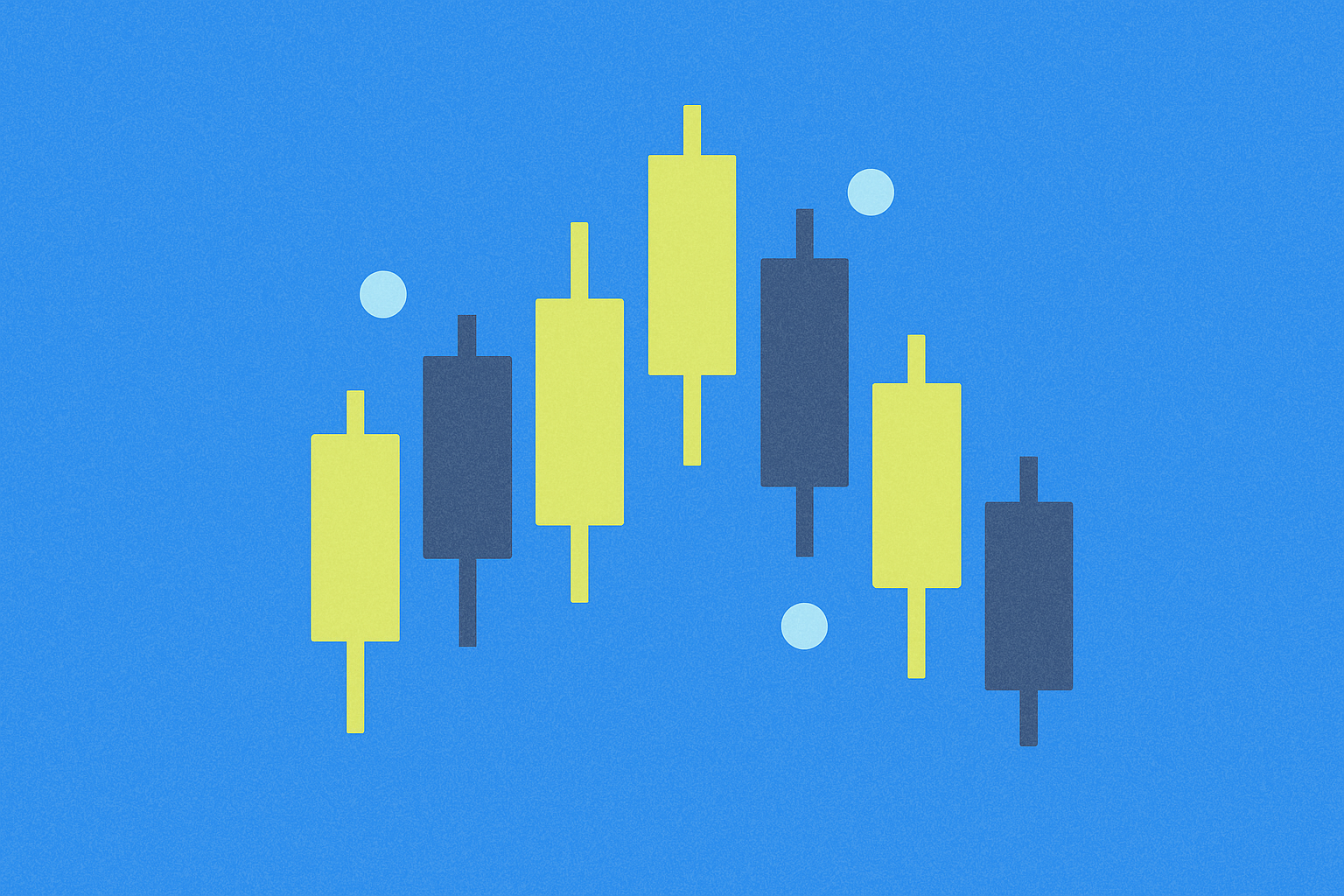
This comprehensive guide teaches cryptocurrency traders how to master candlestick patterns for improved trading decisions. It covers the fundamental structure of candlesticks, including open, close, high, and low prices, then explores eight essential patterns—both bullish (Hammer, Bullish Engulfing, Morning Star) and bearish (Hanging Man, Shooting Star, Bearish Engulfing)—that reveal market sentiment and potential reversals. The article emphasizes that successful pattern recognition requires combining candlestick analysis with technical indicators like RSI, moving averages, and volume analysis on Gate exchange trading platforms. By understanding how to read these time-tested patterns across different timeframes and market contexts, traders can identify entry and exit points more effectively while managing risk through proper position sizing and stop-loss orders in volatile cryptocurrency markets.
What is a Candlestick?
A candlestick represents the price movement of an asset over a specific period, which traders can freely configure according to their strategy—whether it's 1 minute, 1 hour, daily, or monthly timeframes. Each candlestick displays four key elements that provide comprehensive price information:
- Open Price: The price at which the period began, establishing the starting point for that timeframe's trading activity
- Close Price: The final price when the period ended, indicating where market participants agreed to settle
- High Price: The highest price reached during the period, showing the maximum bullish momentum
- Low Price: The lowest price recorded during the period, revealing the extent of bearish pressure
The candle body represents the range between the open and close prices, visually showing the net price change. The wicks or shadows extend above and below the body to display the high and low prices, revealing the full extent of price volatility during that period. Candlesticks are typically color-coded for quick visual interpretation:
- Green (or White): Indicates the close price was higher than the open, signifying bullish price action and buying pressure
- Red (or Black): Shows the close price was lower than the open, representing bearish price movement and selling pressure
This visual representation allows traders to quickly assess market sentiment and price dynamics at a glance, making it an invaluable tool for technical analysis in cryptocurrency markets.
Why Use Candlestick Charts
Originating from 18th-century Japanese rice merchants, candlestick charts have evolved into an essential tool for modern traders across all financial markets, particularly in the volatile cryptocurrency space. Their enduring popularity stems from several key advantages that make them superior to simple line charts.
The visual clarity of candlestick charts allows traders to instantly grasp complex price action and market psychology. Unlike line charts that only show closing prices, candlesticks reveal the complete story of price movement—the opening, closing, highest, and lowest prices—all in a single visual element. This comprehensive information enables traders to identify patterns, trends, and potential reversals more effectively.
In cryptocurrency trading, where markets operate 24/7 and volatility can be extreme, the ability to quickly interpret market sentiment through candlestick patterns becomes even more critical. Traders can spot buying and selling pressure, identify support and resistance levels, and make more informed decisions about entry and exit points.
Candlestick patterns form over time and reveal crucial information about market trends, potential reversals, or consolidation phases. Understanding how to read these patterns is fundamental to successful cryptocurrency trading.
A single candlestick tells the story of price action within its specific timeframe, showing the battle between buyers and sellers. However, when multiple candlesticks combine, they create larger and more meaningful patterns that can signal significant market movements. These patterns emerge from the collective behavior of market participants and often repeat because human psychology and trading behavior tend to follow similar patterns.
Successful pattern recognition requires considering the context in which patterns appear. A bullish pattern appearing after a prolonged downtrend carries different weight than the same pattern appearing in the middle of an uptrend. Traders must also consider volume, overall market conditions, and confirmation from subsequent price action before making trading decisions based on candlestick patterns.
8 Essential Candlestick Patterns for Cryptocurrency Trading
Bullish Candlestick Patterns
Hammer: This pattern features a small body positioned at the upper end with a long lower wick, appearing at the bottom of a downtrend. The formation tells a compelling story: sellers drove prices significantly lower during the period, but strong buying pressure emerged, pushing prices back up to close near the opening level. This rejection of lower prices suggests that buyers are stepping in and a potential trend reversal may be imminent. The longer the lower wick relative to the body, the more significant the bullish signal becomes.
Inverted Hammer: Characterized by a small body at the lower end with a long upper wick, this pattern appears at the bottom of a downtrend. It indicates that buyers attempted to push prices higher, encountering resistance from sellers who drove prices back down. While it may seem bearish at first glance, the Inverted Hammer actually signals that buying interest is building. If confirmed by a strong bullish candle in the next period, it often marks the beginning of an upward reversal.
Bullish Engulfing: This powerful two-candle pattern occurs at the end of a downtrend when a small red candle is followed by a larger green candle that completely engulfs the previous candle's body. This pattern demonstrates a dramatic shift in market sentiment—strong buying pressure has overwhelmed the previous selling momentum. The larger the engulfing candle, the more significant the reversal signal. Traders often look for this pattern at key support levels for additional confirmation.
Morning Star: A three-candle pattern forming at the bottom of a downtrend, the Morning Star signals a potential trend reversal through its distinct formation. The first candle is a long bearish candle, followed by a small-bodied candle (which can be bullish or bearish) that gaps down, and finally a long bullish candle that closes well into the first candle's body. This pattern shows selling pressure diminishing as buyers gradually take control, often marking the dawn of a new uptrend—hence the name "Morning Star."
Piercing Line: Appearing at the end of a downtrend, this pattern consists of a long red candle followed by a long green candle that opens below the previous close but closes above the midpoint of the red candle's body. This formation indicates that despite initial selling pressure, buyers stepped in aggressively and pushed prices significantly higher. The deeper the green candle closes into the red candle's body (ideally above the 50% mark), the stronger the bullish reversal signal becomes.
Bearish Candlestick Patterns
Hanging Man: This pattern appears at the top of an uptrend and resembles a Hammer in shape, featuring a small body at the upper end with a long lower wick. However, its context makes it bearish—it suggests that sellers pushed prices significantly lower during the period, and although buyers managed to push prices back up, the selling pressure is increasing. This pattern warns that the bullish trend may be weakening and a reversal could be approaching, especially if confirmed by subsequent bearish price action.
Shooting Star: Characterized by a small body at the lower end with a long upper wick, the Shooting Star appears at the peak of an uptrend. The pattern tells us that buyers pushed prices significantly higher during the period, but encountered strong resistance that drove prices back down to close near the opening level. This rejection of higher prices indicates that sellers are becoming more aggressive and the uptrend may be exhausted. The pattern's bearish signal strengthens when the upper wick is at least twice the length of the body.
Bearish Engulfing: This powerful reversal pattern occurs at the top of an uptrend when a small green candle is followed by a larger red candle that completely engulfs the previous candle's body. It represents a dramatic shift in market sentiment—strong selling pressure has suddenly overwhelmed the previous buying momentum. The pattern signals that bears have seized control and a downtrend may be beginning. Traders often wait for confirmation from the next candle before acting on this signal, especially in volatile cryptocurrency markets.
Combining Candlestick Patterns with Technical Indicators
While candlestick patterns are powerful analytical tools on their own, their effectiveness multiplies when combined with other technical indicators. This multi-layered approach helps traders filter out false signals and make more confident trading decisions in the volatile cryptocurrency markets.
The Relative Strength Index (RSI) can confirm whether a bullish candlestick pattern appears in oversold territory or a bearish pattern emerges in overbought conditions, adding weight to the reversal signal. Moving averages help identify the overall trend direction, ensuring that traders align their pattern-based trades with the broader market momentum. Bollinger Bands provide context about volatility and price extremes, helping traders understand whether a candlestick pattern appears at a significant price level.
Volume analysis serves as another crucial confirmation tool—a bullish engulfing pattern accompanied by high trading volume carries much more significance than the same pattern on low volume. Support and resistance levels identified through price action analysis can also validate candlestick signals, as patterns appearing at these key levels tend to be more reliable.
By overlaying multiple signals and waiting for confirmation from various indicators, traders can significantly reduce false signals and optimize their investment decisions. This comprehensive approach is particularly important in cryptocurrency trading, where markets can be manipulated and false breakouts are common.
Conclusion
Candlestick patterns serve as essential tools for cryptocurrency traders, providing invaluable insights into market sentiment and helping predict future price movements. These time-tested patterns reveal the ongoing battle between buyers and sellers, allowing traders to anticipate potential trend reversals, continuations, and consolidation phases.
However, successful trading requires more than just pattern recognition. Consistent practice in identifying and interpreting these patterns across different timeframes and market conditions is crucial for developing trading expertise. Traders must approach candlestick analysis with careful judgment, always considering the broader market context and avoiding over-reliance on any single signal.
Risk management remains paramount—always verify signals by combining candlestick patterns with other technical indicators, use appropriate position sizing, and set stop-loss orders to protect capital. The cryptocurrency market's inherent volatility demands disciplined and responsible trading practices. By mastering candlestick patterns while maintaining a comprehensive analytical approach, traders can enhance their ability to navigate the dynamic cryptocurrency markets and make more informed trading decisions.
FAQ
What is a candlestick chart? What do the four basic elements (open price, close price, high price, low price) represent?
A candlestick chart displays price movements over a time period using four key elements: open price (trading start price), close price (trading end price), high price (highest price during the period), and low price (lowest price during the period). The candlestick body shows the range between open and close, while the wicks display the high and low extremes.
What are the most common K-line patterns? What market signals do they indicate respectively?
Common patterns include hammer and shooting star indicating trend reversals, three white soldiers suggesting bullish continuation, three black crows signaling bearish continuation, and doji reflecting market indecision. Each pattern reveals buyer-seller dynamics and potential price direction shifts.
How to use candlestick patterns for cryptocurrency trading decisions? What risks should be noted?
Use candlestick patterns to identify trends and breakpoints for entry signals. Set stop-loss orders to manage risk effectively. Avoid overtrading and consider market volatility and liquidity conditions carefully.
How to distinguish between bullish candlestick patterns (such as hammer, bullish engulfing) and bearish patterns (such as shooting star, bearish engulfing)?
Bullish patterns form at support levels with upward momentum, featuring lower wicks and closes above opens, signaling potential price increases. Bearish patterns form at resistance levels showing downward pressure, with upper wicks and closes below opens, indicating potential price declines. Position and price action context determine their significance.
How accurate are candlestick patterns in cryptocurrency trading? Why can't we rely solely on candlestick analysis for trading decisions?
Candlestick pattern accuracy in crypto markets is limited due to high volatility. Single reliance on candlesticks leads to incomplete analysis and risky decisions. Combine with volume, support/resistance, and other indicators for better results.
What are the differences between candlestick patterns across different timeframes (5-minute, 1-hour, daily) in technical analysis?
Different timeframes reveal distinct market information: 5-minute candles show short-term volatility, hourly candles display medium-term trends, and daily candles reflect overall price movements. Using multiple timeframes helps traders identify trading signals across different time scales.
How to combine candlestick patterns with other technical indicators (such as moving averages, RSI) to improve trading success rate?
Combine candlestick patterns with moving averages to confirm trend direction and RSI to gauge momentum strength. Use RSI above 70 for overbought signals and below 30 for oversold conditions. Align pattern breakouts with moving average crossovers for higher probability entries and exits.
* The information is not intended to be and does not constitute financial advice or any other recommendation of any sort offered or endorsed by Gate.