This comprehensive guide compares VIC (Viction) and ICP (Internet Computer), two leading blockchain protocols with distinct applications in enterprise solutions. VIC, launched in 2018, operates as a user-centric Layer-1 blockchain featuring zero-gas transactions, currently trading at $0.08205. ICP, established in 2021, functions as decentralized cloud infrastructure with a current price of $3.318 and higher trading liquidity. The analysis examines historical price trajectories, supply mechanisms, institutional adoption, and technology ecosystems to evaluate investment value through 2031. While VIC offers emerging blockchain potential, ICP provides established market presence with greater liquidity. Price projections suggest VIC may reach $0.121-$0.220 by 2031, while ICP could expand to $4.10-$8.08. Investment strategy recommendations vary by risk tolerance, with conservative portfolios favoring ICP allocation and experienced investors considering diversified exposure across both platforms on Gate.
Introduction: VIC vs ICP Investment Comparison
In the cryptocurrency market, the comparison between VIC and ICP has become a focal point for investors. The two differ notably in market cap ranking, application scenarios, and price performance, representing distinct positioning within the crypto asset landscape.
Viction (VIC): Launched in 2018, it has gained market recognition through its positioning as a user-centric Layer-1 blockchain offering zero-gas transactions and enhanced security.
Internet Computer (ICP): Since its launch in 2021, it has been positioned as a decentralized cloud blockchain capable of hosting secure applications, websites, and enterprise systems with trustless multi-chain interactions.
This article will comprehensively analyze the investment value comparison between VIC and ICP around historical price trends, supply mechanisms, institutional adoption, technical ecosystems, and future predictions, attempting to address the question investors care about most:
"Which represents a more suitable investment consideration at this time?"
I. Historical Price Comparison and Current Market Situation
VIC (Viction) and ICP (Internet Computer) Historical Price Trends
- 2021: VIC reached a notable price level of $3.88 on September 6, 2021, during a period of market expansion.
- 2021: ICP experienced significant price movement, reaching $700.65 on May 11, 2021, during the early phase of its public launch.
- Comparative Analysis: Throughout the market cycle, VIC declined from its peak of $3.88 to a low of $0.078423 recorded on January 26, 2026, while ICP demonstrated a substantial decline from its high of $700.65 to $2.23 recorded on October 11, 2025.
Current Market Situation (January 26, 2026)
- VIC current price: $0.08205
- ICP current price: $3.318
- 24-hour trading volume: VIC $18,481.09 vs ICP $2,380,105.85
- Market Sentiment Index (Fear & Greed Index): 20 (Extreme Fear)
View real-time prices:
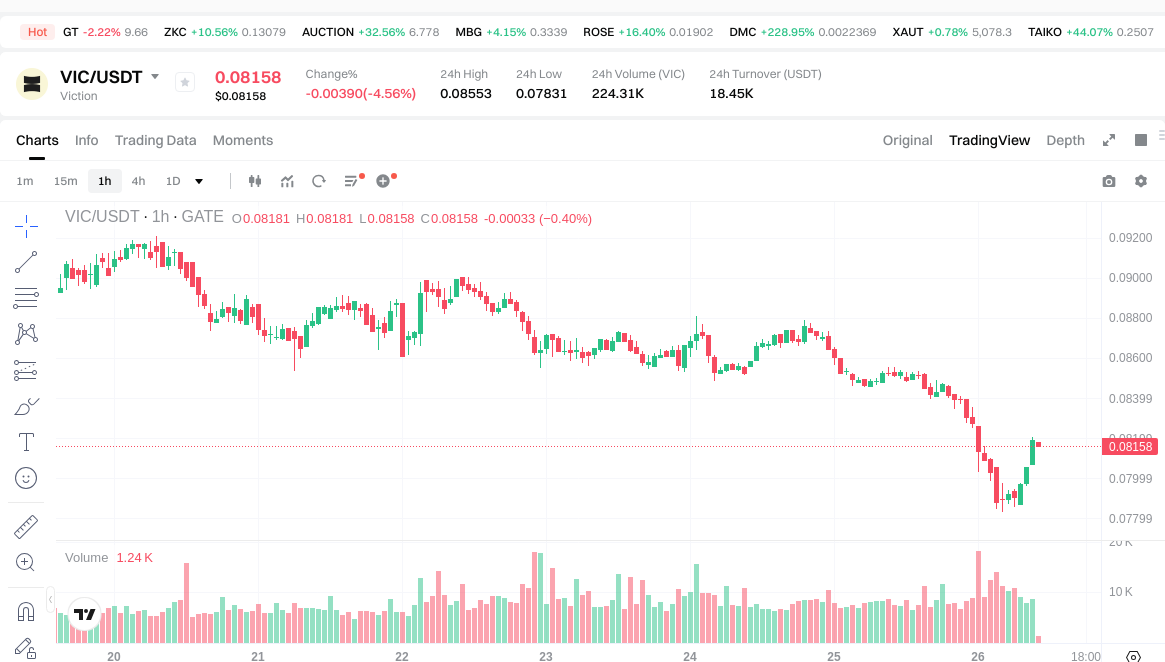
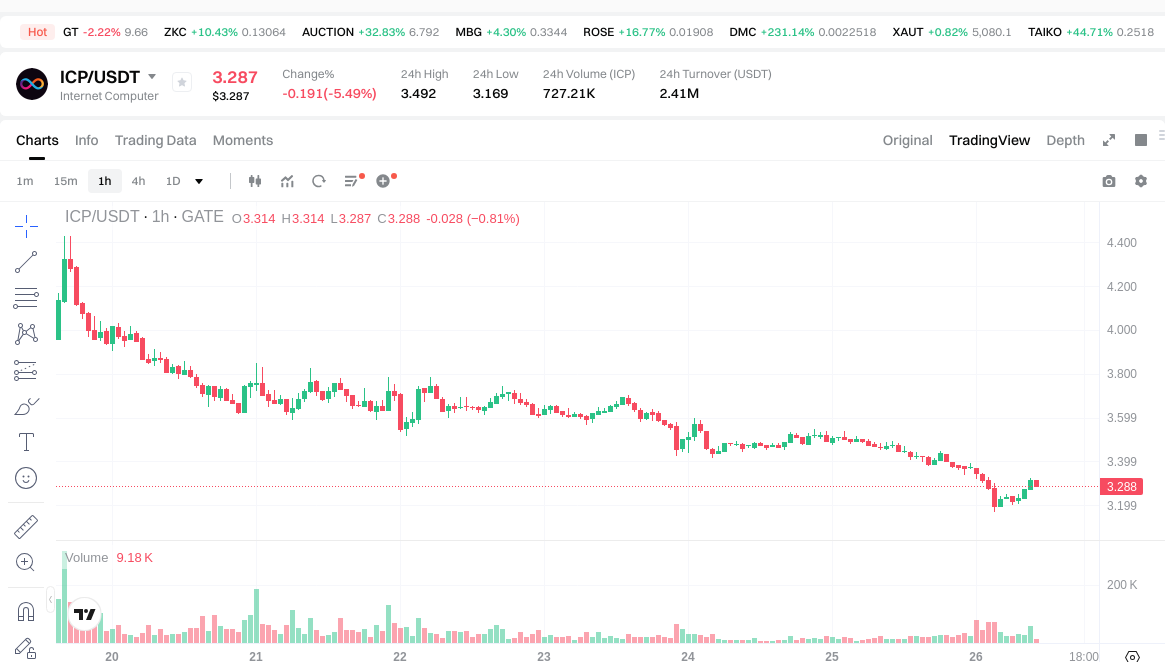
II. Core Factors Influencing VIC vs ICP Investment Value
Supply Mechanism Comparison (Tokenomics)
Due to limited available data on the specific supply mechanisms of VIC and ICP, a detailed comparison cannot be provided at this time. Generally, supply mechanisms such as fixed supply models, deflationary structures, or halving schedules can significantly influence token price dynamics over different market cycles.
Institutional Adoption and Market Application
Institutional Holdings: Specific data regarding institutional preference between VIC and ICP is not available in the reference materials.
Enterprise Adoption: Information on the comparative application of VIC and ICP in cross-border payments, settlements, or institutional investment portfolios is not provided in the available sources.
National Policies: Regulatory attitudes toward VIC and ICP across different jurisdictions are not covered in the reference materials.
Technology Development and Ecosystem Building
VIC Technology Upgrades: Details on recent or planned technology upgrades for VIC and their potential market impact are not available in the provided materials.
ICP Technology Development: Information regarding ICP's technological advancements and their potential implications is not included in the reference sources.
Ecosystem Comparison: Comparative data on DeFi integration, NFT development, payment solutions, and smart contract deployment for both VIC and ICP is not available in the reference materials.
Macroeconomic and Market Cycles
Performance in Inflationary Environments: Specific analysis of which asset demonstrates stronger inflation-hedging properties is not available in the provided materials.
Macroeconomic Monetary Policy: The impact of interest rates and dollar index movements on VIC and ICP is not addressed in the reference sources.
Geopolitical Factors: Information regarding cross-border transaction demand and international developments affecting these assets is not provided in the available materials.
III. 2026-2031 Price Prediction: VIC vs ICP
Short-term Forecast (2026)
- VIC: Conservative $0.075 - $0.082 | Optimistic $0.082 - $0.084
- ICP: Conservative $1.68 - $3.29 | Optimistic $3.29 - $4.47
Mid-term Forecast (2028-2029)
- VIC may enter a gradual growth phase, with estimated price range of $0.061 - $0.117 in 2028, expanding to $0.076 - $0.146 by 2029
- ICP may enter a development expansion phase, with estimated price range of $2.36 - $5.36 in 2028, expanding to $3.04 - $6.13 by 2029
- Key drivers: institutional capital inflows, ETF developments, ecosystem expansion
Long-term Forecast (2030-2031)
- VIC: Base scenario $0.106 - $0.125 (2030) expanding to $0.121 - $0.156 (2031) | Optimistic scenario $0.186 (2030) to $0.220 (2031)
- ICP: Base scenario $3.29 - $5.48 (2030) expanding to $4.10 - $5.61 (2031) | Optimistic scenario $5.75 (2030) to $8.08 (2031)
View detailed price predictions for VIC and ICP
Disclaimer
VIC:
| Year |
Predicted High Price |
Predicted Average Price |
Predicted Low Price |
Price Change |
| 2026 |
0.0840377 |
0.08159 |
0.0750628 |
0 |
| 2027 |
0.097720343 |
0.08281385 |
0.0488601715 |
1 |
| 2028 |
0.11734722545 |
0.0902670965 |
0.06138162562 |
10 |
| 2029 |
0.14636809697475 |
0.103807160975 |
0.07577922751175 |
26 |
| 2030 |
0.186380567172563 |
0.125087628974875 |
0.106324484628643 |
52 |
| 2031 |
0.219585078283944 |
0.155734098073719 |
0.121472596497501 |
90 |
ICP:
| Year |
Predicted High Price |
Predicted Average Price |
Predicted Low Price |
Price Change |
| 2026 |
4.4744 |
3.29 |
1.6779 |
0 |
| 2027 |
4.697462 |
3.8822 |
2.562252 |
17 |
| 2028 |
5.36228875 |
4.289831 |
2.35940705 |
29 |
| 2029 |
6.12909604125 |
4.826059875 |
3.04041772125 |
45 |
| 2030 |
5.75145685603125 |
5.477577958125 |
3.286546774875 |
65 |
| 2031 |
8.0849050661925 |
5.614517407078125 |
4.098597707167031 |
69 |
IV. Investment Strategy Comparison: VIC vs ICP
Long-term vs Short-term Investment Strategies
- VIC: May be considered by investors interested in emerging Layer-1 blockchain infrastructure with zero-gas transaction features and those seeking exposure to lower market cap assets with potential growth trajectories.
- ICP: May appeal to investors focused on decentralized cloud computing applications and those interested in projects with established institutional backing and broader ecosystem development.
Risk Management and Asset Allocation
- Conservative Investors: VIC 20-30% vs ICP 70-80% - Conservative portfolios may consider higher allocation to assets with more established market presence and liquidity.
- Aggressive Investors: VIC 40-50% vs ICP 50-60% - More risk-tolerant portfolios might balance exposure between emerging and established blockchain platforms.
- Hedging Tools: Stablecoin allocation for liquidity management, derivatives for downside protection, cross-asset portfolio diversification across different blockchain use cases.
V. Potential Risk Comparison
Market Risks
- VIC: Lower liquidity evidenced by 24-hour trading volume of $18,481.09 may result in higher price volatility and execution challenges during market stress periods. The current price of $0.08205 reflects substantial decline from historical levels.
- ICP: While demonstrating higher liquidity with 24-hour volume of $2,380,105.85, the asset has experienced considerable price fluctuation from its launch level of $700.65 to current $3.318, indicating sensitivity to broader market sentiment.
Technical Risks
- VIC: Information regarding network scalability, transaction throughput capacity, and infrastructure resilience during periods of increased usage is limited in available materials.
- ICP: Details on computational resource distribution, security architecture, and potential vulnerability management are not comprehensively covered in the reference sources.
Regulatory Risks
Both VIC and ICP operate in an evolving regulatory landscape where jurisdictional approaches to blockchain technology, decentralized applications, and digital assets continue to develop. Regulatory clarity in major markets could influence adoption trajectories and institutional participation differently for each asset.
VI. Conclusion: Which Is the Better Buy?
📌 Investment Value Summary:
- VIC Considerations: Positioned as a Layer-1 blockchain with zero-gas transaction functionality, currently trading at $0.08205 with lower market liquidity. Price projections suggest potential gradual appreciation from $0.075-$0.084 (2026) to $0.121-$0.220 (2031) under various scenarios.
- ICP Considerations: Established as a decentralized cloud computing platform with current price of $3.318 and comparatively higher trading volume. Forecasts indicate potential range expansion from $1.68-$4.47 (2026) to $4.10-$8.08 (2031) depending on market conditions.
✅ Investment Considerations:
- New Investors: May consider starting with assets demonstrating higher liquidity and more established market presence while allocating smaller positions to emerging platforms. Diversification across multiple blockchain use cases could help manage concentration risk.
- Experienced Investors: Could evaluate portfolio allocation based on risk tolerance, investment horizon, and conviction in specific technology applications. Consideration of technical fundamentals, ecosystem development, and market cycles may inform position sizing.
- Institutional Participants: May conduct comprehensive due diligence on governance structures, security audits, regulatory compliance frameworks, and liquidity profiles before determining allocation strategies aligned with investment mandates.
⚠️ Risk Disclosure: The cryptocurrency market exhibits considerable volatility and uncertainty. Price predictions are subject to numerous variables including market sentiment, technological developments, regulatory changes, and macroeconomic conditions. Current market sentiment reflects extreme fear (Fear & Greed Index: 20). This analysis does not constitute investment advice, and participants should conduct independent research and consult qualified professionals before making investment decisions.
VII. FAQ
Q1: What are the primary differences between VIC and ICP as blockchain platforms?
VIC (Viction) is a user-centric Layer-1 blockchain launched in 2018, focusing on zero-gas transactions and enhanced security features. ICP (Internet Computer), launched in 2021, positions itself as a decentralized cloud computing platform capable of hosting secure applications, websites, and enterprise systems with trustless multi-chain interactions. The fundamental distinction lies in their core value propositions: VIC emphasizes transaction cost elimination for user accessibility, while ICP focuses on providing decentralized cloud infrastructure as an alternative to traditional centralized cloud services.
Q2: How do the current prices of VIC and ICP compare to their historical peaks?
As of January 26, 2026, VIC trades at $0.08205, representing a decline of approximately 97.9% from its historical peak of $3.88 recorded on September 6, 2021. ICP currently trades at $3.318, reflecting a decline of approximately 99.5% from its launch peak of $700.65 on May 11, 2021. Both assets have experienced substantial corrections from their historical highs, with ICP demonstrating a more pronounced percentage decline despite maintaining a higher absolute price level.
Q3: What is the projected price outlook for VIC and ICP through 2031?
Price projections for VIC suggest a conservative range of $0.075-$0.082 in 2026, potentially expanding to $0.121-$0.156 by 2031, with an optimistic scenario reaching $0.220 in 2031. For ICP, forecasts indicate a conservative range of $1.68-$3.29 in 2026, potentially growing to $4.10-$5.61 by 2031, with optimistic projections reaching $8.08 in 2031. These projections remain subject to numerous market variables including institutional adoption, ecosystem development, regulatory frameworks, and broader macroeconomic conditions.
Q4: How does liquidity differ between VIC and ICP, and why does it matter for investors?
VIC demonstrates significantly lower liquidity with a 24-hour trading volume of $18,481.09, compared to ICP's $2,380,105.85. This liquidity differential matters substantially for investors because lower liquidity typically results in wider bid-ask spreads, greater price volatility during execution, and increased difficulty entering or exiting positions during market stress periods. Higher liquidity assets like ICP generally offer better price discovery, reduced slippage, and improved ability to execute larger transactions without significant market impact.
Q5: What portfolio allocation strategies might different investor types consider for VIC and ICP?
Conservative investors might consider a portfolio weighting favoring ICP at 70-80% versus VIC at 20-30%, reflecting ICP's higher liquidity and more established market presence. Aggressive investors with higher risk tolerance could balance exposure more evenly, allocating 40-50% to VIC and 50-60% to ICP to capture potential growth from emerging blockchain infrastructure alongside established decentralized computing platforms. Both strategies should incorporate risk management tools including stablecoin reserves for liquidity, derivatives for downside protection, and diversification across different blockchain use cases to manage concentration risk.
Q6: What are the primary risks associated with investing in VIC versus ICP?
VIC's primary risks include lower liquidity resulting in higher execution volatility, limited available information on network scalability and infrastructure resilience, and the challenges facing emerging blockchain platforms in achieving sustained adoption. ICP faces risks related to its significant price decline from launch levels, sensitivity to market sentiment as evidenced by its historical volatility, and the competitive landscape in decentralized cloud computing. Both assets operate within an evolving regulatory environment where jurisdictional clarity could materially impact adoption trajectories and institutional participation differently for each platform.
Q7: How should current market sentiment influence investment decisions regarding VIC and ICP?
The current Fear & Greed Index reading of 20 indicates extreme fear in the cryptocurrency market, historically associated with periods of heightened risk aversion and potential accumulation opportunities for long-term investors. However, extreme fear environments also correlate with continued downside volatility and uncertain recovery timelines. Investors should consider that both VIC and ICP have declined substantially from historical peaks, and current sentiment may persist or intensify before market conditions stabilize. Decision-making should incorporate investment horizon, risk tolerance, and conviction in specific technology fundamentals rather than relying solely on sentiment indicators.
Q8: What due diligence considerations are essential before investing in VIC or ICP?
Essential due diligence includes evaluating technical architecture and scalability capabilities, analyzing ecosystem development and developer activity, reviewing security audit histories and vulnerability management protocols, assessing governance structures and token economics, examining regulatory compliance frameworks across relevant jurisdictions, understanding institutional backing and partnership networks, analyzing competitive positioning within respective market segments, and monitoring liquidity profiles and trading infrastructure. Investors should conduct independent research, consult qualified professionals, and align investment decisions with individual financial circumstances, risk tolerance, and investment objectives rather than relying exclusively on price predictions or historical performance.
* The information is not intended to be and does not constitute financial advice or any other recommendation of any sort offered or endorsed by Gate.