This comprehensive comparison examines WAI and SNX as two distinct cryptocurrency investment opportunities within the DeFi ecosystem. WAI, launched in 2025, represents emerging AI agent infrastructure backed by industry leaders including Ubisoft, Animoca Brands, and Microsoft for Startups, currently trading at $0.02697 with high volatility. SNX, an established decentralized synthetic asset protocol since 2018, operates at $0.3842 with superior trading volume of $1,431,876 versus WAI's $252,877. The article analyzes historical price trends, tokenomics mechanisms, institutional adoption, and technical ecosystems, providing price projections through 2031. Conservative investors should favor SNX's established DeFi infrastructure with 70-80% allocation, while aggressive investors may pursue 50-60% WAI exposure for growth potential. The comparison addresses supply mechanisms, regulatory risks, technical infrastructure, and personalized investment strategies across different investor profiles through comprehensive F
Introduction: Investment Comparison Between WAI and SNX
In the cryptocurrency market, the comparison between WAI vs SNX remains a topic investors cannot overlook. Both assets exhibit notable differences in market cap rankings, use cases, and price performance, representing distinct positioning within the crypto asset landscape.
WAI (World3): Launched in 2025, this decentralized platform has gained market recognition through its focus on AI agent creation and deployment, enabling automated tasks and strategic interactions across Web2 and Web3 environments. Supported by industry backers including Ubisoft, Animoca Brands, Sui Foundation, AWS, BNB Chain, and Microsoft for Startups, WAI leverages advanced agent VM technology and the WORLD3 AI Protocol.
SNX (Synthetix): Since its launch in 2018, Synthetix has positioned itself as a decentralized synthetic asset protocol, supporting various comprehensive assets including USD-pegged currencies, precious metals, indexes, and other cryptocurrencies. Originally known as Havven, it has established itself within the DeFi ecosystem as a platform for engineers building decentralized networks.
This article will comprehensively analyze the investment value comparison between WAI vs SNX, examining historical price trends, supply mechanisms, institutional adoption, technological ecosystems, and future projections, while addressing investors' most pressing question:
"Which represents the better investment opportunity under current market conditions?"
I. Historical Price Comparison and Current Market Status
WAI and SNX Historical Price Trends
-
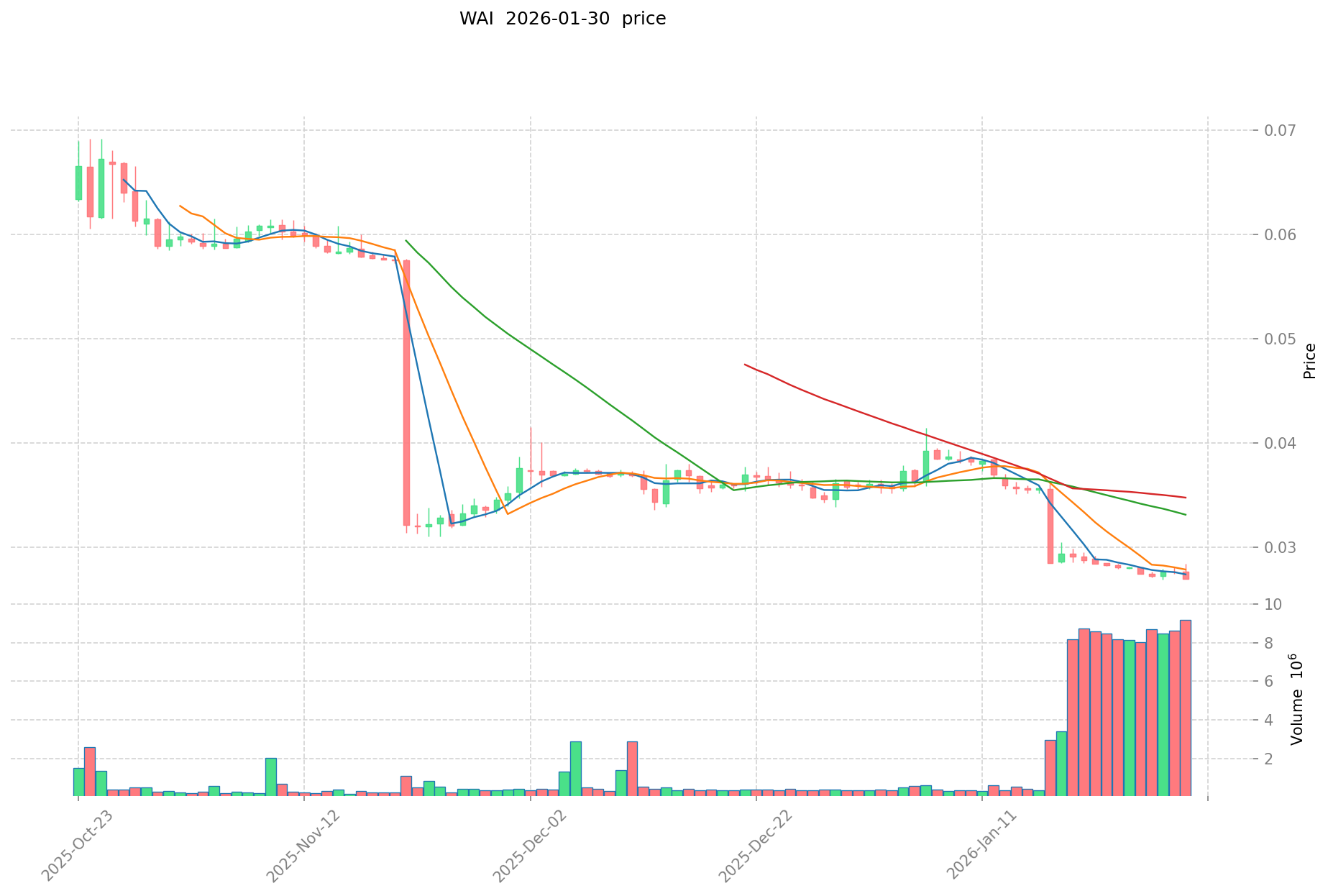
2025: World3 (WAI) experienced significant volatility during its early trading period. The token reached a high of $0.07198 in August 2025 shortly after its launch, but subsequently declined to a low of $0.02 within the same month, reflecting typical early-stage market dynamics.
-
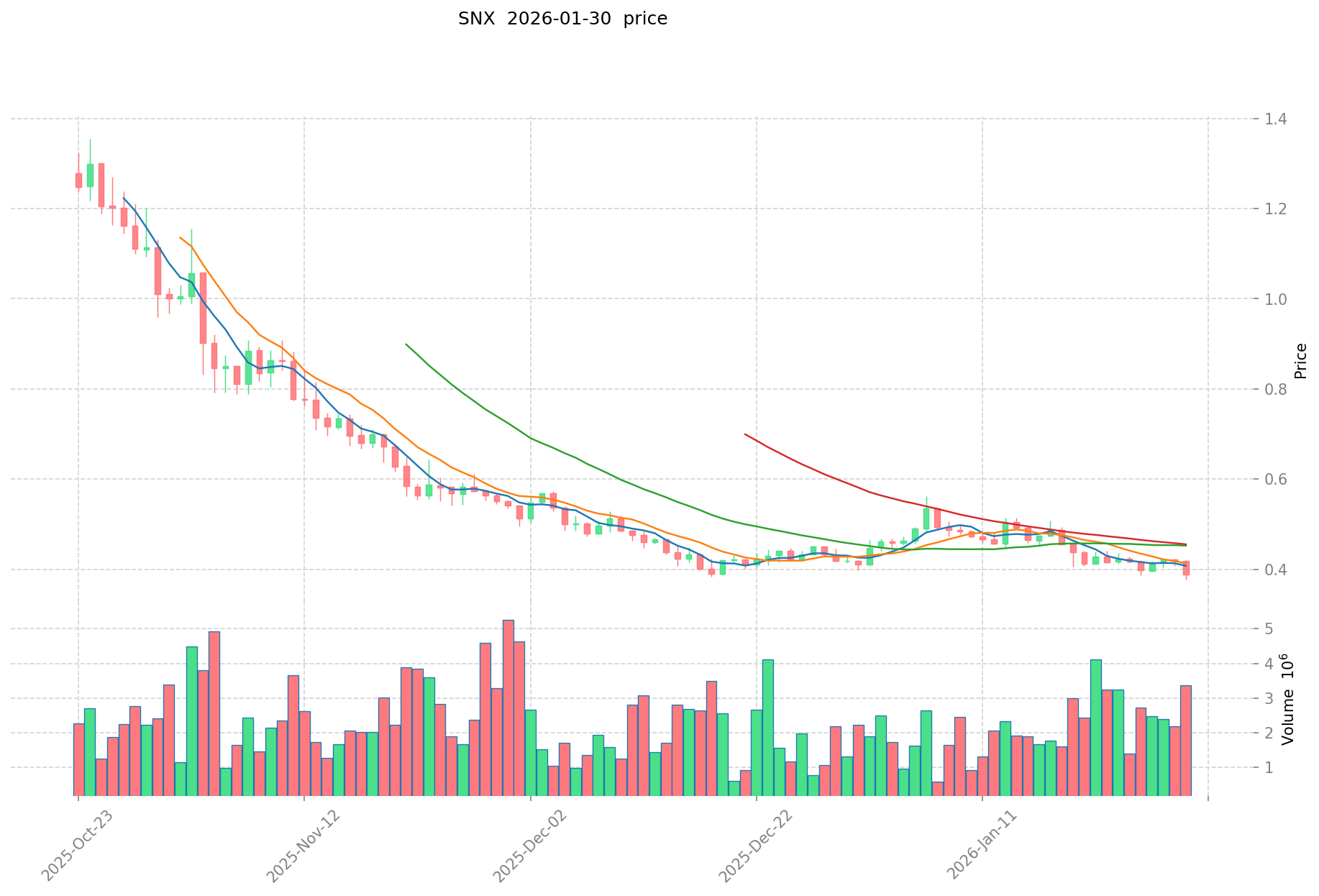
2021: Synthetix (SNX) achieved its all-time high of $28.53 in February 2021, during the broader cryptocurrency market rally. However, the token has since experienced a substantial decline, with its price falling to $0.0347864 at its historical low in January 2019.
-
Comparative Analysis: During the recent market cycle, WAI demonstrated high volatility with a price range between $0.02 and $0.07198 over a relatively short timeframe since its 2025 launch. In contrast, SNX has undergone a more extended decline from its 2021 peak of $28.53, representing a significant correction from previous highs.
Current Market Status (2026-01-30)
- WAI Current Price: $0.02697
- SNX Current Price: $0.3842
- 24-Hour Trading Volume: WAI at $252,877 vs SNX at $1,431,876
- Market Sentiment Index (Fear & Greed Index): 16 (Extreme Fear)
View real-time prices:
II. Core Factors Influencing WAI vs SNX Investment Value
Supply Mechanism Comparison (Tokenomics)
- WAI: Information regarding WAI's supply mechanism is not detailed in the available materials.
- SNX: Synthetix has adjusted its tokenomics to eliminate inflationary emissions. The platform operates with a dynamic debt pool mechanism that supports real-time, zero-slippage trading. Synthetic assets are created through over-collateralization of underlying assets. As referenced, approximately 150 million SNX tokens (valued at around $400 million) were staked on the mainnet, and about 60 million SNX tokens (valued at $160 million) were staked on Optimism as of a certain period. The debt pool merger mechanism has integrated staker debt risks across networks.
- 📌 Historical Pattern: Supply mechanisms influence price cycles through staking incentives and debt pool dynamics, where tokenomics adjustments can reduce inflation pressure and potentially stabilize long-term value trajectories.
Institutional Adoption and Market Application
- Institutional Holdings: Detailed information on institutional preference between WAI and SNX is not specified in the materials.
- Enterprise Adoption: SNX operates within the decentralized finance (DeFi) ecosystem, primarily through Synthetix platform which enables synthetic asset creation and trading. The platform supports global decentralized liquidity pools and has applications in derivatives trading. Information on WAI's enterprise adoption is not available in the materials.
- National Policies: Specific regulatory attitudes toward WAI and SNX across different jurisdictions are not detailed in the provided materials.
Technical Development and Ecosystem Building
- WAI Technical Upgrades: Technical development information for WAI is not provided in the materials.
- SNX Technical Development: Synthetix features a dynamic debt pool design that enables real-time, zero-slippage trading characteristics. The platform utilizes smart contracts and oracle mechanisms to ensure price transparency and accuracy. The synthetic asset model operates through over-collateralization, where users can stake crypto assets to create synthetic assets tracking real-world asset prices.
- Ecosystem Comparison: SNX demonstrates active participation in the DeFi sector through its synthetic asset platform, supporting derivatives trading and decentralized exchange mechanisms. The platform enables users to create and trade synthetic representations of various asset classes including stocks, commodities, and fiat currencies. Information on WAI's ecosystem presence in DeFi, NFT, payment systems, or smart contract applications is not available in the materials.
Macroeconomic Environment and Market Cycles
- Performance Under Inflation: Specific comparative analysis of inflation-resistant properties between WAI and SNX is not detailed in the materials.
- Macroeconomic Monetary Policy: The influence of interest rates and dollar index fluctuations on both assets is not explicitly documented in the available materials.
- Geopolitical Factors: Cross-border transaction demand and international situation impacts on WAI and SNX are not specifically addressed in the provided materials.
III. 2026-2031 Price Prediction: WAI vs SNX
Short-term Forecast (2026)
- WAI: Conservative $0.02025-$0.027 | Optimistic $0.027-$0.03456
- SNX: Conservative $0.290396-$0.3821 | Optimistic $0.3821-$0.416489
Mid-term Forecast (2028-2029)
- WAI may enter a consolidation phase with projected price range of $0.023-$0.052
- SNX may enter a growth phase with projected price range of $0.409-$0.686
- Key drivers: institutional capital inflows, ETF developments, ecosystem expansion
Long-term Forecast (2030-2031)
- WAI: Baseline scenario $0.028-$0.047 | Optimistic scenario $0.052-$0.073
- SNX: Baseline scenario $0.417-$0.589 | Optimistic scenario $0.695-$0.897
View detailed price predictions for WAI and SNX
Disclaimer
WAI:
| Year |
Predicted High Price |
Predicted Average Price |
Predicted Low Price |
Price Change |
| 2026 |
0.03456 |
0.027 |
0.02025 |
0 |
| 2027 |
0.0458622 |
0.03078 |
0.0240084 |
14 |
| 2028 |
0.052499907 |
0.0383211 |
0.023375871 |
42 |
| 2029 |
0.04813513371 |
0.0454105035 |
0.024067566855 |
68 |
| 2030 |
0.05846602325625 |
0.046772818605 |
0.02853141934905 |
73 |
| 2031 |
0.073140995093568 |
0.052619420930625 |
0.038412177279356 |
95 |
SNX:
| Year |
Predicted High Price |
Predicted Average Price |
Predicted Low Price |
Price Change |
| 2026 |
0.416489 |
0.3821 |
0.290396 |
0 |
| 2027 |
0.5590123 |
0.3992945 |
0.331414435 |
4 |
| 2028 |
0.507902604 |
0.4791534 |
0.45519573 |
24 |
| 2029 |
0.68600392278 |
0.493528002 |
0.40962824166 |
28 |
| 2030 |
0.8020817088504 |
0.58976596239 |
0.4895057487837 |
53 |
| 2031 |
0.897741747950058 |
0.6959238356202 |
0.41755430137212 |
81 |
IV. Investment Strategy Comparison: WAI vs SNX
Long-term vs Short-term Investment Strategies
- WAI: May appeal to investors seeking exposure to emerging AI agent platforms with potential for ecosystem expansion, though suitable investor profiles depend on risk tolerance for newer market entrants launched in 2025.
- SNX: May attract investors interested in established DeFi protocols with synthetic asset capabilities, particularly those evaluating platforms with historical presence since 2018 and infrastructure for derivatives trading.
Risk Management and Asset Allocation
- Conservative Investors: WAI 20-30% vs SNX 70-80% - allocation reflects established protocol history and DeFi integration of SNX compared to WAI's earlier market stage.
- Aggressive Investors: WAI 50-60% vs SNX 40-50% - higher allocation toward newer assets balanced with established protocol exposure.
- Hedging Tools: Stablecoin allocation for volatility management, options strategies for downside protection, cross-asset portfolio diversification across multiple protocol categories.
V. Potential Risk Comparison
Market Risk
- WAI: Price volatility demonstrated during 2025 trading period with range between $0.02 and $0.07198, reflecting early-stage market dynamics and liquidity characteristics common to newer token launches.
- SNX: Historical price correction from February 2021 peak of $28.53 to current levels indicates extended market cycle exposure and sensitivity to broader DeFi sector trends.
Technical Risk
- WAI: Scalability considerations and network stability factors typical of platforms in early deployment phases.
- SNX: Smart contract dependencies in synthetic asset creation mechanisms, oracle system reliability requirements, and debt pool merger complexities across multiple network implementations.
Regulatory Risk
- Both assets face evolving regulatory frameworks affecting decentralized protocols, with synthetic asset platforms potentially subject to securities-related oversight considerations and AI-focused platforms encountering emerging technology governance standards across different jurisdictions.
VI. Conclusion: Which Is the Better Buy?
📌 Investment Value Summary:
- WAI Characteristics: Represents exposure to AI agent infrastructure development with institutional backing from entities including Ubisoft, Animoca Brands, and Microsoft for Startups, though operating in earlier market stages with corresponding volatility patterns.
- SNX Characteristics: Offers participation in established DeFi synthetic asset protocol with operational history since 2018, zero-slippage trading mechanisms, and integration across multiple blockchain networks including mainnet and Optimism.
✅ Investment Considerations:
- Emerging Market Participants: May consider gradual position building in established protocols like SNX while monitoring development progress of newer platforms such as WAI, maintaining appropriate position sizing relative to risk tolerance.
- Experienced Market Participants: Could evaluate diversified exposure across both categories, balancing established DeFi infrastructure with emerging AI-focused protocols based on individual portfolio strategies and market cycle assessment.
- Institutional Participants: May prioritize protocols with demonstrated operational history, established liquidity characteristics, and clear technical infrastructure such as SNX's synthetic asset mechanisms, while evaluating newer platforms through appropriate due diligence frameworks.
⚠️ Risk Disclosure: Cryptocurrency markets exhibit high volatility characteristics. This content does not constitute investment advice.
VII. FAQ
Q1: What are the main differences between WAI and SNX in terms of their core functionality?
WAI focuses on AI agent creation and deployment for automated tasks across Web2 and Web3 environments, while SNX operates as a decentralized synthetic asset protocol enabling trading of various assets including USD-pegged currencies, precious metals, and cryptocurrencies. WAI represents emerging AI infrastructure launched in 2025 with backing from Ubisoft, Animoca Brands, and Microsoft for Startups, whereas SNX has established itself since 2018 within the DeFi ecosystem, offering zero-slippage trading through its dynamic debt pool mechanism and over-collateralization model for synthetic asset creation.
Q2: How do the historical price performances of WAI and SNX compare?
SNX demonstrates a more extended market history with greater price volatility, reaching an all-time high of $28.53 in February 2021 before experiencing substantial correction to current levels around $0.3842. WAI shows typical early-stage volatility since its 2025 launch, fluctuating between $0.02 and $0.07198 within its first months of trading, currently priced at $0.02697. The significant difference in trading history reflects SNX's exposure to multiple market cycles compared to WAI's limited track record, though both assets exhibit volatility characteristics common to cryptocurrency markets.
Q3: What are the projected price ranges for WAI and SNX through 2031?
For 2026, WAI projects a conservative range of $0.02025-$0.027 and optimistic range of $0.027-$0.03456, while SNX forecasts conservative $0.290396-$0.3821 and optimistic $0.3821-$0.416489. Long-term projections for 2031 suggest WAI baseline scenario of $0.028-$0.047 with optimistic potential of $0.052-$0.073, whereas SNX baseline estimates $0.417-$0.589 with optimistic scenario reaching $0.695-$0.897. These projections indicate SNX maintains higher absolute price levels while WAI shows percentage growth potential from current lower base, though both forecasts remain subject to market conditions, technological developments, and broader cryptocurrency adoption trends.
Q4: What institutional backing and ecosystem support do WAI and SNX possess?
WAI benefits from institutional support including Ubisoft, Animoca Brands, Sui Foundation, AWS, BNB Chain, and Microsoft for Startups, focusing on AI agent infrastructure development. SNX operates within the established DeFi ecosystem with approximately 150 million tokens (valued around $400 million) staked on mainnet and 60 million tokens (valued at $160 million) staked on Optimism, demonstrating significant protocol participation. SNX's institutional presence centers on its synthetic asset platform enabling derivatives trading and decentralized exchange mechanisms, while WAI's institutional relationships support AI-focused protocol development, representing different ecosystem positioning within the cryptocurrency landscape.
Q5: What are the primary technical risks associated with WAI versus SNX?
WAI faces technical considerations typical of platforms in early deployment phases, including scalability factors and network stability requirements as the AI agent infrastructure develops. SNX encounters risks related to smart contract dependencies in synthetic asset creation mechanisms, oracle system reliability requirements for accurate price feeds, and complexities in debt pool merger operations across multiple network implementations including mainnet and Optimism. Both protocols require ongoing technical maintenance and upgrades, though SNX's established operational history since 2018 provides more extensive real-world performance data compared to WAI's newer 2025 launch timeline.
Q6: How should different investor types approach allocation between WAI and SNX?
Conservative investors may consider allocation ratios of 20-30% WAI versus 70-80% SNX, reflecting SNX's established protocol history and DeFi integration compared to WAI's earlier market stage. Aggressive investors might pursue higher allocation toward newer assets with 50-60% WAI versus 40-50% SNX, accepting greater volatility for potential upside exposure. Institutional participants may prioritize protocols with demonstrated operational history such as SNX's synthetic asset mechanisms while evaluating newer platforms like WAI through appropriate due diligence frameworks. Portfolio strategies should incorporate stablecoin allocations for volatility management, options strategies for downside protection, and cross-asset diversification across multiple protocol categories based on individual risk tolerance and investment timeframes.
Q7: What regulatory considerations affect WAI and SNX investments?
Both assets operate within evolving regulatory frameworks affecting decentralized protocols across different jurisdictions. SNX's synthetic asset platform potentially faces securities-related oversight considerations due to its creation and trading of assets tracking real-world prices including stocks, commodities, and fiat currencies. WAI encounters emerging technology governance standards related to AI-focused platforms as regulatory bodies develop frameworks for artificial intelligence applications in blockchain environments. Investors should monitor regulatory developments in their respective jurisdictions regarding DeFi protocols, synthetic assets, and AI technologies, as policy changes may impact operational capabilities, compliance requirements, and market accessibility for both platforms.
Q8: What factors drive the 24-hour trading volume differences between WAI and SNX?
Current data shows SNX maintains higher 24-hour trading volume at $1,431,876 compared to WAI's $252,877, reflecting SNX's established market presence, broader exchange listings, and deeper liquidity pools developed since its 2018 launch. The trading volume disparity indicates greater market participant engagement with SNX's synthetic asset protocol and established DeFi infrastructure versus WAI's newer AI agent platform launched in 2025. Higher trading volumes generally correlate with improved price discovery mechanisms, tighter bid-ask spreads, and reduced slippage for larger transactions, suggesting SNX currently offers more favorable trading conditions for investors seeking liquidity, though WAI's volume may expand as ecosystem development progresses and market awareness increases.
* The information is not intended to be and does not constitute financial advice or any other recommendation of any sort offered or endorsed by Gate.