This comprehensive guide explores the Harami candlestick pattern, a Japanese technical analysis tool used to identify potential trend reversals in cryptocurrency markets. The article covers essential components including pattern identification, confirmation strategies, bullish and bearish variations, and the specialized Harami Cross formation. Traders learn how to recognize these patterns through specific structural characteristics—where a smaller candle's body is completely contained within a larger candle's body. The guide emphasizes confirmation through subsequent candlesticks and explains how to combine Harami signals with other technical indicators, fundamental analysis, and risk management practices. Ideal for traders on Gate seeking reliable entry and exit signals, this resource demonstrates that successful trading requires a holistic approach beyond candlestick patterns alone, incorporating market context, macroeconomic factors, and disciplined position sizing for sustainable trading success.
What Is a Harami Candle?
Harami candles represent a distinctive candlestick pattern that technical analysts and traders use to identify potential trend reversals in financial markets. This pattern serves as a valuable tool for predicting future price movements and assists investors in making informed decisions about entering or exiting positions in the cryptocurrency market.
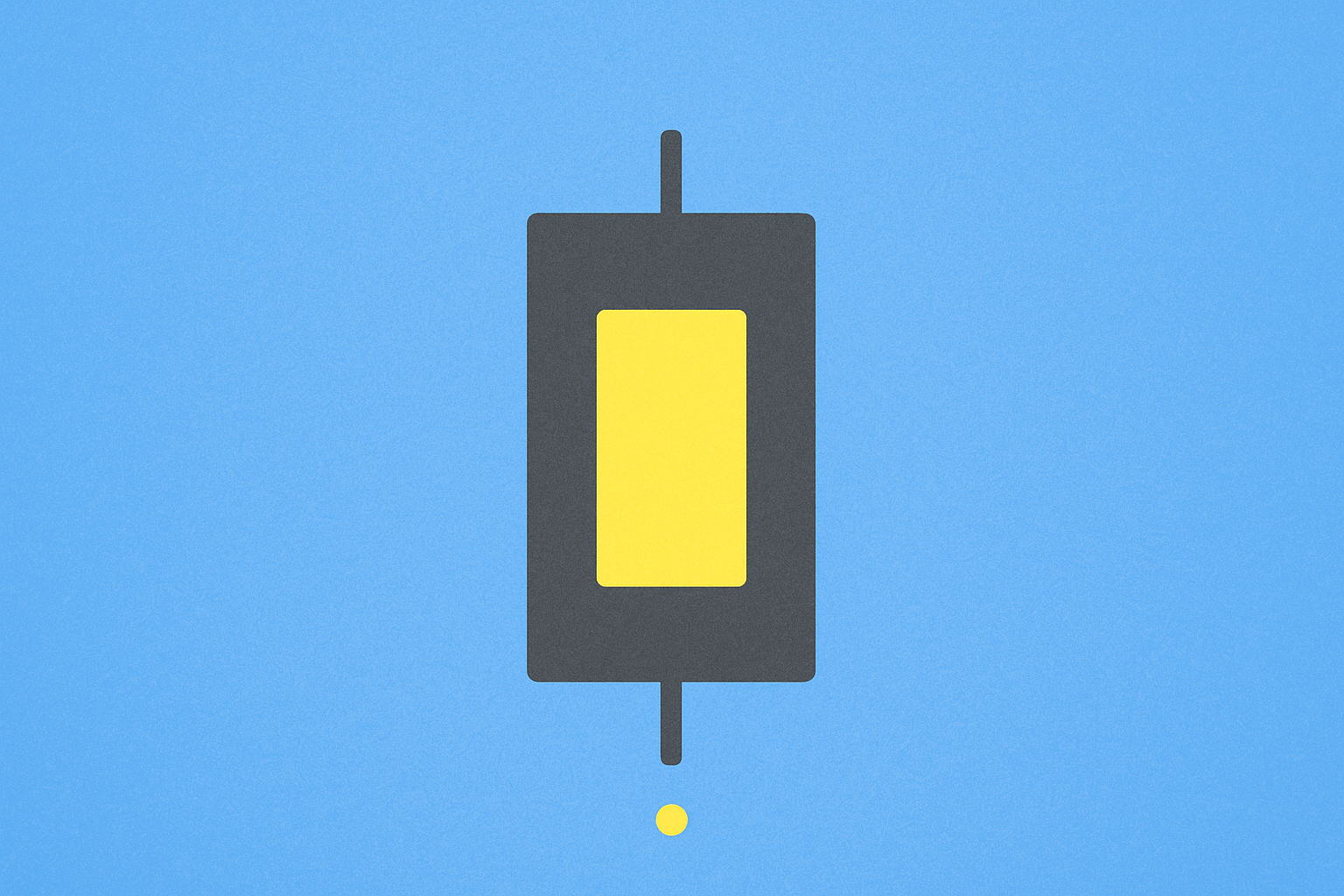
The term "harami" originates from the Japanese word meaning "pregnant," which aptly describes the visual appearance of this pattern. A harami candlestick pattern forms when the real body of one candlestick is completely engulfed or contained within the real body of the preceding candlestick. This unique formation can emerge during both uptrends and downtrends, making it a versatile indicator for market analysis.
To accurately identify a harami candlestick pattern, traders should look for two essential characteristics. First, the second candlestick must be noticeably smaller than the first candlestick, indicating a potential weakening of the previous trend's momentum. Second, the real body of the second candlestick must be entirely contained within the real body of the first candlestick, without exceeding its upper or lower boundaries. These two criteria are fundamental to distinguishing genuine harami patterns from other candlestick formations.
The significance of the harami pattern lies in its ability to signal a potential shift in market sentiment. When this pattern appears after a sustained trend, it suggests that the prevailing momentum may be losing strength, and a reversal could be imminent. However, traders should always combine this pattern with other technical indicators and market analysis tools to increase the reliability of their trading decisions.
How to Confirm Trend Reversal With Harami Candles
Identifying a potential harami candlestick pattern is only the first step in the analysis process. The critical next phase involves confirming whether the pattern will indeed lead to a trend reversal. This confirmation process is essential because not all harami patterns result in significant price movements, and premature trading decisions can lead to losses.
The most reliable method to confirm a trend reversal is to observe the candlestick that forms immediately after the harami pattern. Traders should wait for this subsequent candlestick to close before making any trading decisions. This patience allows the market to provide additional evidence about the direction of the potential reversal.
When the candlestick following a bullish harami pattern closes as a bullish candle, this serves as strong confirmation that the market has reversed its downward trajectory and is transitioning into an upward trend. This confirmation signal suggests that buying pressure has overcome selling pressure, and traders may consider entering long positions.
Conversely, if the candlestick following a bearish harami pattern closes as a bearish candle, this confirms that the market has reversed its upward movement and is shifting into a downward trend. This confirmation indicates that selling pressure has gained dominance, and traders might consider taking short positions or exiting long positions.
It is worth noting that the strength of the confirmation candle also matters. A strong confirmation candle with substantial volume provides more reliable evidence of a trend reversal than a weak confirmation candle with minimal price movement. Additionally, traders should consider the overall market context, including support and resistance levels, when interpreting harami patterns and their confirmations.
Bullish Harami Candle Pattern
The Bullish Harami Candle pattern represents one of the most important reversal signals in technical analysis, particularly for traders looking to identify potential buying opportunities. This pattern emerges when market conditions suggest that bearish momentum may be exhausting and a shift toward bullish sentiment could be underway.
A Bullish Harami pattern forms through a specific two-candle sequence. The first candle is a large bearish candlestick, reflecting strong selling pressure and downward price movement. This is followed by a smaller bullish candlestick, which opens at a price within the range of the previous bearish candle's body. The key characteristic is that the entire body of the second candle remains contained within the body of the first candle, suggesting that sellers are losing control and buyers are beginning to enter the market.
The reliability of the Bullish Harami pattern increases significantly when it appears in oversold market conditions. In such scenarios, the pattern indicates that the selling pressure that drove prices down has become exhausted, and buyers are starting to step in at what they perceive as attractive price levels. Traders often view this as an opportune moment to consider entering long positions, anticipating a potential upward price movement.
Bullish Harami patterns can exhibit varying tail lengths on the candlesticks, which can provide additional insights into market dynamics. Patterns with longer lower tails on the second candle often indicate stronger rejection of lower prices and more aggressive buying interest. However, traders should remember that while this pattern suggests a potential reversal, not all Bullish Harami formations lead to substantial price increases. Therefore, combining this pattern with other technical indicators, volume analysis, and broader market trends enhances the probability of successful trades.
Bearish Harami Candle Pattern
The Bearish Harami Candle pattern serves as a warning signal for traders holding long positions, indicating that an upward trend may be losing momentum and a potential reversal to the downside could be approaching. Understanding this pattern helps traders protect their profits and avoid being caught in downward price movements.
The formation of a Bearish Harami pattern begins with a long bullish candlestick, which demonstrates strong buying pressure and upward price momentum. This is followed by a small bearish candlestick that forms entirely within the body of the preceding bullish candle. The appearance of this smaller bearish candle after a strong upward move suggests that buyers are becoming hesitant and sellers are beginning to assert themselves in the market.
The bearish nature of this pattern stems from its implication that bulls have lost their control over price direction and bears are starting to take over. When this pattern appears after an extended uptrend or near resistance levels, it carries greater significance as it suggests that the upward momentum has reached its limit. The smaller size of the second candle indicates indecision in the market, which often precedes a more decisive move in the opposite direction.
While the Bearish Harami pattern is a useful tool for identifying potential reversals, traders should approach it with appropriate caution. This pattern is generally considered less reliable than some other reversal patterns, such as the engulfing pattern or the evening star. Therefore, confirmation becomes particularly important when trading based on Bearish Harami signals.
After identifying a Bearish Harami pattern, traders should wait for confirmation in the form of a subsequent bearish candlestick. If the next candle closes as a strong bearish candle, this confirmation strengthens the reversal signal and may trigger a sell signal. At this point, investors might consider reducing their long positions, taking profits, or even initiating short positions, depending on their risk tolerance and trading strategy. However, this decision should always be made in conjunction with other technical analysis tools and consideration of the broader market environment.
What Is a Harami Cross Candle?
The Harami Cross represents a specialized variation of the traditional Harami pattern, distinguished by its unique structural characteristics and often considered by many traders to carry greater significance for predicting trend reversals. This pattern combines elements of the Harami formation with the indecision signal of a Doji candle, creating a powerful indicator of potential market turning points.
The defining feature of a Harami Cross is the extremely small real body of the second candlestick, which resembles a Doji candle. In an ideal Harami Cross pattern, the second candle's opening and closing prices are nearly identical, creating a cross-like appearance on the chart. The smaller the real body of this second candle, the stronger the signal becomes. This minimal real body indicates a state of equilibrium between buyers and sellers, suggesting that the previous trend's momentum has significantly weakened.
The appearance of such a small real body following a strong price movement in either direction signals that the forces driving the previous trend have become exhausted. This exhaustion creates an environment where a reversal becomes increasingly probable. The Harami Cross pattern, like its traditional counterpart, can manifest as either a bullish or bearish reversal signal, depending on its position within the overall trend structure.
Many experienced traders attribute greater importance to the Harami Cross pattern compared to the regular Harami pattern due to the enhanced indecision signal provided by the Doji-like second candle. This increased indecision often precedes more significant price movements, making the Harami Cross a potentially more reliable indicator of impending trend changes. However, as with all technical patterns, confirmation through subsequent price action remains essential before making trading decisions.
Bullish Harami Cross Signs
The Bullish Harami Cross pattern exhibits four key characteristics that traders should recognize to properly identify and interpret this reversal signal in downtrending markets.
First, this pattern typically appears during a downward trend, often near the end of a sustained period of selling pressure. Its emergence in this context suggests that the bearish momentum that has been driving prices lower may be reaching exhaustion. Traders should look for this pattern after a series of lower lows and lower highs, as its appearance in such conditions carries greater significance.
Second, the pattern signals a potential transition in market sentiment from a downward trend to either a neutral consolidation phase or an upward trend. This shift indicates that the balance of power between buyers and sellers is changing, with buyers beginning to challenge the dominance of sellers. The pattern serves as an early warning that market participants should prepare for a possible change in price direction.
Third, the first candle in the pattern is a strong red (bearish) body, meaning it is distinctly large and demonstrates significant downward price movement. This large bearish candle represents the final push by sellers and often occurs with substantial trading volume. The size of this candle is important because it shows that sellers have expended considerable effort to drive prices lower, potentially exhausting their momentum.
Fourth, the second candle resembles a green (bullish) Doji, characterized by its cross-like shape where the opening and closing prices are nearly identical. This candle must be entirely contained within the range of the preceding red candle, without exceeding its upper or lower boundaries. The cross shape forms because the opening and closing occur at almost the same price level, indicating a state of equilibrium and indecision in the market. This indecision, following strong bearish movement, often precedes a reversal to the upside.
Bearish Harami Cross Signs
The Bearish Harami Cross pattern displays four distinctive characteristics that enable traders to identify potential reversal points in uptrending markets and take appropriate defensive or opportunistic actions.
First, this pattern typically appears during an upward trend, often manifesting after a sustained period of buying pressure has pushed prices higher. Its occurrence in this context suggests that the bullish momentum that has been propelling prices upward may be weakening. Traders should be particularly attentive when this pattern emerges after an extended rally or near significant resistance levels, as these conditions enhance the pattern's reliability.
Second, the pattern signals a potential shift in market dynamics from an upward trend to either a neutral consolidation period or a downward trend. This transition indicates that buyers are losing their grip on price control and sellers are beginning to exert influence. The pattern serves as a cautionary signal for traders holding long positions, suggesting they should consider risk management measures such as tightening stop-losses or taking partial profits.
Third, the first candle in the pattern is a strong green (bullish) body, meaning it displays substantial upward price movement and is noticeably large compared to surrounding candles. This large bullish candle often represents the final surge of buying enthusiasm and may be accompanied by increased trading volume. The significance of this large candle lies in demonstrating that buyers have expended considerable energy pushing prices higher, potentially setting the stage for exhaustion.
Fourth, the second candle resembles a red (bearish) Doji, displaying a cross-like shape where the opening and closing prices are nearly equal. This candle must remain entirely within the range of the preceding green candle, not extending beyond its upper or lower limits. The cross formation occurs because buying and selling pressures are in balance, with the opening and closing prices converging at nearly the same level. This equilibrium state, following strong bullish movement, often foreshadows a reversal to the downside, as it indicates that buyers have lost their ability to push prices higher and sellers are beginning to gain control.
Conclusion
While Harami candles and Harami Cross patterns provide valuable insights into potential trend reversals, traders must approach these signals with appropriate caution and comprehensive analysis. Relying solely on these candlestick patterns to make buying or selling decisions represents a risky strategy that can lead to significant losses.
Successful trading requires a holistic approach that incorporates multiple sources of information and analysis techniques. Traders should examine previous price trends to understand the broader context in which the Harami pattern appears. Analyzing historical price action helps determine whether the current pattern aligns with typical reversal points or if it might be a false signal within a continuing trend.
Additionally, project-specific developments and news play a crucial role in cryptocurrency markets. Fundamental factors such as technological upgrades, partnership announcements, regulatory changes, or shifts in adoption rates can significantly impact price movements, sometimes overriding technical signals. Traders should stay informed about these developments and consider how they might influence the validity of candlestick patterns.
Understanding the larger macroeconomic environment is equally important. Broader market conditions, including overall cryptocurrency market sentiment, traditional financial market trends, monetary policy changes, and global economic indicators, can all affect the reliability of technical patterns. A Harami pattern that appears during a broader market downturn may carry different implications than one appearing during a bull market.
Risk management remains paramount when trading based on candlestick patterns. Traders should always use appropriate position sizing, set stop-loss orders to limit potential losses, and maintain a diversified portfolio to reduce exposure to any single trade. By combining Harami pattern analysis with comprehensive market research, fundamental analysis, and sound risk management practices, traders can increase their probability of success while protecting their capital from unnecessary risks. Remember that no single indicator or pattern provides guaranteed results, and continuous learning and adaptation to changing market conditions are essential for long-term trading success.
FAQ
What is the difference between Bullish Harami and Bearish Harami candlestick patterns?
Bullish Harami appears in downtrends, signaling potential reversal upward with a small candle inside a larger bearish candle. Bearish Harami occurs in uptrends, indicating potential reversal downward with a small candle inside a larger bullish candle.
How to identify and confirm Harami candlestick patterns? What conditions must be met?
A Harami pattern consists of a smaller candle completely within the previous larger candle's range. For bullish Harami, a downcandle precedes an upcandle. For bearish Harami, an upcandle precedes a downcandle. Confirmation requires the smaller candle's body to stay within the prior candle's high-low range, followed by subsequent price action confirming the reversal signal.
How reliable is the Harami candlestick pattern in actual trading? What is the success rate?
The Harami pattern's reliability in real trading is limited, with success rates around 50%. Due to market complexity, it cannot guarantee consistent results and should be combined with other technical indicators.
After Harami formation appears, traders should wait cautiously for further price confirmation while implementing strict risk management. Set stop-loss orders below key support levels and position size according to risk tolerance. Only risk capital you can afford to lose, and combine technical analysis with market context for optimal entry and exit decisions.
What is the difference between Harami candles and other candlestick patterns such as Engulfing and Doji?
Harami is a small candle contained within the prior candle's body, signaling potential reversal. Engulfing completely encompasses the previous candle. Doji has equal open and close prices, indicating indecision. Each pattern reflects different market sentiment and reversal strength.
Do Harami candlestick patterns have the same effectiveness across different timeframes (daily, 4-hour, 1-hour)?
No, Harami pattern effectiveness varies across timeframes. Shorter timeframes like 1-hour and 4-hour typically show more immediate and pronounced signals, while daily timeframes provide stronger confirmation but fewer trading opportunities. Lower timeframes are more responsive to price action.
* The information is not intended to be and does not constitute financial advice or any other recommendation of any sort offered or endorsed by Gate.