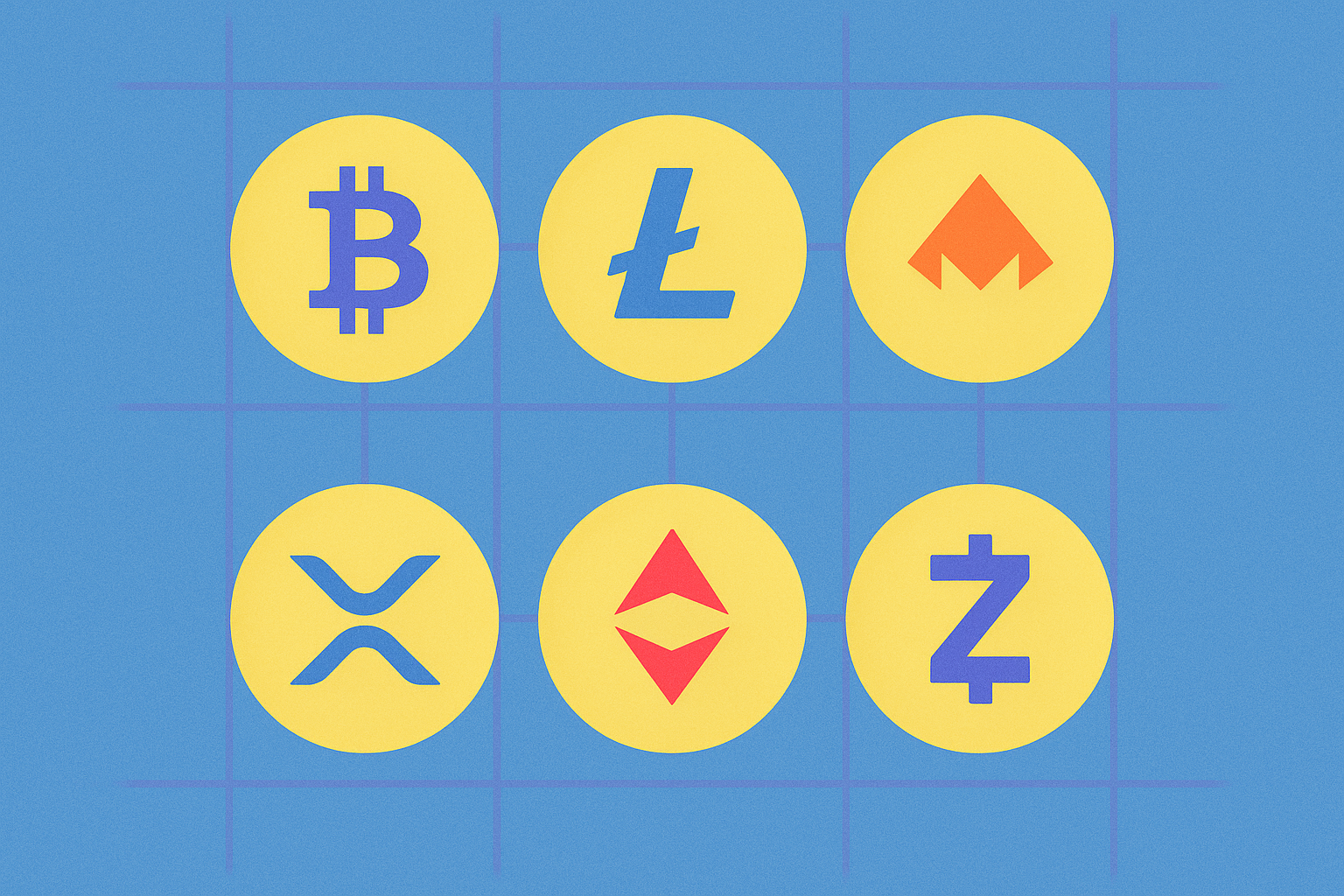
What Are Dino Coins?
"Dino Coins" refers to legacy cryptocurrencies launched in the early days of the industry that remain actively traded today. Like dinosaurs from prehistoric times, these crypto assets have survived countless market cycles and nearly every major challenge. Reliable tokens in this category benefit from well-established communities and a proven track record.
Dino coins continue to matter because interest in time-tested cryptocurrencies typically rises when the market shifts from high-risk speculation back to assets with proven durability. While newer blockchains face scalability bottlenecks, unreliable technology, short-lived hype, and regulatory uncertainty, many traders gravitate toward older networks that have consistently weathered crypto’s toughest periods.
The dino coins concept is increasingly relevant in today’s crypto ecosystem, especially for investors seeking relative stability amidst market volatility. These projects have survived everything from brutal bear markets to sweeping regulatory changes, which makes them compelling choices for portfolio diversification.
Key Takeaways
Essential points to know about dino coins:
- Dino coins are typically cryptocurrencies launched before 2017, withstanding multiple market cycles and maintaining active networks and communities
- Crypto dinosaurs often rebound with strong liquidity and robust long-term charts—providing more stability than hype-driven new tokens
- When searching for top dino coins, prioritize fundamentals (use case, upgrades, developer activity), along with liquidity and market sentiment
- Dino coins carry risks, including outdated technology, regulatory hurdles, and competition from newer blockchains
Understanding these traits helps investors make more informed decisions on whether dino coins align with their investment strategies. Every point above highlights a core aspect of a mature, proven crypto ecosystem.
Dino Coins: Full Definition
While there’s debate over what exactly qualifies as a dino coin, most agree these are established, early-generation cryptocurrencies that feel ancient by crypto standards.
These mature projects debuted early and endured repeated market cycles. They maintain loyal communities in an industry notorious for fleeting attention. This resilience isn’t accidental—it’s built on solid fundamentals and growing real-world utility.
Think of XRP, Monero, Litecoin, and Dogecoin—all original coins that refuse to fade. Some call them “dino alts” or “crypto dinosaurs”—terms for legacy coins that continue to evolve year after year. These projects have earned reputations that marketing alone can’t buy.
What Makes a Crypto Dinosaur?
A true crypto dinosaur isn’t just old. Most dino coins have defining features that set them apart from the millions of failed cryptocurrencies and meme coins.
First is launch timing. These resilient coins emerged in crypto’s earliest era, often before the 2017 bull run or even Ethereum’s industry-shifting debut. That timing gives them a major first-mover advantage.
Second is staying power. Dino coins have outlasted repeated market cycles and remain active, earning the trust of long-term holders. They’ve survived market crashes, competing projects built on similar code, delistings, regulatory uncertainty, and enough FUD to sink all but the strongest contenders.
Finally, market recognition. A crypto dinosaur still enjoys a level of adoption or name recognition. Coins like Litecoin and Monero maintain daily use cases within their niche communities. This isn’t just nostalgia—it’s a reflection of sustained utility.
Why Dino Coins Matter
Dino coins behave differently from many new altcoins that dominate headlines. Their price trends are often steadier and, at times, more predictable—making them an essential part of the crypto conversation.
While new projects can be exciting, many rely on viral marketing or short-term speculation, running on hype rather than substance. Liquidity for these coins tends to be thinner, amplifying volatility and risk for inexperienced investors.
In contrast, dino coins typically offer active trading markets and communities that stick around through turbulence. Price swings still happen, but moves for legacy coins usually reflect more rational investor sentiment, anchored by committed long-term holders.
Dino coins aren’t immune to risk, but they’re less swayed by whatever narrative is currently trending. Their comparative stability makes certain legacy cryptocurrencies valuable in a diversified portfolio, balancing exposure to new coins with a stable foundation. This strategy lets investors pursue high-growth opportunities while maintaining a solid base.
Dino Coin Season: The Comeback of Crypto Dinosaurs
Every few years, the market rediscovers forgotten legends and brings them back into the spotlight. Traders call this rotation “dino coin season”—a cycle loosely tied to altcoin season and Bitcoin’s halving rhythm.
The return of legacy projects is driven by several factors, starting with simple exhaustion. After wallets get burned by fast-moving meme coins, questionable presales, and “revolutionary” projects that vanish in months, investors are drawn back to coins with proven track records. This reflects repeating psychological cycles in the market.
Nostalgia also plays a part. Like childhood memories, investors recall these coins from crypto’s formative years. Buying LTC, XLM, DOGE, or ETC feels like revisiting a simpler era—built on experimentation and self-sovereignty, not hype. When the rest of the market feels fragile, nostalgia can fuel renewed demand.
Finally, network effects provide a solid foundation for growth as markets return to these resilient legacy projects. Dino coins already have working infrastructure, not just whitepaper promises—including established wallets, broad platform integration, and active developer ecosystems.
Types of Dino Coins
Legacy coins generally fall into two categories: The first includes foundational infrastructure projects that defined early cryptocurrency and still serve real-world purposes today—Bitcoin, Ethereum, Monero, and Dogecoin, for example. These form the backbone of today’s crypto ecosystem.
The second includes revival projects, sometimes called “zombie chains,” which ran strong for a time but stagnated, now showing renewed activity as investors revisit proven networks. Zcash and Dash are in this group, with their resurgence often sparked by technology upgrades or shifting market conditions.
Legacy Infrastructure Coins
Legacy infrastructure coins are the oldest, most resilient crypto projects, built well before the 2017 bull market and ICO boom. They laid the groundwork for the crypto ecosystem we know today.
Litecoin
Launched in 2011 as a Bitcoin fork, Litecoin aimed for faster transactions without sacrificing security. It enjoys broad support on trading platforms, regular protocol upgrades, and a vibrant mining community. Litecoin has earned its reputation as the “silver” to Bitcoin’s “gold”—a faster, cheaper option for daily payments.
XRP
XRP debuted in 2012 as a rapid settlement layer for banks and institutions, remaining one of the top cryptocurrencies by market cap. It has a large, loyal following and continues to grow through Ripple’s expanding ecosystem. Despite regulatory challenges, XRP remains popular for cross-border transfers.
Stellar Lumens
Stellar Lumens was launched in 2014, focusing on low-cost global payments and token transfers. XLM benefits from an active developer community and a long list of payment partners, including global fintech collaborations. The platform is built for efficient cross-border transactions.
Monero
Launched in 2014, Monero remains the leading privacy coin, surviving regulatory scrutiny, network upgrades, and delistings. Many see it as the go-to privacy alternative to BTC. Monero’s advanced technology keeps it relevant as financial privacy becomes increasingly important.
Hybrid or Revival Coins
Some dino coins take a break or fade from the spotlight without disappearing. Ethereum Classic and Zcash, for instance, have lost market share to newer competitors, yet their blockchains remain active. In crypto, “dead” often just means dormant.
Ethereum Classic
The controversial 2016 Ethereum hard fork split the community, resulting in two Ethereum networks, each with its own token. While ETC is smaller than ETH in adoption and market cap, its community remains dedicated to the original ideals of decentralization, immutability, and security. The “code is law” philosophy is at ETC’s core.
Zcash
Zcash launched in 2016 as a privacy-centric blockchain using zero-knowledge proofs, drawing attention as a privacy asset until interest cooled with new competitors and a slower market. Thanks to upgrades and governance debates, Zcash has seen renewed activity. Its zk-SNARKs technology remains a key competitive advantage.
Dash
One of the first payment-focused cryptocurrencies, Dash saw broad merchant adoption in the mid-2010s. Growth slowed, but the project continues to release upgrades, and Dash’s PrivateSend feature keeps it relevant among privacy coins. Its masternode system also offers a distinct governance model.
How to Evaluate Dino Coins
Dino coins can anchor a diversified portfolio, but age alone isn’t enough. You need to weigh fundamentals (utility, use case), market conditions, and sentiment. Comprehensive evaluation requires a multi-dimensional approach.
Review the Fundamentals
If you’re considering a purchase, thoroughly assess the project’s overall health.
Technology and Upgrade Path
Is the project actively developing? Does its GitHub show regular updates and pull requests? Is there a clear roadmap? These let you compare the project to newer solutions. Consistent development signals a healthy project.
Use Case and Ecosystem
Does the project have genuine real-world applications and meaningful network adoption? Nostalgia alone won’t drive lasting gains—a dino coin needs a relevant purpose in today’s blockchain landscape.
Developer Activity and Community Health
Is there an active team? Compare the current and founding teams, and examine funding sources. Mature projects with strong decentralization can sustain themselves on holder/developer economic interest. An active, engaged community is a major asset.
Network Security
Weigh the economic security of dino coins. Bitcoin and Ethereum remain secure due to the high cost of attacking their networks. Smaller chains are more exposed. Security doesn’t have to match Bitcoin’s—there must at least be a baseline economic incentive protecting the chain.
Liquidity, Trading Volume, and Market Conditions
Is the coin listed on major exchanges or decentralized platforms? Low-liquidity coins (few traders on either side) are less efficient to trade and can experience dramatic price swings on small trades.
It’s essential to consider potential volatility before investing. Dino coins are generally more stable than meme coins, but crypto is volatile—double-digit percentage moves are possible. Low liquidity can amplify these swings. Order book analysis and bid-ask spreads offer further insight into liquidity.
Consider Branding, Narrative, and Sentiment
Crypto trends often become memes. Some crypto dinosaurs may surge simply because they trend on social media; but if there’s no underlying value, they’re no better than pump-and-dump meme coins. For sustainable growth, social sentiment must be backed by strong fundamentals.
Risks of Dino Crypto Coins
Dino coins can help stabilize a diversified portfolio, but they also come with risks you must fully understand:
- Older chains may rely on outdated code, slow throughput, or legacy consensus models with lower efficiency
- Low hashrate or minimal staking can make old networks vulnerable to attacks—such as transaction reordering, double spending, or stalled finality
- Early projects may still face unresolved legal or compliance issues affecting long-term value
- Dino coin season can end quickly if attention shifts to newer, more exciting trends
- Faster, cheaper, or more scalable chains can easily overshadow slower legacy networks. With more competition for capital, dino coins may capture smaller market shares
Understanding these risks is vital for effective risk management.
Risk Management Tips for Investing in Crypto Dinosaurs
Investing in dino coins benefits from a balanced approach to crypto risk management.
Long-Term Holding vs Active Trading
Some investors treat dino coins as core, long-term holdings due to their established communities and history of surviving market cycles. Others prefer to trade in and out of these assets during rotation periods or when activity spikes. Your strategy should match your risk tolerance and investment goals.
Position Sizing and Diversification
Think about position size. For example, you might allocate 10% of your portfolio to crypto dinosaurs, then decide how to divide it among individual projects. Conservative sizing is often wiser—never put all your eggs in one basket.
Stay Updated on Network Health
Just as you’d evaluate legacy assets before buying, stay informed on project fundamentals. If usage trends decline, it may be time to revise your strategy.
Track metrics like active wallet addresses and network fees. Hashrate and percentage of staked supply are also key indicators. On-chain data can provide early warnings of changing trends.
Monitor Sentiment and Market Cycles
Community sentiment often drives renewed interest in crypto dinosaurs. Watch social discussions, ecosystem events, and broader crypto narratives. Timing matters—dino coins tend to perform better during rotation phases or after Bitcoin dominance cools. Understanding market cycles helps you optimize entry and exit points.
Notable Dino Coin Examples
Here are concrete examples of dino coins with proven resilience:
Monero
Monero’s 2014 launch sparked the privacy coin movement, built on the principle that financial transactions should be private by default. Ring signatures, stealth addresses, and hidden transaction amounts place Monero at the top among privacy coins.
Recent Highlights:
- Active development with regular protocol updates, continuously improving privacy and security
- Transaction volume up 40% in recent years, showing sustained adoption
- Strong user base despite regulatory delistings on some exchanges
- Mining participation up 22%, reflecting increased network security
Litecoin
Created in 2011 as a faster Bitcoin alternative, Litecoin is one of the oldest cryptocurrencies with diverse active use cases. It shares Bitcoin’s core principles (decentralization, PoW security, permissionless access) but features faster block times and lower fees.
Recent Highlights:
- Network upgrades like MWEB, SegWit, and Lightning integration enhance functionality
- Widely accepted for payments; integrated with multiple payment processors
- Consistently high daily transaction volume (~200,000), reflecting active usage
- Strong mining participation—second only to Bitcoin in hashrate
Dogecoin
Dogecoin began as a playful experiment in 2013 and quickly skyrocketed. Today, it’s a leading cryptocurrency by market cap and popularity. This dog-themed dino coin maintains a robust proof-of-work network secured through merged mining with Litecoin.
Recent Highlights:
- Rising institutional visibility, with new Dogecoin investment products in several markets
- Enhanced security from merged mining with Litecoin
- Growing merchant and payment acceptance, including integration with major payment gateways
- Continuous development focused on scalability and developer tooling
Crypto Dinosaurs: In Summary
Dino coins remind us that time-tested utility often trumps mere hype—new and flashy isn’t always better than persistence. These legacy networks have survived market crashes and waves of new rivals, but continue producing blocks with real activity.
Dino coins aren’t for everyone. Some investors prefer emerging tech or higher-risk bets. What matters is understanding why a coin has lasted and whether it still fits today’s ecosystem. Look ahead, but never ignore resilience.
In a constantly evolving crypto world, dino coins offer a unique blend of relative stability and upside potential. They are the industry’s foundation and continue to play key roles shaping digital finance’s future. For savvy investors, understanding and leveraging the unique traits of these legacy cryptocurrencies can be a powerful component of a balanced long-term investment strategy.
FAQ
What Are Dino Coins? What Makes Them Unique?
Dino Coins are decentralized, blockchain-based cryptocurrencies with fully decentralized data storage. Their core uniqueness is that no individual or institution can control or manipulate the network, ensuring maximum transparency and security.
How Do You Buy and Trade Dino Coins? Where Can You Buy Them?
You can buy Dino Coins on major crypto exchanges. Create an account, purchase stablecoins like USDT, and swap them for Dino Coins. The process is fast and beginner-friendly.
How Secure Are Dino Coins? What Investment Risks Should You Consider?
Dino Coins are designed with industry-standard security and audited smart contracts. Key risks include market price volatility, liquidity, and regulatory factors. Only invest money you’re prepared to lose.
What Are the Pros and Cons of Dino Coins Compared to Other Cryptocurrencies?
Dino Coins’ core strength is full blockchain decentralization, guaranteeing data security without institutional control. Drawbacks include relatively limited market liquidity and user adoption compared to top coins.
Who Is Behind Dino Coins? What’s the Project Roadmap?
Dino Coins are developed by experienced blockchain and gaming professionals. The project launched in 2022 to build a unique ecosystem around the Dino character. The team has not yet announced a detailed development roadmap publicly.
What Are the Benefits of Holding Dino Coins? Are There Staking or Mining Features?
Dino Coins holders can earn extra rewards through liquidity pool staking. The DINO token supports mining and Automated Market Maker (AMM) platform participation, offering attractive earning opportunities.
* The information is not intended to be and does not constitute financial advice or any other recommendation of any sort offered or endorsed by Gate.