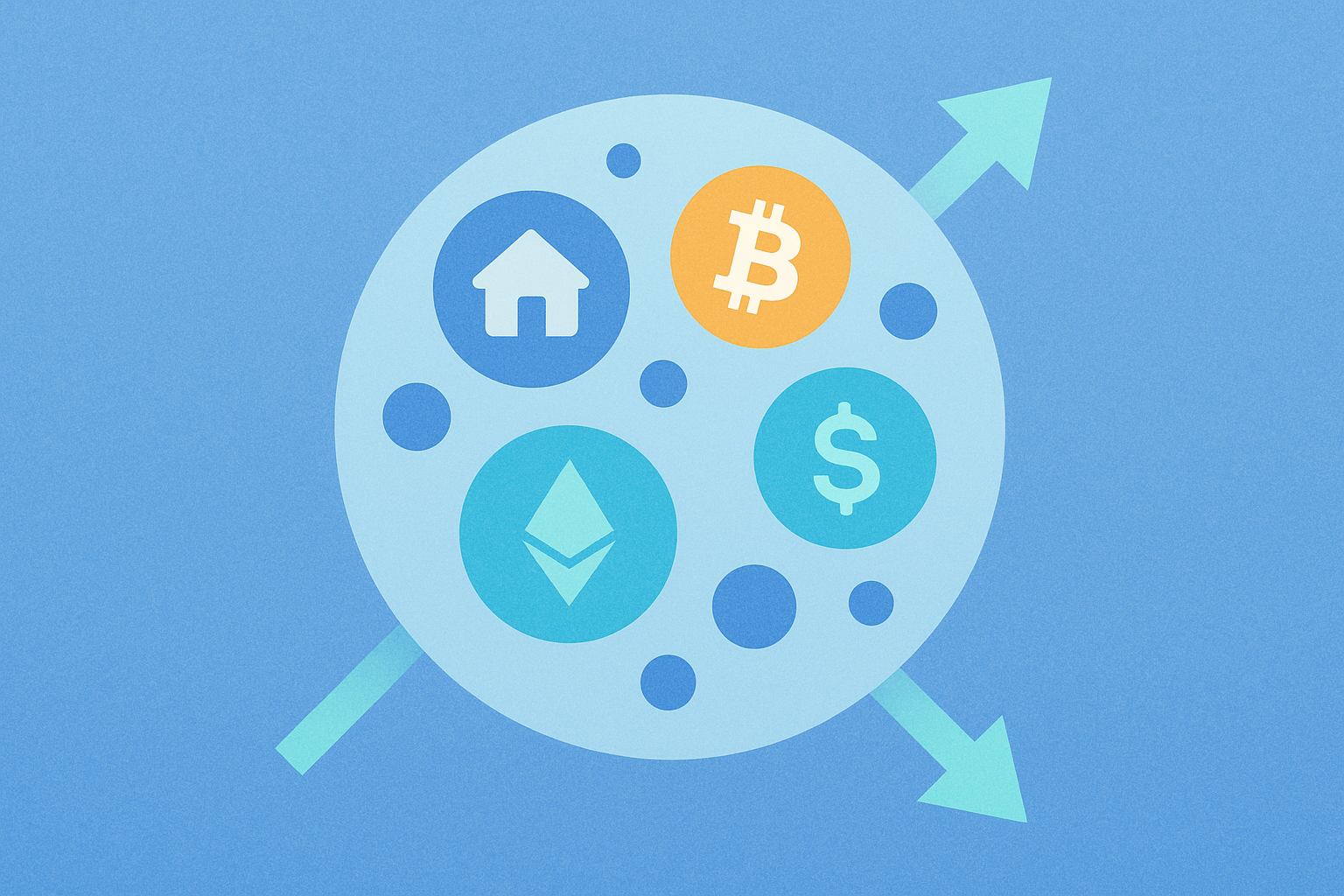
The complete guide to real-world assets (RWA) in Web3 blockchain. Learn how asset tokenization operates, explore the different types of RWA, and understand the advantages and risks of investment. Gain access to gold, bonds, and stocks via Gate.
Key Takeaways
Real-world assets (RWA) are blockchain-based tokens that represent tangible and financial assets such as bonds, gold, and stocks. Industry data shows that the total value of tokenized real-world assets is substantial, with stablecoins making up a significant portion of the overall market capitalization. The tokenization process includes asset verification, data integration using oracles, and the creation of tradable tokens on the blockchain.
RWAs offer critical advantages, including the ability to own fractional shares of high-value assets, transaction transparency through the public blockchain ledger, and access to decentralized finance (DeFi) tools such as staking and earning interest. RWA categories range from stablecoins and treasury bonds to commodities, structured credit, equities, and institutional funds.
However, RWA investments carry specific risks, including regulatory uncertainty across jurisdictions, technical vulnerabilities in smart contracts, and liquidity issues with certain tokenized assets. The rising popularity of RWAs is fueled by evolving regulatory frameworks, advancements in blockchain technology, institutional adoption, and broader trends toward financial digitalization.
What Are Real-World Assets?
RWAs (Real-World Assets) are digital tokens on a blockchain that represent ownership rights to real, tangible, or financial assets. These include government bonds, precious metals (such as gold and silver), stocks of public companies, real estate, and other valuable physical assets.
Think of a token as a digital certificate of ownership that confirms your stake in a given asset—whether it's a corporate bond or a gold bar in a secure vault. Unlike traditional cryptocurrencies like Bitcoin or Ethereum, which lack physical backing and derive value from market supply and demand, RWAs are backed by real tangible or financial assets.
This real asset backing typically gives RWA tokens greater price stability than volatile cryptocurrencies. However, it's important to note that RWAs are not risk-free—the token's value can fluctuate based on the underlying asset's price, management quality, and other factors.
Stablecoins pegged to fiat currencies, such as the US dollar, are a special case. Their inclusion as RWAs is actively debated in the crypto community since fiat collateral differs from traditional tangible assets. Nevertheless, many experts classify stablecoins as RWAs because of their tie to real financial instruments.
How Do RWAs Work?
Tokenizing real-world assets is a multi-step process that turns physical or financial assets into digital tokens on a blockchain. It's similar to digitizing a traditional stock certificate or ownership deed, but relies on advanced blockchain technology to provide transparency and security.
The tokenization process includes three key stages:
Asset Verification and Validation
The first and most critical stage is rigorous verification of the asset's existence and ownership rights. Independent experts and auditors thoroughly assess the asset, check legal documents, and confirm that the asset exists and is under proper control.
To meet legal requirements in various jurisdictions, a Special Purpose Vehicle (SPV) is often established. This legal entity owns the asset and issues tokens representing shares in it, ensuring legal protection for investors.
Real-World Data Integration
The second stage involves transferring asset value and ownership data onto the blockchain. This uses specialized tools called oracles—such as the industry-standard Chainlink. Oracles bridge the real world and blockchain, delivering real-time data on prices, ownership, and other vital asset parameters.
Regular independent audits, including Proof of Reserve procedures, verify asset authenticity and existence. These checks ensure every issued token is truly backed by its corresponding share of a real asset.
Token Creation and Issuance
In the final stage, the blockchain platform generates digital tokens, each representing a specific portion of the underlying asset. These tokens can be bought, sold, or exchanged on various platforms and exchanges, with all transactions automatically recorded in the blockchain's distributed ledger.
The key benefit of this process is absolute transparency. Every token transaction is publicly recorded, creating an immutable history of ownership. This greatly reduces fraud risk, as any participant can verify a token's authenticity and history, building strong system-wide trust.
Why Use RWAs?
Tokenized real-world assets offer investors substantial benefits that make investing more accessible and efficient:
Fractional Ownership and Lower Barriers to Entry
One of the biggest advantages of RWAs is the ability to own fractional shares of high-value assets. Tokenization allows large assets to be divided into numerous smaller parts, each represented by a token. For example, rather than buying an entire $50,000 bond, an investor can purchase $50 worth of tokens and gain a proportional share.
This shift dramatically lowers barriers to entry, making assets previously out of reach for retail investors with limited capital accessible. Younger investors and those with modest savings can now diversify their portfolios with high-quality assets.
Transparency and Security
Blockchain technology delivers an unmatched level of investment transparency. All token transactions are recorded in a public distributed ledger, available for anyone in the network to verify. This openness ensures mutual oversight, where every operation can be tracked and validated.
This level of transparency significantly reduces fraud and manipulation risks. In traditional finance, opaque ownership and complex intermediary chains can hide misconduct. In the RWA model, every token has a clear, verifiable history, building trust among market participants.
Flexible Financial Instruments and DeFi Integration
RWA tokens open up innovative financial tools that combine traditional asset benefits with decentralized finance. Token holders can earn passive income through staking, participate in liquidity pools, and use other DeFi products.
For example, tokenized US Treasury bonds automatically pay interest to holders through blockchain smart contracts. This removes intermediaries, reduces costs, and speeds up income distribution. Investors can trade tokens globally 24/7, unlike traditional markets with limited hours.
Types of RWAs
The tokenized real-world asset market covers a broad array of asset classes—from stablecoins to institutional investment funds. Below are the main RWA categories and leading platforms by assets under management, according to RWA.xyz. These platforms lead their segments and set industry standards.
Stablecoins
Overview: Stablecoins are cryptocurrency tokens pegged to fiat currencies, most often the US dollar. They're widely used for fast, secure digital payments, transfers, and as a store of value in the crypto ecosystem. Their inclusion as RWAs is debated due to the nature of fiat backing.
Leading platforms: Tether (USDT), USD Coin (USDC)
Example: USDC enables users to instantly pay international invoices and transfer funds via crypto apps, avoiding lengthy bank processing and high fees.
Government Securities
Overview: Tokenized US government bonds are among the safest and most stable RWAs. Token holders receive regular interest like in traditional bonds, but with blockchain benefits—transparency, liquidity, and automation via smart contracts.
Leading platforms: BUIDL by BlackRock, USYC by WisdomTree, BENJI by Franklin Templeton
Example: BUIDL tokens, issued by BlackRock, automatically pay US government bond interest directly to holders’ wallets using smart contracts, eliminating paperwork and intermediaries.
Commodities and Precious Metals
Overview: Tokens pegged to physical commodities, especially precious metals like gold, are popular with investors seeking protection from inflation and economic instability. Each token represents a set amount of metal stored securely.
Leading platforms: Tether Gold (XAUT), PAX Gold (PAXG)
Example: XAUT represents ownership of one troy ounce of gold stored in secure Swiss vaults, allowing investors to hold gold without physical storage or insurance, minimizing price swings by tying value to a stable asset.
Structured Credit
Overview: Tokenized credit products, including home equity lines of credit and other structured finance, create new options for advanced credit solutions within DeFi. These products let investors earn from credit portfolios.
Key platform: FIGR_HELOC
Example: FIGR_HELOC tokens represent shares in portfolios of home equity loans managed by professional firms. Investors earn interest income from borrowers’ payments.
Company Stocks
Overview: Tokenized public company shares allow investors to own business stakes with global blockchain access. This is especially valuable for investors in regions with limited access to international stock markets.
Leading platforms: Backed (EXOD, TSLAx)
Example: TSLAx gives holders exposure to Tesla shares under Swiss regulation, giving investors in various countries access to this popular asset.
International Bonds
Overview: Tokenized corporate and government bonds from multiple countries with automated interest payouts via blockchain. These products help global investors diversify their portfolios.
Leading platforms: CUMIU, EUTBL
Example: CUMIU tokens give investors exposure to a portfolio of international bonds, with interest payments distributed automatically on-chain in line with ownership share.
Institutional Funds
Overview: Tokenized investment funds built for institutional investors offer broad diversification and professional management, combining traditional asset management with blockchain innovation.
Leading platforms: JAAA, BCAP
Example: JAAA tokens provide access to a diversified portfolio of institutional assets managed by professionals, with transparent blockchain reporting.
| Asset Type |
Leading Platforms |
Main Function |
| Stablecoins |
Tether, USD Coin |
Fast digital payments and transfers |
| Government Securities |
BlackRock, WisdomTree, Franklin Templeton |
Stable interest payments |
| Commodities and Precious Metals |
Tether Gold, PAX Gold |
Inflation protection |
| Structured Credit |
FIGR_HELOC |
Advanced credit solutions |
| Company Stocks |
Backed (EXOD, TSLAx) |
Investment in public companies |
| International Bonds |
CUMIU, EUTBL |
Diversification and interest income |
| Institutional Funds |
JAAA, BCAP |
Professional asset management |
Why Is RWA Growing?
Tokenized real-world assets are quickly becoming a driving force in digital finance. Several long-term trends are fueling this growth:
Regulatory Framework Development
In recent years, global regulators have developed clearer rules for crypto assets and tokenized instruments. The European MiCA (Markets in Crypto-Assets) regulation is a strong example, setting unified standards for the crypto market in the EU.
These regulatory shifts create a stable, predictable environment for tokenized asset growth, boosting trust among institutional investors and traditional financial institutions. Clear rules support platforms like CUMIU and other projects operating within legal boundaries.
Blockchain Technology Advancements
Modern blockchain platforms like Ethereum, Stellar, and Aptos offer much faster and cheaper transactions than earlier versions. Ethereum Layer-2 solutions (Layer-2)—including Arbitrum and Optimism—lower transaction fees and boost network throughput.
These tech improvements make tokenization economical and practical for a wide range of products. They underpin major projects like BUIDL by BlackRock, processing thousands of daily transactions.
Institutional Adoption
The world’s largest financial organizations are entering the tokenized asset space. Leaders like BlackRock, WisdomTree, and Franklin Templeton are launching products based on tokenized US government bonds and other assets.
This institutional adoption legitimizes the RWA sector and attracts conservative investors looking for stable income with proven financial tools, plus blockchain benefits—transparency, automation, and global access.
DeFi Ecosystem Integration
Tokenized real-world assets significantly strengthen the DeFi market by bringing in stable, collateralized assets. RWAs let DeFi users secure loans with real assets, earn stable yields, and use advanced financial strategies.
For example, the FIGR_HELOC platform allows investors to stake tokens backed by home equity loans, earning income automatically via smart contracts. This synergy connects traditional finance with innovative DeFi solutions.
Global Access and Investment Democratization
Tokenization drastically lowers barriers to investment, making previously inaccessible assets available to retail investors. Now, even those with small capital can acquire tokens tied to Tesla stock (TSLAx by Backed), government bonds, or gold bars.
This democratization is especially vital for developing markets and regions with limited access to international finance. Blockchain removes geographic barriers, letting investors worldwide join global markets.
Economic Stability Amid Volatility
During periods of high crypto volatility and economic uncertainty, RWAs offer more stable alternatives. Gold-backed tokens (such as XAUT by Tether Gold) are effective hedges against inflation and fiat currency devaluation.
Tokenized government bonds offer predictable returns like traditional bonds but with added blockchain benefits—liquidity, transparency, and low costs. RWAs appeal to conservative investors seeking innovation and stability.
The number of token issuers and product diversity continues to grow, signaling sector maturity. RWAs are reshaping finance, making it more transparent, accessible, and innovative for participants globally.
RWA Risks
Despite their benefits, tokenized real-world assets come with risks that require careful consideration before investing:
Regulatory Uncertainty and Jurisdictional Differences
Crypto asset and tokenized instrument laws vary widely between countries and are evolving rapidly. These differences can create obstacles for cross-border trading and legal uncertainty.
Investors may find a token legal in one jurisdiction but banned or restricted elsewhere. Legal changes can suddenly impact token prices or availability, creating extra risk for holders.
Technical Risks and Smart Contract Vulnerabilities
Blockchain and smart contracts, while innovative, carry technical risks. Bugs in smart contract code can be exploited by attackers to steal funds or manipulate tokens.
History shows multiple DeFi protocol attacks costing millions due to programming flaws. Hacks of decentralized exchanges and lending protocols have resulted in major investor losses. Security audits help, but can’t remove all risks.
Asset Management and Custody Risks
Asset management quality is crucial for token value. Poor or dishonest custody of physical assets can wipe out token value. For example, if the gold backing XAUT isn't properly secured or is stolen, token holders lose out.
Lack of management transparency, insufficient audits, or conflicts of interest also add risk. It's essential to vet token issuers and their operational processes thoroughly.
Liquidity Issues
Not all tokenized assets have high liquidity. Tokens tied to niche or specialized assets (e.g., little-known company stocks or exotic commodities) may have few buyers and low trading volumes on exchanges.
Poor liquidity makes it hard to sell tokens quickly at fair prices. Investors may face wide bid-ask spreads or no buyers when needed, especially in turbulent markets.
Conclusion: The Future of RWAs
Tokenized real-world assets are fundamentally reshaping the global financial system, bridging traditional finance and the digital economy. By bringing assets like government bonds, gold, and stocks onto the blockchain, RWAs make investing more accessible, transparent, and efficient worldwide.
As the market expands, blockchain technology improves, and DeFi integration deepens, tokenized assets will play a growing role in connecting traditional and digital finance. Regulatory frameworks and institutional adoption offer a solid base for long-term growth.
RWAs open new doors for all types of investors—from individuals with limited capital to major institutions. Fractional ownership, global access, and DeFi integration democratize high-quality asset investing and create innovative income streams.
However, before investing in tokenized real-world assets, it is critical to research projects thoroughly, understand the associated regulatory, technical, management, and liquidity risks, and make informed decisions based on objective data. Only a deliberate, well-informed approach can maximize the benefits of this innovative technology while minimizing risks.
FAQ
What are RWAs (Real-World Assets) and how do they work in crypto?
RWAs are real physical assets (real estate, commodities, securities) digitized on the blockchain. They provide transactional value, boost transparency, and enhance real asset trading efficiency via cryptocurrency networks.
What types of real-world assets can be tokenized on the blockchain?
Real estate, precious metals, securities, artwork, and commodities can be tokenized on the blockchain. Tokenization turns physical assets into digital tokens, enabling convenient trading and fractional ownership.
What are the main advantages of RWAs compared to traditional investments?
RWAs offer higher liquidity, wider accessibility, lower intermediary fees, and stronger transparency through blockchain. Tokenization allows investors to own shares of real assets with minimal barriers to entry.
What risks and challenges are associated with investing in RWAs?
Investing in RWAs involves financial risks, including price volatility and market instability. There are also technical challenges with blockchain integration and regulatory uncertainty. Investors also face counterparty and liquidity risks.
What are some examples of successful RWA projects on the market?
Paxos (PAXG) and Tether’s XAUT are leading RWA projects, tokenizing gold and attracting high trading volumes. NFT platforms are also driving digitization of real assets like art and real estate.
How do you buy and store real asset tokens?
Buy RWA tokens on reputable platforms through established verification processes. Use cold wallets (Ledger, Trezor) for secure storage. Diversify your portfolio and monitor regulatory developments in your jurisdiction.
What role does regulation play in the development of the RWA market?
Regulation streamlines RWA market integration, reduces risks, and increases investor confidence. Legal frameworks support market growth, attract institutional capital, and ensure long-term stability for tokenized assets.
* The information is not intended to be and does not constitute financial advice or any other recommendation of any sort offered or endorsed by Gate.